Why a Collar Threatens a Pomeranian’s Windpipe
It's an utterly heartbreaking moment for any Pomeranian owner when you hear that distinctive, dry, goose-like "honk" coming from your beloved fluffball. This terrifying cough often signals something serious, and for Poms, it frequently points to a vulnerable spot they carry right in their tiny throats: the windpipe. Understanding why a seemingly innocuous collar can pose a grave threat to this delicate structure is crucial for every Pomeranian parent, and this guide is here to shed light on those risks and offer safer alternatives.
Understanding the Pomeranian's Delicate Trachea
Pomeranians, with their joyful barks and fluffy coats, are adored for their small size and spirited personalities. However, their diminutive stature comes with certain anatomical predispositions that make them susceptible to specific health concerns, particularly involving their respiratory system. It's not just a "small dog thing"; there are specific factors that make Poms especially vulnerable.
The Anatomy of a Pomeranian's Windpipe
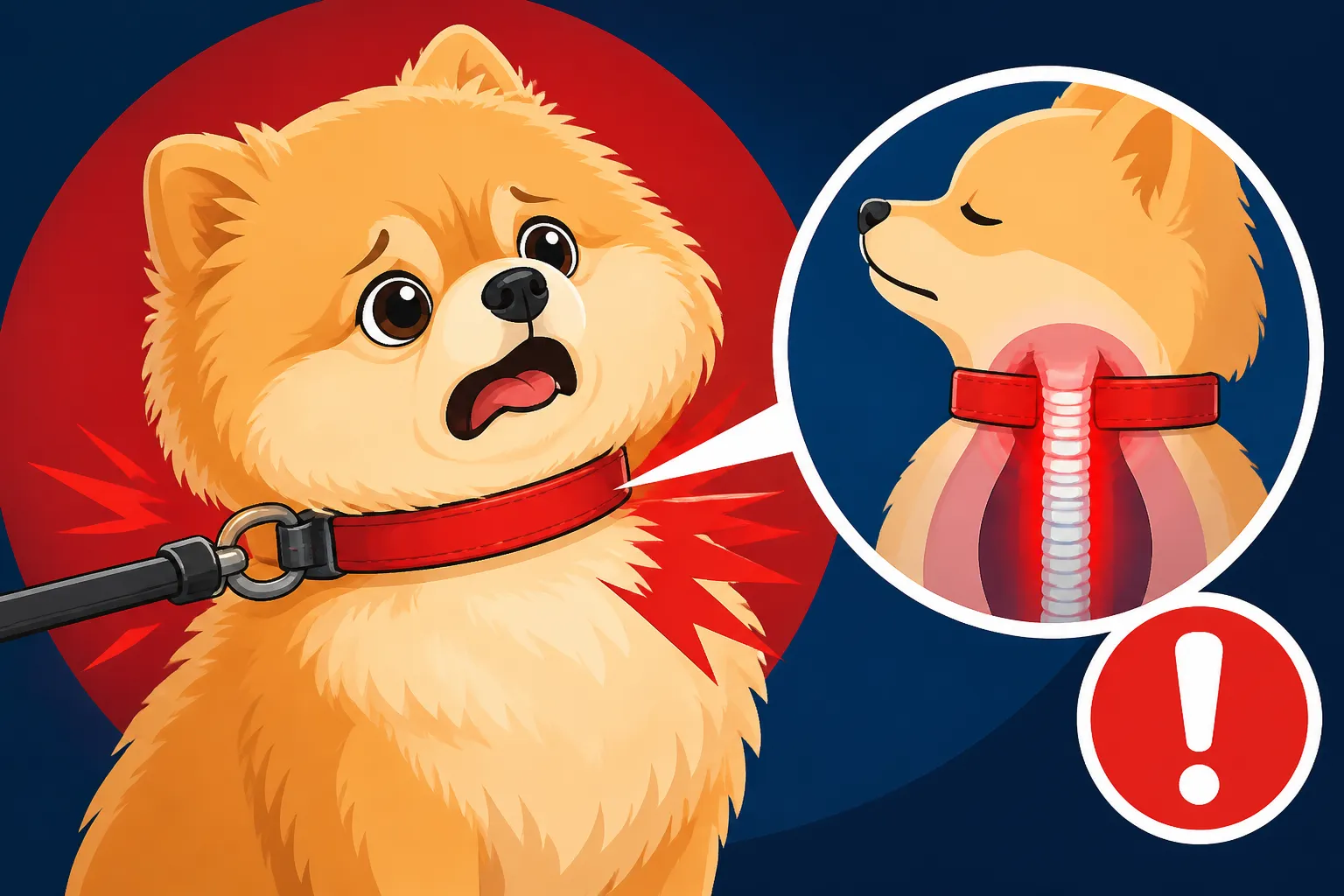
A Pomeranian's windpipe, or trachea, is a relatively small and delicate tube composed of C-shaped cartilage rings that keep it open. These rings are connected by soft tissue, forming a pathway from the larynx down into the lungs. In larger breeds, these cartilage rings are typically robust and firm. But in smaller breeds like Pomeranians, these rings can be inherently weaker or softer. Imagine a series of tiny, flexible hoops; they need to stay firm to maintain an open airway. When these rings are compromised, the trachea can flatten or collapse.
This structural difference means that any external pressure, even what might seem minor to us, can have a disproportionately large impact. A tiny force that barely registers on a larger dog's sturdy throat can directly impinge upon a Pom's fragile windpipe, pushing the delicate cartilage rings inwards. This is why paying close attention to any strange sounds, like The Honking Cough of a Pomeranian's Collapsing Windpipe, is so important for early detection of potential issues.
Why Poms Are Prone to Tracheal Collapse
Tracheal collapse is a common and often distressing condition in Pomeranians and other toy breeds. It's not necessarily caused by an injury, though trauma can certainly exacerbate it. Often, it's a congenital issue, meaning some Poms are born with weaker tracheal cartilage. Over time, or with consistent irritation, these rings can start to lose their rigidity. As the dog breathes, especially when excited or pulling on a lead, the pressure changes in the airway can cause the softened trachea to flatten, obstructing the flow of air.
This inherent predisposition makes Pomeranians particularly vulnerable to external factors that exert pressure on their necks. Their genetic makeup simply doesn't give them the same structural resilience as, say, a Labrador. It's a silent vulnerability that many owners aren't even aware of until symptoms, such as the characteristic goose-like cough, begin to appear.
Contributing Factors Beyond Collars
While collars are a major culprit, it’s important to understand that other factors can contribute to or worsen tracheal collapse in a Pomeranian. Obesity, for instance, adds pressure not only externally but also internally on the respiratory system, making it harder for the dog to breathe and putting extra strain on the trachea. Allergies, environmental irritants like smoke or dust, and even certain types of exercise or over-excitement can trigger a coughing fit or worsen an already compromised windpipe.
Even something as simple as the common cold or kennel cough can highlight an underlying tracheal weakness. A vet can help differentiate a temporary cough from the distinct sound of The Sound a Pomeranian Makes When Its Trachea Collapses. Moreover, concurrent heart conditions, which can also cause coughing, might complicate diagnosis, as the symptoms can sometimes overlap. It's a complex picture, and collars just happen to be a very preventable piece of the puzzle.
The Dangers of Collars on a Pomeranian's Windpipe
Many well-meaning owners unwittingly put their Pomeranians at risk by using traditional neck collars. What seems like a standard piece of equipment for any dog can be incredibly detrimental to a breed with such a delicate throat.
Direct Pressure and Trauma from Collars
Imagine a narrow strap tightening around your throat every time you moved quickly or strained. That's essentially what a collar does to a Pomeranian, especially when they pull on the leash. The direct pressure exerted by a collar can bruise or even physically deform the fragile cartilage rings of the trachea. A sudden jerk on the leash, whether accidental or intentional during training, can cause significant and immediate trauma. This isn't just discomfort; it can lead to acute inflammation, pain, and, most critically, the collapse of those delicate rings.
Even if your Pom doesn't pull, the constant rubbing and slight pressure from a collar during everyday activities like sniffing around on a walk or playing can cause chronic irritation. This continuous, low-level stress can weaken the tracheal cartilage over time, slowly paving the way for collapse. It’s a silent, incremental damage that often goes unnoticed until symptoms become severe. This chronic irritation can even affect surrounding tissues, making the entire area more sensitive and prone to inflammation.
The Cumulative Effect of Repeated Strain
The true danger of collars often lies in the cumulative effect of repeated strain. It's not always one dramatic incident, but rather the consistent, day-in-and-day-out pressure that takes its toll. Every time your Pomeranian leans into the leash, every gentle tug, every excited leap while wearing a collar, contributes to the gradual weakening and eventual collapse of the tracheal rings. Think of it like bending a piece of thin plastic over and over again; eventually, it will snap.
This cumulative damage can be insidious because it often doesn't show immediate dramatic symptoms. You might not notice anything wrong until the condition has progressed significantly, reaching a more advanced stage like a Grade 2 or 3 collapse when you might need to consider Grading a Pomeranian's Tracheal Collapse. By then, the damage is more extensive and the solutions become more complex and potentially invasive. It’s a stark reminder that even seemingly harmless habits can have long-term consequences for our tiny companions.
Collars and Exacerbating Existing Conditions
For Pomeranians who already have a predisposition to tracheal issues, or those who have even a mild case of tracheal collapse, a collar can turn a manageable condition into a crisis. The pressure from a collar can immediately trigger a coughing fit, restrict airflow, and even lead to respiratory distress. If your Pom already has a compromised windpipe, a collar can easily push it over the edge, causing it to completely flatten and make breathing extremely difficult.
In severe cases, even a short walk with a collar could lead to an emergency, requiring immediate veterinary intervention. The stress on the trachea can also lead to inflammation, which further narrows the airway, creating a vicious cycle of irritation and collapse. Owners often don't realize that their dog might have an underlying, mild tracheal issue until a collar exacerbates it, making the symptoms impossible to ignore. This is why prevention and early detection are so vital.
Recognizing Signs of Tracheal Distress and Damage
Knowing what to look for can make all the difference in catching tracheal problems early and preventing further damage. Pomeranians are good at hiding discomfort, so owners need to be extra vigilant.
The Classic "Honking Cough"
The most recognizable sign of tracheal collapse in a Pomeranian is a dry, harsh, goose-like cough. This cough often sounds like a honk and can be triggered by excitement, exercise, drinking water, or even pulling on a collar. It's distinct from a wet cough and can sometimes be mistaken for something stuck in their throat. If you hear your Pom making this noise, especially repeatedly, it's a serious red flag that warrants veterinary attention.
The cough occurs because the collapsing trachea irritates the lining of the airway, prompting the dog to try and clear it. It's a reflex, but one that unfortunately can also worsen the collapse by increasing internal pressure. This sound can be particularly startling and distressing for owners, who often describe it as if their dog is struggling to breathe. It's crucial not to dismiss it as just a quirk of the breed; it's a direct signal of respiratory distress.
Behavioral Changes and Other Symptoms
Beyond the honking cough, there are other, more subtle signs that your Pomeranian might be experiencing tracheal distress or has a collapsing windpipe. You might notice them becoming more lethargic, reluctant to exercise, or panting excessively even after minimal activity. Their breathing might become labored, or you might hear a wheezing sound. In some cases, their gums or tongue might take on a bluish tint, indicating a lack of oxygen – this is an emergency and requires immediate veterinary care.
You might also observe changes in their behavior, such as avoiding situations that trigger their cough, like getting overly excited or pulling on a leash (if you are still using one). They might become less playful or more anxious. Sometimes, a Pom might try to extend their neck or stretch their head forward in an attempt to open their airway. These subtle cues are just as important as the more obvious cough in indicating a problem.
When to Seek Veterinary Attention
If you notice any of the signs mentioned above, especially the characteristic honking cough, it's absolutely crucial to schedule an appointment with your veterinarian as soon as possible. While some mild cases can be managed with medication and lifestyle changes, severe tracheal collapse can be life-threatening. A vet will be able to perform a thorough examination, which may include X-rays, fluoroscopy (a moving X-ray), or even a bronchoscopy to visualize the trachea and Grading a Pomeranian's Tracheal Collapse.
Never ignore these symptoms, hoping they will just go away. Early diagnosis and intervention can significantly improve your Pomeranian's quality of life and potentially prevent the condition from worsening. If your Pom is having severe difficulty breathing, has blue gums, or collapses, this is an emergency situation, and you need to get to the vet immediately. Understand when Whether a Pomeranian's Cough Is an Emergency requires immediate action.
Safer Alternatives: Harnesses and Their Benefits
The good news is that preventing collar-related tracheal damage is simple: switch to a harness. But not just any harness will do; selecting the right type and ensuring a proper fit is paramount.
The Superiority of Front-Clip and Y-Shape Harnesses
When it comes to protecting your Pomeranian's delicate windpipe, harnesses that distribute pressure across their chest and shoulders, rather than their neck, are essential. Front-clip harnesses and Y-shape harnesses are particularly beneficial. Front-clip harnesses have the leash attachment point on the dog's chest, which helps redirect their forward motion if they pull, gently guiding them back towards you without putting any pressure on the trachea. This is especially helpful for Poms who tend to pull during walks.
Y-shape harnesses (sometimes called "H-style" or "Freedom" harnesses) also avoid neck pressure by having straps that go around the chest and behind the front legs, forming a "Y" shape over the chest bone. This design ensures that all pulling force is absorbed by the stronger structures of the chest and shoulders. Avoid harnesses that have a strap running straight across the lower throat, as these can still apply pressure to the trachea, albeit less directly than a collar. For detailed advice on this, look into Harnesses Fitted for a Pomeranian's Windpipe.
Fitting a Harness Correctly for Maximum Safety
A harness is only as safe as its fit. A poorly fitting harness can still cause issues, rub uncomfortably, or allow your Pomeranian to slip out. When trying on a harness, ensure you can comfortably slide two fingers under all the straps. It should be snug enough that it doesn't shift around excessively but not so tight that it restricts movement or breathing. Pay close attention to the area behind their front legs; straps here should not rub against their armpits, which can cause chafing and irritation.
Always check the fit regularly, especially if your Pomeranian is still growing or if their weight fluctuates. The harness should allow for a full range of motion in their shoulders and legs. A properly fitted harness will sit comfortably on the dog's body, effectively distributing any pulling force away from the delicate throat area. It’s also wise to check for any signs of rubbing or irritation after the first few walks.
Training Your Pomeranian to Love Their Harness
Some Pomeranians might be a little resistant to wearing a harness at first, especially if they're used to a collar or are just naturally a bit dramatic. The key is to introduce it gradually and positively. Start by letting them sniff and investigate the harness, offering treats and praise. Then, simply put the harness on them for a few minutes indoors, again with treats and praise, before taking it off. Gradually increase the time they wear it, eventually attaching the leash and taking short walks.
Make the harness a positive experience. Associate it with fun things like walks and treats. Never force it or make it a negative interaction, as this can create aversion. With a little patience and positive reinforcement, most Pomeranians will quickly adapt and even associate their harness with exciting outdoor adventures.
Living with a Pomeranian with Tracheal Issues
If your Pomeranian has already been diagnosed with tracheal collapse, life doesn't stop, but adjustments are definitely needed. The focus shifts to management and making their life as comfortable and safe as possible.
Management Strategies for Collapsed Trachea
Managing a Pomeranian with a collapsed trachea often involves a multi-faceted approach. Your vet might prescribe medications to reduce inflammation, suppress coughing, and dilate airways. These can include cough suppressants, anti-inflammatories, and bronchodilators. It's crucial to follow your vet's instructions meticulously and never self-medicate. Regular vet visits are also vital to monitor the condition and adjust medications as needed.
Beyond medication, lifestyle modifications are paramount. Absolutely no collars should ever be used; a well-fitting harness is non-negotiable. Keeping your Pom calm and avoiding over-excitement can also help reduce coughing fits. Sometimes, even Managing a Pomeranian's Windpipe Without Surgery is possible through these combined efforts. In severe cases where medical management isn't enough, surgery, such as tracheal stenting, might be considered, but this is a complex decision with its own risks, particularly given the small size of Pomeranians and the potential for Anesthesia Risk in a Four Pound Pomeranian.
Environmental Adjustments for Breathing Comfort
Creating a supportive home environment can significantly improve your Pomeranian's comfort if they have tracheal collapse. Minimize exposure to environmental irritants such as cigarette smoke, dust, strong perfumes, and aerosol sprays. Using humidifiers, especially during dry seasons, can help keep their airways moist and less irritated. Ensure their living space is well-ventilated and keep them away from areas with heavy foot traffic where they might inhale more dust.
Consider elevated food and water bowls to prevent them from stooping too low, which can put extra strain on their neck and throat. Keep them away from overly enthusiastic playmates, especially larger dogs who might accidentally step on their throat during play. A calm, clean, and stable environment can reduce the frequency and severity of coughing episodes, making a huge difference in their daily life.
The Role of Diet and Weight Management
Weight management is perhaps one of the most critical factors in managing tracheal collapse. An overweight Pomeranian carries excess fat around their neck and chest, which puts additional pressure on their windpipe and compromises their ability to breathe effectively. Even a small amount of weight loss can significantly alleviate symptoms and improve breathing comfort. If your vet has commented on your Pom's weight, taking steps to address it is essential. You might be surprised to learn that Whether Weight Gain Worsens a Pomeranian's Windpipe is a resounding yes.
Work with your veterinarian to establish a healthy diet and exercise plan. This might involve reducing calorie intake, switching to a prescription weight-management food, and increasing gentle, controlled exercise (always using a harness!). Remember, exercise should be carefully monitored to avoid triggering coughing fits. A lean, healthy weight can often make a more profound difference than any medication alone in improving a Pomeranian's respiratory health.
Preventing Future Problems and Ensuring Long-Term Health
Proactive care and vigilance are the best ways to protect your Pomeranian from tracheal issues, especially if you adopt a puppy or a young adult.
Educating Family and Caretakers
The first step in prevention is ensuring everyone in your household, and anyone who cares for your Pomeranian, understands the risks associated with collars and the importance of using a harness. This includes family members, pet sitters, dog walkers, and even friends who might interact with your dog. Make it clear that traditional collars are off-limits for walks or any situation where there might be pressure on the neck.
Explain why a harness is necessary, detailing the delicate nature of the Pomeranian's trachea. Visual demonstrations of how to properly put on and adjust the harness can be helpful. This collective understanding and commitment to safety will create a consistent protective environment for your Pom and significantly reduce the risk of accidental harm to their windpipe.
Regular Vet Check-ups and Proactive Care
Regular veterinary check-ups are essential for all Pomeranians, but especially so if they have any predisposition to tracheal issues. Your vet can monitor their respiratory health, listen for any early signs of compromise, and provide guidance on preventative measures. They can also help you maintain an ideal weight for your Pom and address any other health concerns that might indirectly affect their breathing. These check-ups are also a great time to discuss general wellness and how to maximize their lifespan, as discussed in How Long a Well Bred Pomeranian Actually Lives.
Be proactive in discussing any new coughs, changes in breathing, or behavioral shifts with your vet, no matter how minor they seem. Early intervention can sometimes halt the progression of tracheal collapse or make it much more manageable. Don't wait until the symptoms are severe; partner with your vet to keep your Pomeranian healthy and breathing easily for years to come.
Investing in Preventative Measures
Beyond simply using a harness, consider other preventative measures to safeguard your Pomeranian's health. This includes investing in high-quality nutrition, maintaining a clean home environment free of irritants, and considering pet insurance. Companies like Healthy Paws can be incredibly helpful for covering unexpected veterinary costs, especially for conditions like tracheal collapse that might require ongoing medication or even surgery. While preventative care might seem like an added expense, it’s an investment in your Pom’s well-being and often saves money in the long run by avoiding costly emergency treatments.
Think about the lifetime costs of caring for a small dog; it can easily reach The Eighteen Thousand Dollar Lifetime of a Pomeranian. Pet insurance, like that offered by Healthy Paws, can provide peace of mind by helping to alleviate the financial burden of chronic conditions or sudden emergencies. It’s also wise to research Whether a Policy Covers a Pomeranian's Trachea before committing. Proactive choices, from harnesses to insurance, ensure your Pomeranian lives a full, happy life without the constant worry of respiratory distress.
Collar vs. Harness for Pomeranians: A Comparison
To highlight the importance of choosing the right equipment, here's a quick comparison of collars and harnesses for Pomeranians:
| Feature | Traditional Collar (Flat Buckle/Clip) | Harness (Y-Shape/Front-Clip) |
|---|---|---|
| Pressure Point | Concentrated on the neck/trachea | Distributed across chest, shoulders, and back |
| Tracheal Risk | High risk of direct trauma, inflammation, and collapse | Minimal to no risk of tracheal injury with proper fit |
| Comfort | Can be uncomfortable, cause choking/gagging when pulled | Generally more comfortable, allows natural movement without strain |
| Control | Can offer less control for pullers, leads to choking | Offers better control, discourages pulling without neck strain |
| Identification | Excellent for ID tags (should still be worn even if not used for leash) | Can also hold ID tags, but main purpose is leash attachment |
| Escape Risk | Dogs can sometimes back out of collars | Harder for dogs to slip out of when properly fitted |
| Best Use | Primarily for holding ID tags (if a collar is desired) | Everyday walks, training, travel, and safety during all activities |
Ultimately, a harness is the unequivocally safer and more humane choice for your Pomeranian, especially given their breed-specific vulnerabilities.
Disclaimer
The information provided in this article is for general informational purposes only and is not a substitute for professional veterinary advice. Always consult with a qualified veterinarian regarding your Pomeranian's health and any medical conditions.