Harnesses Fitted for a Pomeranian’s Windpipe
One of the most terrifying sounds a Pomeranian owner can hear is that sudden, harsh honking cough, a distinct alarm bell that often signals distress in their delicate windpipe. This guide is here to walk you through the crucial decision of choosing and fitting a harness that actively protects your beloved Pom’s vulnerable throat, ensuring every walk is a joyous adventure, not a hidden health risk.
The Silent Threat of a Neck Collar on Your Pomeranian
It’s easy to assume a tiny, lightweight dog like a Pomeranian would be safe in a traditional neck collar, but that couldn't be further from the truth. Their anatomy, particularly their trachea, is far more delicate than many realize, making standard collars a significant and often unseen danger. The repeated pressure, even from light leash tugs, can lead to serious, long-term health issues.
Understanding Tracheal Collapse in Pomeranians
Pomeranians, like many small breeds, are unfortunately predisposed to a condition known as tracheal collapse. Imagine your dog's windpipe not as a rigid pipe, but as a series of cartilage rings, almost like a vacuum cleaner hose. In a healthy dog, these rings keep the airway open. In a Pomeranian with a collapsing trachea, these rings can weaken and flatten, making it difficult for air to pass through. When you attach a leash to a neck collar, even a gentle pull can press directly on this already fragile structure, irritating it further or even causing it to collapse more severely.
The signs can start subtly: a mild cough, especially after excitement or exercise. But over time, as the condition progresses, you might hear a more pronounced, dry, "honking" sound, almost like a goose. This isn't just an annoying cough; it's a sign that your Pomeranian is struggling to breathe. Many owners don't connect the collar to these symptoms, thinking it's just a breed trait or an occasional issue. But every time that collar pulls or tugs, it's putting undue stress on those vulnerable rings, exacerbating a condition that can be truly debilitating. It’s a heartbreaking reality that something as seemingly innocent as a collar can be a contributing factor to such a serious health problem, a problem that often means managing a Pomeranian's windpipe without surgery if it advances.
The Immediate Dangers of Neck Pressure
Beyond the long-term risk of exacerbating tracheal collapse, a neck collar poses immediate dangers, even for a Pomeranian without a diagnosed tracheal issue. Picture this: your Pom sees a squirrel, bolts forward, and then suddenly hits the end of the leash. That sudden jerk concentrates all the force around their tiny neck. This impact can cause acute trauma to the trachea, larynx, and even the thyroid gland. It’s not just about the strength of the tug, but the suddenness and location of the pressure.
Think about a small child being pulled by their neck versus their chest; the difference in safety is stark. For a Pomeranian, this quick, sharp pressure can trigger an immediate coughing fit, gagging, or even momentary difficulty breathing. In severe cases, it can lead to more serious injuries, potentially requiring emergency veterinary intervention. Even a seemingly docile Pomeranian can react impulsively to stimuli, and that single moment of excitement or fear can have lasting consequences if they're wearing a traditional collar. It's a risk that, thankfully, can be almost entirely eliminated with the right equipment. You can learn more about this specific risk in our article, Why a Collar Threatens a Pomeranian's Windpipe.
Anatomy of a Safe Harness: Prioritizing Your Pomeranian's Delicate Trachea
Moving away from collars is the first crucial step, but not all harnesses are created equal. For a Pomeranian, the design of the harness is paramount, focusing on distributing pressure away from the neck and across stronger, more muscular areas of the body. This isn't just about comfort; it's about protecting their most vulnerable points.
The Critical Role of Chest and Back Support
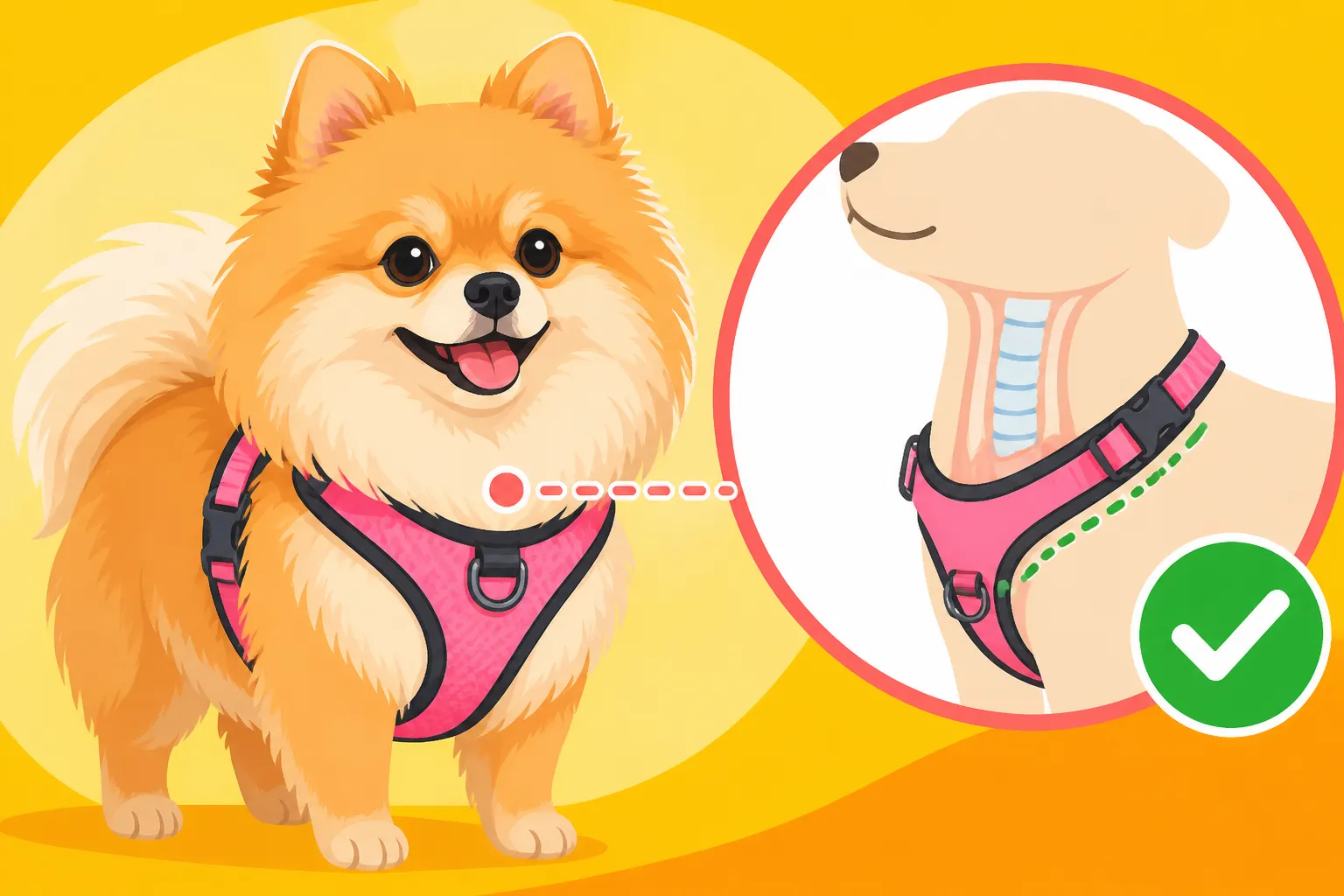
A truly safe harness for a Pomeranian is designed to cradle their body, primarily engaging the chest and back rather than the neck. The key here is the placement of the straps. The main weight-bearing straps should cross over the chest, well below the delicate throat area, and then wrap around the rib cage, distributing any pulling force evenly. This means that if your Pomeranian pulls on the leash, the pressure is absorbed by their sternum and chest muscles, which are much more robust and less susceptible to injury than the trachea.
Furthermore, a good harness will often have a strap that runs along the back, connecting the front and rear sections. This dorsal connection point, where the leash attaches, further ensures that any tension pulls up and back against the shoulder blades and chest, rather than forward into the throat. This is fundamentally different from a collar, where the leash directly pulls on the neck. When considering Harnesses, Ramps and Carriers a Pomeranian Needs, a well-designed harness is at the top of the list for preventing accidental tracheal trauma.
Material Matters: Comfort and Durability
The materials used in a harness are just as important as its design, especially for a breed with a luxurious double coat and sensitive skin like a Pomeranian. You want something that is both gentle and robust. Soft, breathable fabrics like padded mesh, neoprene, or fleece lining are ideal, as they prevent chafing and irritation, particularly in areas where the harness might rub against their delicate fur or skin. Stiff, rough materials can cause discomfort, matting, or even skin sores over time, especially during longer walks or in warmer weather.
Durability is also key. Even though Pomeranians are small, they can be surprisingly strong pullers when excited, and you need a harness that can withstand regular use without fraying or breaking. Look for strong, reinforced stitching, sturdy D-rings (ideally metal, not plastic), and reliable buckles that won't easily come undone. Companies like Chewy offer a wide array of harness options, often with detailed descriptions of materials and construction, making it easier to select a high-quality product that meets these essential criteria. A harness isn't a one-time purchase; it's a piece of safety equipment that needs to stand up to daily life, protecting your Pom day in and day out.
Navigating the Market: Harness Types for Pomeranians
The sheer variety of harnesses available can be overwhelming, but understanding the basic types will help you narrow down the best choice for your Pomeranian's unique needs and, most importantly, their windpipe safety. Not all harnesses offer the same level of protection, and some can still inadvertently put pressure on the throat.
Step-In Harnesses: Convenience vs. Security
Step-in harnesses are popular for their ease of use – no need to lift paws over the head. Your Pomeranian simply steps into two leg holes, and then the harness buckles over their back. For some Pomeranian owners, especially those with Poms that are head-shy or have sensitive ears, this design can be a godsend. They often feature two loops that crisscross over the chest and buckle at the back, meaning much of the pressure is distributed across the chest and ribs.
However, not all step-in harnesses are created equal. Some designs can still sit a little high on the chest, perilously close to the throat, especially if your Pomeranian has a deep chest or tends to pull. It's crucial to ensure the V-shape or horizontal strap across the chest sits well below the sternum and doesn't ride up towards the throat when there's tension on the leash. While convenient, some also find them less secure for "escape artist" Pomeranians who might try to back out of them. Always double-check the fit around the chest and neck area, even with a step-in style, to prevent accidental pressure.
Vest-Style Harnesses: The Ultimate in Distribution
Vest-style harnesses are often considered the gold standard for breeds like Pomeranians with delicate tracheas. These harnesses truly encompass the chest and sometimes part of the back, distributing pressure over a much wider surface area. Imagine it like a comfortable, padded jacket for your dog. The broad fabric straps and panels ensure that any tension from the leash is spread across the entire chest and shoulders, far away from the neck. This broad distribution minimizes pressure points and significantly reduces the risk of tracheal irritation or collapse.
Many vest harnesses are made from soft, breathable mesh or padded fabric, maximizing comfort and preventing chafing. They come in various designs, from those that fully cover the chest to those that use wider, padded straps. The key characteristic is that there's ample material across the chest, creating a barrier between the leash attachment and the windpipe. These are especially beneficial for Pomeranians already showing signs of a sensitive or compromised trachea, as they offer maximum protection. When looking for the very best in windpipe safety, a well-fitting vest-style harness is hard to beat.
Harnesses to Approach with Caution
While the general rule is "harness over collar," some harness designs are still less than ideal for a Pomeranian's delicate windpipe. Any harness that has a prominent horizontal strap running high across the chest, near the base of the throat, should be viewed with caution. Even if it's technically a harness, if a significant portion of the pulling force is directed against that strap in the throat area, it defeats the purpose of moving away from a collar. Sometimes these are simple H-style harnesses where the front strap sits too high.
Similarly, harnesses with very thin straps, even if they are well-placed, might not offer enough pressure distribution. Thin straps, though lightweight, can still dig in and create concentrated pressure points, which can be uncomfortable or even harmful. Front-clip harnesses, while excellent for discouraging pulling by redirecting the dog, need careful consideration for Poms. The front clip means the leash is attached at the dog's chest, which can cause the harness to twist and potentially shift straps closer to the throat, especially if the dog pulls hard or suddenly. Always evaluate how any harness sits and behaves when your Pomeranian moves, pulls, or turns. The goal is complete neck freedom.
Here's a quick comparison of popular harness types for Pomeranians:
| Harness Type | Pros for Pomeranians | Cons for Pomeranians | Best Use Case |
|---|---|---|---|
| Vest-Style | Excellent pressure distribution, maximum comfort, secure | Can be bulky, some Poms dislike full coverage | Most protective, ideal for sensitive tracheas, daily walks |
| Step-In | Easy to put on, no overhead pulling, good chest coverage | Some designs can ride high, less secure for "escape artists" | Head-shy Poms, mild pullers, quick outings |
| H-Style | Lightweight, simple design | Can have straps too close to the throat, less pressure distribution | Only if front strap is demonstrably low on chest, non-pullers |
| Front-Clip | Can reduce pulling, good control | May twist and shift straps to throat, not ideal for delicate Poms | Only for training strong pullers if fit is impeccable |
The Art of a Perfect Fit: Ensuring Your Pomeranian's Comfort and Safety
Even the best-designed harness won't offer proper protection if it doesn't fit correctly. A harness that's too loose can allow your Pomeranian to slip out, while one that's too tight can chafe, restrict movement, and still put pressure in the wrong places. Getting the fit just right is a crucial step in ensuring both safety and comfort.
Measurements: Getting It Right the First Time
Before you even think about purchasing a harness, you need to take accurate measurements of your Pomeranian. This isn't just a recommendation; it's a non-negotiable step. Most harness manufacturers provide sizing charts, but these are only useful if you have your dog's measurements handy. The two critical measurements for a Pomeranian are:
- Chest Girth: This is the most important measurement. Use a soft tape measure and wrap it around the widest part of your Pomeranian's rib cage, just behind their front legs. Make sure the tape is snug but not tight. This measurement determines the primary fit of most harnesses.
- Neck Circumference (optional but helpful): While the goal is to avoid neck pressure, knowing the neck size can help ensure the top straps of a vest-style harness aren't too tight or too loose. Measure around the base of their neck, where a collar would typically sit.
Always measure twice to ensure accuracy, and if your Pomeranian is between sizes, it's often better to go for the larger size if the harness is highly adjustable. Remember, Pomeranians have a thick double coat, so don't press the tape measure too tightly, but make sure you're getting to the actual body, not just the fluff. Many pet supply stores, including Chewy, offer robust sizing guides that often include diagrams to help you measure correctly, reducing the chances of needing a return.
Adjustments: Customizing for Your Unique Pom
Once you have a harness, the real magic happens in the adjustment. Most quality harnesses come with multiple adjustable straps, usually around the chest and sometimes the neck or belly. The general rule of thumb for a proper fit is the "two-finger rule": you should be able to comfortably slide two fingers underneath any strap of the harness, without it being too loose or too snug. If you can fit more than two fingers, it's likely too loose; if you can't fit two fingers, it's too tight.
Pay particular attention to the chest strap. It should sit comfortably across your Pomeranian's sternum, well below their windpipe. When you look at your Pom from the side, the strap should form a clear horizontal line or V-shape below the throat, leaving plenty of space. The harness should not restrict shoulder movement, allowing your Pom to walk and run naturally without rubbing or chafing in their armpits. Observe your Pomeranian walking, trotting, and even sitting in the harness for a few minutes indoors before heading out. Are they comfortable? Is the harness shifting? Does it ride up? Fine-tune the adjustments until it sits perfectly and securely, ensuring that no pressure can inadvertently be applied to their delicate throat. This careful attention to detail is vital, especially since Anesthesia Risk in a Four Pound Pomeranian means we want to avoid any health complications that might require invasive procedures.
Making the Switch: From Collar to Harness Gracefully
Transitioning your Pomeranian from a collar to a harness might take a little patience, especially if they're not used to wearing anything more than a lightweight collar. But with positive reinforcement and a gradual approach, you can make this switch a smooth and stress-free experience for both of you.
Introducing the Harness: A Positive Experience
The first step is to introduce the harness in a positive and non-threatening way. Don't just clip it on and expect your Pomeranian to love it. Start by simply letting them sniff and investigate the harness. Place it on the floor, perhaps with a high-value treat on or near it. Praise them for any interaction, no matter how small. Once they're comfortable with its presence, try draping it over their back for a few seconds, immediately rewarding them with praise and treats.
Gradually increase the time the harness is on their back. Then, try buckling it, but only for a moment, and then take it off again, always pairing the experience with positive reinforcement like treats, gentle petting, or a favorite toy. The goal is to create a positive association, so they view the harness as something good that leads to rewards, rather than something scary or restrictive. For a Pomeranian puppy, starting early can make this process even easier, becoming just another part of their routine, much like the general The First Year Bills on a Pomeranian Puppy that include all their essential gear.
Training Your Pomeranian to Walk on a Harness
Once your Pomeranian is comfortable wearing the harness around the house, it's time to introduce the leash. Attach the leash to the harness while still indoors and let them drag it around for a few minutes under supervision. This helps them get used to the feel of the leash attached to their body without the added pressure of you holding it. Always supervise closely to prevent entanglement.
Next, pick up the leash and practice walking a few steps indoors. Use soft praise and treats to encourage them to walk alongside you. If they resist or freeze, don't drag them. Instead, entice them with a treat to take a few steps, then release the tension and reward them. The idea is to teach them that the harness means gentle guidance, not restraint. For specific techniques, our guide on Teaching a Pomeranian to Walk on a Loose Harness can provide more in-depth strategies for this crucial training phase. Consistency and patience are key; your Pomeranian needs to learn that the harness means fun outings, not an uncomfortable experience.
Lifespan and Care: Maintaining Your Pomeranian's Harness
A harness is a piece of safety equipment, and like any equipment, it requires regular inspection and care to remain effective and safe. Over time, wear and tear can compromise its integrity, making consistent maintenance a crucial part of your Pomeranian's ongoing well-being.
Regular Inspection and Cleaning
Make it a habit to visually inspect your Pomeranian's harness before every walk. Look for any signs of fraying on the straps, loose stitching, or cracks in the buckles. Check the metal D-rings or clips for rust or deformities. Any sign of damage means it's time to consider replacement. Remember, a tiny flaw can become a big problem unexpectedly, especially if your Pomeranian makes a sudden move.
Regular cleaning is also essential, not just for hygiene but also for the longevity of the harness. Dirt, grime, and oils from your dog's coat can build up, potentially causing skin irritation or weakening the fabric over time. Most harnesses can be hand-washed with mild soap and water, or follow the manufacturer's instructions, especially for padded or mesh materials. Allow it to air dry completely before putting it back on your Pomeranian. Keeping the harness clean and in good condition contributes to the overall health and comfort of your dog, preventing issues that might otherwise lead to a vet visit. This is just one aspect of the comprehensive care that contributes to The Eighteen Thousand Dollar Lifetime of a Pomeranian, where preventative measures save money and stress in the long run.
Knowing When to Replace
Just like dog toys or beds, harnesses don't last forever. Even with the best care, general wear and tear from daily use will eventually take their toll. You should be prepared to replace your Pomeranian's harness if you notice any significant degradation:
- Frayed or stretched straps: These can lose their strength and compromise the security of the harness.
- Cracked or broken buckles: A faulty buckle is a direct safety hazard; it could release unexpectedly.
- Rust or bending of metal hardware: Weakened metal can snap or cause injury.
- Loss of padding or structural integrity: If a vest harness loses its shape or padding, it may no longer distribute pressure effectively.
- Growth: For a growing puppy, you'll need to upgrade sizes as they develop. Even adult Pomeranians can fluctuate in weight, so periodically re-measure and check the fit. Whether Weight Gain Worsens a Pomeranian's Windpipe is a valid concern, and a too-tight harness on an overweight dog can negate its protective qualities.
Think of it as routine safety equipment. You wouldn't drive a car with worn-out seatbelts, and you shouldn't rely on a compromised harness for your Pomeranian. Investing in a new, well-fitting harness when needed is a small price to pay for your beloved companion's safety and comfort. Many pet product retailers, like Chewy, make finding replacements straightforward, with a wide selection of durable and safe options readily available. Establishing a The Checkup Schedule a Pomeranian Should Keep with your vet can also provide opportunities to discuss proper equipment and fitting with a professional.
Disclaimer
This article is for general informational purposes only and does not constitute professional advice. Laws, prices and regulations vary by location and change over time. Consult a qualified professional for guidance on your specific situation.