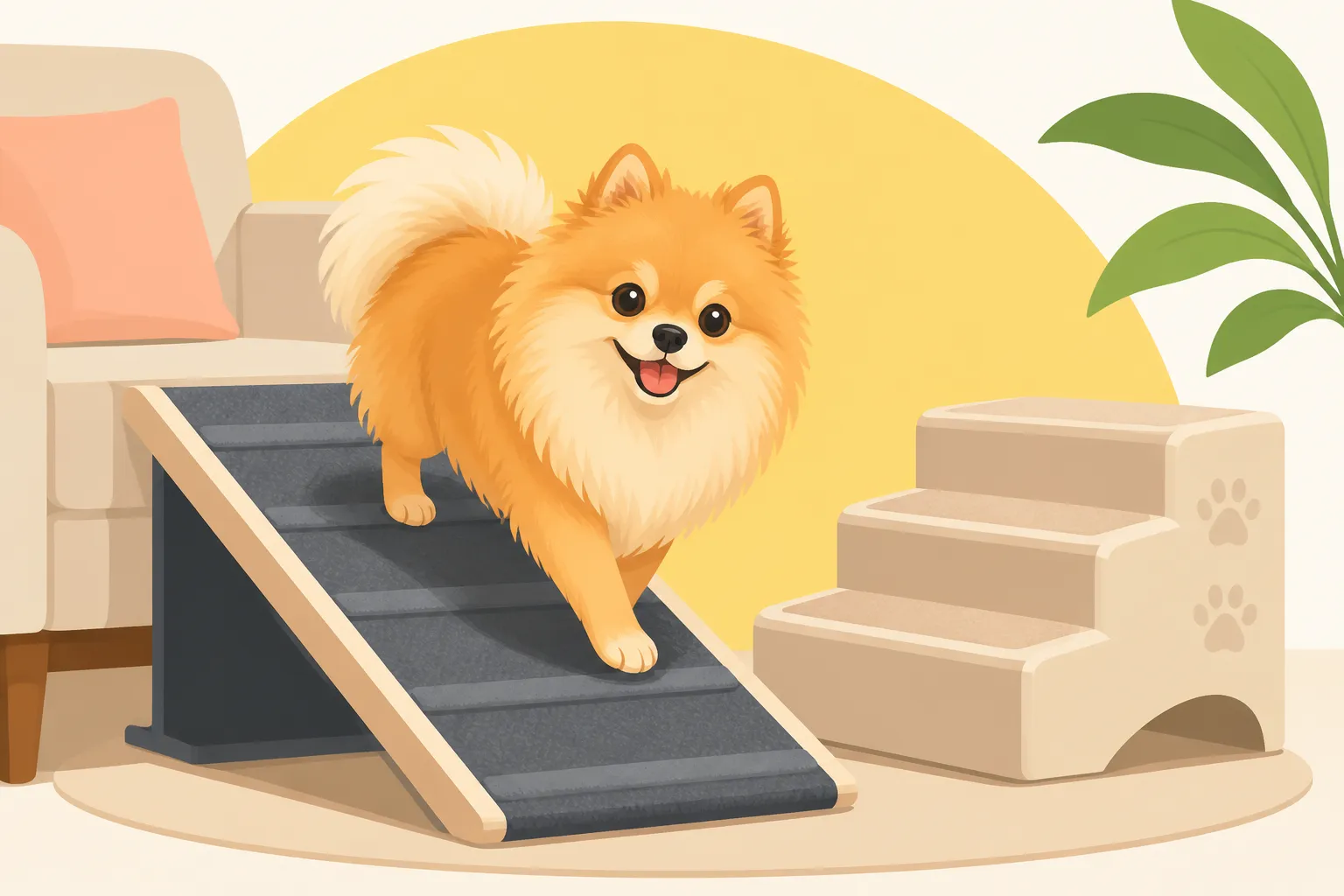
Ramps and Steps Sized for a Pomeranian
It’s a heart-stopping moment many Pomeranian owners know too well: you turn your back for just a second, and your tiny fluffball has launched themselves from the sofa or bed, landing with a jarring thud. This seemingly small leap can actually have huge, long-term consequences for these delicate dogs. This comprehensive guide will walk you through everything you need to know about choosing, placing, and training your Pomeranian to use ramps and steps, ensuring their safety and protecting their precious little bodies from unnecessary strain and injury.
The Critical Need for Ramps and Steps for Pomeranians
Our beloved Pomeranians, with their buoyant personalities and cloud-like coats, often act like they’re invincible. They’ll fearlessly scale mountains of cushions or leap from heights that would make a much larger dog think twice. However, their small stature and delicate bone structure mean these adventurous antics carry significant risks. Investing in appropriate ramps and steps isn't just a luxury; it's a fundamental aspect of responsible Pomeranian ownership that can prevent painful injuries and costly veterinary bills.
Protecting Fragile Joints and Bones
Pomeranians, like many small breeds, are predisposed to certain orthopedic conditions. Their little legs and tiny joints just aren't designed to absorb the repeated impact of jumping off furniture, no matter how low it seems to us. Each jump creates a micro-trauma, contributing to wear and tear over time. Think about the cumulative effect of hundreds or thousands of these jumps throughout their life. It adds up, dramatically.
One of the most common issues we see is Slipping Kneecaps in a Five Pound Pomeranian, medically known as patellar luxation. This is where the kneecap slips out of its groove, causing pain and a characteristic skipping gait. While genetics play a role, environmental factors like constant jumping can exacerbate the condition or even trigger its onset. Similarly, tiny hips and elbow joints can suffer from repetitive strain, leading to early onset arthritis or worsening existing conditions like Arthritis in a Pomeranian at Ten. Protecting these joints from an early age can make a world of difference in your Pomeranian's comfort and mobility as they age.
Preventing Accidental Falls and Injuries
Beyond chronic joint issues, the immediate danger of falls is a huge concern. A Pomeranian can misjudge a landing, slip on a polished floor, or get tangled in bedding, leading to acute injuries that are both terrifying and expensive to treat. We're talking about anything from sprains and fractures to more severe head trauma. Imagine your little one attempting to jump from your bed and landing awkwardly, twisting a tiny leg. Or perhaps they slip off the armrest of a couch and hit their head on the coffee table. These aren't far-fetched scenarios; they happen to Pomeranians every day.
These accidents are particularly concerning if your Pomeranian also suffers from conditions like The Honking Cough of a Pomeranian's Collapsing Windpipe. A sudden fall or impact can easily worsen a delicate trachea, leading to a severe coughing fit or even a respiratory emergency. Even for a perfectly healthy Pomeranian, a broken leg could mean weeks in a cast, restricted movement, and potentially complex surgery, not to mention the emotional toll on both you and your furry friend. Preventing these falls with properly sized ramps and steps is a proactive way to safeguard their immediate well-being.
Supporting Older and Special Needs Pomeranians
As Pomeranians age, their physical capabilities naturally decline. Their vision might not be as sharp, their balance may become less steady, and existing joint conditions can become more pronounced. For senior Poms, simple tasks like getting onto the sofa for cuddles or into bed at night can become challenging, painful, or even impossible without assistance. This is where ramps and steps truly become indispensable. They offer a dignified and pain-free way for your older companion to continue enjoying their favorite spots without the risk of injury or the frustration of being unable to reach them. This is especially true for those wonderful Poms that are Keeping a Pomeranian Going Past Fourteen.
Similarly, Pomeranians with special needs, such as those recovering from surgery, suffering from severe arthritis, or dealing with neurological conditions, benefit immensely from these aids. They help maintain a sense of independence and improve their quality of life. For instance, a Pomeranian recovering from knee surgery for Slipping Kneecaps in a Five Pound Pomeranian simply cannot jump. Ramps provide a controlled, low-impact way for them to move without stressing healing tissues. This foresight can help your Pom enjoy a full and active life for How Long a Well Bred Pomeranian Actually Lives.
Understanding Pomeranian-Specific Ramp Features
When it comes to choosing a ramp for your Pomeranian, it’s not a one-size-fits-all situation. Their unique size, weight, and physical needs demand specific considerations. A ramp designed for a Labrador simply won't work for a five-pound Pom; it would be too steep, too wide, and potentially frightening. We need to think like our Poms to select the perfect pathway.
Length, Incline, and Surface Considerations
The golden rule for Pomeranian ramps is a gentle incline. A longer ramp will naturally have a shallower slope, which is much easier and safer for tiny legs to navigate. For a standard sofa height (around 18-24 inches), you’ll want a ramp that is at least 4-5 feet long. Anything shorter will create an incline that's too steep, requiring more effort and making your Pom feel like they're climbing a mountain rather than strolling up a gentle hill. A steep ramp can also put unnecessary strain on their back and leg joints.
The surface of the ramp is equally crucial. It must provide excellent traction to prevent slips and falls. Look for ramps with carpeted surfaces, rubberized treads, or a sandpaper-like finish. Avoid slick plastic or smooth wood, especially if your Pomeranian has fluffy paw pads or is a bit clumsy. Some ramps even feature textured patterns to enhance grip. Consider also the width; while your Pom is small, a wider ramp can feel more secure and less intimidating, giving them ample room to adjust their footing. Some brands available through retailers like Chewy offer a great variety, often with detailed dimensions to help you choose the right fit for your furniture.
Material and Portability Factors
Ramps come in a variety of materials, each with its own advantages and disadvantages. Plastic ramps are often lightweight and portable, making them great for travel or moving between rooms, but ensure the plastic is sturdy and has a non-slip surface. Wooden ramps tend to be more aesthetically pleasing and can blend better with home decor, offering excellent stability. However, they can be heavier and less portable. Aluminum ramps are another option, typically found in pet car ramps, offering a good balance of strength and lighter weight.
Think about how and where you'll be using the ramp. If it's primarily for a specific piece of furniture, a sturdy, less portable wooden ramp might be ideal. If you plan to use it for car travel, or move it between the bed and the sofa, a lightweight, foldable plastic or aluminum option would be more practical. Many ramps fold or collapse for easy storage, which is a huge plus if you have limited space. Just make sure that when it's extended, it locks securely into place and doesn't wobble, as instability can deter your Pomeranian from using it.
Integrating Ramps with Furniture and Vehicles
The whole point of a ramp is to provide easy access, so it needs to integrate seamlessly with whatever height you’re trying to reach. When choosing a ramp for your sofa or bed, measure the height of the furniture from the floor to the top of the cushion. This measurement will help you determine the ideal length and incline. The ramp should sit flush against the furniture, or slightly underneath, to prevent any gaps that your Pomeranian could step into. Some ramps even have a lip or edge that slides under the cushion for added security.
For vehicle access, the same principles apply. Measure the height of your car's entry point (trunk, back seat, etc.) and look for a ramp that can extend to that height with a comfortable incline. Car ramps are often designed to be foldable and have textured surfaces that are easy to clean, given they'll be exposed to outdoor elements. Consider also the weight capacity; while your Pomeranian is small, a ramp that can handle a bit more weight will be sturdier and less likely to flex under pressure, giving you peace of mind. Ramps really are essential for Ramps for a Pomeranian That Jumps Off the Sofa and for general safety.
What to Look for in Pomeranian-Friendly Steps
While ramps are excellent for a smooth, continuous path, steps offer a different solution, particularly if space is a concern or if your Pomeranian prefers discrete platforms. Like ramps, pet steps need to be specifically designed with small dogs in mind, addressing their unique physical requirements to ensure safety and comfort.
Step Height, Depth, and Width
The dimensions of each individual step are paramount for a Pomeranian. Standard human steps are far too tall, forcing your Pom to leap or struggle, which defeats the purpose. Look for steps where each rise (height) is no more than 4-6 inches. This allows your Pomeranian to comfortably step up without straining their joints or back. The run (depth) of each step should be sufficient for their entire body length, giving them a stable platform to pause if needed. For a Pomeranian, steps with a depth of 6-8 inches are usually adequate, ensuring they don’t feel like they’re teetering on a ledge.
The overall width of the steps should also be considered. While your Pom is tiny, a wider set of steps (say, 12-16 inches) provides greater stability and confidence, allowing them to turn around or adjust their footing without fear of falling off the side. Think about a wiggly puppy or an older dog with less agility; ample space makes all the difference. Many pet stairs come in different configurations, so measure your furniture height carefully to ensure the steps will reach without leaving a dangerous gap.
Stability and Non-Slip Surfaces
Stability is non-negotiable for pet steps. A wobbly or flimsy set of steps will quickly be avoided by your Pomeranian, and worse, could lead to a fall. Look for steps with a wide base, sturdy construction (wood, high-density foam, or robust plastic), and anti-skid pads on the bottom to prevent them from sliding on hard floors. If the steps are lightweight, ensure they are designed not to tip over easily, even if your Pom bounds up or down them with gusto.
Just like with ramps, the surface of each step must offer excellent traction. Carpeted treads, non-slip fabric, or rubberized pads are essential. Smooth, hard plastic or unfinished wood can be incredibly dangerous, especially if your Pomeranian is moving quickly. Some steps feature removable, washable covers, which is a fantastic bonus for hygiene and keeping them looking fresh – because let's face it, Poms are often spoiled and like things clean!
Design and Aesthetics for Your Home
While functionality and safety are top priorities, pet steps can also be an attractive addition to your home. Thankfully, there are many stylish options available today that go beyond basic plastic. You can find wooden steps that match your existing furniture, upholstered steps that blend with your decor, or even modern designs that add a touch of flair. Some pet steps even double as storage units, with hinged tops that reveal compartments for toys, treats, or grooming supplies.
Consider the color and material in relation to your home's aesthetic. A set of elegant wooden steps might look perfect next to your antique dresser, while plush, carpeted steps could be ideal for a cozy bedroom. Remember, these steps will likely be a permanent fixture in your living space, so choose something you’re happy to look at every day. A quick search on sites like Chewy will show you a vast array of options to fit any style.
Introducing and Training Your Pomeranian to Use Them
Even with the perfect ramp or steps, your Pomeranian might not immediately understand what to do. They might be wary of new objects, or simply revert to old jumping habits. Patience, positive reinforcement, and a consistent approach are key to successfully introducing these aids into their lives.
Positive Reinforcement Techniques
The absolute best way to teach your Pomeranian anything, including how to use steps or a ramp, is through positive reinforcement. This means rewarding them for every small step (pun intended!) they take towards using the new equipment. Start by simply placing the ramp or steps near the furniture, but not quite against it. Let your Pom investigate it at their own pace. Offer treats, praise, and gentle encouragement when they sniff it, touch it, or even just walk past it without fear.
Once they seem comfortable with its presence, move it into position. Now, lure them onto the first step or the bottom of the ramp with a high-value treat, like a tiny piece of cooked chicken or a favorite soft chew. Don't push or force them. If they take even one step, reward them lavishly. Repeat this process, gradually luring them further up. Each successful step or section of the ramp earns them a reward. Keep training sessions short and fun, no more than 5-10 minutes, especially for a Pomeranian who may have a How Long a Pomeranian Will Hold Focus limit. The goal is to create a positive association, so they see the ramp or steps as a fun way to get to their favorite spot, not a scary obstacle.
Overcoming Initial Reluctance
It's completely normal for some Pomeranians to be hesitant or even a bit scared of a new ramp or set of steps. They're small, and these large, unfamiliar objects can be intimidating. If your Pom is particularly reluctant, try placing a familiar blanket or one of their favorite toys on the first step or at the base of the ramp. This can make the new object feel more inviting and less foreign. You can also sit on the floor yourself, next to the ramp, and gently call them, offering treats as they approach.
Sometimes, walking up and down the ramp yourself (if possible, or at least mimicking the action with your hand) can demonstrate that it's safe. If they still resist, try picking them up, carrying them up the steps or ramp, placing them on the furniture, and then immediately rewarding them and letting them jump down (if safe, otherwise carry them down too for the first few times). Then try luring them down the ramp first, as going down can sometimes be less intimidating than going up. Remember, patience is a virtue, and forcing the issue will only create a negative association. Keep it light, keep it positive, and they’ll get there. It’s about building trust and confidence.
Consistent Use and Reinforcement
Once your Pomeranian starts using the ramp or steps, consistency is key. Make it the only way they are allowed to access the furniture. If you sometimes let them jump and sometimes expect them to use the ramp, they'll become confused and less likely to consistently use the aid. Every time they go to jump, gently redirect them to the ramp or steps. You might even use a verbal cue like "steps!" or "ramp up!" to help them associate the command with the action.
Continue to offer praise and occasional treats for their first few weeks of consistent use. Over time, the reward will become the access to the comfy sofa or bed itself. It’s also helpful to teach them Why Jumping Off Furniture Wrecks a Pomeranian's Knees by actively preventing jumping whenever you can. This is particularly important if you have a Pomeranian puppy. Starting early can prevent habits that are difficult to break later on and can even safeguard them from the possibility of The Skip in a Pomeranian's Back Leg down the line. Remember, it's a marathon, not a sprint, and soon enough, using their ramp or steps will become second nature to your clever little Pom.
Maximizing the Lifespan and Benefits of Your Pomeranian's Ramps and Steps
Once you've invested in quality ramps and steps and successfully trained your Pomeranian to use them, the job isn't quite over. To ensure they continue to provide maximum benefit and safety for years to come, a little ongoing care and attention is necessary. These are tools that protect your Pomeranian's long-term health, and they deserve proper maintenance.
Regular Inspection and Maintenance
Just like any piece of equipment, pet ramps and steps need periodic checks to ensure they remain safe and functional. Make it a habit to inspect them once a month. Check for any loose screws, wobbly joints, or cracks in the material, especially if they are made of wood or plastic. If you have carpeted steps or a ramp with a fabric surface, check for any tears or frayed edges that could snag your Pomeranian's paw. Over time, the non-slip treads can also wear down, reducing their effectiveness.
For ramps and steps with removable covers, wash them regularly according to the manufacturer's instructions. This keeps them clean and hygienic for your Pom. If they are permanently carpeted, a quick vacuum or spot clean can help. If any part seems damaged or unstable, address it immediately. Tighten screws, re-glue loose fabric, or replace the unit if it’s beyond repair. A broken ramp or step is worse than no ramp at all, as it can create a false sense of security and lead to an accident.
Ensuring Safe Placement and Environment
The location and surrounding environment of your Pomeranian's ramps and steps are just as important as the units themselves. Always ensure they are placed on a stable, non-slip surface. If you have hardwood floors or tiles, consider placing a non-slip rug or mat underneath the base of the ramp or steps to prevent any shifting during use. Never place them in a high-traffic area where people might trip over them or knock them out of position.
Also, be mindful of distractions or hazards around the ramps. Keep toys, blankets, or other obstacles clear of the pathway so your Pomeranian has a clear, unobstructed route. If the ramp or steps are for access to a bed, ensure there isn't a tangled mess of blankets at the top that could cause a misstep. For car ramps, ensure the vehicle is parked on level ground and the ramp is securely positioned before encouraging your Pom to use it. These small details can prevent unforeseen accidents and ensure the tools function as intended.
The Long-Term Health and Comfort Payoff
Ultimately, the effort you put into selecting and maintaining ramps and steps for your Pomeranian will pay dividends in their long-term health and comfort. By mitigating the impact of jumping, you're actively working to prevent or delay the onset of common orthopedic issues like patellar luxation, arthritis, and spinal problems. This means fewer trips to the vet for acute injuries, potentially reducing your overall The Eighteen Thousand Dollar Lifetime of a Pomeranian expenses related to emergency care or long-term medication. Many pet insurance providers, like Healthy Paws, emphasize preventative care, and while they may not cover the cost of ramps themselves, avoiding injuries certainly keeps claims down.
More importantly, it means a higher quality of life for your furry companion. They'll be able to access their favorite spots without pain or struggle, maintaining their independence and joy well into their golden years. This can be especially important for an older Pomeranian, allowing them to continue to snuggle on the sofa and feel connected to their family, even as their mobility declines. Providing these simple aids is a testament to your love and commitment, ensuring your Pomeranian enjoys a comfortable, safe, and happy life by your side. You are, in essence, making life easier for your little companion, helping them navigate their world more safely, which is particularly vital for a delicate breed like ours. It's truly a small investment for a lifetime of well-being.
| Feature / Type | Ideal for Pomeranians | Considerations |
|---|---|---|
| Ramps | Gentle incline, textured non-slip surface, stable width. | Best for continuous access, less impact on joints. Requires more length for a shallow slope. |
| Steps (Stairs) | Low rise (4-6 inches), deep treads (6-8 inches), stable. | Good for smaller spaces, can feel more natural for some dogs. May have slight more impact than a ramp. |
| Materials | Wood, high-density foam, sturdy plastic with grip. | Wood is durable and attractive; foam is lightweight; plastic can be portable. Prioritize stability and grip. |
| Surface | Carpeted, rubberized treads, sandpaper texture. | Essential for traction, prevents slips. Avoid smooth plastic or polished wood. Removable covers are a bonus. |
| Placement | Flush with furniture/bed, on stable floor, clear of clutter. | Measure furniture height carefully. Ensure no gaps or wobbly connections. Avoid high-traffic areas. |
| Training | Positive reinforcement, high-value treats, patience. | Start slow, make it fun. Never force. Consistency is key to breaking old jumping habits. |
Disclaimer
This article is for general informational purposes only and does not constitute professional advice. Laws, prices and regulations vary by location and change over time. Consult a qualified professional for guidance on your specific situation.