How Long a Pomeranian Will Hold Focus
One of the biggest frustrations many Pomeranian parents face is feeling like their little fluffball has the attention span of a gnat when it comes to training. You start a command, they seem engaged for a second, and then a dust bunny floats by, or a car passes outside, and poof – their focus is gone. This guide will dive deep into understanding your Pomeranian's unique ability to concentrate, what influences it, and how you can gently but effectively extend their focus during training and daily interactions to build a stronger bond and a more responsive companion.
Understanding the Pomeranian's Innate Attention Span
Pomeranians, with their lively Spitz heritage, are often described as intelligent, curious, and, let's be honest, a little bit independent. These traits, while endearing, can sometimes make consistent focus a challenge. They weren't bred for hours of sustained work like some herding or retrieving breeds; their ancestors were more about being alert watchdogs and charming companions. This means their natural inclination is often to be aware of everything in their environment, which can easily pull their attention away from a training exercise.
Their intelligence is a double-edged sword here. While they are quick learners and can pick up commands rapidly, that same cleverness can lead to them getting bored or distracted if an exercise isn't stimulating enough, or if they've decided something else is more interesting. It's not usually stubbornness, although it can certainly feel that way when your Pom looks directly at you and then chooses to ignore a cue. Instead, it's often a combination of their curious nature, their short attention cycles, and their inherent desire to make their own decisions. Expecting them to hold a long, drawn-out "stay" in a busy park right from the get-go is setting both of you up for frustration. We need to respect their natural wiring while working to expand their capabilities. Whether Spitz Independence Makes a Pomeranian Difficult is a common concern for many new Pom owners precisely for this reason.
Factors That Play a Role in Your Pomeranian's Focus
Several elements can significantly impact how long your Pomeranian is able to hold their focus. Recognizing these factors is the first step in setting your little one up for success. It's not just about their personality; it's also about their environment, physical state, and your approach.
Age and Developmental Stage
A tiny Pomeranian puppy, full of boundless energy and curiosity, simply doesn't have the same capacity for sustained focus as a more mature adult. Their brains are still developing, they're exploring the world, and everything is a novelty. For these little ones, even a minute or two of focused training is a huge win. As they mature, their attention span naturally lengthens, though it will likely never be on par with breeds known for intense concentration. An older Pomeranian, perhaps past ten, might also see a decrease in focus due to cognitive changes or health issues. It's crucial to tailor your expectations and training sessions to their current life stage.
Environmental Distractions
This is perhaps the biggest culprit when it comes to a wandering Pom mind. A leaf blowing by, a bird chirping, the sound of a distant delivery truck, or even just another family member walking into the room can be enough to derail an entire training session. Pomeranians are highly attuned to their surroundings, and their alert nature means they notice everything. Trying to train in a high-distraction environment before your Pom has a solid grasp of the command in a calm setting is like asking a child to do complex math problems in the middle of a carnival. It's simply too much for their senses to process while also trying to concentrate on your cues.
Training Methods and Reinforcement
The way you approach training profoundly affects your Pomeranian's willingness to focus. If sessions are too long, repetitive, boring, or if the rewards aren't compelling enough, your Pom will quickly tune out. High-value rewards are absolutely key for this breed; a piece of plain kibble might not cut it when competing with the allure of a crunchy leaf. Pomeranians respond incredibly well to positive reinforcement, where good behavior is immediately rewarded. Conversely, harsh corrections or frustration from the trainer can make them anxious or shut down, leading to a complete loss of focus or even a reluctance to engage at all. Consistency and making training feel like a fun game are far more effective. For more on rewards, check out The Reward a Pomeranian Actually Cares About.
Practical Strategies to Lengthen Your Pomeranian's Attention
So, how do we help our little Poms stretch that attention muscle? It's all about strategic planning, patience, and making training incredibly rewarding.
Keep Training Sessions Short and Sweet
This is probably the most important piece of advice for a Pomeranian. Aim for very short, frequent training sessions rather than one long one. Think 2-5 minutes, three to five times a day, especially for puppies. Even adult Poms benefit from this approach. These short bursts keep things fresh, prevent boredom, and end before your Pomeranian has a chance to fully check out. When you finish on a high note, they're more likely to be excited for the next session. This also aligns with general recommendations like those found at BAXTER & Bella, whose positive reinforcement programs often advocate for short, engaging lessons tailored to a dog's natural attention span. Training Session Length for a Pomeranian goes into more detail about how to structure these sessions.
| Age Stage | Recommended Session Length | Focus Tips |
|---|---|---|
| Puppy (8-16 weeks) | 1-2 minutes, 5-8 times/day | Focus on one command, high-value treats, minimal distractions. |
| Adolescent (4-12 months) | 3-5 minutes, 3-5 times/day | Introduce new environments gradually, proof known commands, vary rewards. |
| Adult (1-7 years) | 5-10 minutes, 2-3 times/day | Practice in different locations, add duration/distance to commands. |
| Senior (8+ years) | 2-3 minutes, 2-3 times/day | Gentle review of known commands, comfortable environment, prioritize fun. |
Minimize Distractions Gradually
Start training in the quietest, most familiar part of your home – perhaps your living room with the TV off and no other pets or people around. Once your Pomeranian consistently performs a command there, gradually introduce minor distractions. Maybe turn on some quiet music, or have a family member sit calmly nearby. Slowly, over weeks, you can move to different rooms, then to the backyard, and eventually to slightly busier public spaces. The key is gradual exposure. If you notice your Pom losing focus, you've moved too quickly. Go back a step.
Utilize High-Value Rewards
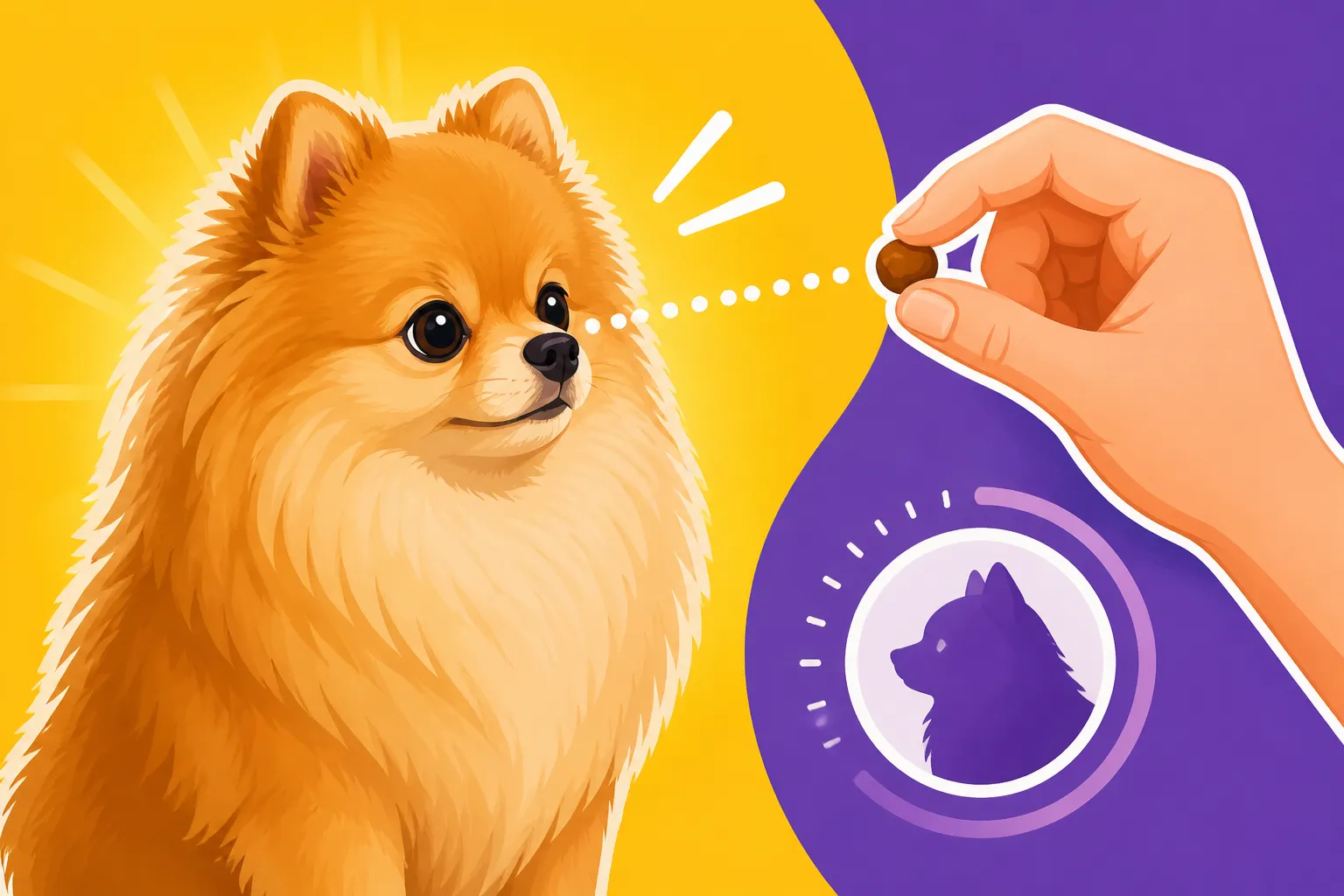
Pomeranians are highly motivated by food, praise, and sometimes toys. Find out what your specific Pom goes absolutely wild for. Is it tiny pieces of cooked chicken? Cheese? A squeaky toy? Save these "jackpot" rewards specifically for training, so they retain their allure. The higher the value of the reward, the more your Pomeranian will be willing to focus and work for it, especially when faced with distractions. Keep these treats small – remember your Pom's tiny mouth and waistline! You can find a fantastic array of tiny, high-value training treats suitable for small breeds on platforms like Amazon.
Engage Their Brain with Enrichment
A mentally stimulated Pomeranian is often a more focused Pomeranian. Incorporate puzzle toys, scent games, and short bursts of interactive play into their daily routine. These activities tap into their natural intelligence and hunting instincts, helping to burn mental energy and improve their ability to concentrate. A Pom that's bored or under-stimulated is more likely to create their own (often undesirable) entertainment, and will have a harder time focusing on you. For some great ideas, check out Puzzle Toys Small Enough for a Pomeranian and Games That Tire a Pomeranian Indoors. Even simple games like "find the treat" hidden under a cup can be incredibly engaging for them.
Be Consistent and Predictable
Dogs thrive on routine and clear communication. Use the same command words and hand signals consistently. Everyone in the household should be on the same page. If one person uses "sit" and another uses "bottom," it's confusing and will break your Pomeranian's focus. Regular, predictable training times also help them get into the right mindset. Establishing The Routine a Pomeranian Needs Every Day can make a huge difference in their overall behavior and responsiveness.
Knowing When Your Pomeranian Has Checked Out
It's just as important to recognize when your Pomeranian has reached their limit as it is to encourage them to focus. Pushing a dog past their attention span can lead to frustration for both of you, souring their association with training.
Signs of Disengagement
Watch for subtle cues that your Pom is losing interest:
- Looking away: Their eyes wander from yours or the training object.
- Sniffing the ground: A common displacement behavior, signaling they're trying to cope with stress or boredom.
- Licking lips or yawning: Again, these can be stress signals in a training context.
- Scratching or shaking off: Another way they might try to relieve tension.
- Reluctance to respond: A command they usually know well is ignored or performed slowly.
- Increased barking or whining: Could be a sign of frustration or over-stimulation.
If you see these signs, it's time to end the session on a positive note. Ask for one easy command they know perfectly, reward them generously, and then put away the training tools. This ensures they still feel successful and happy, rather than ending on a note of failure or frustration. Remember, Whether Corrections Backfire on a Pomeranian is a real concern; you want to build confidence, not fear.
Building Positive Associations with Focus
Think of every training session as an opportunity to build a positive relationship around learning. Keep your energy upbeat, your voice cheerful, and your movements fluid. If you're stressed or frustrated, your Pomeranian will pick up on it, and it will impact their ability to focus. Make learning fun, and they'll be more eager to engage with you, even if only for a few minutes at a time. The goal isn't to create a robot, but a happy, confident dog who enjoys working with you. Over time, those short bursts of focus will naturally extend, and you'll find your little Pom becomes an incredibly attentive and responsive companion.
This article is for general informational purposes only and does not constitute professional advice. Laws, prices and regulations vary by location and change over time. Consult a qualified professional for guidance on your specific situation.