Walking a Pomeranian on a Fragile Windpipe
For many Pomeranian parents, the joy of a daily walk can be tinged with anxiety, especially if your little companion has a delicate windpipe. The distinct "honking" cough of tracheal collapse is a real and unsettling concern, making you wonder if you're doing more harm than good with every outing. This comprehensive guide is here to alleviate those worries, detailing exactly how to ensure your Pomeranian can enjoy safe, comfortable walks even with a fragile windpipe.
Understanding Your Pomeranian's Fragile Windpipe
Before we dive into the nitty-gritty of safe walking, it’s essential to truly grasp what we're up against when we talk about a fragile windpipe in a Pomeranian. These tiny dogs, for all their fluff and feisty spirit, often come with a structural vulnerability that can make even simple activities like walking a challenge. It's not just a "cough"; it's a condition that requires mindful management.
What Tracheal Collapse Really Means for Your Pom
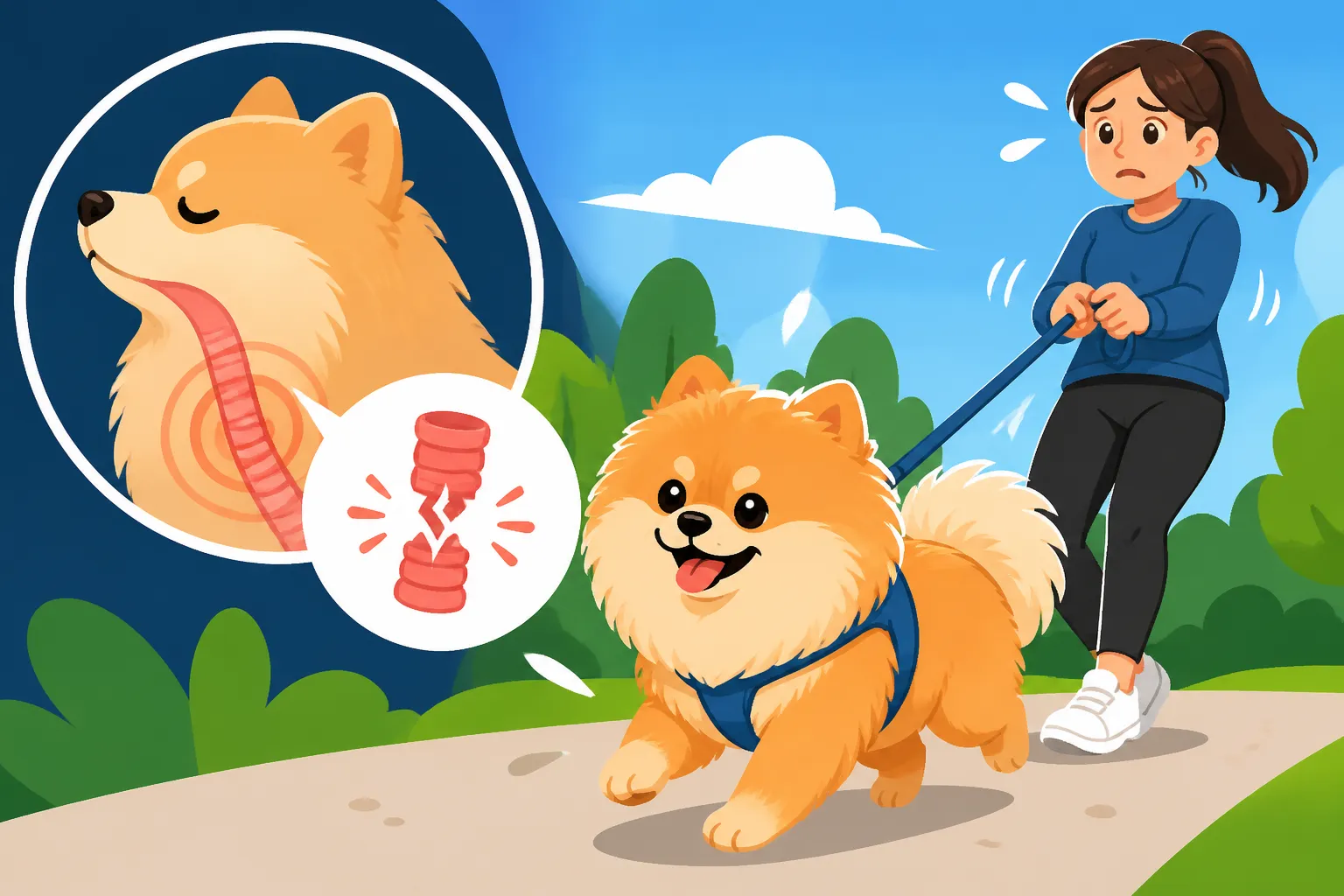
Tracheal collapse is a progressive, degenerative disease that affects the rings of cartilage that make up the trachea, or windpipe. In a healthy dog, these rings are strong and C-shaped, providing a sturdy tube for air to pass through. In Poms prone to this condition, these rings weaken and flatten, eventually losing their rigidity. Imagine a vacuum cleaner hose that's stiff and round collapsing inward like a pancake. When these rings collapse, the airway narrows, making it difficult for your dog to breathe. This can happen anywhere along the trachea, but it's often more pronounced in the cervical (neck) area, which is precisely where a collar would sit and exert pressure. The severity can range from mild, intermittent coughing to severe respiratory distress, impacting their quality of life significantly. It's a condition that can worsen over time, and even seemingly minor stress or excitement can trigger an episode.
The Telltale Signs of a Struggling Windpipe
Recognizing the signs of tracheal collapse is crucial for any Pomeranian owner. The most common and often first symptom you'll notice is a dry, harsh, honking cough, which many describe as sounding like a goose. This cough might be worse during excitement, exercise, or when your dog pulls on their leash. You might also observe labored breathing, where they seem to be working harder to get air in and out. If the collapse is more severe, you could see blue-tinged gums or tongue, known as cyanosis, which is an emergency situation indicating a lack of oxygen. Other signs include a reduced tolerance for exercise, rapid breathing (tachypnea), gagging, or even fainting in extreme cases. Owners often notice these symptoms escalating during periods of heat, humidity, or stress. It's not always obvious, though; sometimes, a dog might just seem less energetic or reluctant to play, which can be easy to dismiss as just getting older or being lazy, but it could be their way of avoiding activities that trigger their cough.
How a Veterinarian Diagnoses the Condition
Diagnosing tracheal collapse usually begins with a thorough physical examination where your vet might gently palpate your Pomeranian's neck, which can sometimes elicit the characteristic cough. They'll listen to your dog's heart and lungs, ruling out other conditions that might cause similar symptoms, like heart disease or kennel cough. A common diagnostic tool is radiography (X-rays) taken at specific points during both inhalation and exhalation. This dynamic imaging allows the vet to see if the trachea narrows when your dog breathes. Fluoroscopy, which is a real-time X-ray, can provide an even clearer picture of the trachea collapsing in motion. In some cases, endoscopy, where a tiny camera is inserted down the trachea, offers the most definitive diagnosis by allowing direct visualization of the tracheal rings and the extent of the collapse. Your vet might also recommend blood tests to check overall health and rule out other systemic issues. It's important to be honest and detailed about your observations at home, including The Sound a Pomeranian Makes When Its Trachea Collapses and when these episodes occur, as this information is invaluable to your vet.
Why Traditional Collars Are a No-Go
When you're dealing with a condition as delicate as a collapsing trachea, certain traditional dog accessories designed for other breeds become outright dangerous for your Pomeranian. The conventional neck collar, a staple for most dogs, is one such item that needs to be permanently retired from your Pom's wardrobe. Understanding why it poses such a threat is key to making the switch to safer alternatives.
The Pressure Point: How a Collar Aggravates the Trachea
Think about the anatomy of your Pomeranian's neck. The trachea, or windpipe, runs right through it, just beneath the skin and muscle. A standard collar, by its very design, encircles this area. Every time your dog pulls, even gently, or the leash is accidentally tugged, that pressure is directly applied to the delicate tracheal rings. For a Pomeranian with a healthy trachea, this might cause minor discomfort or a momentary cough. For a dog with a weakened, collapsing trachea, however, it's like squeezing a soft drinking straw. The external pressure can force the already compromised cartilage to flatten even further, significantly narrowing the airway and exacerbating the symptoms. This isn't just uncomfortable; it can be incredibly painful and frightening for your dog, leading to severe coughing fits, gagging, and difficulty breathing. It becomes a direct trigger for the very episodes you're trying to prevent.
The Danger of Sudden Pulls and Leaps
It's not just sustained pulling that's a problem; sudden, unexpected movements can be even more dangerous. Imagine your Pomeranian spots a squirrel and lunges forward excitedly. Or perhaps they're startled by a loud noise and instinctively pull back on the leash. Even if you're generally a careful walker, these moments are almost impossible to entirely prevent. When a Pom on a collar experiences a sudden jerk, the force concentrated on that small area of the neck can be intense. This sharp, momentary compression can inflict acute trauma on the trachea, potentially causing an immediate and severe collapse. Beyond the immediate respiratory distress, repeated trauma from these sudden movements can accelerate the progression of the disease, making the trachea even weaker over time. This is Why a Collar Threatens a Pomeranian's Windpipe more than just an inconvenience; it's a serious health risk that can lead to emergency vet visits.
Misconceptions About Collar Safety for Small Breeds
Many owners mistakenly believe that because their Pomeranian is small and "doesn't pull much," a collar is fine. Or they might think that a very thin, lightweight collar is somehow safer. Unfortunately, size doesn't negate the fundamental anatomical risk. A small dog's trachea is still a delicate structure, and the relative pressure exerted by any collar can be just as damaging, if not more so, than on a larger dog with a more robust windpipe. Another misconception is that if the collar is "loose enough," it won't cause problems. While an overly tight collar is certainly worse, even a loosely fitted one can still shift and apply pressure during a sudden movement or if your dog tries to back out of it. The crucial point is the location of the pressure. No matter how light or loose, a collar sits directly over the windpipe. The only truly safe option for a Pomeranian with a fragile trachea is to completely remove any pressure from this vulnerable area.
The Indispensable Role of a Proper Harness
Once you understand the profound risks associated with collars for Poms with tracheal issues, the pivot to a harness becomes not just a recommendation, but a necessity. However, not all harnesses are created equal, especially when your primary goal is protecting a delicate windpipe. Choosing the right one is paramount.
Identifying a Trachea-Safe Harness for Your Pomeranian
A truly trachea-safe harness for a Pomeranian needs to distribute pressure across the chest and shoulders, completely bypassing the neck. The key design feature to look for is a "Y" or "V" shape at the front, where the straps meet below the throat and rest on the sternum. This ensures that any pulling force is absorbed by the stronger bone structure of the chest, rather than pressing against the soft tissue of the trachea. Avoid any harness that has a horizontal strap running across the throat, even if it seems to sit low. When your dog pulls, that horizontal strap can ride up and press directly on the windpipe.
Look for harnesses made of soft, non-abrasive materials that won't chafe your Pom's delicate skin or thick coat. Neoprene, soft mesh, or padded nylon are good choices. Ensure the harness is well-constructed with durable buckles and D-rings for the leash attachment. For a Pomeranian, a harness specifically designed for small breeds is often best, as it will be proportioned correctly for their tiny bodies. Brands like Ruffwear, Puppia, and Gooby often have styles that fit these criteria. Some owners also find comfort in a vest-style harness, provided the neck opening is generous and sits well below the throat. Harnesses Fitted for a Pomeranian's Windpipe are becoming more common as awareness of tracheal issues grows.
Step-by-Step: Fitting Your Pomeranian for a Harness
Even the best harness won't be effective if it's not fitted correctly. A poor fit can still allow straps to ride up onto the neck or create uncomfortable pressure points.
- Measure Accurately: Before buying, measure your Pomeranian's chest girth (the widest part behind their front legs) and their neck circumference (where a collar would normally sit, though the harness won't touch here). Compare these measurements to the manufacturer's size chart. When in doubt, size up if your Pom is between sizes, as you can often adjust it down.
- Putting it On: Most trachea-safe harnesses will either step-in (your dog steps into the leg holes) or clip around the neck and chest. Follow the manufacturer's instructions carefully.
- The Two-Finger Rule: Once the harness is on, you should be able to comfortably slide two fingers flat underneath all straps, especially around the chest and armpits. If you can't, it's too tight. If you can fit more than two fingers, it might be too loose and could allow your Pom to slip out or cause chafing.
- Check the Neckline: This is the most critical part for a Pomeranian with a fragile windpipe. The top strap of the harness, or the part that goes around the neck, must sit well below the base of their throat, resting on their chest bone (sternum). If it rides up towards their throat even when they pull gently, it's not the right harness or it's not adjusted correctly.
- Observe Movement: Let your Pom walk around the house with the harness on. Watch for any rubbing, restricted movement, or signs of discomfort. It shouldn't impede their natural gait or cause their front legs to rub.
- Test the Slip Factor: Gently try to pull the harness over your Pom's head from the back. If they can easily back out, it's too loose. Adjust accordingly.
A properly fitted harness will feel secure but not restrictive, allowing your Pomeranian to breathe and move freely, giving you peace of mind on walks.
Popular Harness Styles and Their Pros & Cons
Let's look at some common harness types and how they stack up for Poms with tracheal issues:
| Harness Type | Pros | Cons | Best For |
|---|---|---|---|
| Vest Harness | Wide straps distribute pressure broadly, often covers more body area. Snug fit prevents slipping. | Can be warm in hot weather. Some designs might have neck openings that ride too high for extreme cases. | Poms needing maximum chest support; those prone to slipping out of harnesses. |
| Y-Front Harness | Design keeps straps off the trachea. Lightweight and breathable. Allows full range of shoulder motion. | Requires careful fitting to ensure the "Y" sits correctly on the sternum. Some minimalists can back out. | Most Poms with tracheal collapse, especially those active in warmer climates. |
| Step-In Harness | Easy to put on, no need to go over the head (good for Poms who dislike head-gear). Often Y-front design. | Can be tricky if your Pom doesn't lift paws easily. Might not be as secure as a vest for some Houdini Poms. | Poms sensitive to things going over their head; owners wanting quick on/off. |
| Front-Clip Harness | Leash attachment on the chest helps reduce pulling and redirects dog. Still uses Y-front design. | Can tangle under the front legs if not fitted perfectly. May not be ideal for extreme pulling Poms. | Poms learning loose-leash walking, or those who pull moderately. |
When selecting a harness from somewhere like Amazon, read reviews carefully, especially those from owners of small dogs or dogs with similar conditions. Pay attention to how the harness sits on the dog's chest and how reviewers describe its stability. Ultimately, the "best" harness is the one that fits your Pomeranian comfortably, securely, and keeps all pressure away from their vulnerable windpipe. You might even consider a couple of options to see what your Pom prefers. What a Properly Fitted Pomeranian Harness Costs can vary, but it's an investment in your dog's health.
Mastering the Leash and Walking Technique
Even with the perfect trachea-safe harness, your leash handling technique plays a monumental role in protecting your Pomeranian's fragile windpipe. It's not just about the gear; it's about how you use it. Developing a gentle, consistent walking style can make all the difference in ensuring their comfort and safety.
The Art of Loose-Leash Walking for Poms
Loose-leash walking isn't just a polite behavior; for a Pomeranian with a delicate trachea, it's a health imperative. The goal is for the leash to remain slack, forming a "U" shape, without any tension. This means your dog is walking with you, not pulling against you. Start by teaching your Pom to walk beside you in a quiet, distraction-free environment, like your living room or backyard. Use high-value treats to reward them every few steps they take calmly by your side with a loose leash. The moment they pull, stop dead in your tracks. Wait for the leash to slacken, even for a second, then immediately mark that moment with a verbal cue like "Yes!" or a clicker, and reward them before continuing. This teaches them that pulling gets them nowhere, but a loose leash keeps the walk going and earns treats.
Keep training sessions short and positive, ending on a high note before your Pom gets tired or frustrated. For a small breed like a Pomeranian, several five-minute sessions throughout the day are far more effective than one long, tedious one. The idea is to build muscle memory for walking politely without putting any strain on their chest, which could indirectly cause them to struggle with breathing. Teaching a Pomeranian to Walk on a Loose Harness is a gradual process, but absolutely vital for their well-being.
Avoiding Sudden Jerks and Excited Lunges
Pomeranians are often bundles of energy and curiosity, and it's natural for them to get excited by new sights, sounds, or smells. However, for a Pom with a fragile windpipe, a sudden lunge after a bird or a sharp pull when startled can be as damaging on a harness as it would be on a collar, albeit with less direct tracheal pressure. The sudden motion itself can still cause the trachea to compress or irritate it.
To minimize jerks:
- Anticipate: Pay close attention to your surroundings. See that other dog approaching? Notice the rustling in the bushes? Prepare yourself to gently redirect your Pom's attention before they lunge. Use a cheerful voice to call their name, offer a treat, or change direction.
- Short Leash, Not Tight Leash: Keep a relatively short leash, allowing just enough slack for comfortable movement, but not so much that your Pom can gain full momentum before hitting the end. This gives you more control and reduces the force of any sudden stop.
- Be a Shock Absorber: Keep your arm slightly bent at the elbow and your hand close to your body. If your Pom does lunge, let your arm act as a natural shock absorber, rather than having a rigid arm that transmits the full force of the jerk.
- Redirect, Don't Punish: If your Pom starts to get over-excited, gently steer them away from the stimulus. Never yank the leash or use harsh corrections; this only increases stress and can make them more likely to react fearfully or frantically.
Short, Frequent Walks vs. Long Strolls
The duration and frequency of walks are crucial considerations for a Pomeranian with tracheal issues. While they might love exploring, their compromised respiratory system can't handle the same sustained effort as a healthy dog.
- Focus on Frequency, Not Length: Instead of one long walk, aim for several shorter, more frequent outings throughout the day. For example, three 10-15 minute walks are often much better than one 30-45 minute walk. This allows them to relieve themselves, get some sensory stimulation, and stretch their legs without overexerting their lungs.
- Listen to Your Dog: Your Pomeranian will tell you when they've had enough. Watch for increased panting, lagging behind, or the onset of their characteristic cough. The moment you see these signs, it's time to head home. Don't push them, even if you're only halfway through your planned route.
- Vary the Environment: While shorter walks are key, varying where you walk can keep things interesting. Explore different scents, sights, and sounds, but always prioritize safety and avoid overly stimulating or crowded areas initially.
- Indoor Alternatives: On days when the weather is bad, or your Pom isn't feeling up to it, indoor exercise is a great alternative. Engaging them with puzzle toys, fetch in the hallway, or short training sessions can provide mental and physical stimulation without the respiratory strain of a long outdoor walk. Whether a Pomeranian can walk far depends entirely on their individual condition and the specific day.
By combining the right equipment with thoughtful leash handling and mindful walk planning, you can help your Pomeranian enjoy their outdoor adventures safely and comfortably.
Environmental Considerations for Safe Walks
Even with the best harness and perfected leash technique, external environmental factors can significantly impact a Pomeranian with a fragile windpipe. Being aware of and managing these elements is a critical part of ensuring their safety and comfort during walks.
Temperature Extremes and Their Impact on Breathing
Extreme temperatures, whether hot or cold, can put added strain on a Pomeranian's respiratory system, especially one already compromised by tracheal collapse.
- Heat and Humidity: High temperatures combined with humidity make it much harder for dogs to cool themselves down. Pomeranians, with their double coats, are already prone to overheating. When a dog tries to pant more vigorously to cool off, this increased airflow can irritate and further collapse a delicate trachea, leading to a vicious cycle of coughing and struggle.
- Management: During summer months or in warm climates, restrict walks to the very early morning or late evening when temperatures are coolest. Stick to shaded routes. Always carry water and offer it frequently. Watch for excessive panting, drooling, or a glazed look in their eyes, which are signs of overheating. Consider indoor activities or short trips outside solely for potty breaks during peak heat. A cooling vest could also be beneficial, but ensure it doesn't add bulk or pressure to their chest.
- Cold and Dry Air: While less commonly associated with tracheal issues, very cold and dry air can also be irritating to the respiratory tract, potentially triggering coughing fits. The sudden change from warm indoor air to crisp outdoor air can be a shock to sensitive airways.
- Management: In colder seasons, consider a light dog coat to help maintain body temperature, but ensure it's not restrictive around the neck or chest. Keep walks shorter. If your Pom starts coughing from the cold air, it's a clear sign to head indoors. Some Poms might benefit from a humidifier in the home to keep their airways moist, especially if they spend a lot of time indoors during winter.
Identifying and Avoiding Environmental Triggers
Beyond temperature, various elements in the environment can trigger or worsen tracheal collapse symptoms. Being a proactive detective can help you keep your Pom comfortable.
- Allergens and Irritants: Dust, pollen, strong perfumes, cleaning chemicals, air fresheners, and even smoke from fireplaces or barbecues can all irritate a sensitive respiratory system.
- Management: Avoid walking near construction sites, heavily gardened areas during peak pollen seasons, or places where people are smoking. If you're sensitive to strong smells, your Pom likely is too. Be mindful of products used in your home that might be irritating.
- Pollution: Car exhaust and other urban air pollutants are harsh on anyone's lungs, but especially so for a dog with a compromised windpipe.
- Management: If possible, choose walking routes that are away from busy streets and heavy traffic. Parks or quieter residential areas are preferable to main roads.
- Stress and Excitement: While not an environmental trigger in the traditional sense, high-stress situations or extreme excitement can physiologically impact your Pomeranian's breathing and heart rate, leading to an increased likelihood of a coughing spell.
- Management: Avoid crowded dog parks or areas with unpredictable off-leash dogs. Try to walk during quieter times of day. If your Pom gets very excited by certain stimuli (like other dogs or people), work on positive reinforcement training to help them remain calm (more on this later).
Creating a Low-Stress Walking Environment
The ideal walking environment for a Pomeranian with a fragile windpipe is one that is calm, predictable, and free from sudden shocks or overstimulation.
- Quiet Routes: Seek out serene paths, local walking trails during off-peak hours, or less-trafficked residential streets. The less your Pom has to react to, the better.
- Consistent Routine: Dogs thrive on routine. Walking at the same times each day can help your Pomeranian feel secure and less anxious.
- Positive Associations: Make walks a positive experience. Bring their favorite treats, offer praise, and keep the tone upbeat and reassuring. If your Pom associates walks with stress or discomfort, they may resist going out.
- Respect Their Pace: Never rush your Pomeranian. Allow them to sniff and explore at their own speed. Forcing them to keep up a brisk pace can quickly lead to respiratory distress. This isn't a race; it's an enjoyable outing.
- "Emergency" Plan: Always have a plan for unexpected situations. Know the closest vet emergency clinic. Consider carrying a small amount of sugar syrup (like Karo syrup) if your Pom is also prone to Blood Sugar Crashes in a Pomeranian Puppy or simply as a quick energy boost in case of distress, though this is primarily for hypoglycemia. Being prepared reduces your own stress, which in turn helps your Pom.
By proactively managing these environmental factors, you can significantly enhance your Pomeranian's safety and enjoyment on their daily adventures.
When to Modify or Halt Walks
Understanding the cues your Pomeranian gives you is paramount when managing their walks, especially with a fragile windpipe. They can't tell you in words if they're struggling, so it's up to you to be their advocate and interpret their body language and symptoms.
Recognizing Signs of Distress During a Walk
Your Pomeranian will give you clear signals if they're not coping well during a walk. Learning to recognize these immediately and acting upon them can prevent a mild cough from escalating into a serious respiratory crisis.
- Increased or Persistent Coughing: This is the most obvious sign. If the characteristic "honking" cough becomes more frequent, louder, or doesn't subside after a few seconds of rest, it's a red flag. The Honking Cough of a Pomeranian's Collapsing Windpipe isn't just a quirky Pom sound; it's a cry for help when it's prolonged.
- Labored or Rapid Breathing: Watch their chest and abdomen. Are they heaving or struggling to inhale or exhale? Is their breathing much faster than usual, even after a brief rest? Open-mouth panting that seems excessive for the activity level or temperature is also a concern.
- Blue-tinged Gums or Tongue (Cyanosis): This is an emergency. If your Pom's gums or tongue appear bluish or purplish, it means they are not getting enough oxygen. Stop the walk immediately, carry them to a cool, quiet spot, and seek veterinary attention at once. This could indicate a severe tracheal collapse episode.
- Lethargy or Lagging Behind: If your normally eager Pom suddenly slows down, lags behind, or seems generally uninterested in continuing the walk, it could be a sign of exhaustion or respiratory strain. They might be trying to conserve energy.
- Gagging or Retching: This often accompanies severe coughing fits as their body tries to clear the irritated airway. It looks similar to trying to vomit but usually produces no stomach contents.
- Fainting or Collapse: In extreme cases, a lack of oxygen can lead to syncope (fainting) or complete collapse. If this happens, it's a medical emergency.
The moment you observe any of these signs, stop the walk immediately. Carry your Pomeranian if needed, and get them to a calm, cool, and quiet environment. Offer water. Assess their breathing. If the signs are severe or do not improve quickly, contact your veterinarian right away.
The Importance of Rest Days and Indoor Exercise
Just like humans, dogs need rest. For a Pomeranian with a fragile windpipe, rest days are not a luxury but a necessity to prevent overexertion and allow their system to recover.
- Scheduled Downtime: Don't feel obligated to walk your Pom every single day, especially if they've had a particularly active day or showed any signs of struggle during a previous walk. Building in a rest day or two each week can make a significant difference.
- Listen to the Weather: If it's too hot, too cold, too humid, or very windy, consider it an automatic indoor day. The external elements can make breathing more challenging.
- Engaging Indoor Activities: Rest days don't mean boredom. There are plenty of ways to provide mental and light physical stimulation indoors:
- Puzzle Toys: These are fantastic for mental enrichment, making your Pom "work" for treats. Look for small-sized puzzles that dispense kibble or small, soft treats.
- Indoor Fetch/Chase: In a safe, open space, a short game of fetch with a soft, lightweight toy can burn off some energy without intense respiratory strain. Keep it brief and watch for panting.
- Training Sessions: Five-minute sessions practicing tricks like "sit," "stay," "spin," or "wave" can be mentally stimulating and reinforcing. BAXTER & Bella, for example, offers online training resources that can provide structured indoor activity ideas.
- Hide-and-Seek: Hide treats or toys around the house for your Pom to sniff out. This engages their powerful sense of smell and provides gentle exercise.
- Prioritize Mental Stimulation: On days when physical activity needs to be minimal, focus on mental games. A tired mind is often just as content as a tired body.
Consulting Your Vet on Exercise Limitations
Your veterinarian is your most important partner in managing your Pomeranian's tracheal collapse. They can provide tailored advice on exercise limitations based on the severity of their condition.
- Regular Check-ups: Ensure your Pom has regular vet check-ups, especially if their tracheal condition is known. This allows your vet to monitor its progression and adjust recommendations.
- Grading the Collapse: Your vet can grade the severity of the tracheal collapse (usually Grade I to Grade IV). This grading helps determine the appropriate level of activity. A dog with Grade I might tolerate more than one with Grade III. Grading a Pomeranian's Tracheal Collapse is a key step in understanding their limits.
- Personalized Exercise Plan: Ask your vet for a specific exercise plan. They might recommend a certain maximum duration for walks, a pace to maintain, or specific environmental conditions to avoid.
- Discuss Medications: If your Pom is on medication for their trachea (like cough suppressants or anti-inflammatories), ask how these medications might influence their exercise tolerance.
- Symptoms to Watch For: Reconfirm with your vet the specific symptoms that should prompt you to stop a walk or seek emergency care. Having a clear understanding helps you act decisively.
- Consider Referral: In some cases, your vet might refer you to a veterinary internal medicine specialist or a veterinary cardiologist if they suspect concurrent heart issues (which can mimic or worsen respiratory signs) or if the tracheal collapse is severe and requires more advanced management options like stenting.
By being vigilant, providing appropriate alternatives, and maintaining open communication with your vet, you can ensure your Pomeranian gets the right amount of activity without compromising their delicate health.
Beyond the Walk: Supporting Tracheal Health
Managing a Pomeranian with a fragile windpipe extends far beyond just how you walk them. A holistic approach that includes diet, environmental adjustments at home, and sometimes medical intervention can significantly improve their quality of life and help Managing a Pomeranian's Windpipe Without Surgery.
Weight Management: A Crucial Factor
One of the most impactful things you can do for a Pomeranian with tracheal collapse is to keep them at a healthy, lean weight. Even a few extra ounces can make a huge difference to their breathing.
- The Vicious Cycle: Overweight dogs have more fat deposits around their neck and chest, which can further compress the trachea and put additional strain on the respiratory system. The extra weight also means more effort is required for every movement, increasing panting and the likelihood of a coughing episode. This creates a difficult cycle: they cough more when they're overweight, so they're less active, which makes them gain more weight.
- Finding the Ideal Weight: Your vet can help you determine your Pomeranian's ideal body condition score. You should be able to easily feel their ribs without pressing hard, and they should have a discernible waist when viewed from above. Their tummy should tuck up slightly when viewed from the side. Don't be fooled by their abundant coat; it can hide a lot!
- Dietary Adjustments: This is the primary way to manage weight.
- Portion Control: Measure out your Pom's food precisely. Don't just eyeball it. Even a small breed food bowl can hold too much. How Much Food a Pomeranian Eats in a Month is surprisingly little, so every calorie counts.
- High-Quality, Small Breed Formula: Choose a high-quality kibble designed for small breeds. These typically have appropriate calorie densities and nutrient balances. Whether a Pomeranian Needs Small Breed Formula is a good question for your vet.
- Limit Treats: Treats should make up no more than 10% of their daily caloric intake. Opt for low-calorie options like small pieces of cooked carrot, green beans, or specialized dental chews.
- No Free-Feeding: Leaving food down all day can lead to overeating. Stick to scheduled meal times.
- Consistent Exercise (within limits): While walks might be restricted, consistent, appropriate exercise helps burn calories. This ties back to the short, frequent walks and indoor activities discussed earlier.
- Regular Weigh-ins: Weigh your Pomeranian regularly, ideally weekly at home, especially if they are on a weight loss program. Even small changes in ounces matter for these tiny dogs. This directly addresses Whether Weight Gain Worsens a Pomeranian's Windpipe.
Home Environment Adjustments for Respiratory Health
Making your home a haven for your Pom's lungs can greatly reduce triggers and improve their overall comfort.
- Humidification: Dry air can be irritating to airways. Using a humidifier in the rooms your Pomeranian spends the most time in can help keep their mucous membranes moist and less prone to irritation, especially during dry winter months.
- Air Quality:
- No Smoking: Absolutely no smoking of any kind (cigarettes, cigars, vaping, cannabis) in the house or anywhere near your Pomeranian. Secondhand smoke is a severe respiratory irritant.
- Avoid Strong Scents: Steer clear of aerosol sprays, strong air fresheners, scented candles, incense, and harsh chemical cleaners. These can all trigger coughing fits. Opt for unscented products or natural alternatives.
- Cleanliness: Regular vacuuming (with a HEPA filter vacuum if possible) and dusting can reduce airborne allergens like dust mites and pet dander, which can exacerbate respiratory issues.
- Air Purifiers: Consider investing in a good quality air purifier with a HEPA filter for the rooms your Pomeranian frequents.
- Reduce Excitement Triggers: Poms often cough when excited. Try to keep their home environment calm.
- Doorbell Training: Train your Pom that the doorbell doesn't mean frantic barking and jumping. Reward calm behavior when the doorbell rings, or use a silent doorbell alert on your phone. The Doorbell and the Pomeranian Response is a common problem.
- Manage Visitor Greetings: Have visitors ignore your Pom until they are calm, or put your Pom in a quiet room with a puzzle toy until the initial excitement settles.
- Easy Access: Ensure your Pomeranian can comfortably access their favorite spots without strenuous jumping, which can put pressure on the chest and neck. Provide ramps or steps to beds and sofas.
Medications and Supplements for Tracheal Support
While lifestyle changes are crucial, some Pomeranians with tracheal collapse will also benefit from medical management prescribed by a veterinarian.
- Cough Suppressants: These are often prescribed to reduce the frequency and severity of coughing, which in turn helps prevent further irritation and damage to the trachea. Monthly Cough Medication for a Pomeranian can be a regular part of their care.
- Anti-inflammatories: Steroids (like prednisone) can be used, particularly during acute flare-ups, to reduce inflammation and swelling in the airways.
- Bronchodilators: These medications help to open up the airways, making breathing easier. They are often used in conjunction with cough suppressants.
- Sedatives/Anxiolytics: If anxiety or extreme excitement consistently triggers coughing fits, a mild sedative might be considered for specific situations (e.g., vet visits, car rides, or during noisy events).
- Antibiotics: If a secondary bacterial infection develops due to chronic inflammation, antibiotics may be prescribed.
- Supplements: While not a cure, some supplements might offer supportive benefits:
- Glucosamine/Chondroitin/MSM: These joint supplements are primarily for cartilage health and might offer some minimal benefit for tracheal cartilage, but their primary use is for conditions like Slipping Kneecaps in a Five Pound Pomeranian. Always discuss with your vet before administering any supplements.
- Omega-3 Fatty Acids: Fish oil supplements can reduce general inflammation throughout the body, including potentially in the airways.
- Regular Re-evaluation: It's vital to have regular follow-up appointments with your vet to assess the effectiveness of any medications and adjust dosages as needed. Never self-medicate or change your Pomeranian's medication regimen without veterinary guidance.
By addressing weight, optimizing their home environment, and working closely with your vet on appropriate medications, you can provide comprehensive care that significantly enhances your Pomeranian's comfort and quality of life, even with a fragile windpipe.
Training for a Better Walking Experience
Training isn't just for puppies learning basic commands; for a Pomeranian with a fragile windpipe, specific training can be a lifeline, empowering them to navigate walks more safely and comfortably. It's about teaching them coping mechanisms and good manners that directly support their respiratory health.
Positive Reinforcement for Calm Leash Manners
Building calm leash manners is paramount. Instead of reacting to pulling, you want to proactively reward the desired behavior. This is where positive reinforcement shines, especially with intelligent and sometimes sensitive breeds like Pomeranians.
- Reward Proximity: Start by rewarding your Pom simply for being near you on a loose leash. Every step they take without pulling, click or say "Yes!" and offer a tiny, high-value treat. Your walking pace might be excruciatingly slow at first, but consistency is key.
- Change Direction: If your Pomeranian starts to forge ahead, without any verbal correction, simply pivot and walk in the opposite direction. They'll quickly learn that pulling takes them further from what they want to investigate, while sticking by you keeps the adventure going. The moment they turn and catch up with a loose leash, reward them.
- The "Watch Me" Command: Teach your Pom to make eye contact on command. This is an invaluable tool for diverting attention from potential triggers (other dogs, loud noises) before they can react with a lunge or bark. Start in a quiet environment, hold a treat near your eye, say "Watch Me," and reward when they look at you. Gradually increase distractions.
- Focus on the Journey, Not Just the Destination: Poms love to sniff. Incorporate structured sniffing breaks into your walk. When the leash is loose, say "Go sniff!" and let them explore for a few seconds, then call them back to a loose-leash heel with a reward. This balances their natural instincts with your training goals.
- Consistency is Key: Everyone who walks your Pomeranian must use the same techniques. Inconsistent training will confuse your dog and make progress difficult. Consider enrolling in a positive reinforcement obedience class, or using online resources like BAXTER & Bella, which offers structured lessons and support for various training challenges.
Teaching Your Pomeranian to "Settle" on Command
An overexcited Pomeranian is a coughing Pomeranian. Teaching a "settle" or "relax" command can be incredibly beneficial for managing their respiratory health, especially during walks or when encountering stimulating environments.
- Start at Home: Begin teaching "settle" in a calm, quiet environment. Have your Pom on a leash (even indoors) and a mat or bed.
- Lure and Reward: The moment your dog lies down on the mat, even if it's just a sigh and a flop, mark and reward. Repeat this many times.
- Add the Cue: Once they are offering the behavior consistently, add your verbal cue ("Settle" or "Relax") just as they begin to lie down.
- Extend Duration: Gradually increase the amount of time they have to remain settled before getting a reward. Start with a few seconds, then build up to a minute or two.
- Introduce Distractions: Once they are solid at home, slowly introduce mild distractions (e.g., a family member walking by, a quiet television) while practicing "settle."
- On Walks: When you encounter a situation that might overstimulate your Pom (e.g., another dog in the distance), stop, ask for a "settle," and reward them for remaining calm, even if it's just sitting and watching without barking or pulling. This provides them with an alternative behavior to their excited reactions.
Desensitization to Outdoor Stimuli
Pomeranians often react strongly to outdoor stimuli – other dogs, people, sounds – which can lead to barking, lunging, and consequently, coughing. Desensitization helps them become less reactive by gradually exposing them to these triggers in a controlled, positive way.
- Identify Triggers: Make a list of everything that causes your Pom to react strongly on walks.
- Controlled Exposure: The key is to expose your Pom to these triggers at a distance where they don't react. This is called their "threshold." For example, if another dog 50 feet away causes them to bark, start practicing at 75-100 feet.
- Positive Association: The moment your Pom notices the trigger (e.g., another dog) but remains calm, immediately mark that moment with a "Yes!" and give a super high-value treat. The goal is for them to associate the presence of the trigger with good things happening.
- Gradual Approach: Over many sessions, slowly decrease the distance to the trigger, always staying below their threshold. If they react, you've moved too close, too fast – increase the distance for the next session.
- Vary Triggers: Practice with different types of triggers. One day it might be other dogs, the next day, children on bikes.
- Short Sessions: Keep these sessions brief and positive. End before your Pom gets stressed or reactive.
- "Look at That" Game: Teach your Pom to look at a trigger and then look back at you for a treat. This helps them acknowledge the trigger without reacting negatively.
By investing time in these training techniques, you're not just creating a well-behaved dog; you're actively safeguarding your Pomeranian's delicate windpipe and ensuring their walks are enjoyable and healthy.
Disclaimer
This article is for general informational purposes only and does not constitute professional advice. Laws, prices and regulations vary by location and change over time. Consult a qualified professional for guidance on your specific situation.