Grading a Pomeranian’s Tracheal Collapse
Hearing your beloved Pomeranian suddenly make a honking cough, struggling for breath, is one of the most terrifying experiences a pet parent can face. It’s an instant jolt of panic, watching their tiny body heave, wondering if they’re getting enough air. This distressing sound is often a sign of tracheal collapse, a common issue in our small, fluffy companions. Understanding how veterinarians grade the severity of this condition is crucial for managing it effectively and giving your furry friend the best possible quality of life. This guide will walk you through the specifics of tracheal collapse grading, what each stage means for your Pomeranian, and what you can expect in terms of care.
Understanding Tracheal Collapse in Pomeranians
Tracheal collapse is a progressive respiratory condition that affects the windpipe, or trachea, which is a tube made of cartilage rings that carries air to and from the lungs. Imagine a vacuum cleaner hose: it has rigid rings to keep it open. Now, imagine those rings weakening and flattening. That's essentially what happens with tracheal collapse.
What is Tracheal Collapse?
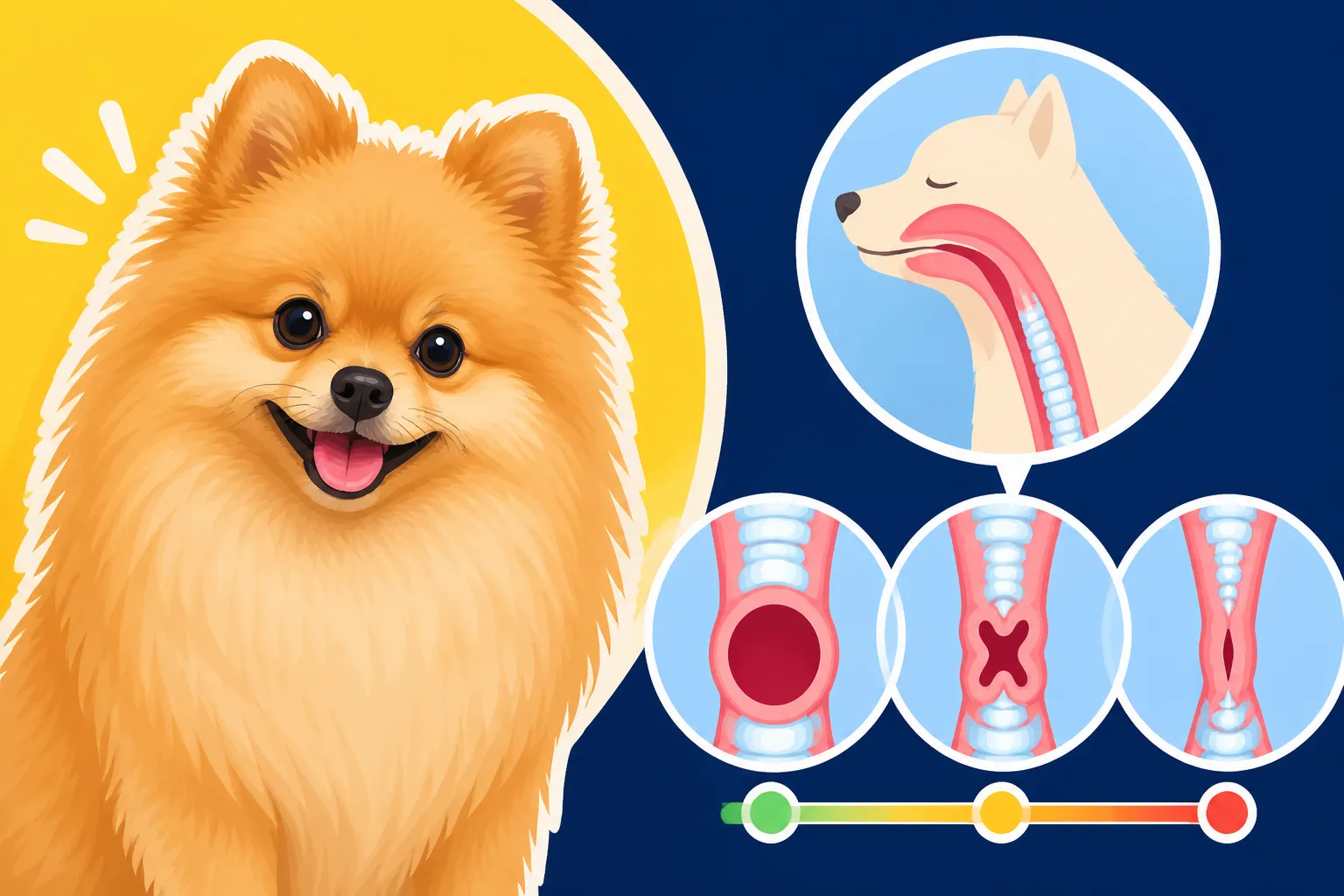
The trachea is supported by C-shaped cartilage rings that maintain its open, cylindrical shape. In dogs with tracheal collapse, these rings weaken and lose their rigidity, causing the trachea to flatten, particularly during inhalation or exhalation. This flattening obstructs the airway, making it difficult for air to pass through freely. It’s not just a partial collapse; in severe cases, the entire tube can flatten, leading to significant respiratory distress. This structural weakness can occur at any point along the trachea, from the neck (cervical trachea) to inside the chest cavity (thoracic trachea), and sometimes even the smaller bronchi.
Why Pomeranians Are Prone
Pomeranians, along with other toy breeds like Yorkshire Terriers, Chihuahuas, and Pugs, are genetically predisposed to tracheal collapse. It's often considered a congenital condition, meaning they are born with inherently weaker tracheal cartilage. While symptoms might not appear until later in life, the structural weakness is usually present from a young age. This breed-specific vulnerability is one of those harsh realities of owning a tiny, adorable Pom. It’s not something you did wrong; it’s often just part of their genetic makeup. The condition typically manifests in middle-aged or older dogs, but it can start much earlier, sometimes even in puppies.
Common Triggers for Collapse Episodes
Even with an inherently weak trachea, certain factors can trigger or worsen episodes of tracheal collapse. Excitement is a huge one. When your Pomeranian gets overly excited, barks furiously, or pulls against their collar during a walk, the increased air pressure and strain can cause the already weakened trachea to temporarily collapse. Environmental irritants like smoke, dust, allergens, or even strong perfumes can also irritate the airway and lead to coughing fits that exacerbate the collapse. Obesity plays a significant role too, as excess weight puts added pressure on the respiratory system. Even humidity and certain weather conditions can affect a Pomeranian's breathing, making them more susceptible to collapse episodes. This is why many owners quickly learn that a traditional collar is a no-go; instead, a properly fitted harness is essential to protect their fragile windpipe.
The Grading System for Tracheal Collapse
When your veterinarian diagnoses tracheal collapse, they'll typically assign a grade from I to IV. This grading system helps determine the severity of the collapse and guides the most appropriate course of treatment. It's a way for vets to communicate the extent of the problem and for you, as an owner, to understand the path forward.
Grade 1: Mild Collapse
At Grade I, the collapse is very subtle, often involving only about 25% narrowing of the tracheal lumen (the inner space of the windpipe). The tracheal rings are still mostly intact, but there might be a slight laxity or weakening. Your Pomeranian might exhibit only occasional, dry, honking coughs, perhaps after exercise or excitement, and these episodes are usually short-lived and resolve on their own. They might seem perfectly fine most of the time, leading many owners to dismiss these initial coughs as a one-off or just "allergies." However, even at this stage, it's a warning sign that needs attention. The internal lining of the trachea might also show some mild inflammation, indicating irritation.
Grade 2: Moderate Collapse
Grade II represents a more noticeable collapse, with about 50% of the tracheal lumen narrowed. The cartilage rings are more significantly flattened, and the tissue lining the trachea becomes more irritated and inflamed. At this stage, your Pomeranian will likely have more frequent and persistent coughing episodes, often described as the classic "honking cough." These coughs can be triggered by excitement, eating or drinking, or even just changes in activity. You might start noticing mild respiratory distress, especially during physical exertion or stress. They may also begin to show signs of exercise intolerance, becoming winded more easily than before. This is where many owners realize something serious is going on and seek veterinary help.
Grade 3: Significant Collapse
With Grade III, the tracheal lumen is significantly compromised, narrowing by about 75%. The cartilage rings are quite flattened, almost C-shaped becoming U-shaped, and the tracheal membrane is severely slack, often nearly touching the bottom of the flattened trachea. Your Pomeranian will experience chronic, debilitating coughing, even at rest. Respiratory distress becomes more pronounced, with visible effort to breathe, especially on inspiration. You might observe them trying to extend their neck, or their gums might appear bluish (cyanotic) during severe coughing fits due to a lack of oxygen. This stage often requires consistent medication to manage symptoms and prevent life-threatening crises. It’s a very concerning point where a Pomeranian's quality of life can be greatly impacted, and they may need emergency care if they cannot breathe.
Grade 4: Severe Collapse
Grade IV is the most severe form, where the trachea is almost completely flattened, narrowing by 90% or more, often becoming nearly a slit. The tracheal rings are almost completely flat, and the dorsal membrane is severely flaccid, sometimes even inverted, completely obstructing airflow. This is a medical emergency. Your Pomeranian will be in severe respiratory distress, struggling to breathe with their mouth open, possibly panting heavily, and their gums will be distinctly blue or purple. They might collapse due to oxygen deprivation. This stage often requires immediate veterinary intervention, including oxygen therapy, sedatives, and potentially more aggressive treatments to save their life. The prognosis for long-term management at this stage can be very challenging, often leading to discussions about advanced surgical options like tracheal stents, though these come with their own set of risks, especially for a small dog like a Pomeranian.
Here's a quick summary table of the different grades of tracheal collapse:
| Grade | Tracheal Narrowing | Cartilage Rings | Symptoms Observed | Treatment Focus |
|---|---|---|---|---|
| Grade I | ~25% | Mildly weakened | Occasional dry, honking cough post-excitement/exercise | Lifestyle modification, mild anti-inflammatories |
| Grade II | ~50% | Moderately flattened | More frequent coughs, mild respiratory distress with exertion | Medications (cough suppressants, anti-inflammatories), harness use |
| Grade III | ~75% | Significantly flattened | Chronic coughing even at rest, visible respiratory distress, occasional cyanosis | Consistent medications, careful management, potential emergency care |
| Grade IV | >90% (near complete) | Severely flattened, often inverted | Severe respiratory distress, blue gums, collapse, life-threatening | Emergency intervention (oxygen, sedatives), advanced surgical consideration |
Symptoms Associated with Each Grade
Recognizing the signs of tracheal collapse is the first step in getting your Pomeranian the help they need. The symptoms often progress with the severity of the collapse, moving from subtle hints to unmistakable emergencies.
Early Warning Signs
In the early stages, typically Grade I and sometimes Grade II, the signs can be quite subtle and easily dismissed. You might hear an occasional, dry, harsh cough, often described as sounding like a goose honking. This cough might only happen when your Pomeranian gets overly excited, when they wake up, or after taking a drink of water too quickly. It's often transient, meaning it comes and goes. Owners might think their dog just has a "tickle" in their throat or has swallowed something incorrectly. However, these seemingly innocuous coughs are crucial warning signs. You might also notice a slight decrease in their energy levels or a reluctance to engage in strenuous play, though this can be very mild and easy to overlook.
Worsening Symptoms to Watch For
As tracheal collapse progresses to Grade II and especially Grade III, the symptoms become more pronounced and concerning. The honking cough becomes more frequent and persistent. It might occur several times a day, even when your Pomeranian is calm. You'll likely notice them struggling more to breathe, with visible effort in their chest and abdomen. They might extend their neck forward, trying to straighten their airway to get more air. Exercise intolerance becomes more evident; a walk that was once easy now leaves them panting heavily and needing frequent breaks. They might become easily winded, even with minimal activity. During particularly bad coughing fits, their tongue or gums might momentarily appear bluish, indicating a lack of oxygen. This is a critical point where consistent veterinary management is essential, and understanding how to manage a Pomeranian's windpipe without surgery becomes a primary focus.
Emergency Indicators and What to Do
Grade IV tracheal collapse presents as a medical emergency. If your Pomeranian is experiencing severe respiratory distress – gasping for breath, panting relentlessly with their mouth open, struggling to inhale, or exhibiting a consistently blue or purple tongue and gums – you need to seek immediate veterinary care. They might collapse due to oxygen deprivation. This is a life-threatening situation requiring rapid intervention, often involving oxygen therapy, sedatives to calm their breathing, and possibly emergency medications to reduce swelling and open the airway. Knowing the signs that indicate your Pomeranian's cough is an emergency can quite literally be a lifesaver. Keep the number for your emergency vet handy, and if you have pet insurance like Healthy Paws, be sure you understand their emergency claim process.
Diagnosis and Confirmation of Tracheal Collapse
When you notice those tell-tale honking coughs or your Pomeranian struggles to breathe, a trip to the vet is in order. Diagnosing tracheal collapse involves a combination of physical examination and specialized imaging.
Initial Veterinary Examination
Your veterinarian will start with a thorough physical examination. They’ll listen to your Pomeranian’s heart and lungs (auscultation) and often gently palpate (feel) their trachea. Sometimes, just running a finger along the windpipe can trigger the characteristic honking cough, which is a strong indicator of collapse. The vet will also observe your Pomeranian's breathing pattern, looking for increased effort or any signs of distress. They'll also check for other conditions that might mimic or contribute to respiratory issues, such as heart disease or kennel cough. It’s a careful process, as the goal is to differentiate tracheal collapse from other potential issues that cause similar symptoms.
Imaging Techniques
To confirm tracheal collapse and assess its severity, imaging is often necessary.
- X-rays (Radiographs): Standard chest X-rays can sometimes show a narrowing of the trachea. However, X-rays are static images, meaning they capture the trachea at one moment in time (either during inhalation or exhalation). Since the collapse is dynamic – it worsens with breathing – a single X-ray might miss it or underestimate its severity. They are, however, very useful for ruling out other causes of coughing, like an enlarged heart or lung disease, which can sometimes appear similar.
- Fluoroscopy: This is a much more effective diagnostic tool. Fluoroscopy provides a real-time, moving X-ray video of the trachea as your Pomeranian breathes. This allows the vet to observe the dynamic collapse as it happens, seeing exactly where and how much the trachea narrows during both inhalation and exhalation. It provides a much clearer picture of the extent and location of the collapse, which is vital for accurate grading. It helps to differentiate the sound a Pomeranian makes when its trachea collapses from other respiratory noises.
Endoscopy: Direct Visualization
For the most definitive diagnosis and precise grading, a veterinarian might recommend a tracheoscopy or bronchoscopy. This procedure involves passing a tiny, flexible camera (endoscope) down your Pomeranian's windpipe while they are under light anesthesia. This allows the vet to directly visualize the inside of the trachea, assess the integrity of the cartilage rings, the degree of collapse, and the condition of the tracheal membrane and lining. It provides an undeniable view of the collapse and is the gold standard for accurately grading the severity (Grade I to IV) and planning any potential surgical interventions. Given the anesthesia risk in a four pound Pomeranian, pre-anesthetic bloodwork and careful monitoring are always crucial.
Management and Treatment Approaches Based on Grade
Once your Pomeranian’s tracheal collapse has been graded, your vet will work with you to develop a management plan. Treatment varies significantly depending on the severity of the condition, aiming to improve breathing and enhance quality of life.
Conservative Management for Mild Cases
For Pomeranians with Grade I or II tracheal collapse, conservative medical management is typically the first line of defense. This approach focuses on reducing irritation and inflammation, suppressing coughs, and minimizing triggers.
- Medications: This often includes anti-inflammatory drugs (like corticosteroids) to reduce swelling in the airways, cough suppressants to break the cycle of coughing and irritation, and sometimes bronchodilators to help open up the lower airways. Antibiotics might be prescribed if a secondary infection is present. Regular use of cough suppressants for a Pomeranian can significantly improve their comfort.
- Lifestyle Modifications: Weight management is crucial; even a few extra ounces can put strain on a small Pomeranian's respiratory system, and managing weight can help ease the burden on their windpipe. Switching from a collar to a harness is non-negotiable to prevent pressure on the neck. Avoiding environmental irritants like smoke, strong aerosols, or excessive dust is also vital. Keeping your home calm and reducing excitement can also help minimize coughing fits.
- Supplements: Some veterinarians might suggest supplements like glucosamine and chondroitin, which are thought to support cartilage health, although their direct impact on tracheal collapse is not definitively proven. This is an area where proactive care and prevention can make a real difference in the long run.
Surgical Interventions for Severe Cases
When conservative management is no longer sufficient, especially for Grade III or IV tracheal collapse, or if your Pomeranian's quality of life is severely compromised, surgical options might be considered.
- Tracheal Ring Placement (External Rings): This involves placing small, artificial rings around the outside of the collapsed portion of the trachea to provide external support and keep the airway open. This is typically used for collapse in the cervical (neck) portion of the trachea. The surgery is delicate and requires a highly skilled veterinary surgeon.
- Intraluminal Stent Placement: For collapse within the thoracic (chest) portion of the trachea or for more diffuse collapse, a stent can be placed inside the trachea. This self-expanding mesh tube acts as an internal scaffold, holding the airway open. While effective for many, stents can migrate, fracture, or cause granulation tissue to form, leading to new issues. It's a complex procedure, and while a stent can dramatically improve breathing, it's not without potential complications. You might find yourself wondering if a stent fixes a Pomeranian's windpipe permanently, and the answer is usually that it manages it, but is not a complete cure. Post-surgical care and ongoing medication are usually required.
Emergency Care During a Crisis
For severe respiratory distress or collapse (Grade IV), emergency intervention is critical. This usually involves:
- Oxygen Therapy: Providing supplemental oxygen helps improve blood oxygen levels.
- Sedation: Often, a Pomeranian in respiratory crisis is extremely anxious, which worsens their breathing. Sedatives help calm them down, reducing panting and making it easier for them to breathe.
- Rapid-Acting Medications: Injections of corticosteroids or bronchodilators can quickly reduce inflammation and open airways.
- Cooling Measures: Overheating can exacerbate respiratory distress, so cooling pads or fans might be used.
When facing an emergency, knowing about emergency fees when a Pomeranian cannot breathe can help you be mentally prepared for the costs, and having pet insurance like Healthy Paws can be a huge relief in these stressful situations.
Living with a Pomeranian with Tracheal Collapse
Having a Pomeranian with tracheal collapse means a commitment to ongoing care and vigilance. It’s about managing symptoms, preventing crises, and ensuring they live as comfortably as possible.
Prognosis and Long-Term Outlook by Grade
The prognosis for Pomeranians with tracheal collapse varies greatly with the grade of the condition.
- Grade I and II: With consistent conservative management, many Pomeranians can live a relatively normal and comfortable life for years. Regular vet check-ups, medication adjustments, and strict adherence to lifestyle modifications are key.
- Grade III: This stage requires more intensive management. While medical therapy can still be effective, the risk of respiratory crises is higher. The prognosis depends heavily on the individual dog's response to medication and owner compliance. Surgical intervention may offer a better quality of life in some cases, but it's not a cure and requires careful post-operative care.
- Grade IV: This is the most challenging stage. The prognosis is guarded, even with aggressive medical and surgical interventions. Quality of life can be severely impacted, and decisions often involve careful consideration of palliative care and the dog's comfort. Even with pet insurance like Healthy Paws, the long-term cost of managing severe tracheal collapse can be significant.
Preventative Measures and Daily Care
While you can't change your Pomeranian's genetics, you can implement strategies to manage their condition and prevent it from worsening.
- Weight Management: This cannot be stressed enough. Keeping your Pomeranian at a healthy, lean weight is perhaps the single most impactful thing you can do to ease the burden on their trachea. Discuss diet and exercise with your vet to create a tailored plan. Whether weight gain worsens a Pomeranian's windpipe is unequivocally yes.
- Harness Use: Always use a harness, never a collar, to prevent any pressure on the delicate windpipe. There are many comfortable harness options specifically designed for toy breeds.
- Environmental Control: Minimize exposure to smoke (including secondhand smoke), dust, allergens, and strong chemicals. Use air purifiers if necessary.
- Stress Reduction: Keep your Pomeranian calm. High excitement can trigger coughing fits. Teach them to settle and use positive reinforcement.
- Regular Vet Check-ups: Consistent veterinary care is essential for monitoring the condition, adjusting medications, and catching any secondary issues early.
Ensuring a High Quality of Life
Living with a Pomeranian with tracheal collapse requires patience and dedication, but it doesn't mean they can't have a joyful life. Focus on their comfort and happiness. Provide soft bedding, ensure easy access to water, and manage their diet carefully. Consider enriching their environment with puzzle toys or gentle indoor games that don't overexert them. Create a peaceful home where they feel secure. For many, managing a Pomeranian's windpipe without surgery is a viable and successful path, offering a good quality of life for years. It's about being their advocate and making choices that support their unique needs every single day.
Disclaimer
The information provided in this article is for general informational purposes only and is not intended as a substitute for professional veterinary advice. Always consult with a qualified veterinarian for any health concerns or before making any decisions related to your Pomeranian's health and treatment plan.