Keeping a Pomeranian Safe From Birds of Prey
One of the most terrifying fears for any small dog owner, especially those of us with tiny, fluffy Pomeranians, is the thought of a bird of prey swooping down and snatching our beloved companion. It’s a very real and heartbreaking danger that many people don't consider until they hear a chilling story or have a close call themselves. This guide is here to walk you through understanding why your precious Pomeranian is at risk and, more importantly, equip you with practical, actionable strategies to keep them safe from these aerial predators.
Understanding the Threat: Why Pomeranians Are Vulnerable
It's easy to think of our Pomeranians as fierce little lions, full of bravado and confidence. And they are! But their small stature, coupled with some innate behaviors, makes them unfortunately vulnerable to various birds of prey that might see them as an easy meal. This isn't just about remote wilderness areas; these birds live and hunt in suburban and even urban environments.
Their Small Size and Weight
Let's be honest, a Pomeranian is a tiny dog. Most fall into the three to seven-pound range, making them remarkably light. This miniature size, while part of their charm, is also their biggest disadvantage when it comes to predators like hawks, owls, and eagles. These birds are built to spot and snatch small mammals from above, and a fluffy, prancing Pomeranian can easily be mistaken for a rabbit or squirrel, especially when seen from a height. A bird that weighs even a few pounds, like a Red-tailed Hawk, can easily carry off an animal of comparable weight, sometimes even more. Imagine seeing a majestic hawk soaring overhead – it's beautiful, but for a Pomeranian owner, it can send shivers down your spine because you know your little one could be seen as prey.
Instinctive Prey Drive
Despite their domesticated lives, Pomeranians, like all dogs, retain some of their ancestral hunting instincts. They love to chase squirrels, birds, and anything that scurries. This natural curiosity and prey drive can inadvertently lead them into dangerous situations. A Pomeranian happily chasing a butterfly or a leaf that blows across the yard might not be paying attention to the skies above, making them less aware of an approaching threat. Even if they have Whether a Pomeranian Has Prey Drive, that instinct doesn't always distinguish between harmless small animals and potentially dangerous larger ones. They might be so focused on the chase that they completely miss the shadow descending from above until it's too late. It's a cruel irony that their playful nature can put them in such peril.
Common Birds of Prey in Residential Areas
It's crucial to know your local threats. This isn't just a concern for those living next to dense forests or mountains. Many birds of prey have adapted incredibly well to living alongside humans, finding ample food sources in our parks, open fields, and even backyards.
- Hawks: Red-tailed Hawks, Cooper's Hawks, and Sharp-shinned Hawks are quite common. Red-tails are larger and often seen soaring high, while Cooper's and Sharp-shinned Hawks are smaller, faster, and more agile, often hunting smaller birds but will absolutely take a small dog if the opportunity arises. I've seen a Cooper's Hawk perched on my neighbor's fence, eyeing their bird feeder, and it's a stark reminder that they're always around.
- Owls: Great Horned Owls are a major concern, especially at dawn, dusk, and throughout the night. They are powerful, silent hunters, and their size and strength mean they can easily carry off a Pomeranian. Barred Owls are also a possibility in some areas. Their nocturnal habits mean your dog might be at risk even during what you perceive as "safe" evening potty breaks.
- Eagles: While less common in densely populated areas, Bald Eagles and Golden Eagles can be found near large bodies of water or open spaces. If you live in an area with an active eagle population, the threat to your Pomeranian is significantly higher due to their immense size and hunting prowess. Their eyesight is legendary, and they can spot a tiny movement from incredible distances.
Understanding which birds frequent your area is the first step in formulating a solid defense plan for your furry friend.
Practical Strategies for Outdoor Protection
Keeping your Pomeranian safe outside requires vigilance, smart planning, and a consistent routine. This isn't a "set it and forget it" situation; it demands your active participation every time your Pom steps foot out the door.
Constant Supervision and Leash Discipline
This is the golden rule: never, ever leave your Pomeranian unattended outside, even for a moment. This means no quick dash to the bathroom while they're in the yard, and no letting them "just out for a minute" when you're busy with something else. An opportunistic bird can strike in seconds.
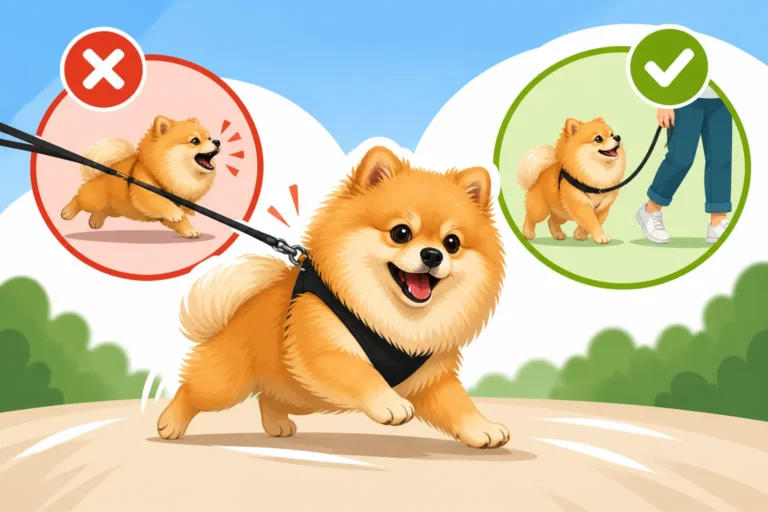
When they are outside, a leash is your best friend. Even in a fenced yard, a leash keeps them close and gives you immediate control. A sturdy, lightweight harness, rather than a collar, is ideal for Pomeranians to protect their delicate throats and avoid any potential damage to their windpipe. You can find excellent small harnesses that distribute pressure evenly across their chest on platforms like Amazon. I always recommend a harness that fits snugly but comfortably. Remember, Why a Collar Threatens a Pomeranian's Windpipe is a real concern.
Practice a strong recall. If you spot a bird overhead, or if your Pom wanders too far, you need them to come back to you instantly. Building a Recall on a Pomeranian That Ignores You is a critical skill for this specific danger, and it requires consistent training. A good training program, like those offered by BAXTER & Bella, can help you develop this life-saving skill. Use high-value treats and make coming to you the most rewarding thing they can do. This isn't just about obedience; it's about survival.
Using Physical Barriers and Covered Spaces
Your yard might be fenced, but that fence offers no protection from above. Think about what can shield your Pomeranian from an aerial assault.
- Covered runs or playpens: If your Pom loves to spend time outside, consider investing in a fully enclosed run with a solid roof or strong mesh covering. These structures provide a safe space where they can sniff around and enjoy the fresh air without being vulnerable. They come in various sizes and can be temporary or permanent.
- Patio umbrellas or shade sails: While not a complete enclosure, a large umbrella or a sturdy shade sail can offer some visual deterrence and limited protection. Birds of prey prefer clear sightlines, and anything that breaks up the open sky above your dog can make them a less appealing target. Plus, it protects them from the sun!
- Solid overhead structures: If you have a covered patio or a gazebo, these are excellent places for supervised outdoor time. The solid roof provides complete protection from above. It's not always practical for the entire yard, but utilizing these existing safe zones is smart.
Think of it this way: if you can't see the sky directly above your Pomeranian, neither can a bird of prey looking for an easy meal.
Safe Yard Practices
Beyond supervision and structures, there are practices that can make your yard less attractive to birds of prey.
- Remove bird feeders: While we love our songbirds, bird feeders can attract smaller birds, which in turn attract birds of prey looking for an easy meal. If a hawk or owl is regularly visiting your yard for the feeder birds, your Pomeranian is automatically at higher risk. It’s a tough choice, but your Pom’s safety should come first.
- Keep your yard tidy: Long grass, brush piles, or overgrown shrubs can hide rodents and other small animals that birds of prey hunt. A neatly mown yard with fewer hiding spots for potential prey might make your yard less interesting to a hunter.
- Be aware of perching spots: Look around your yard for tall trees, utility poles, or high fences where birds of prey might perch to scan for prey. While you can't remove a neighbor's tree, being aware of these vantage points helps you know where to be extra vigilant. If a large bird is consistently perching nearby, it's a clear warning sign.
| Protective Measure | Description | Pros | Cons |
|---|---|---|---|
| Constant Supervision | Never leave your Pomeranian alone outside. | Immediate response to threats, builds bond. | Requires constant human presence, impractical for long periods. |
| Leash Discipline | Use a harness and leash even in a fenced yard. | Direct control, keeps dog close. | Limits dog's free movement, human must hold leash. |
| Covered Runs/Playpens | Enclosed structures with solid tops or mesh. | Full overhead protection, safe containment. | Can be costly, takes up space, dog might feel confined. |
| Patio Umbrellas/Shade | Large umbrellas or sails over play areas. | Some visual deterrence, provides shade. | Not full enclosure, limited protection. |
| Removing Bird Feeders | Eliminating food sources for small birds. | Reduces attraction for birds of prey. | Might miss seeing songbirds, can be inconvenient. |
| Protective Vests | Puncture-resistant vests with spikes. | Adds a layer of defense, visible deterrent. | Can be cumbersome, not 100% foolproof, dogs may dislike them. |
| Strong Recall Training | Teaching your dog to return to you immediately on command. | Crucial for emergency situations, empowers dog owner. | Requires consistent training, not always reliable under extreme stress. |
Indoor Safety and Emergency Preparedness
While outdoor safety is paramount, thinking about how your Pomeranian's environment can indirectly affect their risk, and what to do in a crisis, is equally important.
Keeping Windows and Doors Secure
It might sound obvious, but open windows and doors can be an invitation for trouble. A Pomeranian, especially a curious or anxious one, might dart out if they see or hear something exciting, like a squirrel. And once they're outside without supervision, they're instantly vulnerable. Even if you have screens, ensure they are sturdy and properly latched. A determined Pom, or one startled by a loud noise, can tear through a flimsy screen.
Beyond escape routes, consider windows as potential sighting points. If a large bird of prey frequently perches near your home, your Pomeranian might spot it and become agitated. While the bird can't get in, it can create stress for your dog and potentially make them more prone to barking or trying to get out. It's a good idea to keep an eye on your dog's reactions to what's outside, and if necessary, use window film or blinds to reduce visual access.
What to Do in a Sighting or Attack
Knowing what to do in a split second can make all the difference. Panicking won't help, but acting decisively will.
- Immediate Recall: If you see a large bird of prey overhead while your Pomeranian is outside, the very first thing to do is call your dog back to you with their strongest recall command. Use an excited, high-pitched voice, or whatever tone gets their attention best. Reward them heavily when they come. This is where all that Building a Recall on a Pomeranian That Ignores You training really pays off.
- Pick Them Up: Your Pomeranian's safest place is in your arms. Scoop them up quickly and bring them inside. Their small size makes this easy and is the most effective immediate defense.
- Deterrence: If a bird seems to be actively swooping or showing aggressive intent, make yourself appear as large and loud as possible. Wave your arms, yell, throw a non-harmful object (like a plastic bottle) in its general direction without aiming to hit the bird. The goal is to startle and deter, not to injure.
- In Case of Contact: If the unthinkable happens and a bird makes contact, try to shield your dog with your body. Once the bird disengages, immediately check your Pomeranian for injuries, even if they seem fine. Birds of prey have incredibly sharp talons that can cause deep puncture wounds. Get to a vet immediately. Even a small scratch can become a serious infection, and internal injuries might not be visible.
This is a terrifying scenario to even consider, but preparation is key. Having a plan can prevent paralysis in the moment.
Training for Quick Recall
We've touched on this, but it bears repeating: a reliable recall isn't just a party trick for a Pomeranian; it's a life-saving command. Imagine your Pom has spotted a squirrel on the other side of your yard, just as a hawk swoops down. You need them to turn on a dime and sprint back to you.
Start training your Pomeranian's recall in a safe, enclosed area without distractions. Use an excited tone and a special, high-value treat that they only get for recall. As they improve, gradually introduce more distractions. Work on their ability to [Hold Focus] even when exciting things are happening around them. The goal is for them to associate coming to you with the absolute best reward, making it their priority no matter what. Resources like BAXTER & Bella offer comprehensive online training programs that can help you build this foundation effectively and consistently. Practice daily, even for just a few minutes. Make it a game!
Essential Gear and Tools for Pomeranian Safety
Beyond training and vigilance, there are some products and tools that can add extra layers of protection for your tiny Pomeranian.
Protective Vests and Harnesses
While no piece of gear is 100% foolproof, some items are designed to offer a physical deterrent or protection.
- Puncture-resistant vests: You can find vests specifically designed for small dogs that have tough, often spike-laden material on the back and sides. These are meant to deter birds of prey by making it difficult or painful for them to get a grip. While it might look a little dramatic, for some owners, the peace of mind is worth it. Search for these on Amazon, looking for reviews from other small dog owners. Be aware that your Pomeranian might not be thrilled with wearing one, so introduce it slowly with positive reinforcement. It's akin to thinking about Whether a Pomeranian Needs Clothing at All for warmth, but for protection instead.
- Safety harnesses: As mentioned, a well-fitting harness is crucial. It gives you control without putting pressure on their delicate trachea. Some harnesses also come in bright, highly visible colors, which might make your Pom more noticeable to you and potentially less appealing as "camouflage" prey to a distant bird. Look for reputable brands that specialize in small dog gear. Harnesses Fitted for a Pomeranian's Windpipe are specifically designed to avoid neck pressure.
Monitoring Devices
Technology can also play a role in peace of mind, especially if your Pomeranian spends any time in a larger, fenced yard.
- Outdoor security cameras: Placing a few strategically located security cameras in your yard can give you an extra set of eyes. Many modern cameras offer motion detection alerts, allowing you to quickly check your phone if there's unexpected activity in the yard. While they won't prevent an attack, they can alert you to a potential threat or help you monitor your Pomeranian from indoors if you absolutely cannot be right beside them.
- GPS trackers: For those anxious moments when your Pom might slip out, a GPS tracker can be invaluable. These small devices attach to their collar or harness and allow you to track their location in real-time via an app on your phone. If your Pomeranian bolts and is out of your immediate sight, a tracker can help you locate them quickly, reducing the time they spend vulnerable. They don't protect against a bird of prey directly, but they minimize the risk of a loose dog being an easy target.
Training Aids for Safety Commands
Beyond the recall, consider other training that enhances safety.
- "Leave It" and "Drop It" commands: These are essential for preventing your Pomeranian from putting dangerous items in their mouth, but they can also be applied to situations where their focus on a distraction (like a butterfly or a leaf blowing in the wind) could lead them away from safety. If they are fixated on something that might lead them towards an unsafe area, "Leave It" can redirect their attention back to you.
- Leash training equipment: Even with the best recall, a leash and harness are your primary control tools. Ensure your Pomeranian is comfortable and well-trained to walk politely on a leash. A pulling or distracted dog on a leash is harder to control in an emergency. You want a Pom that walks with you, not ahead of you, so you can scoop them up instantly. Leads Light Enough for a Pomeranian are crucial for comfortable walks.
By combining constant vigilance, smart yard management, emergency preparedness, and the right gear and training, you can significantly reduce the risk of your beloved Pomeranian falling victim to a bird of prey. Their safety is in our hands, and while the threat is real, with these steps, we can help them live long, happy, and safe lives.
Disclaimer
This article is for general informational purposes only and does not constitute professional advice. Laws, prices and regulations vary by location and change over time. Consult a qualified professional for guidance on your specific situation.