Whether a Pomeranian Pulls on the Lead
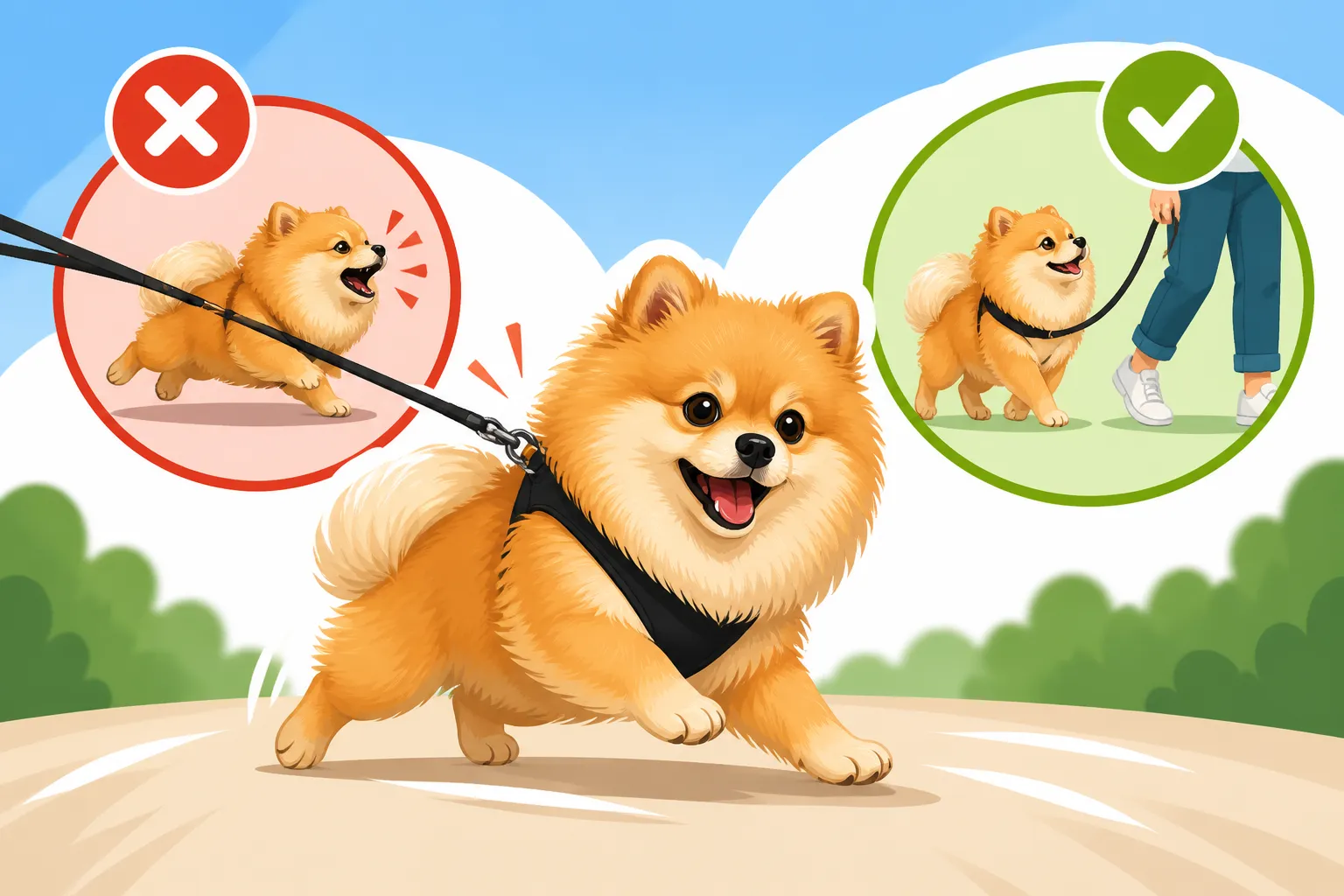
It can be incredibly frustrating, and honestly, a bit surprising, when your tiny, adorable Pomeranian starts acting like a sled dog, pulling with all their might on the leash. You might think, "How much force can a five-pound dog generate?" But trust me, that little engine can create a lot of tension, making walks a chore and even posing health risks for your beloved companion. This guide will walk you through why your Pomeranian might be pulling and how you can work together to achieve those peaceful, loose-leash strolls you've always dreamed of.
Understanding Why Your Pomeranian Pulls on the Lead
It’s easy to look at a small dog like a Pomeranian and assume they can’t possibly pull hard enough to be a problem. But any Pom parent who’s been yanked unexpectedly knows better! There are several reasons why your tiny fluffball might transform into a miniature locomotive once that leash clips on, and understanding these motivations is the first step toward a solution.
First, consider the innate curiosity of a dog. Their world is a vibrant tapestry of scents, sounds, and sights, far more intense than what we perceive. When you step outside, your Pomeranian is hit with a sensory overload – the intriguing smell of another dog that passed by an hour ago, the rustling leaves that might hide a squirrel, the distant sound of another dog barking. Their natural instinct is to investigate, to explore, and to get to whatever piqued their interest now. They're not pulling to be disobedient; they're pulling because their world is incredibly exciting, and they want to experience all of it without delay. Their small size means they have to work harder to keep up with your pace, or conversely, to get ahead to what smells so tantalizing.
Secondly, many Pomeranians simply haven't been taught not to pull. In the early days, a little tug from a puppy seems harmless. We often unconsciously reward pulling by simply continuing to move forward. If your Pom pulls, and you keep walking, even for a few steps, they've just learned that pulling gets them closer to their goal. This forms a strong habit. It becomes a deeply ingrained pattern: leash tightens, we keep moving, therefore pulling works. This is especially common with toy breeds because owners often pick them up when they pull too hard or get excited, which inadvertently rewards the behavior by removing them from the situation they're excited about, but doesn't teach them how to walk nicely.
Another factor can be over-excitement or anxiety. Some Pomeranians are just bursting with energy when they first get outside, eager to greet the world. This joyful exuberance can translate into frantic pulling. For others, pulling might stem from insecurity or fear. They might be trying to create distance from something scary, or pull towards you for comfort. If your Pom barks and lunges at other dogs or people while pulling, it could be a sign of underlying fear or frustration that needs to be addressed through specific counter-conditioning and desensitization training. Ultimately, their small stature can sometimes make them feel like they need to compensate by being "tougher" or "faster" on the leash, trying to control the pace of the walk themselves.
The Real Dangers of a Pulling Pomeranian
While it might seem cute or even manageable when a tiny Pomeranian pulls, it’s crucial to understand that this behavior carries significant health risks for a breed with such delicate anatomy. The potential for serious injury, especially to their neck and throat, is something every Pomeranian owner needs to be aware of. We all want our Poms to be safe and healthy, and ignoring consistent leash pulling can have lasting, detrimental effects.
The most common and severe risk for a pulling Pomeranian is damage to their trachea. Pomeranians are notoriously prone to The Honking Cough of a Pomeranian's Collapsing Windpipe, a condition where the rings of cartilage in their windpipe weaken and flatten, making it difficult to breathe. Constant pressure from a collar, even if it's "just a little pull," can exacerbate this condition or even trigger its onset. Every time your Pom pulls hard and strains against a collar, it puts immense pressure directly on their fragile trachea. Imagine wearing a tight band around your neck and having someone constantly pull on it – it would be incredibly uncomfortable and could cause long-term damage. For a Pomeranian, whose windpipe is already a weak point, this is a serious concern. It's truly eye-opening to realize Why a Collar Threatens a Pomeranian's Windpipe in a breed like ours.
Beyond the trachea, there's also the risk of general neck and spinal injuries. Pomeranians are small dogs, and their bone structure is more delicate than larger breeds. A sudden, sharp pull or jerk on the leash, whether from the dog or the handler, can cause sprains, strains, or even more severe damage to the cervical spine. These injuries can be incredibly painful, require extensive veterinary care, and in some cases, lead to chronic issues or mobility problems down the line. A walk should be a joyful experience, not one fraught with potential medical emergencies.
Furthermore, persistent pulling makes walks less enjoyable for both of you. You’re constantly battling your dog, your arm is getting tired, and your Pom is likely stressed, hyper-stimulated, or frustrated because they're not achieving their goal of getting where they want to go. This can lead to behavioral issues, making your Pomeranian more reactive on walks, more prone to barking, or generally more anxious. It diminishes the quality of your time together and can deter you from taking your Pom out as often as they need for exercise and mental stimulation. The goal is a harmonious walk where you and your Pomeranian move as a team, enjoying the fresh air and companionship without the risk of injury or constant struggle.
Choosing the Right Gear to Prevent Pulling
When it comes to walking your Pomeranian safely and effectively, the right equipment makes a world of difference. Trying to train a pulling Pom with an ill-fitting collar or leash is like trying to drive a car with flat tires – it's an uphill battle. Focusing on gear that minimizes risk and aids in training is paramount, especially given their delicate physical structure.
For Pomeranians, the consensus among vets and experienced owners is almost universally in favor of a harness over a traditional neck collar for walks. Given their susceptibility to tracheal collapse, any device that puts direct pressure on the throat is a significant risk. A well-fitted harness distributes pressure across their chest and shoulders, circumventing the delicate neck area entirely. This isn't just about preventing injury; it also allows your Pomeranian to breathe more freely, making the walk more comfortable and less stressful for them. Look for harnesses specifically designed for small breeds, with soft, non-abrasive materials that won't chafe their skin or mat their fluffy coat. There are many excellent options available on platforms like Amazon.
There are a few main types of harnesses to consider:
- Back-Clip Harnesses: These are the most common. The leash attaches to a ring on your dog's back. They are excellent for pressure distribution and keeping pressure off the neck. However, if your Pom is a strong puller, a back-clip harness might still allow them to lean into the pull, as the pulling force originates from their back, giving them leverage. They are great once loose-leash walking is established.
- Front-Clip Harnesses: These harnesses have the leash attachment ring on the dog's chest. When your Pomeranian pulls, the leash redirects them gently to the side, discouraging pulling by turning them away from their intended direction. This removes the leverage they have with a back-clip harness. Many owners find these incredibly effective for training a dog not to pull, even a tenacious little Pom.
- Step-In Harnesses: These are popular for dogs that dislike having things go over their head. Your Pom simply steps into the loops, and you fasten it over their back. They are generally back-clip designs. They are easy to put on but might not offer the same level of no-pull control as a front-clip.
When selecting a leash, opt for one that is lightweight but durable, about 4 to 6 feet in length. Heavy, bulky leashes can be uncomfortable for a small dog to carry, and retractable leashes are generally discouraged for training, as they teach a dog that tension on the leash is normal and can encourage pulling. A standard nylon or leather lead works best.
Ensuring a proper fit is crucial regardless of the harness type. A harness that’s too loose can allow your Pomeranian to slip out, which is a terrifying prospect, especially if they are startled or try to bolt. One that’s too tight can restrict movement, rub their skin raw, or hinder breathing. You should be able to comfortably fit two fingers under the straps of the harness. Don't underestimate the need for Harnesses Fitted for a Pomeranian's Windpipe – it really is a major safety factor. It’s also wise to check the harness regularly for wear and tear, and to ensure it still fits correctly as your Pom’s weight or coat thickness changes. For extra security, some owners even use a double-clip leash that attaches to both the harness and a flat collar (for ID tags only), offering a backup in case of a slip. This combination prioritizes safety while allowing the harness to do the heavy lifting in terms of preventing throat pressure.
| Harness Type | Pros | Cons | Best For |
|---|---|---|---|
| Back-Clip | Comfortable, easy to put on, good for ID tags. | Can allow pulling leverage, less control for strong pullers. | Pomeranians already walking well on a leash; general comfort. |
| Front-Clip | Redirects pulling, provides good control. | May restrict shoulder movement slightly if ill-fitting; can get tangled. | Pomeranians who pull consistently; active training. |
| Step-In | Easy to put on/take off (no overhead). | Often back-clip design, same pulling leverage issues as regular back-clip. | Pomeranians who dislike overhead harnesses; owners seeking convenience. |
Effective Training Strategies to Stop Pulling
Getting your Pomeranian to walk nicely on a leash isn't about brute force; it's about smart training, consistency, and understanding how your little fluffball learns. It might seem daunting at first, especially if you've been dealing with pulling for a while, but with the right approach, you can transform walks from a tug-of-war into an enjoyable shared experience.
The cornerstone of successful loose-leash walking is positive reinforcement. Your Pomeranian needs to learn that walking calmly by your side is far more rewarding than straining at the end of the leash. This means using high-value treats (tiny pieces of chicken, cheese, or specialized training treats) and enthusiastic praise. Start training in a low-distraction environment, like your backyard or a quiet room. The "stop and go" method is a classic for a reason: the moment your Pomeranian tightens the leash, you stop dead in your tracks. Don't move forward again until the leash slackens, even if it's just for a second. The instant it slackens, say "yes!" or "good!" and take a step forward, rewarding them with a treat. Repeat this endlessly. Your Pom will quickly learn that a tight leash means no progress, and a loose leash means treats and continued movement. You'll be amazed how quickly they catch on to Teaching a Pomeranian to Walk on a Loose Harness.
Consistency is key, and this applies to everyone who walks your Pomeranian. If one family member lets them pull, it undermines all the hard work you're putting in. Make sure everyone understands the training rules and uses the same cues and methods. Short, frequent training sessions, perhaps 5-10 minutes a few times a day, are far more effective than one long, exhausting session. Pomeranians have short attention spans, so keep it fun and engaging. For more insights on this, you might find articles like Training Session Length for a Pomeranian helpful.
Introduce a verbal cue for loose-leash walking, such as "heel" or "let's go easy." Say the cue, and if your Pom walks nicely for a few steps, reward them. If they pull, implement the "stop and go." Gradually increase the duration they have to walk nicely before getting a reward, and slowly introduce more distractions. Begin with quiet streets, then progress to busier areas. It’s important to understand The Reward a Pomeranian Actually Cares About to make your training highly motivating.
If you find yourself struggling, don't hesitate to seek professional help. An experienced dog trainer can provide personalized guidance, identify specific triggers for your Pomeranian's pulling, and demonstrate effective techniques. Many online platforms, like BAXTER & Bella, offer comprehensive puppy and dog training programs that include modules specifically on loose-leash walking. These resources can be invaluable for gaining expert insights from the comfort of your home. Sometimes, an outside perspective can help you see where communication might be breaking down. Remember, building a strong Building a Recall on a Pomeranian That Ignores You will also indirectly help with loose leash walking, as a Pom who pays attention to you is less likely to pull.
Ultimately, training a Pomeranian not to pull is an investment in their safety, well-being, and your relationship. It fosters a sense of teamwork and trust, making every walk a positive experience for both of you. Be patient, be consistent, and celebrate every small victory along the way. Your Pomeranian is smart and eager to please, and with the right guidance, they'll be strutting politely by your side in no time.
Disclaimer
This article is for general informational purposes only and does not constitute professional advice. Laws, prices and regulations vary by location and change over time. Consult a qualified professional for guidance on your specific situation.