Building a Recall on a Pomeranian That Ignores You
It’s a heart-dropping moment when you call your Pomeranian, and they give you that characteristic head tilt, perhaps a little tail wag, before darting off after a leaf or another dog, seemingly deaf to your pleas. This guide isn't just about yelling "come" louder; it's about understanding why your fluffy companion might be giving you the cold shoulder when called, and how to build a rock-solid, life-saving recall that works every single time.
Why Your Pomeranian Seems to Be Ignoring You
It can feel incredibly personal when your dog, who normally showers you with affection, appears to switch off their hearing the moment they're off-leash or in an exciting environment. But it's rarely about deliberate disobedience. Instead, it's a complex mix of breed characteristics, environmental factors, and sometimes, unintentional learning on our part. Understanding these underlying reasons is the first step toward effective training.
The Spitz Brain: Independence and Self-Interest
Pomeranians, like all Spitz breeds, carry a proud heritage of independence. Their ancestors weren't necessarily lapdogs; they were often watchdogs or utility dogs, bred to think for themselves, alert their families, and observe their surroundings with keen intelligence. This means they're not always looking to you for every single command or seeking constant approval in the same way some other breeds might. They have their own agenda, and sometimes, that agenda involves exploring a fascinating scent or chasing a butterfly. Whether Spitz Independence Makes a Pomeranian Difficult is a common question, and it's less about difficulty and more about understanding their unique motivation.
Imagine your Pomeranian, Fluffy, at the dog park. You call her name, and she's halfway across the field, tail wagging, nose to the ground, captivated by a scent left by another dog. In her mind, that scent trail is a thrilling mystery, a story unfolding right beneath her tiny nose. Your voice, while familiar and loved, simply isn't as compelling in that moment. It's not that she doesn't love you, it's that her inherent curiosity and independent spirit have momentarily taken the wheel.
Size and Perceived Safety: What They Chase
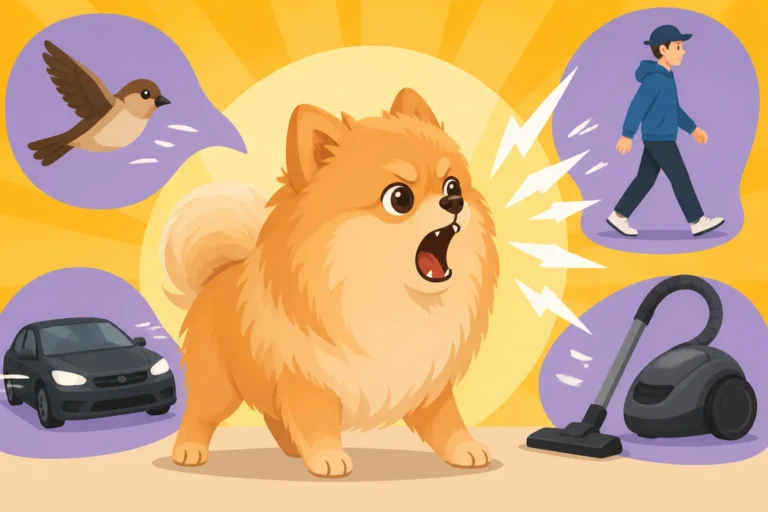
Our pint-sized Poms are often bold and fearless, despite their small stature. This means they might feel surprisingly confident approaching larger dogs or chasing after objects that, to a human, seem far too large or potentially dangerous. Their small size means they can get into tight spaces, slip under fences, or weave through obstacles with incredible speed, making them harder to catch if they decide to bolt. This perceived invulnerability, coupled with their natural curiosity and prey drive, can lead them to ignore a recall when something exciting catches their eye.
Consider your Pomeranian, Barnaby, strolling down the street. Suddenly, a squirrel darts across the path. Barnaby, with his ancestral hunting instincts, sees not a tiny, fluffy rodent, but a challenge, a chase! He might feel entirely safe taking off after it, oblivious to the cars or bikes around him. His size and agility, which we adore, can unfortunately also make him surprisingly effective at escaping and putting himself in harm's way if his recall isn't perfected. Why Off Leash Is a Risk for a Pomeranian often comes down to these moments where instinct overpowers training.
Distraction Over Desire: The World is Too Interesting
Let's be honest, the world is a fascinating place, especially for a dog whose primary way of experiencing it is through scent and sound. A new smell on the sidewalk, the rustle of leaves in the park, the distant bark of another dog, or even a child's laughter can be incredibly distracting. For a Pomeranian, whose senses are so acute, these distractions can quickly override the desire to return to you, especially if "coming when called" isn't consistently associated with something truly amazing.
Think about little Pip, your Pomeranian, at the neighborhood barbecue. So many new people, new smells of grilling food, children playing, and other dogs. You call him, hoping he'll return for a quick cuddle, but he's too busy investigating a dropped potato chip or trying to get a sniff of the neighbor's schnauzer. He's not being naughty; he's simply overwhelmed and entranced by the sensory feast around him. Without consistent, high-value reinforcement in these distracting environments, your voice simply becomes background noise.
Laying the Foundation: Recall Training Basics
Building a reliable recall isn't about harsh corrections or shouting. It's about positive reinforcement, consistency, and making yourself the most exciting thing in your Pomeranian's world. We want them to want to come back to you, not just feel obligated or fearful. This journey starts with simple steps in controlled environments.
Making Recall the Best Game Ever
The secret to a great recall is to make "come" synonymous with "the best thing ever!" Every single time your Pomeranian responds to their recall cue, whether it's their name followed by "come," or a specific whistle, they need to be rewarded with something truly high-value. This isn't just a pat on the head; it's a tiny piece of cooked chicken, cheese, or their absolute favorite toy. The goal is to build such a strong positive association that the thought of coming to you is more appealing than any distraction. The Reward a Pomeranian Actually Cares About is crucial here – it needs to be irresistible.
Start indoors, in a quiet room with no distractions. Crouch down, look excited, and call your Pomeranian's name, then "come!" (or whatever your chosen cue is). The instant they take a step towards you, praise them lavishly, and when they reach you, immediately give them that amazing reward. Don't wait, don't ask for a sit first – reward the act of coming. Then, you might let them go again, building a little game out of it. Repeat this many, many times a day, in short, fun sessions. Training Session Length for a Pomeranian should be brief and positive, not long and arduous.
The Right Tools for Safety and Success
While you're building that bomb-proof recall, safety is paramount, especially for a small dog like a Pomeranian. You'll need the right equipment to ensure they can't dash off into danger before their training is solid. A well-fitting harness is essential, as a collar can put dangerous pressure on a Pomeranian's delicate trachea, especially if they lunge. Why a Collar Threatens a Pomeranian's Windpipe is a serious concern. Look for harnesses that distribute pressure across their chest and shoulders.
Once you have a safe harness, a long line is your best friend. This is a lightweight leash, usually 15 to 30 feet long, that allows your Pomeranian to explore a bit further while still remaining safely connected to you. You can purchase these at most pet stores or online on platforms like Amazon. With a long line, you can practice your recall outdoors in a somewhat distracting environment (like a quiet park or your backyard) without the fear of them running away. They still get the illusion of freedom, but you maintain control. Make sure the long line is light enough not to drag them down or spook them. Leads Light Enough for a Pomeranian are key for comfort and safety.
Starting Indoors, Without Distractions
Just like learning to read before writing a novel, recall training needs to start in the simplest environment possible. Your home, free from the overwhelming sights, sounds, and smells of the outside world, is the perfect classroom. Begin in a single, quiet room, then gradually expand to other rooms, always ensuring minimal distractions.
In these early stages, your goal is to create a perfect, joyful experience every single time your Pomeranian comes to you. Avoid calling them if you suspect they won't come, as every ignored command teaches them that "come" is optional. Instead, if they're too distracted, gently walk over to them, take their collar (or harness), and lead them back to your starting point, then give the command and reward generously when they respond. This might seem counter-intuitive, but it reinforces the positive outcome of "come" without allowing them to practice ignoring you. Think of it as setting them up for success repeatedly.
Advanced Recall: Building Reliability in Distractions
Once your Pomeranian is consistently racing to you indoors, it's time to slowly turn up the volume on distractions. This is where real-world reliability is forged, step by careful step. Rushing this stage will only lead to frustration for both of you.
Gradually Introducing Distractions
The transition from a quiet living room to a bustling park needs to be incredibly gradual. Think of it like a ladder, not a leap. Start with very minor distractions:
- Mildly interesting object: Place a favorite toy a few feet away, but not one they're obsessed with. Call them away from it.
- Another person in the room: Have a family member sit quietly in the room.
- Different rooms: Practice in the kitchen, then the hallway, then a room with a window.
- Backyard: Move to a fenced backyard, where there might be new smells and sounds, but still controlled. Use your long line here!
As you progress, the key is to ensure success. If your Pomeranian is failing to come more than a couple of times, the distraction is too high. Dial it back. Always set them up to win. For example, if you're in the backyard and they're sniffing something intently, don't call them yet. Instead, clap your hands, make a silly noise, or run a few steps away to re-engage their attention before you give the recall cue. Remember, we want them to choose to come to you even when there are other things vying for their attention.
Varying Locations and Scenarios
A common mistake is practicing recall only in one or two spots. Dogs don't generalize commands easily. A "come" in the living room doesn't automatically mean "come" at the park, or "come" at Grandma's house. You need to practice in a multitude of environments to build a truly reliable recall.
Take your Pomeranian to different parks, quiet walking trails, friends' backyards, or even just different streets. Always start with the lowest level of distraction possible in each new location, even if it means going back to basics with your long line. Make sure to reward generously in every new setting. This repeated exposure and positive reinforcement across diverse scenarios will teach your Pomeranian that "come" means the same thing, no matter where they are or what's going on around them. This is also where an online training program, such as those offered by BAXTER & Bella, can be incredibly helpful for structured lessons and ideas for new scenarios to practice in. They often provide step-by-step guides for introducing complexity.
The Emergency Recall: A Lifesaving Command
Beyond your everyday "come," it's vital to teach an "emergency recall" – a cue that means "drop everything and get to me NOW." This should be a distinct word or sound that you never use in any other context, and you never call them for anything unpleasant (like going to the vet) using this cue. It should be reserved for true emergencies, and its reward should be the absolute highest value treat imaginable.
Some people use a whistle for their emergency recall, others a specific word like "FRONT!" or "TOUCH!". Whatever you choose, introduce it in a quiet, distraction-free environment with your Pomeranian right in front of you. Give the cue, immediately present the high-value reward, and praise them. Repeat this a few times, then stop. The emergency recall isn't for daily practice; it's for keeping its power. Once they understand it, only use it in genuine emergencies. The idea is that when you use it, it carries such immense positive weight that they will break off from anything to reach you. Whether a Pomeranian's Recall Can Be Trusted depends heavily on developing this kind of foolproof command.
Troubleshooting Common Recall Problems
Even with the best intentions, recall training can hit snags. Pomeranians are smart, and sometimes, the way we react to their choices can inadvertently reinforce the wrong behaviors. Let's look at a few common challenges and how to navigate them.
When They Play Keep-Away
It's a classic scenario: you call your Pomeranian, they come close, maybe even brush your leg, and then dart away again, initiating a game of chase. This "keep-away" behavior usually happens for one of two reasons: either they're having fun, or they're anticipating something unpleasant (like being put back on leash and ending the fun). Either way, it teaches them that coming to you isn't always a good thing, or that it's a game they can control.
To counteract this, never chase your Pomeranian. If they play keep-away, turn your back and run away from them, looking excited. Most dogs can't resist chasing you. When they catch up, immediately mark (with a "yes!" or a clicker) and reward them, then put them back on the long line if you were using one. If you need to re-leash them, do so calmly. Occasionally, call them, reward them, and then immediately let them go again without re-leashing. This teaches them that coming to you doesn't always mean the fun ends. You can also use a "touch" command, where they nose your hand for a treat, which gets them close enough to grab their harness if needed.
| Recall Stage | Environment | Distraction Level | Reward Type | Key Tool |
|---|---|---|---|---|
| Foundation | Quiet, indoors (1 room) | Zero | High-value food | None (initially) |
| Basic | Indoors (multiple rooms) | Minimal (quiet person) | High-value food/toy | None |
| Transitional | Fenced backyard | Low (scents, sounds) | High-value food | Long Line (15-20ft) |
| Intermediate | Quiet park/trail | Medium (distant dogs) | High-value food/toy | Long Line (20-30ft) |
| Advanced | Busy park/public area | High (people, dogs) | Super high-value | Long Line (30ft) |
| Emergency | Any environment | Any | Ultimate treat | Never used for practice |
Overcoming Fear or Overwhelm
Sometimes a Pomeranian ignores recall not because they're being stubborn, but because they're genuinely overwhelmed, fearful, or overstimulated by their environment. A sudden loud noise, a pushy dog, or too many unfamiliar people can send a small dog like a Pom into a state of panic or avoidance. In these situations, calling them might just add to their stress if they're too frozen or distracted to process your command.
If your Pomeranian seems fearful or overwhelmed, the best approach is often to calmly go to them yourself. Don't add to their stress by yelling. Reassure them, and gently lead them to a quieter spot. Once they've settled, you can then try a very simple, low-stakes recall, rewarding them heavily for success. Understanding The Pomeranian That Cannot Be Left Alone or A Pomeranian That Hides From Children can provide insight into anxieties that might impact recall in busy environments. Always prioritize their emotional well-being over getting a perfect recall in a scary moment.
Consistency is Key: Owner Challenges
Perhaps the biggest hurdle in recall training isn't the Pomeranian, but the human on the other end of the leash. Life gets busy, we forget treats, we get frustrated, or we inadvertently send mixed signals. Inconsistency is the silent killer of a reliable recall. If you only call your Pomeranian when you need to leave, or if you sometimes reward and sometimes don't, they quickly learn that "come" is negotiable.
Make a conscious effort to be consistent with your recall training. Designate a specific, high-pitched, happy tone for your recall cue. Always have high-value treats on hand (a small treat pouch is excellent for this, easily found on Amazon). Practice short, fun recall sessions multiple times a day, even when you don't need your Pomeranian to come. Call them, reward them, and then let them go again. This builds a positive association without ending their fun every time. Remember, your Pomeranian lives in the moment; every interaction is a teaching opportunity. If you consistently make coming to you the most wonderful thing in their world, they will learn to choose you, every time.
Disclaimer
This article is for general informational purposes only and does not constitute professional advice. Laws, prices and regulations vary by location and change over time. Consult a qualified professional for guidance on your specific situation.