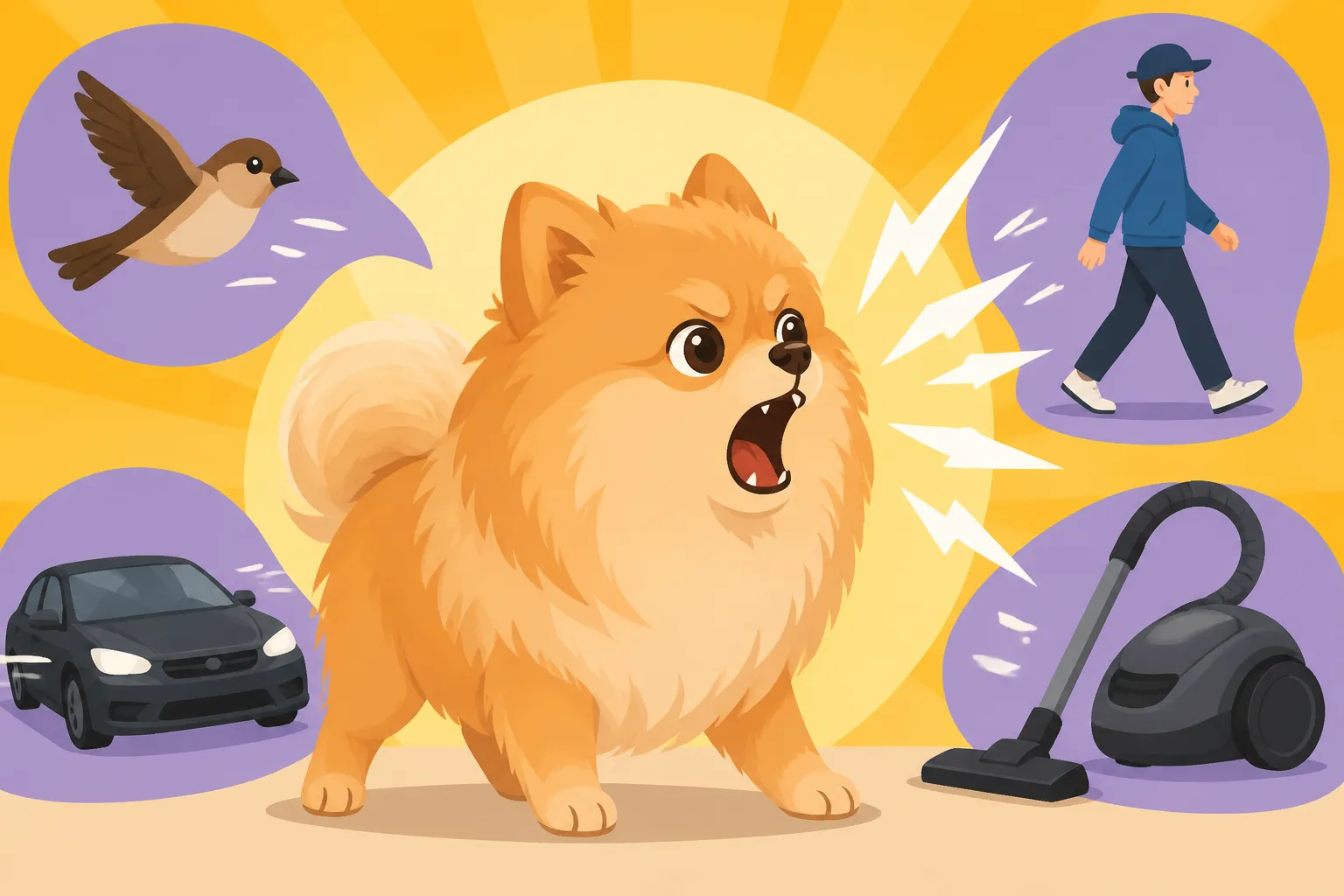
Why a Pomeranian Barks at Everything That Moves
Living with a Pomeranian can be an absolute joy, filled with fluffy cuddles and vibrant personalities. However, one common frustration many Pom parents face is the incessant barking at literally everything that moves, or even just might move. It's enough to drive even the most patient person a little batty! This comprehensive guide will explore the deep-seated reasons behind this vocal tendency and arm you with practical strategies to manage your Pomeranian's enthusiastic alerts, helping you restore some peace to your home.
Understanding the Pomeranian's Innate Nature for Barking
It’s easy to feel like your Pomeranian is just being stubborn or overly sensitive, but their vocal tendencies are deeply rooted in their history and genetics. They aren't barking to annoy you, but rather fulfilling instincts that have been part of their breed for centuries. Understanding this can shift your perspective and help you approach training with more empathy and effectiveness.
The Spitz Heritage: A Watchdog in Miniature
Pomeranians, as delightful as they are, hail from a lineage of much larger, working Spitz dogs. Think of their ancestors, the Icelandic Sheepdog, the German Spitz, or even the mighty Siberian Husky – these dogs were bred to be vigilant, alert, and, yes, vocal. Their job was often to guard property, warn of intruders, or even herd livestock, and a strong, carrying bark was a crucial tool in that arsenal. When these larger Spitz breeds were selectively bred down in size to create the Pomeranian we know and love today, their fundamental watchdog instincts remained firmly intact.
Imagine a tiny, fluffy sentinel in your living room, convinced it's still a rugged guardian of a northern farm. That's essentially what you've got! They may weigh only a few pounds, but in their minds, they are mighty protectors. This intrinsic programming means they feel a deep responsibility to alert their "pack" (you!) to anything they perceive as out of the ordinary, whether it's the mail carrier, a squirrel, or even just a leaf blowing across the yard. This isn't naughtiness; it's instinct. It’s important to remember that they are doing what generations of their ancestors taught them to do. You can learn more about The German Spitz Family a Pomeranian Belongs To.
High Alertness and Sensory Sensitivity
Beyond their watchdog instincts, Pomeranians are incredibly alert and possess surprisingly keen senses, especially considering their small stature. Their ears can pick up sounds that we might dismiss as ambient noise, and their eyes, though small, are constantly scanning their environment. This heightened sensory input means they are often aware of things long before a human might notice.
A delivery truck rumbling down the street, barely a whisper to our ears, can be a major event for a Pomeranian. The sound of a distant dog barking, the faint scent of another animal passing by, or even the subtle shift in light from a cloud moving overhead can be enough to trigger their alert system. This isn't them being dramatic; it's them processing a world that is much louder and more visually active for their sensitive systems. Their reaction might seem disproportionate to us, but for them, it's a perfectly logical response to their hyper-aware perception of their surroundings. This intense awareness is part of their charm, but it also means they need help navigating a world that often overstimulates them.
Common Triggers for Pomeranian Barking
While the underlying instinct is always there, specific situations and stimuli typically set off a Pomeranian's barking spree. Pinpointing these triggers is the first crucial step in developing effective management strategies. Once you know what your Pom is reacting to, you can begin to address it directly.
Visual Stimuli: Everything Outside the Window
For many Pomeranians, the window is a giant, ever-changing television screen. Every person, car, dog, or even a blowing leaf that passes by becomes a prime target for their vocal alerts. They see movement, and their natural instinct kicks in: "Something is there! Alert the pack!" This is particularly true for Poms with prime viewing spots, like those who spend time on a sofa pushed against a window or in a room with a large glass door.
The mail carrier is a classic nemesis, as is the neighbor walking their dog, or children playing across the street. Even reflections or shadows can sometimes be enough to get them going. It's not necessarily aggression; it's often an overabundance of diligence and a desire to inform you of every perceived "threat" or novelty in their territory. Sometimes, if they're particularly confined or frustrated by a barrier like a window, the barking can also stem from an inability to investigate or interact with what they see.
Auditory Stimuli: Sounds from Near and Far
Pomeranians have fantastic hearing, which means they're often barking at things you can't even hear, or at least haven't registered yet. The quintessential trigger, of course, is the doorbell. That sudden, often jarring sound is a direct invitation for them to erupt. The Doorbell and the Pomeranian Response But it's not just immediate sounds in your home; their ears are tuned into the world beyond your walls.
Distant sirens, construction noise, the garbage truck, neighbor's conversations, or even the subtle creak of a floorboard from an upstairs apartment can all be major triggers. Their high alert system means they're constantly processing these auditory cues, and many of them are perceived as potential threats or calls for attention. Since they can't investigate these sounds themselves or understand their harmless nature, barking becomes their primary method of response and communication. This can be particularly frustrating in apartments or homes with thin walls, where outside noises are amplified.
Novelty and Change: The Unfamiliar is Suspicious
Pomeranians thrive on routine and familiarity. Anything new or unexpected in their environment can trigger a strong vocal response because it disrupts their sense of security. This could be something as simple as a new piece of furniture, a package left on the porch, or even you wearing a hat they haven't seen before. Their world feels stable when it's predictable, and changes, however small, can be alarming.
New visitors are a classic example. A Pomeranian often perceives strangers entering their home as an intrusion, and their barking is their way of challenging the newcomer and alerting you to their presence. It's their small but mighty attempt to size up the situation and ensure everyone knows they're on guard. Even if it's a familiar friend, a different coat, or a new scent can be enough to set off their vocal alarms until they've had a chance to properly investigate and deem the "threat" acceptable. This extends to things like changes in your daily schedule, the introduction of a new pet, or even a sudden loud noise from the TV – anything that breaks the familiar pattern of their lives.
Learned Behaviors and Reinforcement
While genetics and instinct lay the groundwork for a Pomeranian's vocal tendencies, many instances of excessive barking are actually learned behaviors, often inadvertently reinforced by us, their loving owners. It's a tricky cycle to break because our natural reactions can often feed into the very behavior we're trying to stop.
Accidental Reinforcement by Owners
This is a big one, and it's so easy to do without even realizing it. When your Pomeranian barks, what's your first instinct? Often, it's to look at them, talk to them (even if it's to say "Quiet!"), or maybe even pick them up to soothe them. While these actions come from a place of care, to a Pomeranian, any attention is good attention. They quickly learn that "barking = I get noticed."
Think about it: they bark, you come over, you make eye contact, you use your voice. This is a massive reward for them! Even scolding can be reinforcing because it's still engagement. Some owners even give a treat or a toy to distract a barking Pom, which, again, teaches the dog that barking produces desirable outcomes. This accidental reinforcement creates a strong association: "If I want something, or if I want you to respond, I just need to bark." This cycle is difficult to break because it's so ingrained in our interaction patterns, but recognizing it is the first step toward change. Whether Picking a Pomeranian Up Rewards Bad Behavior covers this in more detail.
Excitement and Attention Seeking
Pomeranians are social little creatures who absolutely adore being the center of attention. Sometimes, their barking isn't about warning you of danger, but simply about getting you to interact with them. This is particularly true if they're bored, feel neglected, or want something specific.
They might bark when you're on the phone, watching TV, or busy with chores, because they've learned that a few loud barks will usually interrupt your activity and redirect your focus to them. This can manifest as barking for play, barking for food (especially when you're preparing meals), or barking because they want to go outside. It's their way of saying, "Hey! Over here! I exist, and I want something from you!" This form of barking is often accompanied by other attention-seeking behaviors like pawing, jumping, or bringing you a toy. If these barks consistently lead to what they want, the behavior becomes incredibly strong and difficult to extinguish.
Barrier Frustration and Resource Guarding
Pomeranians, despite their size, can be quite territorial. When they feel confined and unable to access what they want or protect what they perceive as theirs, they can experience barrier frustration. This often manifests as barking, especially when behind a fence, in a crate, or even just behind a baby gate, and they see or hear something they want to interact with (or scare away) but cannot reach. They feel helpless, and barking is their outlet for that frustration.
Similarly, resource guarding – where a dog protects items like food, toys, or even their favorite human from others – can also lead to barking. If another pet or even a family member approaches their treasured item or their person, the Pom might bark to warn them away. This isn't just about protecting a physical object; it's about controlling their perceived valuable resources and asserting their boundaries. A prime example is A Pomeranian That Guards a Toy From the Family, where their vocalizations are part of a larger protective display. Understanding the source of this frustration or possessiveness is crucial to modifying the behavior safely and effectively.
Addressing Excessive Barking: Practical Strategies
Now that we understand why Pomeranians bark, let's dive into practical, empathetic strategies to manage and reduce excessive vocalizations. The key is to be consistent, patient, and to use methods that help your Pom feel secure rather than punished.
Environmental Management: Reducing Triggers
One of the most immediate and effective ways to reduce barking is to manage your Pomeranian's environment. This means taking steps to reduce their exposure to common triggers. It's about proactively preventing the barking before it even starts, rather than constantly reacting to it.
Simple changes can make a huge difference. If your Pom barks at everything out the window, limit their window access. Use frosted window film, blinds, or heavy curtains to block their view, especially during peak "trigger" times like the mail delivery or school dismissal. If sounds are the issue, white noise machines, calming music, or even a fan can help muffle external noises that might set them off. Creating a quieter, less visually stimulating "safe space" for your Pomeranian, perhaps in a room away from the main thoroughfares of your home, can also work wonders. This isn't about ignoring the problem; it's about minimizing the stimuli that overwhelm their sensitive senses and trigger their watchdog instincts, giving you a baseline of calm to build upon.
Positive Reinforcement Training Techniques
Training is absolutely essential, and positive reinforcement is the kindest and most effective approach for sensitive Pomeranians. Instead of punishing barking, you want to teach them an alternative, more desirable behavior, and reward them for it. The goal is to teach them a "quiet" cue and reward periods of silence.
Start by identifying a low-level trigger (something they'll bark at, but not intensely). Let them bark once or twice, then interrupt them with a specific word like "Quiet!" or a sound. The moment they pause, even for a second, immediately reward them with a high-value treat and praise. Repeat this many times, gradually increasing the duration of silence required before the reward. You're teaching them that silence, not barking, is what earns them good things. Consistency is paramount here. You might find resources like BAXTER & Bella's online training programs helpful, as they often provide structured lessons for addressing specific behaviors like barking, using positive reinforcement methods. For a specific task, look for guidance on Getting a Barking Pomeranian to Stop on Command.
Desensitization and Counter-Conditioning
These are powerful techniques for helping your Pomeranian change their emotional response to triggers. Desensitization means gradually exposing your dog to a trigger at a very low intensity, so it doesn't provoke a strong reaction. Counter-conditioning means changing their negative emotional association with that trigger to a positive one.
For example, if your Pom barks at the doorbell:
- Start with the sound on your phone, played very softly. The goal is for them to hear it without reacting.
- Pair the sound with high-value treats. Play the sound, treat. Play the sound, treat. Repeat many times.
- Gradually increase the volume over days or weeks. Always staying below the threshold where they react with barking.
- Move to the actual doorbell, initially just tapping it lightly. Again, pairing it with treats.
- Eventually, work up to someone ringing the doorbell normally, rewarding your Pom for staying calm.
The same principle applies to visual triggers. Have someone walk past the window at a distance, and reward your Pom for staying quiet, gradually bringing the "trigger" closer. This isn't a quick fix, but it fundamentally rewires their emotional response over time, helping them learn that triggers predict good things (treats!) instead of requiring an alarm.
Tools and Resources for Barking Management
Beyond direct training, there are various tools and resources that can support your efforts in managing your Pomeranian's barking. These range from physical aids to mental enrichment, all designed to create a calmer, happier environment for your vocal little friend.
Management Tools: Harnesses, Crates, and Pens
Certain physical tools can be incredibly helpful in managing a Pomeranian's barking, especially when you can't be actively training or supervising them. A well-fitting harness, for instance, can provide a sense of security during walks and can prevent tracheal irritation if your Pom tends to pull or gets overly excited. However, it's crucial to select a harness that doesn't put pressure on their delicate windpipe, especially for a breed prone to The Honking Cough of a Pomeranian's Collapsing Windpipe.
Crates and playpens, when introduced positively, can serve as excellent "safe spaces" or quiet zones. If your Pom barks excessively at guests, placing them in their crate with a chew toy in a separate room can prevent the barking, reduce their stress, and help them learn that calm behavior (even when isolated) is rewarded. This isn't about punishment; it's about providing a controlled environment where they don't feel the need to bark. Just remember to never use a bark collar, as they are not only ineffective long-term but can also be harmful to your Pomeranian's delicate throat. Learn Why a Bark Collar Is Wrong for a Pomeranian's Throat.
Enrichment and Exercise for Mental and Physical Well-being
A tired Pomeranian is often a quiet Pomeranian. Ensuring your dog gets adequate mental and physical exercise is fundamental to reducing unwanted barking. While Poms are small, they are active and intelligent and require more than just a short potty break in the yard.
Regular, structured walks (on a harness, of course!) provide essential physical exercise and mental stimulation from sniffing new scents. However, be mindful of their windpipes and overall stamina; multiple shorter walks are often better than one long one. Inside, engage their clever brains with puzzle toys that dispense treats, like those often found on Amazon, or interactive games like fetch in a safe space. Games That Tire a Pomeranian Indoors don't have to be strenuous; mental games can be just as exhausting. Even just 10-15 minutes of focused training or a snuffle mat can help drain their energy in a productive way. A Pomeranian that is well-exercised, both physically and mentally, is less likely to resort to barking out of boredom or pent-up energy.
Seeking Professional Guidance
Sometimes, despite your best efforts, excessive barking can persist or even worsen. In such cases, it's always wise to consult with professionals. Your veterinarian should be your first point of contact to rule out any underlying medical conditions that might be contributing to the barking, such as pain, hearing loss, or cognitive dysfunction in older Poms.
If medical issues are ruled out, a certified professional dog trainer or a veterinary behaviorist can provide invaluable assistance. These experts can observe your Pomeranian's specific behaviors, identify nuanced triggers you might have missed, and develop a customized training plan tailored to your dog's individual needs. They can also guide you through more advanced techniques like desensitization and counter-conditioning, ensuring they are implemented correctly and safely. Don't hesitate to seek help; a professional can often provide the breakthrough you need to achieve a calmer home environment.
Setting Realistic Expectations and Long-Term Commitment
Managing a Pomeranian's barking is a journey, not a destination. It requires understanding, patience, and a long-term commitment. It's important to set realistic expectations for yourself and your furry companion.
Pomeranians Will Always Be Vocal
It's crucial to accept that your Pomeranian, given their Spitz heritage, will likely never be completely silent. They are a vocal breed, and a certain amount of barking is simply part of their charming personality. The goal isn't to eliminate barking entirely, but rather to reduce excessive and inappropriate barking. You want them to alert you when there's a genuine reason, not every time a squirrel twitches its nose outside the window.
Aim for a level of vocalization that is manageable and doesn't cause undue stress for you or your neighbors. If you've ever wondered Whether the Pomeranian Is the Loudest Toy Breed, you'll know they have a reputation! Accepting this inherent trait will help you approach training with less frustration and more understanding. Focus on teaching them when it's appropriate to bark (e.g., a stranger at the door) and when to be quiet (e.g., a leaf blowing by). Celebrate small victories and acknowledge that some level of "Pom chatter" is just part of living with this wonderful breed.
Consistency and Patience are Key
Training a dog, especially when it involves changing deeply ingrained behaviors like barking, requires immense consistency and patience. There will be days when you feel like you're making progress, and then days when it seems like your Pomeranian has forgotten every single lesson. This is normal! Dogs don't learn in a linear fashion, and setbacks are a natural part of the process.
Every family member needs to be on the same page, consistently applying the same commands and rewards. If one person gives in to barking for attention, it can undo weeks of progress. Be prepared for a marathon, not a sprint. Celebrate small victories, don't get discouraged by temporary regressions, and remember that your Pomeranian is trying their best within the context of their instincts and learning. Your calm, consistent leadership is the most powerful tool you have.
Integrating Training into Daily Life
Effective barking management isn't confined to dedicated "training sessions." It needs to be woven into the fabric of your Pomeranian's daily life. This means being mindful of your reactions to their barks throughout the day, providing consistent mental and physical stimulation, and reinforcing desired behaviors whenever they occur naturally.
For instance, if your Pom is quietly observing something out the window instead of barking, offer a quiet "good quiet!" and a small treat. If they settle down when a delivery truck passes, acknowledge it with calm praise. Make good behavior a natural and rewarding part of their existence. Establish a predictable routine, as Pomeranians thrive on structure, and incorporate enrichment activities consistently. This ongoing, subtle reinforcement throughout the day is what truly creates lasting change and helps your Pomeranian understand their role in the household, fostering a calmer, more harmonious home for everyone. The Routine a Pomeranian Needs Every Day is vital for their overall well-being and helps manage many behavioral challenges, including barking.
Disclaimer
This article is for general informational purposes only and does not constitute professional advice. Laws, prices and regulations vary by location and change over time. Consult a qualified professional for guidance on your specific situation.