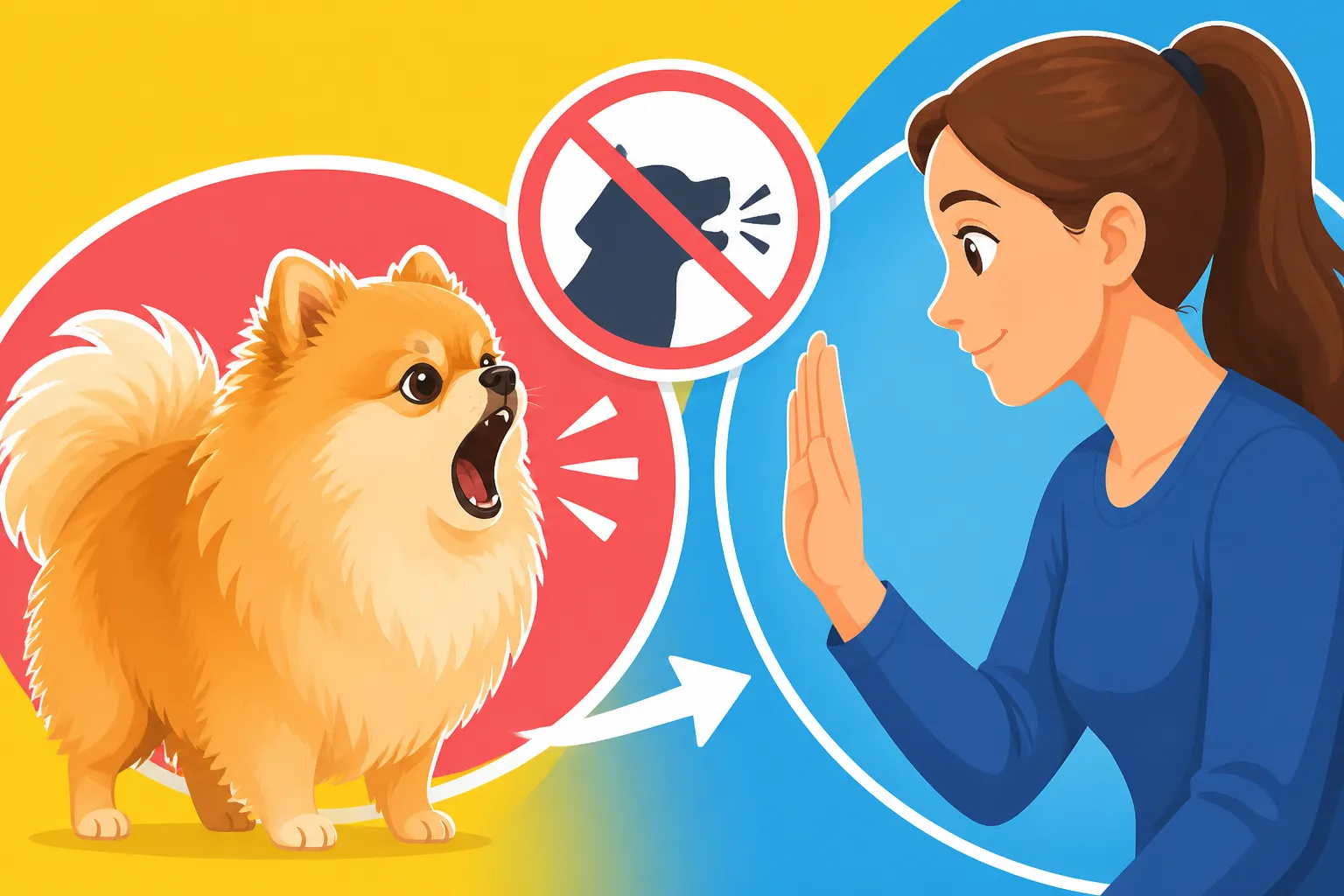
Getting a Barking Pomeranian to Stop on Command
It can be incredibly frustrating when your tiny Pomeranian, with their huge personality, seems to bark at absolutely everything – the mail carrier, a leaf blowing past the window, or even just you getting up from the couch. This constant vocalization isn't just annoying; it can strain relationships with neighbors and leave you feeling helpless. This guide will walk you through actionable strategies to teach your Pomeranian a "quiet" command, helping you regain peace in your home and build a stronger, calmer bond with your furry companion.
Understanding Why Your Pomeranian Barks
Before we can tackle how to stop the barking, it’s vital to understand why your Pomeranian is barking in the first place. Poms are intelligent, alert, and historically bred to be watchdogs. They have a natural inclination to let you know when something is amiss, no matter how small. Ignoring the root cause of the barking means you're just treating a symptom, and the behavior is likely to persist or manifest in other ways.
The Alert Bark: "Something's Different!"
Pomeranians are natural alert barkers. Their ancestors were much larger Spitz dogs used for guarding, and that instinct is deeply ingrained, even in a five-pound package. They will bark to signal the arrival of visitors, the sound of a doorbell, or even just a squirrel scampering across the lawn. This isn't necessarily a bad thing; they're trying to communicate with you. The key is to teach them that you are in charge of assessing the situation and they don't need to continue their vocal alarm once you acknowledge it. This type of barking is often loud and insistent, a definite "pay attention!" signal.
It's easy to accidentally reinforce this behavior. Every time your Pomeranian barks at the door and you immediately rush to see who it is, you're essentially telling them, "Good job! Keep barking, and I'll investigate!" They've successfully communicated their message and achieved their goal. To manage this, you need to change your response. Acknowledge their alert with a calm, reassuring word, and then take over the "watchdog" role yourself. For more insights into this specific trigger, consider reading The Doorbell and the Pomeranian Response.
Attention-Seeking Bark: "Look at Me!"
Pomeranians thrive on attention, and they quickly learn that barking is a very effective way to get it. If they want to play, a treat, a cuddle, or even just for you to look their way, a well-timed bark can do the trick. Many owners fall into the trap of inadvertently rewarding this behavior. When your Pom barks for attention, and you respond by scolding them, picking them up, or even just making eye contact, they've won. Any reaction, positive or negative, is still attention in their eyes. This cycle can be particularly frustrating because it feels like you're constantly being manipulated by your tiny tyrant.
Breaking this pattern requires strong willpower and consistency. You have to commit to ignoring the barking when it's clearly for attention. Turn your back, leave the room, or sit down and ignore them completely. The moment they quiet down, that's when you give them attention. It might feel counterintuitive at first, and the barking might even escalate initially as they try harder, but perseverance is key. Understanding Whether Ignoring a Pomeranian's Barking Works can help solidify this strategy.
Boredom or Anxiety Bark: "I'm Stressed!"
A bored Pomeranian is a vocal Pomeranian. These smart, energetic dogs need mental and physical stimulation. If they're left alone for long periods without toys, enrichment, or proper exercise, barking can become an outlet for their pent-up energy or frustration. Similarly, anxiety, especially separation anxiety, can manifest as incessant barking. A Pomeranian who barks non-stop when you leave might not be trying to annoy the neighbors; they might genuinely be distressed. This can be heartbreaking for owners, as you want your furry friend to feel safe and happy, not anxious.
Recognizing the difference between boredom and anxiety is important. Boredom barking might be accompanied by destructive chewing or general restlessness, while anxiety barking often includes pacing, house-soiling, or intense whining. For Poms prone to anxiety when left alone, it's crucial to address the underlying emotional state. Creating a calming environment, providing engaging toys, and gradually building their confidence in being alone can help. You can find many options for interactive puzzle toys on Amazon to keep their minds engaged. For specific guidance on managing distress when you're not around, read Whether a Pomeranian Barks When Left Alone and A Pomeranian That Screams the Moment You Leave.
Teaching the "Quiet" Command
Teaching your Pomeranian a "Quiet" command isn't about silencing them entirely; it's about giving them an off-switch. This command empowers you to control their vocalizations rather than simply reacting to them. It requires patience and positive reinforcement, but it's a skill that will benefit both you and your Pom immensely.
Step 1: Provoke and Praise the Bark
This might sound backward, but the first step is to get your Pomeranian to bark on command, or at least in a controlled situation. This allows you to associate the barking with a cue. Ask a friend to stand outside your door and knock, or ring the doorbell. Your Pom will likely start barking. As soon as they do, say "Bark!" or "Speak!" and then immediately give them a treat and praise. Repeat this several times until they start to associate the sound of the knock with the "Bark!" command and the reward.
The goal here isn't to encourage more barking, but to gain control over it. Once they understand that barking can earn them a reward when you ask for it, you can then move on to teaching the quiet. This foundational step of getting them to vocalize on cue is surprisingly effective for the next stage. It lays the groundwork for them understanding that their voice is a tool they can use, but you have the remote control. You can find excellent training treats for this purpose on Amazon.
Step 2: Introduce the "Quiet" Cue
Once your Pomeranian is reliably barking on command, or at least in a predictable situation like at the doorbell, it's time to introduce the "Quiet" command. Have your friend knock again. Your Pom barks, you say "Bark!" and then quickly, before they can bark again, offer them a high-value treat right to their nose. As their mouth closes to take the treat, they will momentarily stop barking. The instant they are quiet, say "Quiet!" (or "Enough!"), give them the treat, and praise them enthusiastically.
The timing is critical here. You're rewarding the cessation of barking, not the barking itself. If they continue to bark after you've offered the treat to their nose, try again. The treat should be so appealing that they pause their barking to sniff or take it. Over time, they'll learn that the "Quiet" command signals that they should stop barking to earn a reward. This process might take several short sessions, as their focus is often intense when they're in full bark mode. Remember, consistency in your delivery of both the command and the reward is paramount. For a comprehensive online resource that walks you through such commands, programs like BAXTER & Bella can be incredibly beneficial.
Step 3: Generalize the Command and Increase Distractions
Once your Pomeranian understands "Quiet" in a controlled setting, you need to practice it in various environments with increasing distractions. Start by using the command in different rooms of your house. Then, move to more challenging situations, such as when they bark at a dog walking past the window, or when someone is talking loudly outside. The goal is for them to respond to "Quiet" regardless of the trigger.
As you generalize, gradually increase the time they need to remain quiet before getting the treat. Instead of immediately giving the treat when they stop, wait for a count of one second, then two, then three, before rewarding. This teaches them to hold their silence. If they bark again before you've given the treat, withdraw the treat and try again. Don't forget to vary your rewards; sometimes it can be a favorite toy or a quick game of tug instead of just food. Training Session Length for a Pomeranian can give you an idea of how to structure these practice sessions to keep your Pom engaged and prevent burnout.
Addressing Specific Barking Triggers
Different barking triggers require slightly different management strategies, even with a solid "Quiet" command in place. Tailoring your approach to the specific context can significantly improve your success rate.
Doorbell and Window Barking
The doorbell or people passing by the window are classic Pomeranian barking triggers. To manage this, combine your "Quiet" command with environmental management. If your Pom barks excessively at people or dogs outside, consider blocking their view with window film or curtains during certain times of the day. For the doorbell, practice the "Quiet" command specifically for that sound. Have someone ring the bell, command "Quiet!", reward silence, and then reward again for calmly greeting the "visitor" (even if it's just your family member).
A key part of this is to control the initial intensity of the barking. When the doorbell rings, instead of letting your Pom launch into a full-blown barking frenzy, immediately intervene with your "Quiet" command. Then, have them go to a designated "place" (like their bed or crate) before you open the door. Reward them for staying there quietly. This teaches them to associate the doorbell with going to their spot and being quiet, rather than with a chaotic barking session. You can find durable, comfortable dog beds perfect for a "place" command on Amazon.
Barking at Other Dogs
Pomeranians can be surprisingly bold around other dogs, often barking at dogs much larger than themselves. This can be due to excitement, fear, or an attempt to assert dominance. When walking your Pom, if they start barking at another dog, calmly redirect their attention before the barking escalates. Use a high-value treat or a favorite squeaky toy to get their focus back on you. Command "Look at me!" or "Touch!" (where they touch their nose to your hand), reward the focus, and then calmly walk past the other dog.
Avoid tense leash corrections or pulling them away forcefully, as this can heighten their anxiety or frustration and potentially worsen the barking. Instead, aim to create positive associations. If possible, keep a distance where they can see the other dog without reacting, and reward them for calm observation. Gradually decrease the distance as they improve. Consider a front-clip harness, available on Amazon, which can help give you better control without putting pressure on their delicate trachea.
Separation Anxiety and Loneliness Barking
This is perhaps the most challenging type of barking to address, as it stems from deep-seated emotional distress. Simply commanding "Quiet!" won't fix separation anxiety. Instead, you need a multi-faceted approach focused on Building a Pomeranian's Independence. Start by making your departures and arrivals non-events. Don't make a big fuss when you leave or when you return. Practice short departures, leaving for just a few minutes, then returning before they have a chance to get anxious or start barking. Gradually extend the time you're away.
Provide plenty of mental and physical exercise before you leave them alone. A tired Pom is a less anxious Pom. Offer engaging puzzle toys stuffed with treats (like a Kong) to keep them occupied. Desensitize them to your departure cues (keys jingling, putting on shoes) by doing them randomly without actually leaving. If the anxiety is severe, professional help from a veterinary behaviorist or a certified dog trainer might be necessary. Online programs, such as those offered by BAXTER & Bella, also provide structured approaches to managing separation-related behaviors.
Consistency, Patience, and Realistic Expectations
Training a Pomeranian, especially when it comes to barking, is a marathon, not a sprint. These little dogs are smart, but they also have strong wills and a natural predisposition to being vocal.
The Importance of Consistent Reinforcement
Every single member of your household needs to be on the same page regarding the "Quiet" command and how to respond to barking. If one person ignores attention-seeking barks while another gives in, your Pomeranian will quickly learn who to bark at to get what they want. Inconsistency is the enemy of effective training. Hold short, frequent training sessions daily. Remember that The Reward a Pomeranian Actually Cares About can vary, so experiment to find what motivates your Pom most.
Environmental management is also a form of consistency. If window barking is a problem, keep the blinds closed when you're not actively working on training that specific trigger. Prevent opportunities for your Pomeranian to practice unwanted barking, especially in the early stages of training, to build good habits. This also means being mindful of what you're accidentally rewarding; for example, if you grab the leash for a walk while they're barking excitedly, you're reinforcing that barking leads to walks.
| Barking Type | Common Triggers | Initial Owner Response | Long-term Training Focus | What to Avoid |
|---|---|---|---|---|
| Alert/Warning | Doorbell, passersby, strange noises | Acknowledge, then "Quiet" command | "Quiet" on command, go to "place" upon trigger | Rushing to door every time they bark, yelling |
| Attention-Seeking | Owner ignoring them, wanting a treat | Ignore immediately, reward silence | Consistent "Quiet," reward calm behavior, prevent accidental rewards | Scolding, making eye contact, giving any attention |
| Boredom/Frustration | Lack of exercise, no mental stimulation | Engage with puzzle toys, redirect to appropriate activity | Increased exercise, mental enrichment, structured play | Leaving them with nothing to do, yelling out of frustration |
| Anxiety/Fear | Being alone, new environments, loud sounds | Comfort calmly, identify and manage triggers | Desensitization, counter-conditioning, build confidence, professional help if severe | Punishing fear, forcing interaction, making a big fuss during departures |
Why Punitive Methods Backfire
It's tempting to want to scold, spray with water, or use a bark collar when you're at your wit's end. However, these methods are not only ineffective in the long run but can also damage your relationship with your Pomeranian and even worsen the barking. A bark collar, for instance, might stop the barking temporarily, but it doesn't teach your Pom why they shouldn't bark or what to do instead. It can create fear and anxiety, potentially leading to more complex behavioral issues. Moreover, due to their delicate windpipes, physical corrections around the neck or even certain types of collars are particularly dangerous for Pomeranians. For more on this, please read Why a Bark Collar Is Wrong for a Pomeranian's Throat.
Punishment often suppresses the behavior rather than solving the underlying problem. A fearful Pom might stop barking when you're around, but bark even more when you're gone. Positive reinforcement, on the other hand, builds a cooperative relationship based on trust and understanding. It teaches your Pomeranian that listening to you results in good things, making them more willing to comply.
Setting Realistic Goals
Your Pomeranian will likely never be completely silent. Nor should they be! Barking is a natural form of canine communication. The goal isn't to eliminate barking entirely but to manage it, reduce excessive vocalization, and gain control over when and how long they bark. Understand that there will be good days and bad days. Don't get discouraged if there's a setback. Just go back to basics, shorten your training sessions, and recommit to consistency.
It takes time for a dog to unlearn old habits and form new ones, especially for a breed as independent and intelligent as a Pomeranian. Think of it as a journey of communication with your beloved pet. Celebrate the small victories, like a shorter barking spell at the doorbell or a quiet moment during a walk. With dedication and the right approach, you can significantly reduce your Pomeranian's incessant barking and enjoy a much calmer, happier home life together. Remember that even small dogs have huge learning potential, and sometimes How Long a Pomeranian Will Hold Focus can surprise you with how quickly they pick things up.
Disclaimer
This article is for general informational purposes only and does not constitute professional advice. Laws, prices and regulations vary by location and change over time. Consult a qualified professional for guidance on your specific situation.