Whether a Pomeranian Warns You About Strangers
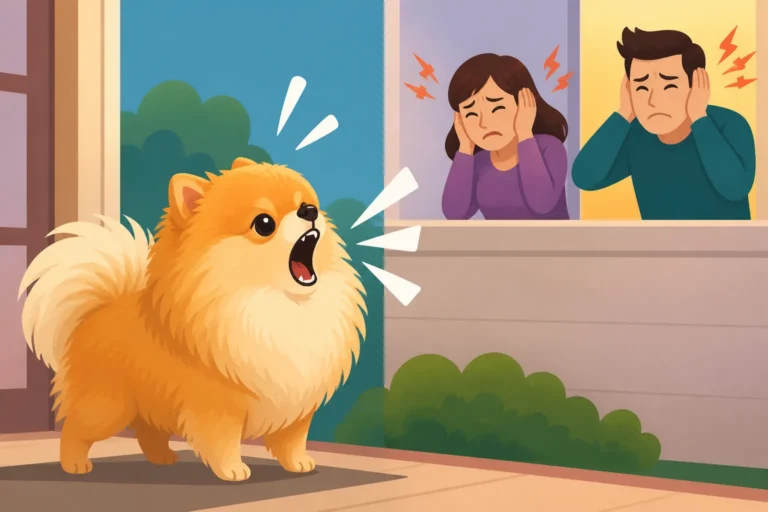
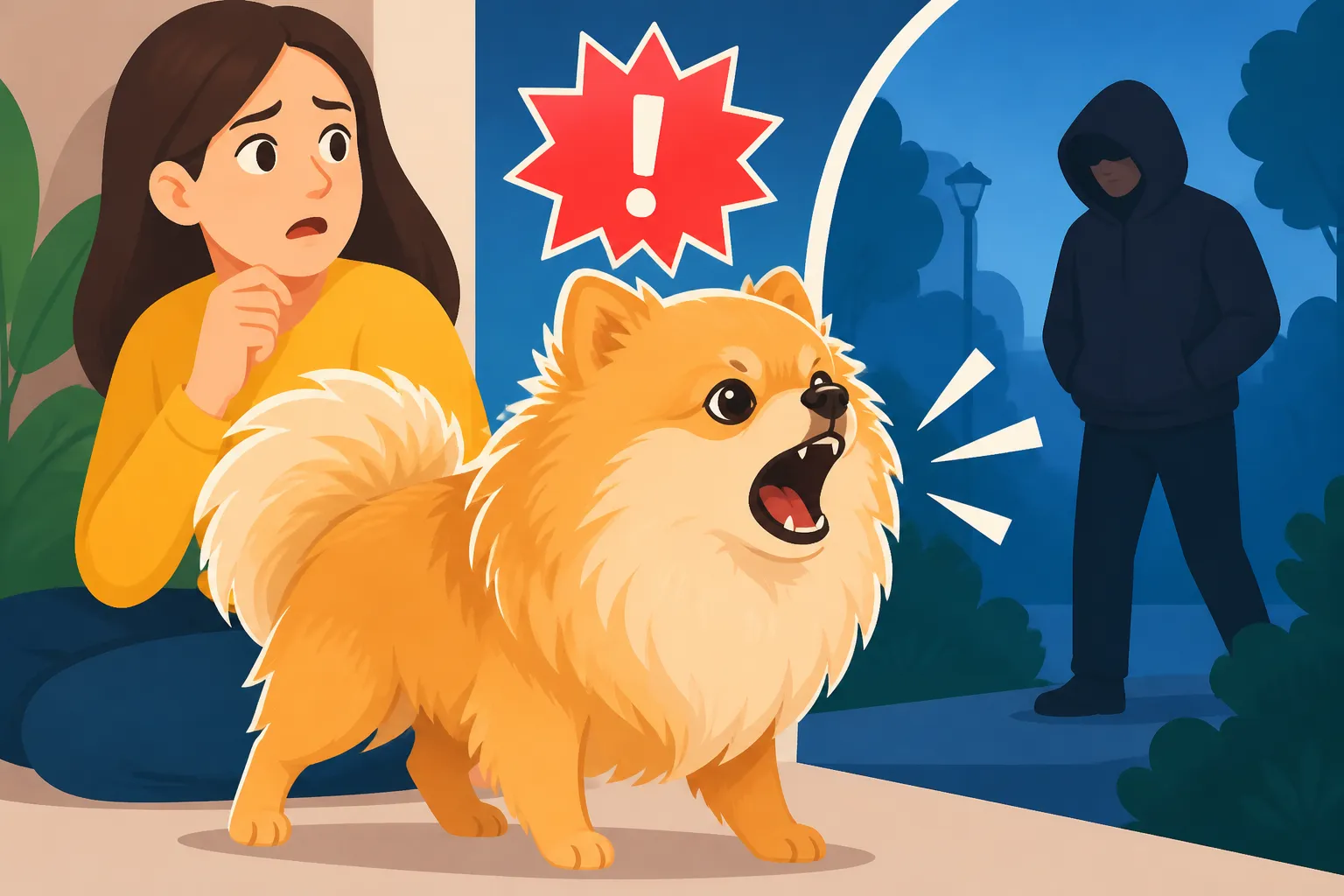
It can be incredibly frustrating, and often quite embarrassing, when your tiny Pomeranian erupts into a furious cacophony of barks every time a new face appears at your door or passes by on the sidewalk. You might wonder, "Is my little fluff ball actually trying to warn me of danger, or is this just pure noise?" This guide will delve into the true nature of a Pomeranian's vocalizations when encountering strangers, helping you understand their instincts, decode their barks, and implement effective strategies to manage their reactions for a calmer home.
The Instincts of an Alert Breed: More Than Just a Cute Face
Many Pomeranian owners are initially drawn to these dogs for their adorable, fluffy appearance and spirited personalities. What often comes as a surprise, however, is the sheer volume and persistence of their barks. This isn't a flaw in their character; it's deeply ingrained in their breed heritage.
The Spitz Heritage and the Watchdog Role
To understand why your Pomeranian reacts so strongly to strangers, we need to look back at their ancestry. Pomeranians are direct descendants of much larger Arctic Spitz breeds, working dogs like the German Spitz, which were historically used for guarding property and livestock. While selective breeding drastically reduced their size over centuries, that core instinct to be an alert system, a "watchdog," remains strong. They weren't bred to be intimidating guard dogs, capable of fending off intruders; rather, they were bred to be excellent alarm systems. Their job was to bark loudly and persistently to alert the larger working dogs or their human companions to anything unusual, including the approach of unfamiliar people.
Think of it this way: your Pomeranian isn't necessarily thinking, "I must protect my human from this person." Instead, their brain is often yelling, "Intruder alert! Something new! Everyone needs to know!" This distinction is crucial. It's less about active protection and more about inherent vigilance and communication. Their small stature means they rely on their voice, not their physical presence, to make an impact. This deep-seated trait means you're working with centuries of instinct, not just a naughty puppy.
Why Pomeranians Are Prone to Being Vocal
Beyond their historical role, several other factors contribute to a Pomeranian's propensity for barking, particularly when it comes to strangers. Their intelligence, coupled with their small size, can create a powerful vocal combination. A Pomeranian often perceives its environment with an acute awareness, and anything out of the ordinary is considered worthy of an announcement.
Firstly, their small size can sometimes make them feel more vulnerable. While they often have big dog personalities, they are physically tiny, and barking can be a way to create a larger presence, to make themselves seem more formidable. Secondly, Poms are inherently curious and often very confident, which can lead them to investigate new stimuli vocally. Every new sight, smell, or sound is a data point, and many Poms feel compelled to communicate these findings to their family. This is why you might notice your Pomeranian barking at a leaf blowing across the yard or a squirrel scampering up a tree – it's all part of their alert nature. This constant vigilance can make them prone to barking at anything that moves, including strangers, as we discuss further in Why a Pomeranian Barks at Everything That Moves. It's a fundamental part of their being, making silent acceptance of new people a learned behavior rather than an innate one.
Decoding the Pomeranian Bark: Warning or Something Else?
When your Pomeranian launches into a barking frenzy at a newcomer, it's natural to interpret it as a "warning." However, the truth is often more nuanced. While they are indeed alerting you, the underlying emotion or intent behind the bark can vary significantly. Understanding these distinctions is key to addressing the behavior effectively.
Distinguishing a True Warning Bark
A true, protective "warning" bark, in the sense of a large guard dog sensing a genuine threat, is actually quite rare in a Pomeranian. Their physical capabilities simply don't align with that kind of defensive posture. If a Pomeranian were genuinely issuing a dire warning of impending physical danger, their bark might be a lower, more guttural sound, accompanied by a stiff body, raised hackles, and perhaps a subtle growl. This would typically be a sustained, serious vocalization.
More often, what we perceive as a warning is actually an alert bark or an announcement bark. Your Pomeranian is communicating, "Hey, human, there's someone new here!" rather than "Danger! Protect yourself!" The tone is usually higher pitched, more frantic, and often accompanied by excited tail wags or a bouncy posture, especially if the "stranger" is a familiar friend. If your Pom is simply announcing a visitor, their body language might show curiosity, excitement, or even a bit of apprehension, but not necessarily aggressive intent. They're doing what they were bred to do: notifying their pack of external presence. It's their way of fulfilling their miniature watchdog duty.
Common Barking Triggers Beyond Warning
It's vital to recognize that not all barks directed at strangers stem from the same place. Poms are complex little creatures, and their vocalizations can be triggered by a range of emotions and learned behaviors.
-
Excitement/Attention-Seeking: Sometimes, your Pomeranian barks at a new person purely out of excitement or a desire for attention. They see a new person as a potential source of pets, treats, or play. This is especially true if previous barking episodes have inadvertently led to the visitor giving them attention (even negative attention like "Quiet!"). They quickly learn that barking gets a reaction. Think about how your Pom reacts when the doorbell rings; this is often a prime example of excitement mixed with alert behavior, as explored in The Doorbell and the Pomeranian Response. They're not "warning" you as much as they are expressing their anticipation or demanding to be part of the interaction.
-
Fear/Anxiety: For some Pomeranians, barking at strangers isn't about warning or excitement; it's rooted in fear or anxiety. A new, unfamiliar person can be perceived as a threat, especially if the dog hasn't been adequately socialized or has had negative experiences. In this scenario, the barking is an attempt to make the perceived threat go away, a "stay away from me!" signal. You might see accompanying body language like tucking the tail, leaning away, lip licking, or trying to hide behind your legs. This kind of barking can be particularly challenging because it comes from a place of vulnerability, and simply telling them "no" can worsen their fear. Understanding if your Pom barks from genuine fear or just habit is critical, a topic detailed in Whether a Pomeranian Barks From Fear or Habit.
-
Territoriality: Pomeranians, despite their size, can be quite territorial. They may perceive your home, your yard, or even your lap as their personal domain, and any new person entering it is seen as an intruder. Their barking in these instances is an attempt to "mark" their territory and communicate boundaries. This isn't necessarily aggressive, but it's a firm statement of ownership. This territorial behavior can extend to resource guarding, where they might guard their owner's presence or a specific spot on the furniture, making new arrivals a perceived threat to their established order.
-
Learned Behavior: This is a big one. Dogs are masters of association. If barking at strangers has, in the past, resulted in the stranger leaving (even if it was coincidental), or if you've inadvertently rewarded the barking with attention (even scolding is attention!), your Pom learns that barking is an effective strategy. It becomes a habit, a go-to response for novel stimuli. Breaking this learned pattern requires consistent and intentional training, ensuring that calm behavior is rewarded, not the noise.
| Bark Type | Primary Motivation | Common Body Language | Owner Interpretation |
|---|---|---|---|
| Alert/Greeting | Announcing, excitement | Tail wagging, bouncy, eager stance, sometimes playful | "Someone's here!" / "Hello!" |
| Fear/Anxiety | Making threat disappear | Tail tucked, ears back, leaning away, lip licking | "Go away, I'm scared!" |
| Territorial | Protecting space | Stiff body, forward posture, perhaps growling | "This is my space, stay out!" |
| Attention-Seeking | Desire for interaction | Bouncing, looking at owner, pawing, persistent | "Look at me!" / "Pay attention!" |
Managing Your Pomeranian's Vocal Reactions to Strangers
Now that we understand the various reasons a Pomeranian might bark at strangers, the next step is to implement effective management and training strategies. The goal isn't to silence your Pom completely, but to teach them more appropriate and calmer ways to react to new people.
Socialization and Positive Associations
One of the most powerful tools you have is early and ongoing socialization. A well-socialized Pomeranian is generally more confident and less likely to react with fear or extreme territoriality to strangers. This means exposing your puppy to a wide variety of people, sights, sounds, and experiences in a positive and controlled way from a young age. Think about people of different ages, genders, hats, glasses, uniforms, and walking gaits. Always ensure these encounters are positive, perhaps pairing the sight of a new person with a high-value treat.
For an adult Pomeranian, you'll employ counter-conditioning. This means changing your dog's emotional response to strangers from negative (fear, territoriality, excessive excitement) to positive. Whenever a stranger appears, immediately give your Pom a fantastic treat, one they only get in this specific context. The goal is for them to associate "stranger" with "yummy treat" rather than "something to bark at." Start at a distance where your Pom notices the stranger but doesn't react vocally, and gradually decrease the distance as they become more comfortable. Remember, Socializing a Pomeranian Before Its Shots Finish needs to be done carefully, but early, safe exposure is crucial for their long-term confidence.
Training for Calm Introductions
Structured training can make a world of difference. Teaching a "quiet" command is invaluable. You can do this by letting your Pom bark a few times, then gently interrupting them with a treat to their nose, and once they're quiet, saying "Quiet" and rewarding them. Repeat this until they associate the word with ceasing barking. Getting a Barking Pomeranian to Stop on Command provides a detailed approach to this.
Another effective strategy is to teach your Pomeranian a "place" command. This involves sending them to a specific mat, bed, or crate when someone comes to the door. Reward them generously for staying on their place while visitors are present. This gives them a job to do and a designated safe space, reducing their need to "manage" the situation themselves. Using positive reinforcement tools can greatly aid this process. Many owners find structured online courses helpful; resources like BAXTER & Bella offer comprehensive guides for puppy and adult dog training that address these specific behavioral challenges, breaking down complex training into manageable steps.
When guests arrive, ask them to initially ignore your Pomeranian. Poms often get more agitated if strangers immediately try to pet them. Once your Pom is calm, then your guest can offer a treat (you provide it, so you control the interaction) or a gentle pet. A well-fitting harness, readily available on platforms like Amazon, can also be a helpful tool for gently guiding and managing your Pomeranian during these introductions without putting pressure on their delicate neck or windpipe. Remember, successful training requires patience and consistency. Understanding The Reward a Pomeranian Actually Cares About will boost your success rate, as will keeping Training Session Length for a Pomeranian short and positive.
Environmental Management and Owner Behavior
Sometimes, the simplest solutions involve managing your environment. If your Pomeranian barks excessively at people walking by your windows, consider using privacy film, curtains, or blinds to limit their view. This removes the trigger, giving you a quieter home and reducing the constant reinforcement of the barking behavior. For Poms who bark from a yard, supervising outdoor time or creating a barrier can be essential, especially for maintaining good relations with Neighbors and a Pomeranian's Voice.
Your own behavior plays a massive role. If you get agitated, yell, or constantly try to shush your Pomeranian, you might actually be reinforcing the barking with attention, even if it's negative. It's also easy to inadvertently reinforce fear. If your Pom barks nervously at a stranger and you immediately pick them up and coddle them, you're teaching them that their fear is justified and barking is the way to get comfort. Instead, strive to remain calm and confident yourself. Show your Pomeranian that new people are not a threat by modeling relaxed behavior. Whether Corrections Backfire on a Pomeranian is an important read, as harsh corrections can often make fear-based barking worse. If your Pom is particularly reluctant to greet or even growls at new people, more specific guidance might be needed, as explored in A Pomeranian That Refuses to Greet Guests or A Pomeranian That Growls at Visiting Kids. Building your Pomeranian's independence and confidence, rather than constantly protecting them, is often the path to a calmer companion.
Disclaimer
This article is for general informational purposes only and does not constitute professional advice. Laws, prices and regulations vary by location and change over time. Consult a qualified professional for guidance on your specific situation.