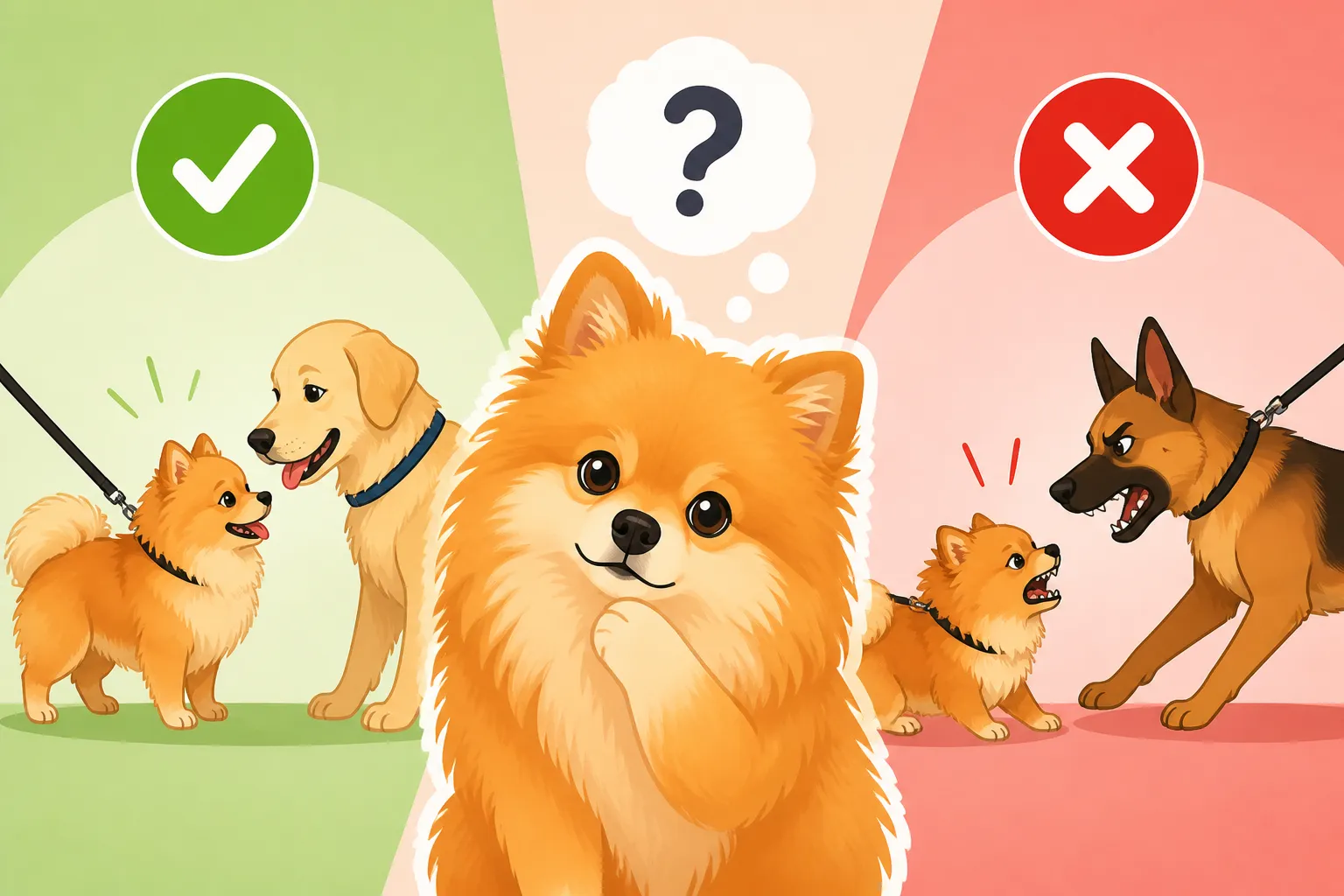
Whether a Pomeranian Should Meet Dogs on Leash
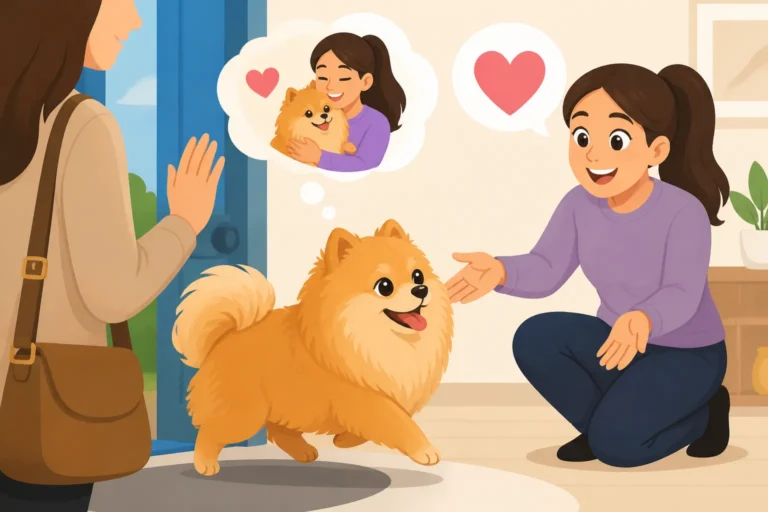
It's a common, understandable impulse when you're out walking your precious Pomeranian: you see another dog, the owner smiles, and everyone naturally moves in for a quick "hello." We want our Poms to be friendly, social butterflies, right? But here's the honest truth, and it might surprise you: on-leash greetings, especially for a tiny dog like a Pomeranian, are often not a good idea. In fact, they can be downright risky, creating anxiety, reactivity, or even leading to serious injury. It's a situation fraught with good intentions that can quickly go sideways, leaving both you and your little floof stressed or hurt. This guide will walk you through why on-leash meetings are often problematic for Poms and offer safer alternatives and strategies for managing these common encounters.
The Risks of On-Leash Greetings for a Pomeranian
Let's face it, our Pomeranians are small. Adorably, wonderfully small. But that petite stature, combined with the artificial restraint of a leash, sets up a unique set of challenges and dangers when it comes to meeting other dogs on the sidewalk. It's not about being anti-social; it's about being realistic and protective of our beloved companions.
The Size Disadvantage and Its Dangers
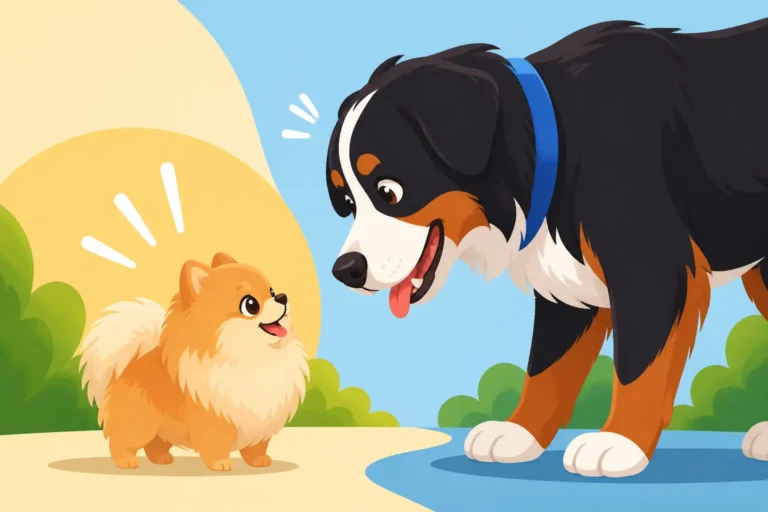
This is perhaps the most glaring risk. Your three, five, or seven-pound Pomeranian, with their delicate bones and fluffy exterior, is a stark contrast to a boisterous Labrador, a curious German Shepherd, or even a rambunctious terrier. While most larger dogs are well-meaning, a simple misstep, an overzealous sniff, or an accidental bump can have devastating consequences for your Pom. Their small size makes them incredibly vulnerable. A large dog might step on them, knock them over, or even try to "play" in a way that’s far too rough for a tiny Pomeranian. I’ve heard countless stories of Poms suffering sprains, fractures, or internal injuries from seemingly innocuous interactions with much larger dogs who simply don't understand their own strength. It's not always malice; often, it's just a tragic mismatch in size and play style. This is a primary reason why you should think twice about A Five Pound Pomeranian Around Big Dogs in uncontrolled environments.
Imagine you're holding your Pom's leash, and a Retriever approaches. The Retriever might pull its owner, eager to greet. Even if the owner has good intentions, that sudden lunge or playful pounce from a dog ten or twenty times your Pom's weight could be disastrous. Your Pomeranian, caught on a short leash, has no escape route. They can't quickly dart away if they feel overwhelmed or threatened, which brings us to the next point.
Leash Frustration and Reactivity
Leashes, while essential for safety and control, fundamentally alter canine social dynamics. When dogs meet off-leash, they have the freedom to approach in a wide arc, sniff, engage, or disengage as they see fit. They can use their full body language—tail wags, relaxed posture, turning away—to communicate intentions. Leashes, however, force a head-on, often confined, greeting. This can lead to what's known as "leash frustration" or "barrier frustration."
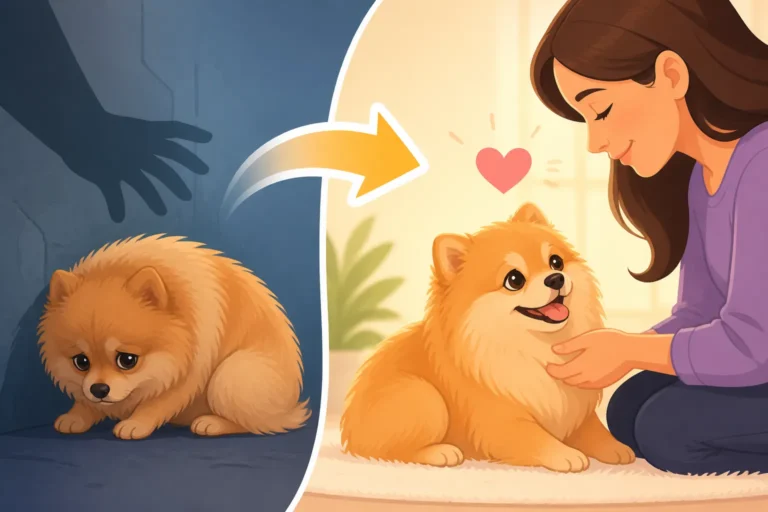
Your Pomeranian, unable to retreat or move freely, might feel trapped. This can manifest as barking, lunging, or growling – behaviors that might be misinterpreted by the other dog or owner as aggression, when it's often a manifestation of fear or anxiety. The tight leash itself can create tension, literally and figuratively, amplifying any stress your Pom feels. Similarly, the other dog might feel the same frustration, becoming more agitated on leash than they would off-leash. This can escalate quickly into a stressful, noisy, or even dangerous encounter. It's a common scenario that can turn a normally calm dog into one that seems "reactive" on walks. Owners often ask Why a Pomeranian Picks Fights It Cannot Win, and leash frustration is a big part of the answer. A good quality, comfortable harness, found on platforms like Amazon, can help alleviate some physical pressure compared to a collar, but it doesn't solve the social dynamic.
Protecting Their Fragile Bodies and Windpipes
Beyond the general size mismatch, Pomeranians have specific vulnerabilities that make on-leash greetings risky. Their tracheas are notoriously delicate, prone to conditions like collapsing windpipe. A sudden jerk on a collar, even from a well-meaning dog's lunge or a startled reaction, can put immense strain on this area. While a harness is generally recommended for Pomeranians to protect their neck and throat, even with a harness, a significant impact or being accidentally bowled over can cause injury to their small ribcage or spine. Walking a Pomeranian on a Fragile Windpipe requires careful consideration, and uncontrolled interactions with other dogs definitely fall into the high-risk category.
Think about it: in the chaos of a tense on-leash greeting, with dogs sniffing rapidly and potentially bumping into each other, your Pomeranian's fragile structure is at stake. Their little legs can be easily twisted or stepped on, leading to Slipping Kneecaps in a Five Pound Pomeranian or other orthopedic issues. The risk simply isn't worth a quick, often awkward, forced social interaction.
Why Off-Leash Socialization is Different (and Often Better) for Poms
It might sound counterintuitive, but often, the safest and most beneficial way for a Pomeranian to interact with other dogs is off-leash, in a controlled and appropriate environment. This allows them to use their natural canine communication skills and navigate social situations on their own terms, without the constraints and frustrations that leashes impose.
Neutral Territory and Body Language
When dogs meet in a neutral, off-leash setting, they have the space and freedom to approach each other naturally. They can walk in a curve, engage in parallel walking, sniff each other’s rear ends (which is polite in dog language), and use a full spectrum of body language to signal their intentions. A relaxed body posture, a wagging tail held at a mid-height, or a gentle play bow communicates friendliness. Conversely, if one dog feels uncomfortable, they can simply move away, shake off tension, or find a safe space without being physically restrained. This freedom of movement is crucial for small dogs like Pomeranians, who often prefer to disengage from overly boisterous play or larger dogs.
In a well-managed off-leash situation, your Pomeranian can learn to read other dogs' signals and respond appropriately, developing vital social skills. This contrasts sharply with the often-tense, direct approach forced by leashes on a sidewalk, where retreat is not an option.
The Importance of Managed Play
Instead of random sidewalk greetings, consider structured, managed playdates or small dog play groups. These environments offer several key advantages:
- Size-Appropriate Companions: Ideally, your Pomeranian should socialize with dogs of similar size and play style. This dramatically reduces the risk of accidental injury. A dedicated small-dog playgroup ensures your Pom won't be overwhelmed by larger, heavier playmates.
- Supervision: A good play environment is always supervised by attentive owners or staff who can intervene if play gets too rough or if a dog becomes overly stressed. They can ensure that all dogs are having a positive, safe experience.
- Neutral Setting: A fenced yard, a dedicated small-dog park area, or a friend's securely fenced space provides a neutral territory where dogs aren't feeling territorial or protective of their owner on a walk. This is a very different scenario from a public Why a Dog Park Is Dangerous for a Pomeranian, which can be overwhelming and unsafe due to the wide variety of dog sizes and temperaments.
Even better, consider puppy classes or obedience schools that incorporate supervised off-leash play sessions. Programs like those offered by BAXTER & Bella often include guidance on safe socialization, helping you understand how to introduce your Pom to other dogs in a positive way. This allows your Pomeranian to build confidence and develop appropriate social skills in a safe, controlled setting. These experiences are invaluable for a well-adjusted dog.
Safe Environments for Small Dogs
For true, beneficial socialization, think about creating or seeking out safe zones. This could mean:
- Friends with small, gentle dogs: Arrange a playdate in a secure backyard.
- Dedicated small-dog park areas: Some dog parks have separate, fenced sections for dogs under a certain weight. Always observe the dynamics before letting your Pom in.
- Indoor dog daycare (small dog specific): If you need to board or entertain your Pom, a daycare that separates dogs by size and temperament can be an excellent option for safe socialization. Whether a Pomeranian Is Safe at Daycare really depends on these factors.
- Training classes: Many positive reinforcement training centers include small, supervised play sessions as part of their curriculum, which is fantastic for building confidence. These can be particularly good for a puppy who needs Socializing a Pomeranian Before Its Shots Finish through carefully selected, vaccinated playmates.
These options provide a much more enriching and secure social experience for your Pomeranian than a fleeting, potentially hazardous, on-leash greeting with a stranger's dog on the street.
Strategies for Managing On-Leash Encounters
Even if you prefer off-leash socialization, you'll inevitably encounter other dogs while walking your Pomeranian on a leash. The key is to have strategies in place to manage these interactions proactively, prioritizing your Pom's safety and comfort above all else. Remember, you are your Pomeranian's advocate.
Avoiding Direct Greetings When Possible
This might sound rude to other dog owners, but it's often the kindest thing you can do for your Pomeranian. Not every dog needs to greet every other dog. It's perfectly acceptable to politely decline a greeting. Here's how:
- Change Direction: If you see another dog approaching, simply cross the street, turn around, or step off the path to create distance.
- Keep Moving: If you must pass closely, maintain a steady pace and don't stop. A quick "Sorry, we're in training!" or "He's not good with on-leash greetings!" is usually sufficient, even if it's not entirely true, the message is clear.
- Use Visual Cues: Some people use brightly colored vests or leashes that say "Dog in Training" or "No Dogs Please" (available on Amazon or specialty pet stores) to signal their preference from a distance.
Remember, you are not being impolite; you are being responsible. You are protecting your small, vulnerable dog from potential stress or injury. Many dog owners, especially those with small breeds, will understand and appreciate your caution.
Teaching a "Look at Me" or "Focus" Command
One of the most valuable tools you can have in your training arsenal is a solid "look at me" or "focus" command. This teaches your Pomeranian to divert their attention from a distraction (like another dog) and instead look at you for direction or a treat.
How to teach it:
- Start in a low-distraction environment: In your home, with no other dogs around.
- Hold a high-value treat: Something your Pom really loves, like small pieces of cooked chicken or cheese.
- Hold the treat near your eye: Say "Look at me!" or "Focus!"
- Reward immediately: The instant your Pom makes eye contact, say "Yes!" or "Good!" and give them the treat.
- Gradually add distractions: As your Pom masters this, practice in slightly more distracting environments – your backyard, a quiet park, and then eventually near other dogs at a distance.
The goal is that when you see another dog approaching, you can cue your Pomeranian to "look at me," they make eye contact, get a reward, and you can calmly walk past. This builds a positive association with seeing other dogs (they get a treat from you!) without the need for a stressful greeting. Programs like BAXTER & Bella’s online puppy school emphasize these foundational commands, which are critical for safe leash walking. This ties into Building a Recall on a Pomeranian That Ignores You, as a good focus command reinforces your connection and your Pom's responsiveness.
Advocating for Your Pomeranian's Space
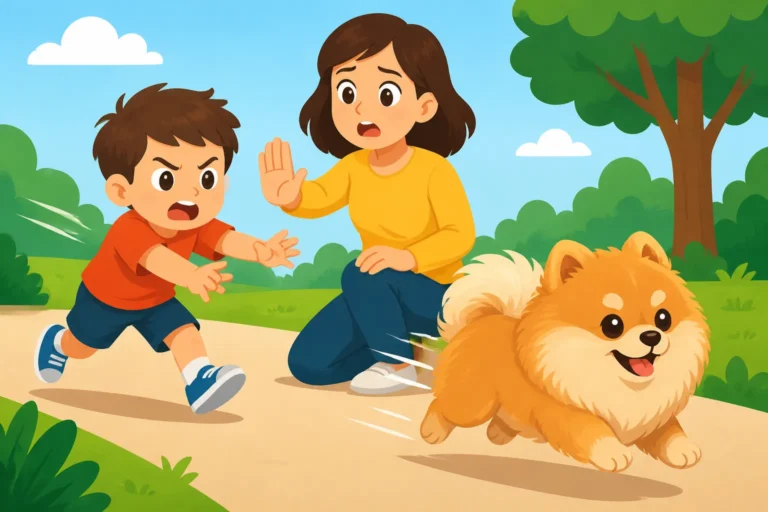
Your Pomeranian relies on you to protect them. This means being assertive and clear with other dog owners. If someone's dog is lunging, barking, or approaching too quickly, it's okay to say, "Please give us some space," or "My dog isn't comfortable meeting on leash." You don't need to apologize or explain extensively. A simple, firm statement is enough.
Here are some advocacy tips:
- Physical Barrier: Position yourself between your Pomeranian and the approaching dog.
- Verbal Cues: Clearly state your boundaries to the other owner.
- Be Proactive: Don't wait until the dogs are nose-to-nose before acting. Intervene when you first notice a potential conflict.
- Body Language: Use your own body language to signal "no approach" – turn your body slightly away, make direct eye contact with the other owner (not their dog), and keep your Pom close to your side.
It's natural to want our Pomeranians to be friendly and well-socialized, but it's crucial to understand the unique vulnerabilities they face, especially during on-leash greetings. By prioritizing their safety, managing encounters proactively, and seeking out safe, controlled off-leash socialization opportunities, you can ensure your little companion develops into a confident, happy dog without unnecessary risks.
| Aspect of Greeting | On-Leash Greeting | Off-Leash Greeting (Controlled Environment) |
|---|---|---|
| Space & Movement | Restricted, forced proximity, no escape | Freedom to approach, retreat, explore |
| Communication | Stilted, often leads to leash frustration, misinterpretation | Natural body language, sniff-and-assess |
| Risk of Injury | High for small Poms, especially with larger dogs | Lower in appropriate size-matched groups, supervised |
| Stress Levels | Can be high due to feeling trapped or overwhelmed | Generally lower, dogs choose interaction level |
| Learning/Socialization | Can create negative associations, reactivity | Builds confidence, teaches appropriate play |
| Owner Control | Physical restraint but less behavioral control | Relies on training & environment management |
Disclaimer
This article is for general informational purposes only and does not constitute professional advice. Laws, prices and regulations vary by location and change over time. Consult a qualified professional for guidance on your specific situation.