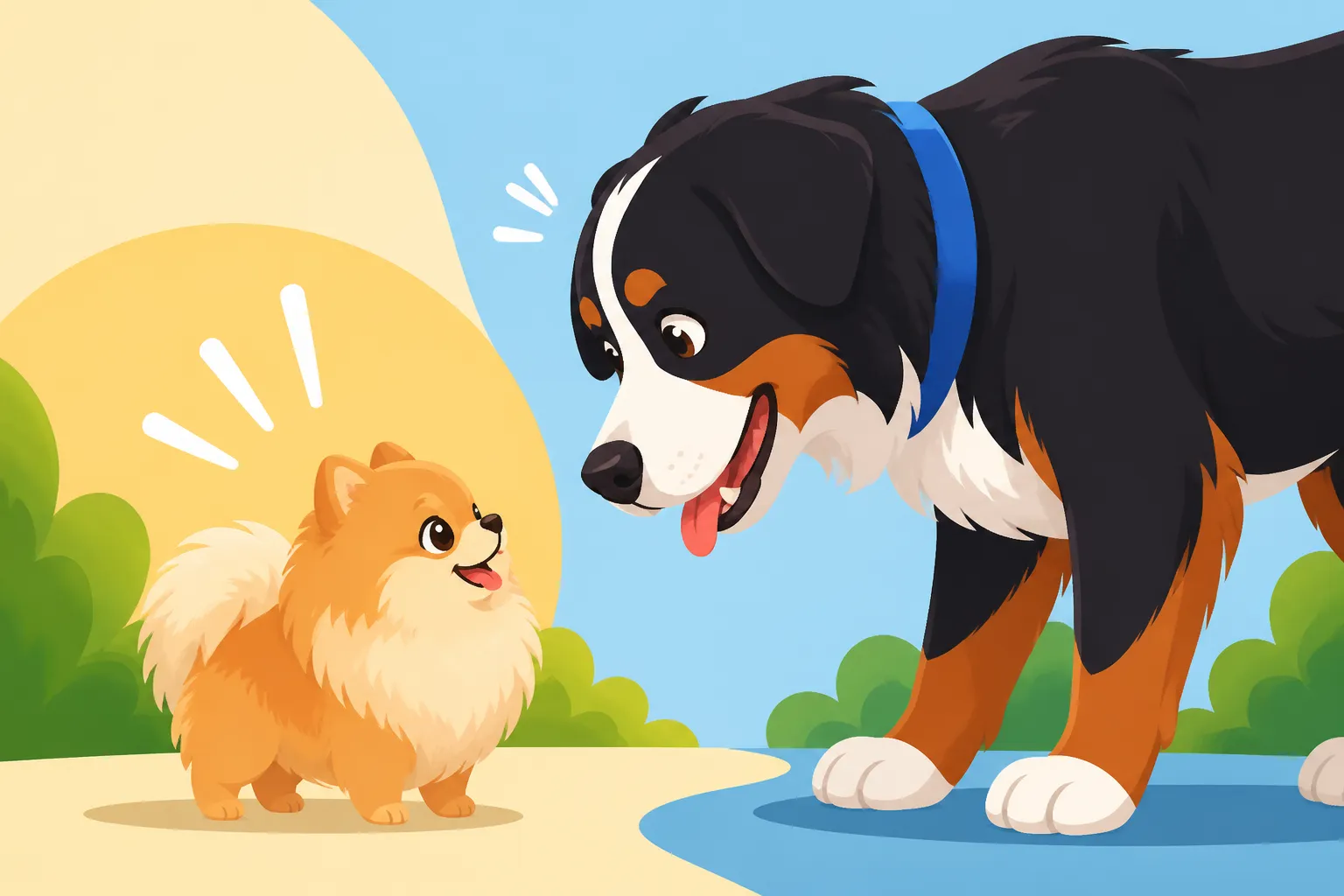
Introducing a Pomeranian to a Much Bigger Dog
Bringing a much larger dog into a home with a tiny Pomeranian, or vice-versa, can feel like a high-stakes balancing act. The size difference alone can spark worries about safety and compatibility, and it’s completely natural to feel overwhelmed by the potential risks. This guide will walk you through careful, step-by-step strategies to introduce a Pomeranian to a bigger dog successfully, fostering a safe and harmonious multi-dog household for everyone involved.
Understanding the Unique Challenges of Size Disparity
It’s easy to look at a fluffy, bold Pomeranian and forget just how delicate they truly are. When you introduce them to a much larger dog, even the gentlest giant can accidentally cause harm due to sheer size and weight. This isn't about blaming bigger dogs; it's about acknowledging the reality of physics and instinct.
The Fragility of a Pomeranian vs. a Larger Dog's Bulk
Imagine a robust Labrador or a playful Golden Retriever. They might view a Pomeranian as another small dog, a bouncy friend, or even a fast-moving toy. Their play style, which might involve enthusiastic nudges, paws, or even a friendly chase, could be devastating for a Pomeranian. Their bones are tiny, their organs vulnerable, and a misplaced paw or a tumble could lead to serious injury. We're talking about potential fractures, internal bruising, or even a punctured lung. It’s not about malice, but about the profound difference in their physical build.
Consider a common scenario: your Pomeranian, full of typical Pom confidence, might dart under the bigger dog's legs during play, or jump up excitedly. If the larger dog doesn't notice and steps down, the consequences can be dire. Similarly, a playful nip from a big dog, even one meant in fun, can have the force to seriously injure a small jaw or delicate rib cage. This isn't just a matter of roughhousing; it's a fundamental difference in how their bodies are designed to withstand impact. This vulnerability is why management and supervision are absolutely paramount, especially in the early stages and during unsupervised moments.
Pomeranian Personality: Big Dog in a Small Body Syndrome
One of the most charming, yet sometimes challenging, aspects of a Pomeranian is their self-assured, often fearless demeanor. They often don't seem to realize they are small. They'll bark at dogs twice their size, try to lead the pack, and stand their ground with an admirable, if sometimes reckless, courage. This "big dog in a small body" syndrome can be a double-edged sword when introducing them to a larger canine companion.
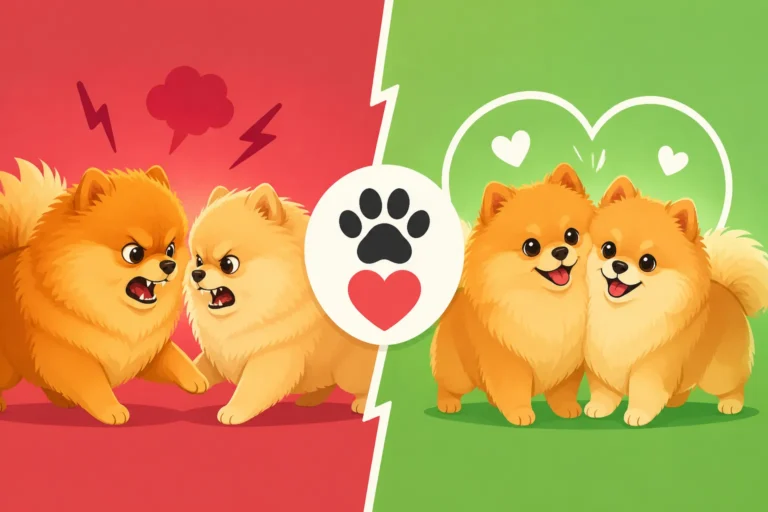
While their confidence can help them stand up for themselves and not be easily intimidated, it can also lead them to instigate interactions that are physically dangerous. A Pomeranian might nip at the heels of a larger dog, bark persistently in its face, or challenge its personal space, completely oblivious to the fact that it is playing with fire. The larger dog, if not well-socialized or incredibly tolerant, might react with a snap or a body block that is far too powerful for the tiny Pom. This is where the human element comes in: we need to be our Pomeranian’s protector and advocate, preventing them from putting themselves in harm's way due to their own bravado. It’s crucial to understand Why a Pomeranian Picks Fights It Cannot Win and to actively manage these situations.
Preparing for the First Meeting: Safety First
Before your two dogs even lay eyes on each other, you need to create an environment that prioritizes safety and sets both dogs up for success. This isn't a quick process; it requires forethought, patience, and the right tools.
Establishing Safe Spaces and Management Tools
Each dog needs their own designated "safe space" where they can retreat, rest, and feel secure without interruption from the other. For your Pomeranian, this might be a cozy crate in a quiet room, or a playpen that the larger dog cannot access. For the larger dog, it could be a crate, a dog bed in a specific corner, or a room where they can relax. These spaces are crucial for de-escalating tension, providing breaks, and ensuring privacy. You might find a good selection of Crates Sized for a Pomeranian or even Playpens for a Pomeranian Puppy on Amazon.
Beyond individual spaces, consider how you will manage their interactions when they are together. Baby gates are indispensable for controlled visual and scent introductions. You can place them across doorways to allow the dogs to see and smell each other without direct physical contact. A well-fitting harness for both dogs is also a must for leashed introductions. For your Pomeranian, a harness that doesn't put pressure on its delicate trachea is especially important; look for one that clips at the back and distributes pressure evenly across the chest, helping to protect against The Honking Cough of a Pomeranian's Collapsing Windpipe.
Scent Introduction Before Visual Contact
Dogs perceive the world primarily through their noses, so a scent introduction is often the most important first step, long before they even see each other. This allows them to "meet" and gather information about one another in a low-stress, non-threatening way. You want them to build positive associations with each other's smell.
Start by swapping bedding, toys, or even just wiping a towel on one dog and placing it in the other's resting area. Observe their reactions. Are they curious? Indifferent? Anxious? A positive sign might be sniffing, lying on the item, or ignoring it. If either dog shows signs of stress—growling, hackles raised, excessive lip-licking—take it as a cue to slow down. Repeat this process for several days, gradually increasing the exposure until both dogs seem comfortable and relaxed with the other's scent. This gentle, indirect introduction builds a foundation of familiarity and helps reduce the shock of a direct meeting.
The Introduction Itself: Slow and Supervised
When it's finally time for them to see each other, remember that slow and steady wins the race. Rushing this stage can set back your progress significantly and create lasting negative associations.
Neutral Territory and Leashed Greetings
The very first visual introduction should always happen on neutral territory. This could be a local park, a quiet street, or even a friend's fenced yard that neither dog considers "theirs." Meeting in a new, shared space helps prevent either dog from feeling territorial or defensive right from the start. Both dogs should be on leashes, handled by separate, calm individuals. Ensure your Pomeranian is wearing a secure, comfortable harness, not just a collar, to prevent injury to its neck or windpipe if it pulls or needs to be gently guided. Harnesses Fitted for a Pomeranian's Windpipe are essential.
Start by walking them parallel to each other at a distance where they acknowledge each other but don't show signs of stress. Gradually decrease the distance, always observing their body language. Look for loose, relaxed postures, wagging tails (not stiff flags), and soft eyes. Avoid direct, head-on approaches, which can be confrontational in dog language. Instead, allow them to sniff each other's rear ends in a curved approach. Keep initial greetings brief—just a few seconds—and end on a positive note. Reward calm behavior with praise and high-value treats. If either dog becomes stiff, stares, growls, or tries to lunge, increase the distance immediately.
Controlled Home Introductions with Barriers
Once they've had successful, calm greetings on neutral ground, you can bring them home for controlled introductions, still utilizing barriers. Start with a baby gate between them, allowing them to see and smell each other through the barrier. You can feed them on opposite sides of the gate, so they associate each other's presence with positive experiences like mealtime. This technique, known as classical conditioning, helps build a positive emotional response to one another.
Engage them in separate but parallel activities. For example, give both dogs a long-lasting chew or puzzle toy on opposite sides of the gate. This encourages them to be calm and occupied in the other's presence, rather than focusing solely on each other. Continue with short, supervised sessions, gradually increasing the duration as long as both dogs remain relaxed and happy. Avoid leaving them unsupervised with the barrier between them for extended periods, as this can lead to frustration if they can't fully interact. It’s about managing their environment to prevent any negative encounters from occurring in the first place. You might consider using guidance from online training platforms like BAXTER & Bella, which often provide structured advice for integrating new pets.
Here’s a simple table to help you keep track of the introduction phases:
| Phase | Location | Setup | Key Actions | Goal |
|---|---|---|---|---|
| Scent Introduction | Separate Rooms | Swapped bedding/toys, closed doors | Place items in resting areas, observe reactions | Positive association with scent, reduce novelty |
| Parallel Walks | Neutral Territory | Both on leashes, separate handlers, distance | Walk parallel, gradually shorten distance, reward calm behavior | Calm visual recognition, brief polite greetings |
| Barrier Greetings | Home, shared space | Baby gate, leashes (optional for calm dogs) | Feed meals, give treats, engage in separate activities across barrier | Positive association with presence, manage excitement |
| Supervised Visits | Home, open space | Both off leash or long line, close supervision | Short sessions, reward calm interaction, separate at first sign of stress | Build trust, encourage gentle play, immediate intervention |
Supervised Off-Leash Interactions
When both dogs consistently demonstrate calm, positive behavior through the barrier, you can move to supervised off-leash interactions in a secure, dog-proofed area of your home. Crucially, always have at least two calm adults present during these sessions – one to monitor each dog. Keep a long line on the larger dog if you feel you might need to gently guide them away, but avoid using it to yank or punish, which could create negative associations.
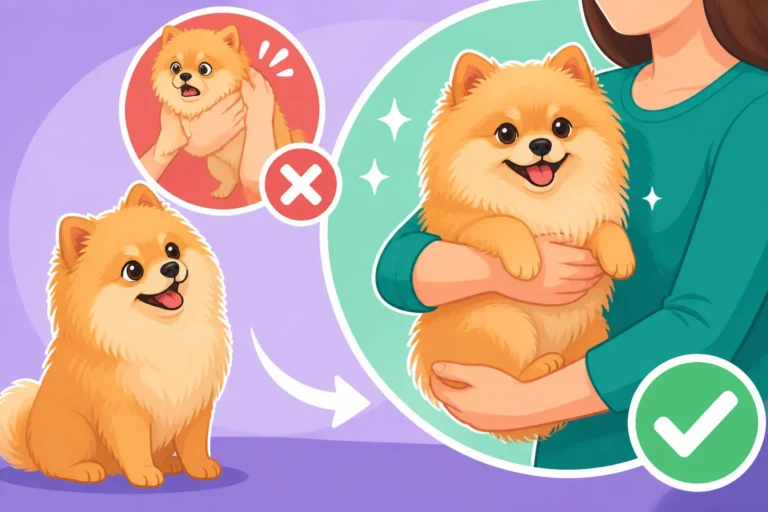
These sessions should be very short initially, perhaps just 5-10 minutes, and increase gradually. Look for relaxed body language: loose tails, soft eyes, play bows, and gentle sniffing. Any stiffening, hard stares, growling, or excessive barking means it's time for a break. Gently separate them into their safe spaces, allowing them to decompress before trying again later. Always end on a positive note, even if it means interrupting a peaceful interaction to give them a break and a reward. Remember, your Pomeranian's safety is paramount, so always be ready to intervene calmly and swiftly, perhaps by scooping up your Pom with a well-practiced Teaching a Pomeranian to Be Picked Up Properly technique.
Ongoing Management and Building a Relationship
A successful introduction is just the beginning. Nurturing a positive relationship between a small Pomeranian and a large dog requires ongoing management, consistent training, and continuous vigilance.
Never Leave Unsupervised
This is arguably the most critical rule: never leave your Pomeranian and the larger dog unsupervised, especially not in the early stages. Even after months or years of peaceful coexistence, accidents can happen. A sudden noise, a dropped treat, or a startled reaction can escalate quickly, and your tiny Pomeranian will always be at a disadvantage. It only takes a second for a tragic mistake to occur.
When you cannot actively supervise them, they should be separated. This means one in a crate, one behind a baby gate, or in different rooms. This isn't punitive; it's a safety measure that protects both dogs and gives you peace of mind. Investing in a sturdy set of indoor pet gates or a secure exercise pen can make this management much easier. For times when you need a little extra support, resources like BAXTER & Bella offer invaluable guidance on managing multi-dog households.
Reinforcing Positive Interactions and Training
Actively encourage and reward calm, gentle interactions between your dogs. If your larger dog lies down calmly while your Pomeranian is nearby, praise and treat them both. If your Pom approaches the larger dog respectfully, reward that behavior. Use positive reinforcement to shape the relationship you want to see. This also means discouraging any behavior that could be seen as rude or potentially dangerous, such as the Pomeranian nipping at the larger dog's tail, or the larger dog being too boisterous.
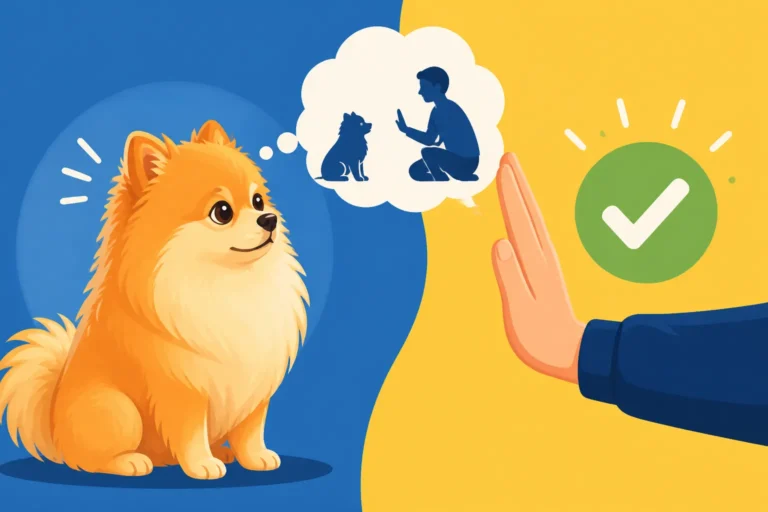
Training both dogs, individually and sometimes together, is also key. Ensure both dogs have a solid "leave it" command. This is vital for intervening if one becomes too fixated on the other or on a valuable resource like a toy or food. A reliable recall is also paramount, especially if you ever have them together in a larger, fenced space. Continued training builds confidence in both dogs and helps them understand boundaries and expectations, making their shared life much smoother. Regular, calm walks together (still on leashes, of course) can also strengthen their bond and teach them to exist peacefully in a shared environment.
Recognizing and Respecting Individual Needs
Even in the most harmonious multi-dog households, each dog will have individual needs and preferences. Your Pomeranian might prefer to nap in a high-up bed, accessible only by a ramp, while your larger dog loves sprawling on the cool kitchen floor. Respect these differences. Ensure both dogs have their own feeding stations where they can eat without feeling rushed or threatened. For a Pomeranian, this might mean eating in their crate or on a raised surface, protected from an eager larger dog.
Some Pomeranians may love to play with larger dogs, engaging in supervised "chase me" games where the larger dog gracefully avoids stepping on the small one. Others might prefer to observe from a distance, enjoying quiet companionship. Pay attention to what your dogs are telling you through their body language. Never force interactions. If your Pom needs a break from the larger dog, ensure they can get one. If the larger dog is getting annoyed by the Pom's antics, gently redirect the Pom. Understanding How Long a Well Bred Pomeranian Actually Lives and aiming for a long, healthy life means prioritizing their emotional and physical well-being in all interactions. The goal is coexistence, respect, and mutual enjoyment, not necessarily constant play.
Disclaimer
This article is for general informational purposes only and does not constitute professional advice. Laws, prices and regulations vary by location and change over time. Consult a qualified professional for guidance on your specific situation.