Whether a Pomeranian Chases Squirrels
It’s a sight that can be both adorable and alarming: your tiny, fluffy Pomeranian, suddenly transforming into a tenacious hunter, pulling against the leash with surprising force as a squirrel darts across the path. Despite their diminutive size, many Pomeranian owners are bewildered by their little companion’s intense prey drive, especially towards quick, darting creatures like squirrels. This guide will explore the fascinating reasons behind this instinct and, more importantly, equip you with practical strategies to manage this behavior safely, ensuring your Pomeranian's adventures remain fun and secure for everyone.
The Ancient Instinct Behind the Modern Pomeranian's Drive
It’s easy to look at a Pomeranian and forget they’re direct descendants of large, robust working dogs. Their ancestors were not lap warmers; they were vital members of Northern communities, pulling sleds, herding reindeer, and guarding homes. That deep-seated instinct to chase and capture, to be alert and reactive, hasn't simply vanished with selective breeding for smaller size and a profuse coat. It's still very much alive, just scaled down for a pint-sized package.
Tracing Back to Larger Ancestors
Think about the Pomeranian's family tree. They belong to the Spitz family, which includes formidable breeds like the Siberian Husky, Alaskan Malamute, and the Norwegian Elkhound. These dogs were bred for specific tasks, many of which involved a high degree of prey drive or the ability to manage livestock. While the Pomeranian's immediate ancestors were used as companions and sometimes even as working dogs on farms (though much smaller than their historical counterparts), the core programming for alertness and quick pursuit remained. They weren't just decorative fluff; they were still dogs with jobs, even if those jobs became less about hunting and more about being a vigilant companion. That sharp awareness of their surroundings and the quick reaction to movement are traits that were highly valued for centuries.
Why Size Doesn't Erase Instinct
Many people assume that because a Pomeranian is small, it must be inherently delicate or less "dog-like" in its instincts. This couldn't be further from the truth. The genetic blueprint for behavior is incredibly persistent. While breeders have successfully miniaturized the Pomeranian over generations, they haven't bred out the underlying instincts that make a dog a dog. A Pomeranian still possesses the same core drives as a large German Shepherd or a tenacious Jack Russell Terrier; it just expresses them on a smaller scale. A sudden rustle in the bushes, the flicker of a bird's wing, or the frantic scamper of a squirrel triggers that ancient hardwired response. It’s not a choice; it’s an ingrained, almost involuntary reaction that bypasses conscious thought in the moment. It's a reminder that beneath all that fluff, there's a strong, instinct-driven animal.
The Thrill of the Chase
For a Pomeranian, chasing isn't just about catching. It's often about the pure, unadulterated joy of the pursuit itself. The rush of adrenaline, the focused intensity, the burst of speed – these are all incredibly rewarding sensations for a dog. Even if your Pom never actually catches a squirrel (and thankfully, for both your dog and the squirrel, they usually don't), the act of chasing is a profound self-rewarding behavior. It releases endorphins and fulfills a primal urge. This is why it can be so hard to interrupt: the dog is in a heightened state, fully engaged in a deeply satisfying activity. Understanding this thrill is key to managing it, as simply scolding your dog won't override such a powerful, positive internal experience. For them, it’s like solving a really fun, fast-paced puzzle, and the "win" is often just getting to participate.
The Reality of a Tiny Hunter: Pomeranians and Small Prey
While the instinct to chase is strong, the reality of a Pomeranian as an actual hunter is quite different. Their small size, delicate bones, and relatively short legs make successful predation on anything but the slowest, most vulnerable prey highly unlikely. Instead, this strong prey drive often puts them in precarious situations.
Squirrels, Birds, and Other Critters
Squirrels are undeniably the prime target for many Pomeranians due to their quick, erratic movements and often brazen presence in parks and backyards. But the prey drive isn't limited to them. Birds taking flight, rabbits hopping through tall grass, even the occasional lizard or large insect can trigger that same intense focus and desire to chase. I’ve even known Poms who get utterly captivated by leaves skittering across the pavement in a strong breeze – anything that moves suddenly and unpredictably can spark that instinct. It's a testament to their hyper-awareness of their environment. Whether a Pomeranian Has Prey Drive is a common question, and the answer is usually a resounding yes, even if it manifests in unexpected ways.
The Physical Limitations and Risks
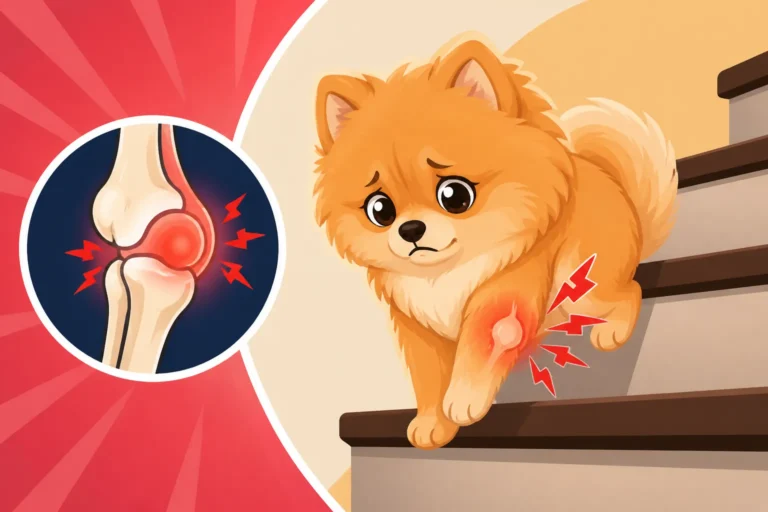
Despite their boundless enthusiasm, a Pomeranian's small stature presents significant limitations and risks when that prey drive kicks in. Their delicate bones are not built for high-impact collisions or sudden stops. A rapid change in direction or a leap over an uneven surface could easily lead to a sprain, a fracture, or even exacerbate conditions like Slipping Kneecaps in a Five Pound Pomeranian. Their small lungs and fragile windpipes, common issues for the breed, also mean that intense, sustained running can lead to breathing difficulties or even a The Honking Cough of a Pomeranian's Collapsing Windpipe. They can quickly overheat during a vigorous chase, especially if it’s a warm day, due to their dense double coat. The joy of the chase can quickly turn into an emergency vet visit, which is a stressful and costly experience for any owner.
The Danger of Off-Leash Chasing
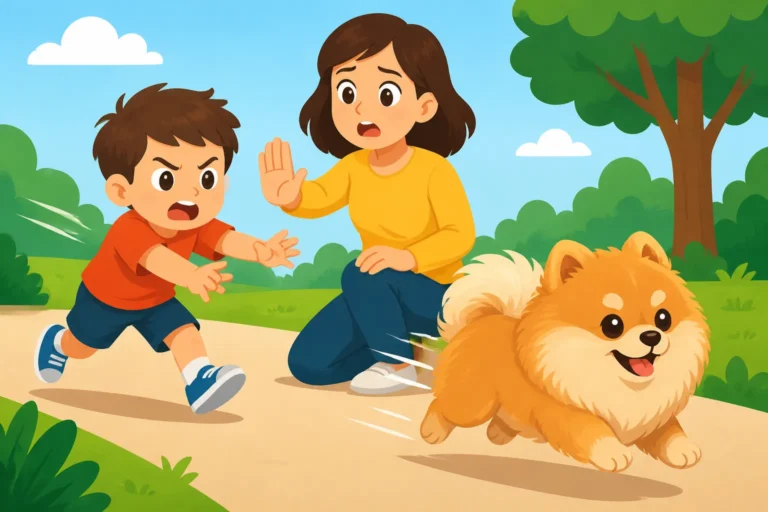
This is perhaps the most critical concern for any Pomeranian owner whose dog has a strong prey drive. An off-leash Pomeranian, suddenly fixated on a squirrel, is a dog in immediate peril. They are so consumed by the chase that they become deaf to commands and oblivious to their surroundings. A dart across a busy road, a headlong plunge into thick bushes, or a sudden confrontation with a larger, less tolerant dog are all very real dangers. These tiny dogs can vanish into surprisingly small spaces or simply be overlooked by drivers. The consequences of an uncontrolled chase can range from being lost or injured by traffic to encountering a much larger predator, like a coyote or a hawk, which unfortunately view small dogs as potential prey themselves. Why Off Leash Is a Risk for a Pomeranian cannot be overstated, especially for those with a strong prey drive.
Managing Your Pomeranian's Prey Drive Safely
Given the strong instinct and potential dangers, effective management of your Pomeranian's prey drive is paramount. It’s not about eliminating the instinct – that’s largely impossible – but about channeling it, redirecting it, and ensuring your dog's safety at all times.
Leash Training and Equipment
A secure, well-fitting harness is non-negotiable for a Pomeranian with a prey drive. Unlike a collar, which can put dangerous pressure on their delicate trachea, a harness distributes pressure across their chest and shoulders. This is especially crucial for a breed prone to The Honking Cough of a Pomeranian's Collapsing Windpipe. When your Pomeranian lunges after a squirrel, that sudden jerk against a collar could cause serious injury. Look for harnesses designed specifically for small breeds, often with an H-shape or Y-front design that doesn't restrict shoulder movement or choke their neck.
It’s also important to consider the leash itself. A lightweight, yet sturdy, lead is essential. Something too heavy can feel cumbersome for a tiny dog, while something too flimsy might snap if your Pom decides to make a sudden dash. Leads Light Enough for a Pomeranian are easy to find. Many owners find success with no-pull harnesses, which gently redirect the dog's attention back to you when they pull. You can find a wide variety of suitable harnesses and leashes on platforms like Amazon, ensuring you have options for your specific Pom's size and build. Make sure the harness is snug enough that your Pomeranian can't back out of it, a common escape artist move for small dogs. If you're struggling, check out tips for Fitting a Harness on a Pomeranian That Backs Out.
Redirection and Positive Reinforcement
The key to managing a squirrel-obsessed Pom isn't punishment, which can create fear and anxiety, but rather redirection and positive reinforcement. When you spot a squirrel before your Pom does, or at the very beginning of their interest, quickly distract them. Use a high-value treat or a favorite squeaky toy to get their attention. Practice "look at me" commands in low-distraction environments first, gradually increasing the difficulty. When they look at you instead of the squirrel, even for a split second, reward them enthusiastically. This teaches them that focusing on you, rather than the squirrel, leads to something wonderful.
Carrying a small bag of extremely enticing treats, like bits of cheese, cooked chicken, or training treats from brands like BAXTER & Bella, can make a huge difference. These aren't your everyday kibble; they're the "jackpot" rewards that can compete with the thrill of a chase. You'll want to practice this often, even when there are no squirrels around, so your Pom associates looking at you with positive outcomes. This builds a strong foundation for when those real-life distractions appear.
Environmental Management and Supervision
The safest approach for managing prey drive is often environmental management. This means being acutely aware of your surroundings when out with your Pomeranian. If you know a particular park path is a squirrel hotspot, consider choosing an alternative route or going at a time when squirrels are less active. In your own yard, ensure your fencing is secure, with no gaps or places a determined little Pom could squeeze under or through. Never leave your Pomeranian unsupervised in a yard, even if it's fenced, especially if squirrels, birds, or other small animals are frequently present.
Inside the house, if your Pom is constantly barking at squirrels outside a window, consider using frosted window film on lower panes, or simply closing curtains during prime squirrel-watching hours. This reduces the visual stimulation that triggers the behavior. Engage your Pomeranian in other stimulating activities indoors, such as puzzle toys or interactive games, to fulfill their need for mental and physical engagement without the risk of chasing real prey. These types of games can actually help to tire them out and satisfy some of that innate drive.
Building a Strong Recall and Impulse Control
Ultimately, a reliable recall and strong impulse control are the cornerstones of safety for any dog with a high prey drive, especially a tiny Pomeranian. These skills literally mean the difference between life and death in many situations.
Training for Safety
A solid recall means your Pomeranian will come back to you immediately, no matter what distractions are present. This isn't just a party trick; it's a life-saving command. Imagine your Pom's leash breaking, or a gate accidentally left open. Your ability to call them back is their best defense against danger. Start recall training in a quiet, enclosed space, like your living room or a securely fenced yard, with minimal distractions. Use a happy, excited tone and a high-value reward every single time they come. Practice this multiple times a day, keeping sessions short and positive. Building a strong foundation here is crucial before attempting it in more distracting environments. Building a Recall on a Pomeranian That Ignores You will offer more in-depth strategies.
'Leave It' and 'Look at Me' Commands
These two commands are invaluable for impulse control. "Leave It" teaches your Pomeranian to ignore something enticing, whether it's a dropped crumb, an interesting scent, or a squirrel. Start by placing a low-value treat on the floor, covering it with your hand. Say "leave it," and when your Pom looks away from your hand, reward them with a different, higher-value treat from your other hand. Gradually increase the difficulty, moving to uncovered treats, then leaving treats on the floor while you walk away, always rewarding them for ignoring the item.
"Look at Me" (or "Watch Me") is equally powerful. This command teaches your Pom to make eye contact with you on cue, shifting their focus away from distractions. Hold a treat near your eye, say "look at me," and when your Pom makes eye contact, immediately mark the behavior (with a clicker or a verbal "yes!") and reward them. Practice this in various environments, gradually increasing the duration of eye contact before the reward. For a Pom, The Reward a Pomeranian Actually Cares About is often a highly motivating factor in training. Consistently practicing these commands can literally snap your Pomeranian out of their prey-driven focus.
Consistent Practice in Various Environments
The real test of recall and impulse control comes in the real world, filled with distractions. Once your Pomeranian is reliable in a quiet setting, slowly introduce more challenging environments. Start with a quiet park on a long leash, then move to areas with more activity, and finally, places where squirrels or birds might be present. Always keep your Pom on a long line or a secure harness and leash during these practice sessions. The goal is to set them up for success, not failure. If they fail, it means you've progressed too quickly.
It's tempting to think that once trained, your Pom's recall is foolproof. However, consistent practice is key. Even well-trained dogs need regular refreshers, especially when faced with something as exciting as a squirrel. Remember that Whether a Pomeranian's Recall Can Be Trusted is directly related to the consistency and quality of your training. Never assume they're "over" their prey drive; it's always there, waiting for the right trigger.
| Prey Drive Management Strategy | Description | Key Benefits | Considerations |
|---|---|---|---|
| Secure Equipment | Using a well-fitted harness and sturdy leash. | Prevents escape, protects trachea, provides control. | Must be correctly sized; regular checks for wear and tear. Avoid collars for walks. |
| Redirection & Treats | Using high-value treats/toys to divert attention from prey. | Builds positive associations, reinforces focus on owner. | Requires proactive observation; treats must be highly motivating. |
| "Leave It" Command | Teaches dog to ignore enticing items or prey. | Essential for impulse control, prevents dangerous encounters. | Needs consistent practice in various settings; start with easy distractions. |
| "Look at Me" Command | Teaches dog to make eye contact with owner on cue. | Redirects focus instantly, creates a strong handler bond. | Practice regularly to maintain reliability; reward heavily. |
| Environmental Control | Avoiding high-prey areas, securing yards, blocking window views. | Prevents triggers, reduces opportunities for chasing. | May limit walk routes; requires vigilance. |
| Consistent Recall Training | Practicing coming when called, with high rewards, in increasing levels of distraction. | Life-saving command, fosters trust and reliability. | Must be fun and positive; never use punishment for not coming. |
Pomeranians, with their spirited personalities and surprisingly strong instincts, can indeed be keen squirrel chasers. While their hunting endeavors are rarely successful and often risky, understanding the root of this behavior and implementing consistent, positive training strategies will allow both you and your fluffy companion to enjoy the great outdoors safely and happily.
Disclaimer
This article is for general informational purposes only and does not constitute professional advice. Laws, prices and regulations vary by location and change over time. Consult a qualified professional for guidance on your specific situation.