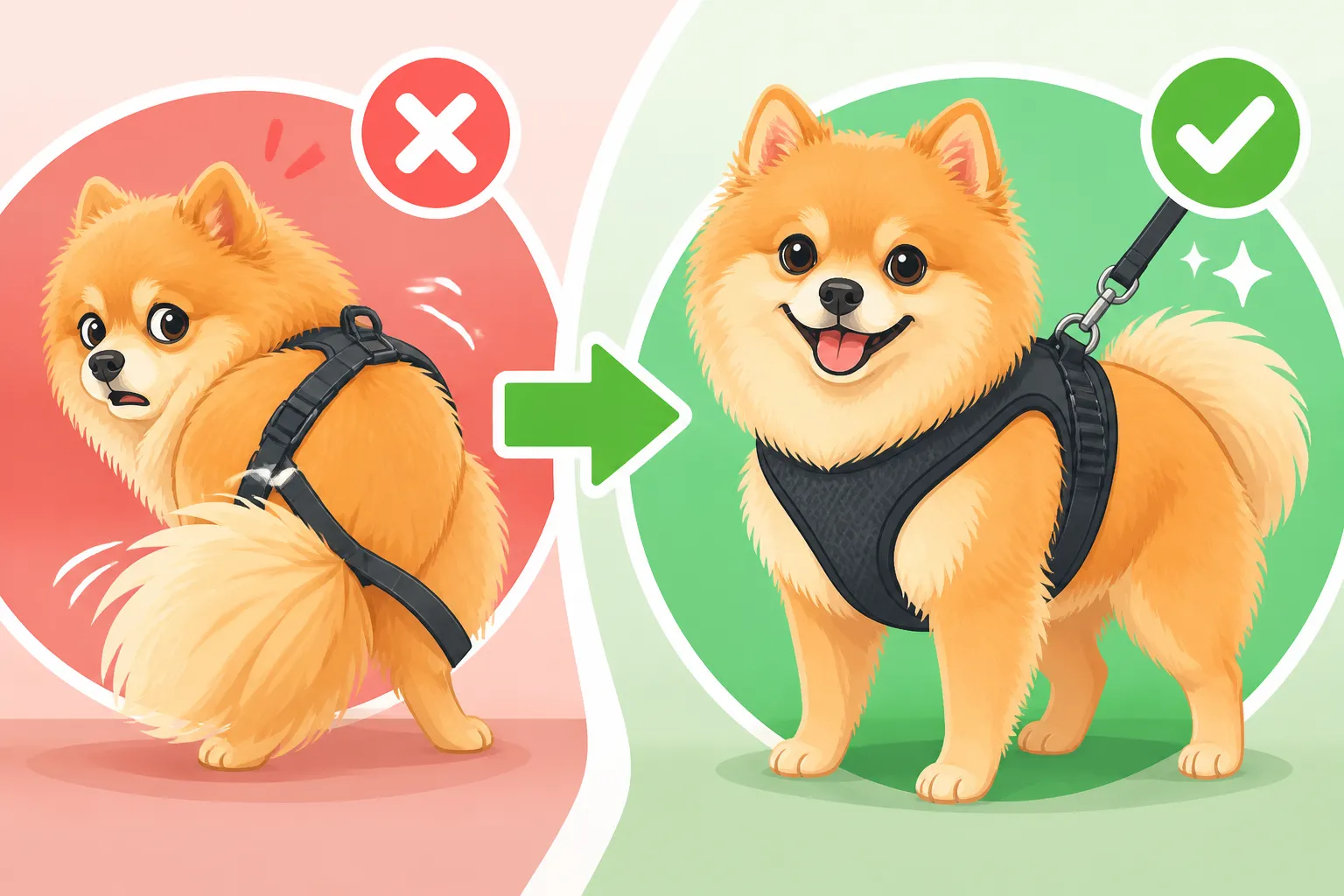
Fitting a Harness on a Pomeranian That Backs Out
It's an utterly common, and frankly, terrifying experience: you're out for a lovely stroll with your precious Pomeranian, and suddenly, they do that Houdini-like wiggle, slipping right out of their harness and darting into the unknown. The heart-stopping panic that washes over you in that moment is something no pet parent ever wants to feel. This comprehensive guide is here to walk you through exactly why your tiny escape artist might be backing out of their harness and, more importantly, how to choose, fit, and train them to wear a secure one, ensuring their safety on every adventure.
Why Do Pomeranians Back Out of Harnesses?
Understanding why your Pomeranian can perform such a daring escape is the first step to preventing it. It's not usually a sign of malice or defiance; it's often a combination of their unique physical characteristics, their natural instincts, and, most commonly, a harness that simply isn't doing its job.
Anatomy and Fear Response
Pomeranians, with their compact yet incredibly flexible bodies, are built for agility. Their small frames and loose skin can make them surprisingly adept at wriggling out of restraints that aren't perfectly fitted. Think about it: they can practically fold themselves in half, especially when they're scared or determined to get somewhere. When a Pomeranian gets startled by a loud noise, an unexpected movement, or even just spots something intriguing, their flight instinct kicks in. In that moment of panic, they might pull backward with all their might, flattening themselves, and if the harness allows even a tiny bit of slack, whoosh, they're gone. It's a primal response to perceived danger, not a conscious decision to give you a heart attack. This innate ability to contort and back out is why a standard, loosely fitted harness can quickly become a liability. You might notice they get particularly squirmy if a larger dog approaches them too quickly, or if they're nervous in a new environment, increasing the risk of an escape.
Improper Fit is the Number One Culprit
More often than not, the problem isn't the Pomeranian itself, but the harness. Many owners, with the best intentions, either buy a harness that's too big, or they don't adjust it properly. A harness might seem fine when your Pom is standing still, but the moment they drop their head, tuck their tail, or pull backward, any excess space becomes an escape route. The straps can slide over their head or past their chest, and they're free. It's like trying to keep water in a colander; if there are too many gaps, it just won't work. The problem is exacerbated by the fluffy coats of Pomeranians, which can hide a multitude of fitting sins. What looks snug over a thick coat might be dangerously loose against their actual body. Always make sure you're feeling for their body, not just compressing their fur. The Coat Blow and the Pomeranian Puppy Uglies can also temporarily alter how a harness fits, so adjustments might be needed as their coat changes throughout the year.
What Makes a Harness "Escape-Proof" for a Pomeranian?
When you're dealing with a clever little escape artist like a Pomeranian, a generic, one-size-fits-all harness simply won't cut it. You need to look for specific design features that address their unique build and their talent for wiggling free. It's about creating a secure enclosure that works with their anatomy, not against it.
Key Design Features to Look For
The best harnesses for Pomeranians who are prone to backing out often share a few crucial characteristics. First, look for a "Y-front" design, sometimes called an H-style. This means the strap goes down between their front legs and then splits into a "Y" shape over their chest, with the leash attachment point usually on their back. This design is excellent because it distributes pressure evenly across their chest and shoulders, rather than putting strain on their delicate neck and windpipe. For a breed known for The Honking Cough of a Pomeranian's Collapsing Windpipe, this is an absolute must. The Y-front also makes it harder for them to pull their legs back through the harness when backing up.
Secondly, multiple adjustment points are non-negotiable. A good harness should have at least three points of adjustment: one around the neck opening, one around the chest girth, and ideally, one along the back strap connecting the neck and chest sections. This allows for a truly custom fit that can be tightened in all the right places, minimizing gaps. If a harness only has one or two adjustment points, it's very likely to create saggy areas when your Pom moves. Some harnesses feature padding, especially around the chest and belly, which can increase comfort and prevent chafing, making your Pomeranian more willing to wear it. Materials matter too; look for durable but soft fabrics that won't irritate their skin or tangle their luxurious coat.
Two-Point or Double-Strap Harnesses
Beyond the basic Y-front, some specialized harnesses incorporate a "two-point" or "double-strap" design specifically engineered to prevent escapes. These harnesses typically feature an additional strap, often around the waist or a bit further back on the rib cage, behind the main chest girth strap. This second strap acts as a failsafe. If your Pomeranian manages to wiggle out of the first chest strap, the second, often slightly tighter, strap still holds them securely. It’s like wearing both a belt and suspenders – extra security for those moments when your Pom decides to make a break for it.
Another effective style is a martingale-style harness. Similar to a martingale collar, these harnesses have a loop mechanism that gently tightens when the dog pulls backward, making it impossible for them to slip out. It's designed to provide a snug fit only when tension is applied, without being constantly tight and uncomfortable. When your Pom isn't pulling or trying to back out, the harness remains comfortably loose. This type is particularly effective for dogs who consistently try to back out the moment they feel restraint. Make sure you get one specifically designed for small breeds, as the mechanism on larger dog harnesses can be too bulky or heavy for a tiny Pomeranian. What a Properly Fitted Pomeranian Harness Costs might be a little higher for these specialized harnesses, but the peace of mind is priceless. You can find a decent selection of these on platforms like Amazon, often with reviews from other small dog owners.
Step-by-Step Guide to Fitting a Harness Securely
Getting the right harness is only half the battle; fitting it correctly is absolutely crucial. A poorly fitted "escape-proof" harness is just as useless as a standard one. This isn't a one-and-done task; it requires precision, patience, and sometimes, a little adjustment as your Pomeranian grows or their coat changes.
Measuring Your Pomeranian Accurately
Before you even think about putting a harness on your Pomeranian, you need to take accurate measurements. Don't just guess or rely on their weight alone. Their chest girth is the most important measurement. This is the widest part of their rib cage, just behind their front legs. Use a soft tape measure and wrap it snugly around this area, but not so tight that it's compressing their fur. Write down the number.
Next, measure their neck circumference. For most harnesses, this is around the base of their neck, where a collar would naturally sit. Again, measure snugly but comfortably. Some harnesses also require a measurement from the base of the neck to the mid-back, or from the chest bone to just behind the rib cage for that second strap. Always check the specific sizing chart provided by the harness manufacturer, as sizes can vary wildly between brands. If your Pom is between sizes, it's generally better to go with the smaller size, assuming it still allows for the "two-finger rule" once adjusted, to minimize any potential gaps. Remember that How Little Food an Adult Pomeranian Needs can impact their girth, so maintaining a healthy weight is good for harness fit, too.
The "Two-Finger Rule" and Beyond
Once you have the harness on your Pomeranian, it's time for adjustments. Start with the neck opening. It should be snug enough that you can comfortably slide two fingers flat between the harness strap and your dog's neck. If you can fit more than two fingers, or if it feels loose, tighten it. If you can't even get one finger in, it's too tight. The same rule applies to the chest girth strap(s). Again, two fingers flat, comfortably.
Beyond the two-finger rule, you need to observe your Pomeranian's movement. Let them walk around the house for a few minutes. Does the harness twist or shift excessively? Does it rub anywhere, especially under their armpits or along their shoulders? Are there any gaping areas, particularly around the neck or where the front legs come through, when they move their head or back up? Pay close attention when they try to pull backward; if it still seems easy for them to slip, it's too loose. Sometimes, even if you can fit two fingers, the harness might still be too large if your Pom is particularly flexible. In these cases, you might need to try a different style or a smaller size. This trial and error is normal.
Acclimating Your Pomeranian to the New Harness
Even the most perfectly fitted harness can be met with resistance if your Pomeranian isn't used to wearing one. This is where positive reinforcement and patience come in. Don't just yank the new harness on and head out the door. Start by letting them sniff and investigate the harness at their leisure. Offer treats and praise whenever they show interest or touch it. You could even place it near their food bowl or bed so they associate it with positive things.
Next, try putting the harness on for very short periods indoors. Snap it on, give a treat, then immediately take it off. Gradually increase the time they wear it, always associating it with high-value treats and enthusiastic praise. You want them to think the harness is a precursor to wonderful things, like treats or a walk. If they seem uncomfortable or try to chew it, distract them with a toy or redirect their attention with another treat. Resources like BAXTER & Bella often have great training modules on how to introduce new gear to puppies and adult dogs, emphasizing positive experiences. For effective training, knowing The Reward a Pomeranian Actually Cares About will be key. Start with short walks around the house, then the yard, before venturing out into the wider world. Never use the harness for punishment, as this will create negative associations.
Recommended Harness Types and Brands for Escape Artists
Finding the perfect harness for a Pomeranian can feel like a quest, especially if you've got an experienced escape artist on your hands. But fear not, there are specific types and brands that consistently prove more effective at keeping these tiny Houdinis safely tethered.
Specific Harness Styles and Why They Work
For Pomeranians notorious for backing out, certain harness designs offer superior security. As mentioned, the Y-front or H-style harness is a fantastic starting point. Brands like Puppia and Gooby make popular versions of these, often with soft mesh or neoprene that's comfortable and lightweight for small breeds. The key here is the strap that runs between the front legs and then splits to go over the chest, preventing them from pulling their legs through.
Even better for true escape artists are martingale-style harnesses or "double H" harnesses. These often feature a second strap that sits further back on the rib cage, and sometimes a martingale loop that gently tightens across the chest when pressure is applied. Ruffwear's Web Master Harness, while often associated with larger dogs, comes in smaller sizes and is renowned for its escape-proof design due to its third belly strap. Another excellent option, specifically designed for small dogs, is the Voyager All-Weather Step-in Harness. It's a vest-style with strong Velcro and a buckle, offering a wide area of coverage that makes it harder for small, flexible bodies to slip out of. Whether a Step In Harness Suits a Pomeranian depends on the specific design and how well it conforms to their body.
Consider a harness that has a leash attachment point both on the back and the front (chest). While the back clip is standard for small dogs to protect their trachea, a front clip can be a valuable training tool for pups who pull forward, gently redirecting them. However, for backing out, the snug fit around the girth and the design that physically prevents them from slipping backward are the most critical features.
Where to Find Reliable Options
When it comes to purchasing these specialized harnesses, you have several avenues. Major online retailers like Amazon are treasure troves, offering a vast selection from various brands. The benefit here is the ability to read numerous customer reviews, often from other Pomeranian owners, which can give you real-world insights into fit and effectiveness. Just be sure to double-check the sizing charts for each specific brand, as they can vary. Searching for "escape-proof harness small dog" or "Pomeranian harness for backing out" can yield targeted results.
Beyond online giants, specialized pet supply stores, both local and online, often carry a curated selection of higher-quality harnesses. These stores sometimes have staff who are knowledgeable about fitting different breeds and can offer personalized advice. While you might not find a brick-and-mortar store named specifically for Pomeranian gear, any good pet boutique or larger chain will have small-dog sections. Some brands to keep an eye out for that are often well-regarded for their secure fit include Freedom No-Pull Harness, Easy Walk, and the aforementioned Ruffwear and Puppia. Remember, investing in a high-quality, secure harness isn't just about convenience; it's a vital safety measure for your beloved Pomeranian. Ensuring your Pomeranian gets accustomed to their harness is also part of the broader training journey, much like the foundational skills taught by services like BAXTER & Bella.
Here’s a quick overview of some popular harness types and their suitability for a Pomeranian prone to backing out:
| Harness Type | Key Features | Pros for Pomeranians (Escape Artists) | Cons for Pomeranians | Escape Risk (When Properly Fitted) |
|---|---|---|---|---|
| Standard Step-In | Two loops for legs, single clip over back. Minimal straps. | Easy to put on, lightweight. | Can be easy to back out of if straps loosen. | Moderate to High |
| Y-Front / H-Style | Strap between front legs, Y-shape over chest, back clip. Multiple adjustments. | Distributes pressure, harder to back out of. Good for neck. | Can still allow escapes if not snug enough. | Low to Moderate |
| Vest Harness | Wide fabric coverage over chest and back, usually buckle/Velcro. | Very secure due to broad coverage, comfortable. | Can be hot in summer, might restrict movement slightly. | Low |
| Martingale-Style | Features a loop that tightens gently when pulled backwards. | Designed specifically to prevent backing out, very secure. | Must be fitted precisely to avoid discomfort. | Very Low |
| Double-Strap / Multi-Point | Two separate girth straps or a third belly strap. | Offers extra layer of security, virtually escape-proof. | Can be bulkier, more straps to adjust. | Very Low |
No matter which harness you choose, consistent checking of the fit and proper adjustment is paramount. Your Pomeranian's safety depends on it! Fitting a Harness on a Pomeranian That Backs Out is an ongoing effort, not a one-time setup.
Disclaimer
This article is for general informational purposes only and does not constitute professional advice. Laws, prices and regulations vary by location and change over time. Consult a qualified professional for guidance on your specific situation.