Whether a Groomer Sedates a Difficult Pomeranian
It’s a heartbreaking and often incredibly frustrating situation: you love your Pomeranian fiercely, but the mere mention of a trip to the groomer sends them into a trembling, growling, or even snapping frenzy. You’re desperate to keep their beautiful coat in tip-top shape and ensure their hygiene, but the stress on both you and your beloved Pom during grooming can be immense. This guide aims to tackle the difficult question of whether groomers sedate a difficult Pomeranian and, more importantly, explore compassionate and effective strategies to help your little fluffball overcome their grooming anxieties without resorting to sedation unless absolutely necessary.
Understanding Why Your Pomeranian Might Be "Difficult" for Grooming
When we label a dog "difficult," it often comes from a place of exasperation. But from your Pomeranian's perspective, their behavior isn't about being naughty; it's usually a deeply rooted response to fear, discomfort, or a lack of understanding. Understanding these underlying reasons is the first step toward finding a solution.
Fear, Anxiety, and Past Traumas
Pomeranians, despite their small size, can have big personalities and often equally big anxieties. The grooming environment can be overwhelming for them. Think about it: strange smells, loud dryers, unfamiliar hands, being confined, and the sensation of being touched in sensitive areas. For a tiny dog who might already be prone to nervousness, this can be terrifying. They don't understand that the groomer is trying to help; they just perceive threats. This is especially true if they've had a negative experience in the past, perhaps a painful nail trim, a rough brush-out, or an accidental nick. That single bad experience can create a lasting trauma, making every subsequent grooming appointment a battle. Their growls, snaps, or attempts to escape are often their only way of saying, "I'm scared, please stop!"
Lack of Early Socialization and Training
One of the biggest factors contributing to a "difficult" grooming experience is a lack of proper early socialization and desensitization. If a Pomeranian puppy isn't gradually introduced to handling, brushing, nail trims, and baths in a positive way from a very young age, these routine procedures can become incredibly stressful later on. Many new Pom parents, understandably, focus on house training and basic commands, sometimes overlooking the critical importance of grooming desensitization. Without this foundation, the first time a dog experiences a full grooming session might be as an older puppy or adult, by which point ingrained fears or sensitivities have already taken root. It’s like throwing someone into a swimming pool without ever teaching them to float; they’ll thrash and panic. Early, positive exposure to various textures, sounds, and gentle handling techniques is crucial. You might find valuable resources on this through platforms like BAXTER & Bella, which often provide guidance on early puppy training and socialization, including getting your dog comfortable with handling.
Pain or Discomfort During Grooming
Sometimes, a Pomeranian's resistance isn't purely behavioral; it could be rooted in physical pain or discomfort. Mats in their dense double coat can be incredibly painful to brush out, pulling on their delicate skin. If they have Dental Disease in a Mouth the Size of a Pomeranian's, brushing can hurt. Slipping Kneecaps in a Five Pound Pomeranian (patellar luxation) can make standing for grooming painful, or even just being held in certain positions. Ear infections, skin irritations, or even arthritis in older Poms can turn a seemingly routine touch into an agonizing experience. A groomer might encounter this if they try to brush out a hidden mat or trim nails that are already sensitive. Before labeling your Pomeranian as "difficult," it’s always wise to rule out any underlying medical issues with your veterinarian that could be contributing to their discomfort during grooming.
Groomers and Sedation: What to Expect and What's Ethical
It’s natural to wonder if sedation is an option when your Pomeranian is truly struggling. However, it's important to understand the ethical boundaries and professional practices surrounding sedation in the grooming world.
The Groomer's Role and Limitations
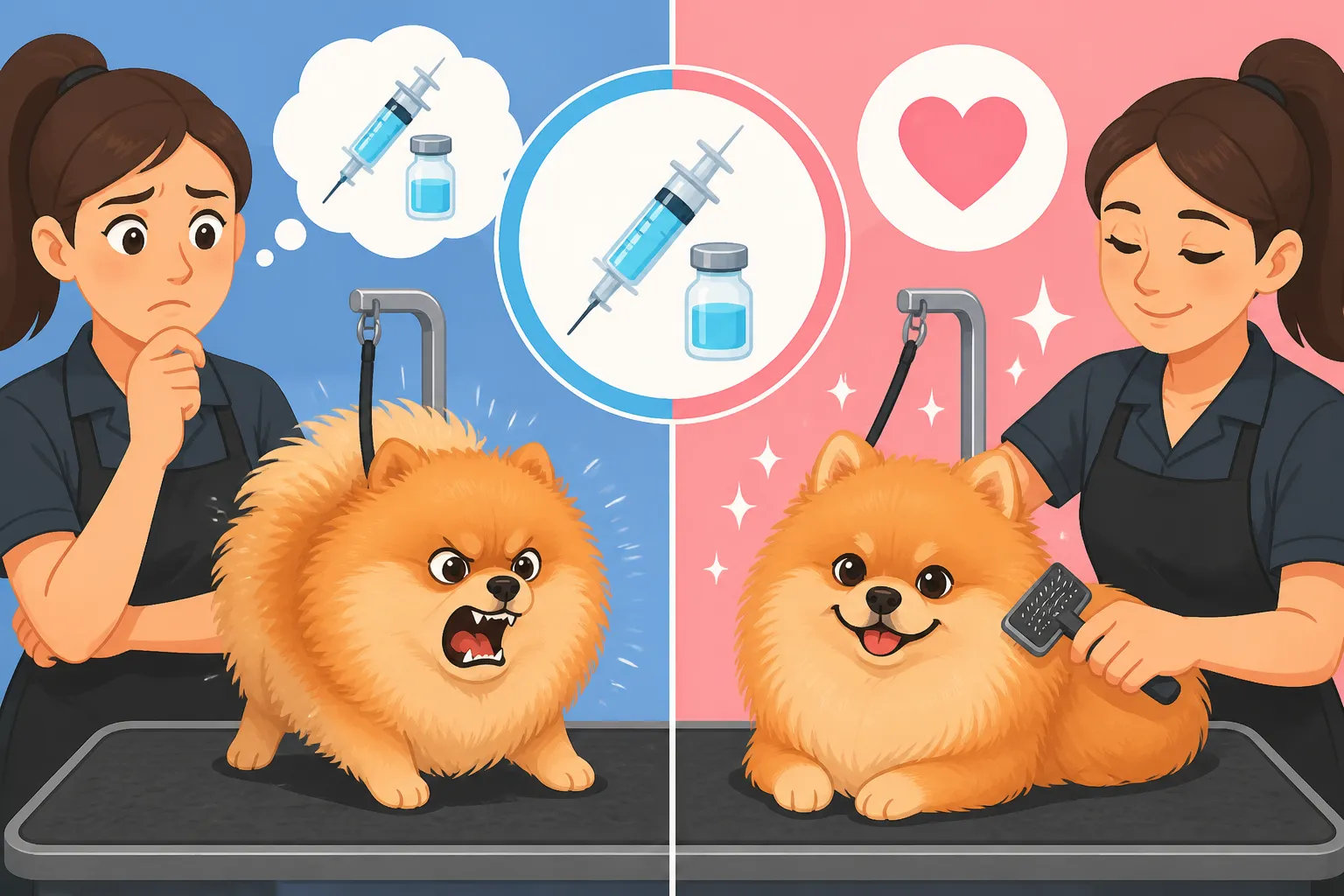
Professional groomers are highly skilled in coat care, styling, and handling a wide variety of dog temperaments. They use specialized tools, techniques, and often a lot of patience to get the job done. Many groomers have developed a range of gentle handling methods and distraction techniques, like offering high-value treats or using calming pheromones, to help anxious dogs. However, it’s critical to understand that groomers are not veterinarians. They are not licensed or equipped to administer sedatives or tranquilizers to an animal. Their primary role is grooming, and while they can manage some behavioral challenges, they cannot provide medical interventions.
If a Pomeranian is too aggressive, fearful, or stressed to be safely groomed, a responsible groomer will refuse service. This isn't because they're unwilling to help, but because attempting to groom a severely distressed or aggressive dog poses significant risks:
- Risk to the dog: A dog under extreme stress can injure itself by struggling violently, have a heart attack, or suffer from heatstroke (especially under dryers). Trying to force grooming on a dog that is biting or thrashing could also lead to accidental cuts or injuries.
- Risk to the groomer: Groomers work with sharp tools, and a biting or thrashing dog can cause serious injury to them, leading to deep cuts, punctures, or even broken bones.
- Ethical concerns: Forcing a dog through a terrifying experience goes against the principles of humane animal care. A good groomer prioritizes the dog's well-being over getting the job done at all costs.
A groomer's "refusal of service" is often a compassionate decision made for the safety of all involved. They will typically recommend that you consult with your veterinarian to address the behavioral issues and possibly explore veterinary-supervised sedation. Some groomers might work with very mild, over-the-counter calming aids that you, the owner, administer beforehand, but they will never administer prescription medication themselves.
When a Vet's Involvement Becomes Necessary
If your Pomeranian's anxiety or aggression during grooming is severe enough that groomers are consistently refusing service, or if you simply cannot manage even basic home care like nail trims, it's definitely time for your veterinarian to step in. A vet can assess the situation from a medical perspective and rule out any underlying pain or illness that might be contributing to the behavior.
More importantly, a vet can discuss pharmacological options. There are prescription sedatives and anti-anxiety medications that can be safely prescribed and administered under veterinary guidance to help calm a dog for necessary procedures, including grooming. This might involve a mild sedative given at home prior to a vet-supervised grooming session, or even a deeper sedation administered directly at the clinic. This is a medical decision that considers your dog's overall health, age, and specific needs, and it is always performed in a controlled environment where vital signs can be monitored. For instance, Anesthesia Risk in a Four Pound Pomeranian is a real concern, so any sedation needs careful consideration. This ensures the safety of your Pomeranian throughout the process, something a professional groomer is not equipped to provide.
Strategies for Calming a Difficult Pomeranian Without Sedation
While sedation might be necessary in extreme cases, the ultimate goal is to help your Pomeranian feel comfortable and safe during grooming without it. This requires patience, consistency, and a multi-faceted approach.
Positive Reinforcement and Desensitization at Home
This is the cornerstone of helping any anxious dog. The idea is to gradually expose your Pomeranian to grooming tools and procedures in a non-threatening way, pairing each step with high-value rewards. Start small and go slowly.
Here’s how you can approach it:
- Introduce the Tools: Leave brushes, combs, and nail clippers lying around (safely) so they become part of the normal environment. Let your Pom sniff them. When they do, offer a treat.
- Gentle Handling: Start by gently touching their paws, ears, and tail without any tools. Praise and reward. Slowly work up to light touches with a soft brush, just one or two strokes, then stop and treat. Teaching a Pomeranian to Stand Still for the Brush is a great skill to develop. The goal is tiny, successful increments.
- Mimic Grooming Actions: Gently hold a paw for a second, then release and treat. Repeat. Gradually increase the duration. Do the same with ears or holding the clipper near a nail without actually clipping. If your Pom is particularly sensitive about mats, start with very brief sessions focused on areas less prone to matting, gradually working your way to more challenging spots. Building a Pomeranian's Tolerance for Combing Mats requires immense patience.
- Practice Short Sessions: Keep grooming sessions very short (2-5 minutes) and always end on a positive note. Never push your Pom past their comfort level to the point of fear or aggression. If they show signs of stress, stop, take a break, and try again later, starting with an easier step.
- High-Value Rewards: Find what truly motivates your Pomeranian. Is it cheese? Cooked chicken? A favorite toy? Use these special rewards only for grooming practice, making the experience extra special.
- Calming Aids: Consider using calming pheromone sprays or diffusers in the area where you practice grooming. Some owners find a snug-fitting "thunder shirt" or similar anxiety wrap can provide a sense of security. You can find many such products on Amazon.
Consistency is key here. Daily, brief sessions are far more effective than long, infrequent ones. If you consistently use the "reward a calm response" approach, your Pomeranian will slowly learn that grooming isn't scary, but actually leads to good things!
Professional Training and Behavior Modification
Sometimes, the anxiety is so deep-seated that you need expert help. This is where a certified professional dog trainer or a veterinary behaviorist can make a huge difference.
- Force-Free Trainers: Look for trainers who specialize in positive reinforcement and force-free methods. They can teach you more advanced desensitization techniques and help you understand your dog's body language better. They can also work on building your Pomeranian's overall confidence, which often translates to less anxiety in grooming situations. They might use specialized tools or techniques, like cooperative care exercises, to empower your Pom to "opt in" to grooming.
- Veterinary Behaviorists: For severe cases of fear or aggression, a veterinary behaviorist is the most appropriate professional. These are veterinarians with advanced training in animal behavior, who can diagnose behavioral conditions (like generalized anxiety disorder) and develop a comprehensive treatment plan that might include behavior modification, environmental management, and, if needed, medication. They can provide a safe and controlled environment for situations like Getting a Pomeranian Through an Exam Calmly. They approach the problem from both a medical and behavioral standpoint, which is crucial for complex cases.
Remember, every dog is an individual. What works for one Pomeranian might not work for another. Be patient with your Pom and yourself; it’s a marathon, not a sprint. Online platforms like BAXTER & Bella can offer guidance and courses that cover aspects of handling and desensitization, providing a structured approach to at-home training.
Choosing the Right Groomer for Anxious Poms
Not all grooming salons are created equal, especially for a sensitive Pomeranian. When you’re dealing with an anxious dog, finding the right groomer is paramount.
- Look for Patience and Experience: Seek out groomers who have specific experience with nervous or reactive small breeds. Ask about their handling techniques for anxious dogs. Do they use force-free methods? Do they offer "happy visits" where your dog can just come in, get treats, and leave without any actual grooming?
- Quiet Environments: Large, bustling salons with many dogs, loud dryers, and constant activity can be overwhelming. Consider smaller, quieter, or even in-home mobile grooming services. Some groomers specialize in one-on-one appointments to minimize stress.
- Communication is Key: A good groomer will listen to your concerns, respect your dog's limits, and communicate openly about how the session is going. They should be willing to do "partial grooms" (e.g., just nails or just a bath) if a full groom is too much.
- Open Door Policy: Some groomers allow owners to stay during the grooming session, which can be comforting for some dogs (and owners). Others find the dog is better behaved without the owner present, so discuss what works best for your Pom.
- Positive Reviews: Read reviews specifically mentioning how the groomer handles difficult or anxious dogs. Word-of-mouth recommendations from other small dog owners in your area can also be invaluable.
A groomer who understands and respects your Pomeranian's fear will be your biggest ally in making grooming a less stressful experience.
Working with Your Veterinarian for Behavioral Support
When all else fails, or if the anxiety is extreme, your veterinarian is your most important resource. They can provide a holistic view of your Pomeranian's health and behavior.
Medical Check-ups and Pain Management
As mentioned earlier, a dog acting out during grooming might be in pain. A thorough veterinary check-up is always the first step. Your vet will perform a physical exam, looking for any signs of discomfort. They might check joints for issues like The Skip in a Pomeranian's Back Leg, examine the skin for hidden irritations, or perform a dental check.
If pain is identified, addressing it can often dramatically improve grooming tolerance. This might involve:
- Medication: Anti-inflammatory drugs for arthritis, pain relievers for injuries, or antibiotics for infections.
- Supplements: Joint supplements can help improve comfort for dogs with orthopedic issues.
- Dietary changes: Special diets can help with skin allergies or other conditions causing discomfort.
Once any underlying pain is managed, you might find that your Pomeranian's "difficulty" during grooming significantly decreases, making training and desensitization much more effective.
Prescription Sedatives for Veterinary-Supervised Grooming
If behavioral modification and pain management aren't enough, or if your Pomeranian absolutely needs grooming that cannot be done otherwise, your veterinarian can prescribe sedatives. This is not a decision to be taken lightly and should always be done under professional veterinary guidance.
Types of Sedation:
- Oral Anxiolytics/Sedatives: These are usually pills or liquids given at home a few hours before the grooming appointment. They are designed to reduce anxiety and produce a mild calming effect, making the dog more amenable to handling. They don't typically cause a dog to "pass out" but can make them less reactive and more relaxed. Your vet will determine the appropriate medication and dosage based on your Pomeranian's weight, health status, and the severity of their anxiety. This could be a short-acting medication for a specific event or a longer-term anxiety medication if their issues are more pervasive.
- Injectable Sedation: In very extreme cases, or if a groomer (often at a veterinary clinic) cannot safely work on the dog even with oral sedatives, injectable sedation might be necessary. This is administered by a vet or vet tech, and the dog is closely monitored throughout the process. This is typically reserved for critical situations, such as severely matted coats that are causing skin infections or extreme dental issues that require immediate attention.
It is crucial to emphasize that any form of sedation carries risks, especially for small breeds like Pomeranians. Your vet will discuss these risks with you, which might include things like changes in heart rate, blood pressure, or breathing. They will also ensure your Pomeranian is healthy enough to receive sedation, often requiring pre-anesthetic bloodwork. This careful, medically supervised approach is why groomers cannot administer these medications themselves – it’s a veterinary procedure. You might hear about this level of care during discussions of The Checkup Schedule a Pomeranian Should Keep or even for routine procedures like Whether a Pomeranian Needs Pre-Anesthetic Bloodwork.
Helping your difficult Pomeranian with grooming is a journey, not a single solution. It involves understanding their fears, patient training, potentially seeking professional behavioral help, and working closely with your veterinarian. While groomers cannot sedate your dog, your vet can provide safe, medically supervised options when necessary, ensuring your beloved Pom gets the care they need while minimizing their stress and discomfort.
Disclaimer
This article is for general informational purposes only and does not constitute professional advice. Laws, prices and regulations vary by location and change over time. Consult a qualified professional for guidance on your specific situation.