Signs a Pomeranian Has Separation Anxiety
It's absolutely heartbreaking to see your beloved Pomeranian fall apart the moment you walk out the door. That frantic barking, the shredded cushions, or even finding a little puddle when you get home can make you feel helpless and guilty, wondering if you're doing something wrong. This guide is here to shed light on separation anxiety in Pomeranians, helping you understand what it looks like, why it might be happening, and most importantly, how to help your furry companion find peace when you're not around.
What Does Separation Anxiety Look Like in a Pomeranian?
Separation anxiety in Pomeranians isn't just your dog being a little miffed you left; it's a genuine panic attack triggered by your absence. It's crucial to understand the difference between a dog who just misses you a bit and one who is truly suffering from anxiety, because the approach to helping them is very different. If you've ever dealt with a crying puppy in a crate, you might have gotten a taste of this, but it can manifest much more severely.
The Tell-Tale Signs of Distress
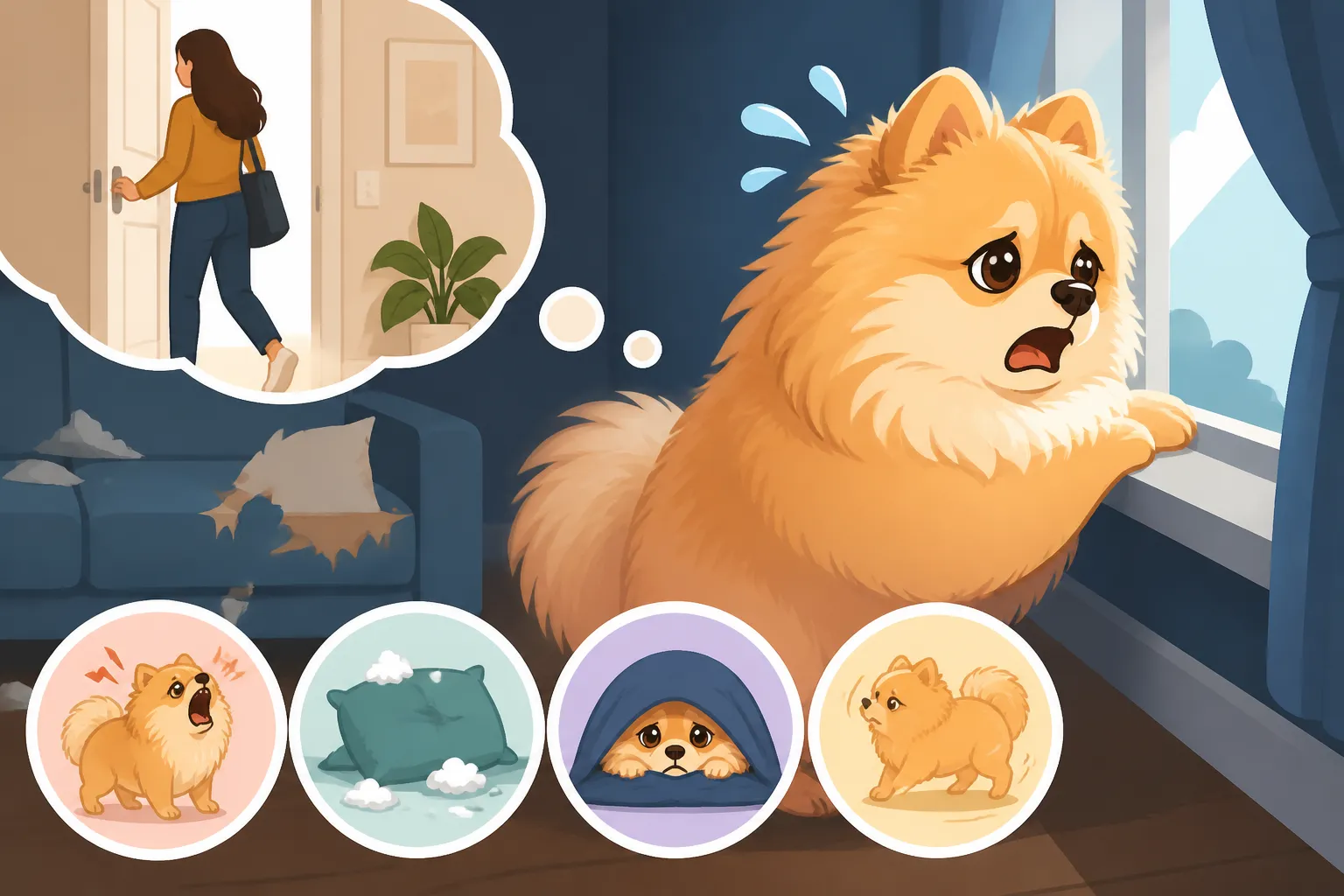
When a Pomeranian experiences separation anxiety, their behavior often escalates rapidly from the moment they realize you're preparing to leave. You might notice them becoming clingy, shadowing your every move, or even trying to block your exit. Once you're gone, the real distress can begin.
A common sign is excessive vocalization. This isn't just a few barks; it's often continuous barking, howling, or whining that can last for hours. Imagine a tiny alarm going off non-stop – that's often what neighbors report. For a small breed like a Pomeranian, this can be incredibly draining and stressful. A Pomeranian That Screams the Moment You Leave is not just being dramatic; they are genuinely terrified and calling for you.
Another deeply upsetting symptom is destructive chewing or scratching. This isn't just puppy chewing; it's often focused on escape routes like doors, window frames, or objects that smell strongly of you, like your furniture or clothing. They're not being naughty; they're trying desperately to get to you or cope with their intense fear. You might come home to a chaotic scene that feels like a hurricane hit your living room, all caused by a tiny dog.
Inappropriate Elimination and Pacing
Finding urine or feces in the house when you return, despite your Pomeranian being otherwise perfectly house-trained, is a strong indicator of separation anxiety. It's not out of spite or a lack of understanding of where to go. It's a physiological response to extreme stress and panic. Their bodies simply can't hold it, or they might eliminate as a self-soothing mechanism. It's a clear sign of their emotional state, not a training failure on your part. A house trained Pomeranian that starts having accidents is often reacting to anxiety.
Pacing, restless movement, and panting are also common. Your Pomeranian might walk circles, continuously check the door, or dig at the carpet, unable to settle. They might shiver uncontrollably even if the room temperature is comfortable. This physical manifestation of anxiety shows they're in a state of hyper-arousal, constantly searching for you or for a way to escape their fear. They simply can't relax.
Here’s a quick overview of how to distinguish between normal "missing you" behaviors and genuine separation anxiety:
| Behavior Trait | Normal Missing You Behavior | Separation Anxiety Symptoms |
|---|---|---|
| Vocalization | A few barks or whines upon arrival | Continuous, frantic barking, howling, or crying for extended periods |
| Destructive Acts | Occasional, minor chewing on appropriate toys | Chewing on doors, windows, furniture, personal items; attempts to escape |
| House Soiling | Holds it, waits for you, goes outside | Urinating or defecating indoors, despite being house-trained, soon after you leave |
| Pre-departure | May watch you leave, then settles | Becomes clingy, restless, panicky as you prepare to leave |
| Post-departure | Settles down after you're gone | Pacing, shaking, drooling, inability to settle, intense focus on the door |
| Reaction to Return | Happy greeting | Overly frantic, prolonged greeting, may take a while to calm down |
Why Do Pomeranians Develop Separation Anxiety?
It’s easy to feel like it’s your fault when your Pomeranian struggles with separation anxiety, but it’s often a complex issue with multiple contributing factors. Poms are naturally deeply devoted to their human companions, and their small size can sometimes make them feel more vulnerable when left alone.
The Roots of Anxiety
One significant factor is genetics and breed predisposition. While not every Pomeranian will develop separation anxiety, some lines may be more prone to general anxiety or hyper-attachment. Their history as companion dogs means they thrive on human interaction, making solitude particularly challenging for them.
Early experiences play a huge role. Puppies who are not gradually acclimated to alone time can develop a strong dependency. If they were never taught The Hours a Pomeranian Tolerates an Empty House, even for short periods, the shock of being left suddenly can be traumatic. Similarly, rescue Pomeranians, especially those who have been rehomed multiple times or spent time in a shelter, might come with a predisposition to anxiety due to past insecurities and fear of abandonment. For them, every departure can trigger old fears.
A sudden change in routine can also trigger separation anxiety in an otherwise calm Pomeranian. A new work schedule, a family member moving out, or even a different living arrangement can disrupt their sense of security. Imagine their entire world shifting; it can be incredibly unsettling for a creature of habit.
Over-Attachment and Lack of Independence Training
Sometimes, separation anxiety can stem from an owner, unknowingly, fostering an unhealthy over-attachment. Consistently picking up your Pomeranian every time they demand attention, allowing them to follow you into every room, or never teaching them to entertain themselves independently can lead to a dog who literally doesn’t know how to exist without you physically present. This is why Building a Pomeranian's Independence is so crucial from a young age.
When a Pomeranian is constantly within arm's reach or on your lap, they don't develop the coping skills needed for solitude. This isn't about neglecting them; it's about teaching them that alone time isn't scary, it's just part of life. Without this foundation, the moment you leave, their world feels like it's falling apart because they've never learned to self-soothe or feel secure independently.
Practical Steps to Help a Pomeranian with Separation Anxiety
Addressing separation anxiety requires patience, consistency, and often a multi-faceted approach. There's no quick fix, but with dedication, you can help your Pomeranian feel more secure when you're not there.
Desensitization and Counter-Conditioning
The core of helping a Pomeranian with separation anxiety lies in desensitization and counter-conditioning. This means gradually exposing them to your departure cues without actually leaving, and pairing departures with positive experiences.
Start by identifying your departure cues: picking up your keys, putting on your shoes, grabbing your bag. Practice these actions repeatedly without leaving. Do them, then sit back down. Do them, then go to another room for a minute, then return. The goal is to strip these actions of their anxiety-inducing power.
Next, you'll work on very short departures. Leave for just 30 seconds, then return calmly. Build up slowly: 1 minute, 2 minutes, 5 minutes, and so on. Only increase the duration if your Pomeranian remains calm. If they start to panic, you've gone too fast and need to go back to a shorter duration. This is where a pet camera can be invaluable, allowing you to monitor their behavior discreetly.
Pairing your departure with something positive is counter-conditioning. Before you leave, give your Pomeranian a special, high-value chew toy or a puzzle feeder that takes them a while to finish. This should be something they only get when you leave, making alone time associated with something wonderful. Think of engaging puzzle toys you can find on Amazon that release treats slowly, keeping their minds busy. This helps change their emotional response from panic to positive anticipation. For more intensive training, programs like BAXTER & Bella offer structured approaches that include exercises for building confidence and managing alone time.
Creating a Safe Space and Routine
A secure and comfortable "den" can make a huge difference. This could be a crate (if properly introduced and not associated with punishment), a small room, or a playpen. Make it a positive space with comfy bedding, favorite toys, and water. Never use the crate as punishment, especially if your Pomeranian struggles with Crate Work With a Pomeranian Puppy That Cries. The goal is for them to view this space as their safe haven, not a prison.
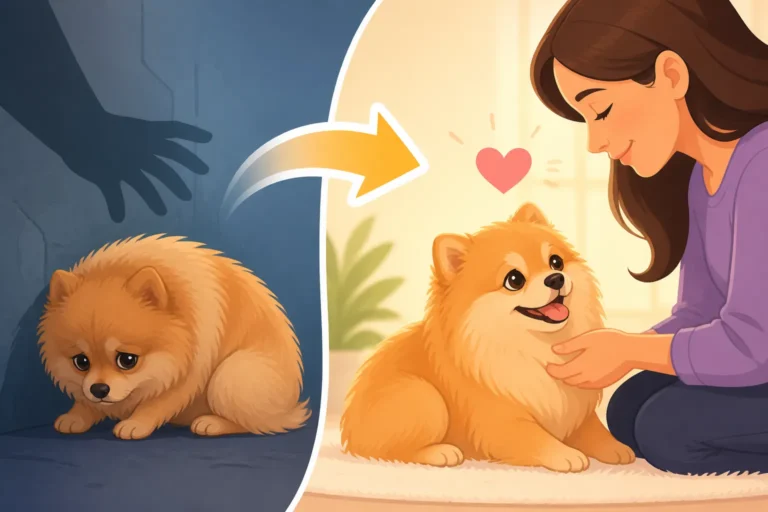
Consistency is key. Establish a predictable daily routine for feeding, walks, playtime, and potty breaks. This predictability can reduce anxiety as your Pomeranian learns what to expect throughout the day. When you do leave, try to make your departures and arrivals low-key. Avoid long, emotional goodbyes or overly enthusiastic greetings, which can inadvertently heighten their anxiety about your absence and return. A calm "I'll be back" and a quiet return helps normalize the process.
Ensure your Pomeranian is well-exercised before you leave. A tired dog is more likely to rest and settle. Even though they are small, Pomeranians still need regular physical and mental stimulation. A good walk, a game of fetch indoors, or a short training session can burn off energy and help them relax. Games That Tire a Pomeranian Indoors can be a lifesaver on bad weather days.
When to Seek Professional Help for Your Pomeranian's Anxiety
While many cases of mild separation anxiety can be managed with consistent home training, there are times when professional intervention is necessary. Recognizing when to call in the experts is a crucial part of being a responsible Pomeranian owner.
Consulting Your Veterinarian
Your first stop should always be your veterinarian. They can rule out any underlying medical conditions that might be contributing to your Pomeranian's behavior. Sometimes, conditions like dental pain, urinary tract infections, or even hormonal imbalances can manifest as behavioral changes, including inappropriate elimination or restlessness. The Checkup Schedule a Pomeranian Should Keep is important, especially when new behaviors emerge.
Your vet can also discuss pharmaceutical options if the anxiety is severe. Medications, when used in conjunction with behavior modification, can significantly reduce your Pomeranian's distress, making them more receptive to training. These aren't a standalone solution but can be a powerful tool to help break the cycle of panic. They can also refer you to a veterinary behaviorist if the case is complex.
Working with a Certified Professional Dog Trainer or Behaviorist
If home strategies aren't yielding results, or if your Pomeranian's anxiety is severe (e.g., self-mutilation, severe destruction, constant vocalization), it's time to consult a certified professional dog trainer or a veterinary behaviorist.
A trainer specializing in separation anxiety will create a tailored behavior modification plan, guiding you step-by-step through the desensitization process. They can observe your Pomeranian's specific triggers and reactions, offering expert advice that online resources simply can't match. They might introduce specific training techniques or even suggest products that could help, such as calming pheromone diffusers or specific calming supplements. For Pomeranians who bark excessively when left alone, a behaviorist can provide strategies beyond simple obedience training, understanding the deep-seated fear that drives the vocalization. What a Behaviorist Charges for a Barking Pomeranian might seem like an investment, but the peace of mind for both you and your pet is invaluable.
Remember, separation anxiety is a genuine panic disorder for dogs. It's not a sign of a "bad" dog, nor is it a reflection of your love for them. It's a solvable problem, but it requires understanding, patience, and often, professional guidance to help your beloved Pomeranian feel safe and secure, even when you're not right there beside them.
Disclaimer
This article is for general informational purposes only and does not constitute professional advice. Laws, prices and regulations vary by location and change over time. Consult a qualified professional for guidance on your specific situation.