Whether Indoor Pads Confuse a Pomeranian
One of the most common frustrations new Pomeranian parents face, and often seasoned owners too, is house training. These tiny bundles of fluff have equally tiny bladders, and sometimes, it feels like they simply can't hold it long enough to get outside. This often leads people to consider indoor potty pads as a convenient solution, but the big question always looms: do indoor pads actually confuse a Pomeranian in the long run? This comprehensive guide will dive deep into the pros and cons of potty pads, explore how they might inadvertently hinder your house-training efforts, and provide actionable strategies to either use them effectively or ditch them for good, setting your little Pom up for success.
The Appeal and Perceived Necessity of Indoor Potty Pads for Pomeranians
It's completely understandable why many Pomeranian owners initially turn to potty pads. You bring home this adorable, delicate puppy, and the thought of them having to brave the elements multiple times a day, especially when they're so small, can be daunting. There’s a certain logic to providing an indoor "safe space" for them to relieve themselves, but it's important to understand the underlying motivations and how they align with your long-term training goals.
Why Owners Consider Pads for Small Breeds
Let's be real, Pomeranians are small dogs. Their little bladders fill up fast, which means more frequent potty breaks than a larger breed. For many owners, this translates into a feeling of constant vigilance, especially during those early puppy days. Add to that the concern for their delicate constitution; imagine a tiny Pom puppy trying to navigate a snowy backyard or a rainy pavement. Owners worry about them getting too cold, too wet, or even getting stepped on by larger dogs or humans while outside.
Then there's the lifestyle aspect. If you live in an apartment on a high floor, getting your Pomeranian outside quickly for every single potty break can feel like an Olympic sport. Stairs, elevators, and busy city streets all add layers of complexity. For some, having an indoor pad just feels like a practical necessity, a way to ensure their tiny companion can relieve themselves without undue stress or discomfort, especially if they are left alone for periods. It often comes from a place of genuine care and wanting to make things easier for everyone involved.
The Initial Convenience vs. Long-Term Goals
Potty pads offer an immediate sense of relief, both for the owner and the puppy. There's a designated spot, and if the puppy uses it, it feels like a victory. No more urgent dashes downstairs, no more frantic searches for a clean patch of grass. This initial convenience is incredibly tempting, especially when you're sleep-deprived from those early puppy weeks. However, what starts as a convenience can quickly become a crutch that actually hinders your progress toward a fully house-trained dog.
The fundamental issue is consistency. House training is all about teaching your Pomeranian where the appropriate place to eliminate is. If "appropriate" means both "outside on the grass" and "inside on a pad," your Pom is receiving mixed signals. Think about it from their perspective: one moment you're praising them for going on the pad, the next you're rushing them outside. How are they supposed to differentiate? Your long-term goal is likely for your Pomeranian to eliminate solely outdoors, and while pads can feel like a good interim step, they can easily delay or complicate reaching that final goal. It’s like teaching a child to use a potty in the living room and then expecting them to automatically understand that the real potty is in the bathroom down the hall – it can get confusing!
How Potty Pads Can Actually Confuse Your Pomeranian
The confusion for your Pomeranian isn't always obvious, but it stems from how dogs learn and generalize. They don't understand our human logic; they associate actions with locations and scents. When we introduce pads, we're fundamentally altering that association in a way that can work against our ultimate house-training goals.
The "Indoor is Okay" Signal
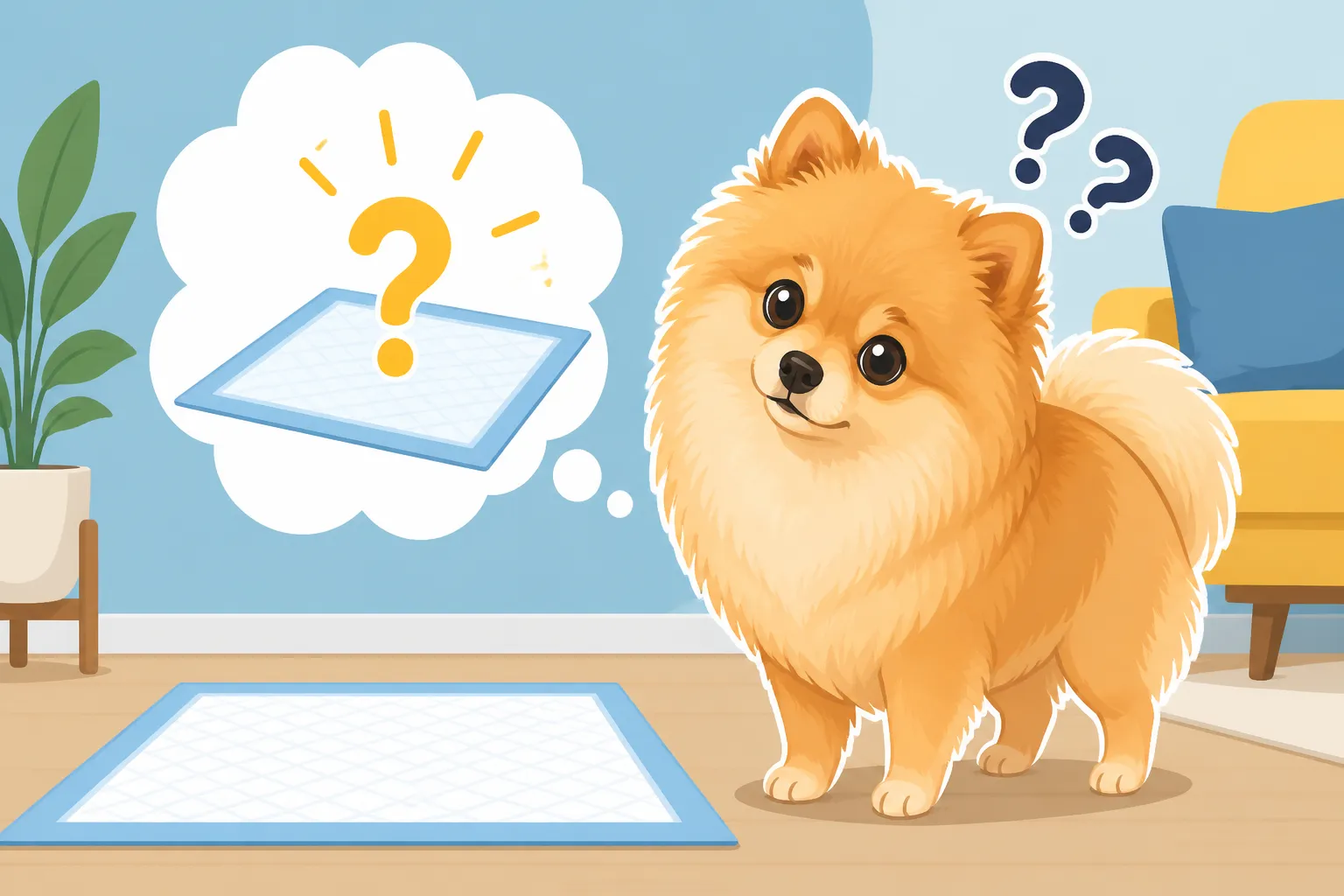
Dogs are creatures of habit and association. When you encourage your Pomeranian to use a potty pad indoors, what they often learn isn't "potty on this specific square of absorbent material." Instead, their brain often interprets it as "it's okay to pee and poop inside the house on something soft and absorbent." This is where the confusion truly begins.
Suddenly, your beautiful rug, your bathmat, a discarded towel, or even a pile of laundry starts looking suspiciously similar to their designated potty pad. They have learned that indoors is a viable place to eliminate, especially on textures that absorb well. This generalization can lead to frustrating "accidents" that aren't really accidents in your dog's mind – they're just following the rules as they understand them. It becomes a huge hurdle to overcome when you then try to restrict all indoor elimination, as you've already given them permission, in their eyes, to go inside.
Undermining Outdoor Training Efforts
The presence of indoor potty pads can directly compete with and undermine your outdoor training efforts. Why should your Pomeranian try to hold it until you get them outside if there’s a perfectly acceptable option just a few feet away? This is especially true for puppies with their small bladders. If they wake up from a nap, feel the urge, and a pad is readily available, they'll likely choose the path of least resistance.
This creates a scenario where your Pomeranian doesn't learn to develop proper bladder and bowel control for extended periods because they don't have to. The motivation to "hold it" and signal you to go outside is diminished. The struggle to get your Pomeranian to prefer going outside, even when a pad is available, can be a long and arduous one. You might find yourself saying, "But they know to go outside!" only to walk in and find a fresh puddle on the pad. It's not malicious; it's just that the pad is a more convenient option for them. For Pomeranians who are already a bit particular, this can be compounded by things like cold or wet weather. If your Pom actively dislikes getting their paws wet, they're much more likely to choose the indoor pad over a damp lawn. This is a common issue, and you might find useful tips in A Pomeranian That Will Not Get Its Coat Wet.
The Scent Problem and "Ghost Accidents"
Dogs possess an incredibly powerful sense of smell, far more acute than ours. Even after you've thoroughly cleaned an indoor accident, there might be residual scent molecules that remain imperceptible to the human nose but are screaming "potty spot!" to your Pomeranian. Potty pads, by their very nature, are designed to absorb and hold urine, which means they consistently reinforce an indoor scent marker for elimination.
If your Pom has used a pad, even if you replace it, the surrounding area (the floor, the baseboard, nearby furniture) can absorb some of that scent. This phenomenon can lead to what some call "ghost accidents" – your dog seems to be going in random spots, but to them, they're simply returning to areas that smell like a past potty spot. It's a self-perpetuating cycle: they pee, the scent lingers, they're drawn back to the scent, they pee again. Breaking this cycle requires diligent cleaning with enzymatic cleaners specifically designed to break down urine proteins and eliminate the scent completely, not just mask it.
Strategies for Effective Pad Use or Phasing Them Out
While the potential for confusion is real, sometimes potty pads are a necessary evil, especially for those living in high-rise apartments, owners with mobility issues, or Poms with specific health concerns that require frequent, immediate access to a potty spot. The key is to use them strategically and with a clear exit plan.
Designated "Pad Zone" and Supervised Access
If you must use potty pads, the most important strategy is to create a highly restricted and consistent "pad zone." This means placing the pad in one specific location and ideally, enclosing that area so your Pomeranian only has access to the pad when they need to relieve themselves indoors. Think of it like a mini bathroom for your dog. A crate attached to a small x-pen with the pad at one end can be very effective. This prevents them from wandering off and choosing other "soft, absorbent" spots around the house.
Supervised access is also crucial. When your Pomeranian is out and about in the main living areas, they should be under constant supervision. This allows you to interrupt any attempts to go elsewhere and immediately redirect them to their designated pad zone or, even better, outside. Many owners find that using a specific pad holder, often available on platforms like Amazon, helps to keep the pad from becoming a mobile potty spot and clearly defines the boundary for the dog. The goal here is to make the pad feel less like "anywhere inside" and more like "this one specific indoor area, just like an outdoor spot."
The Bridge Method: Gradually Moving Pads Outdoors
For owners who want to transition their Pomeranian from pads to strictly outdoor elimination, the "bridge method" can be very effective. This involves a slow, deliberate process of moving the pad closer and closer to your ultimate desired outdoor potty spot.
Here’s a step-by-step approach:
- Start Indoors: Place the pad near the door you'll eventually use for outdoor potty breaks.
- Move Gradually: Over several days, inch the pad closer to the door, perhaps a foot or two at a time. The goal is to make the movement so subtle that your Pomeranian barely notices.
- Outside the Door: Once the pad is right next to the door, move it just outside the door. This is often the biggest hurdle.
- Further Outside: Continue moving the pad a few feet further away from the house each day, towards the final designated outdoor spot (e.g., a patch of grass).
- Shrink the Target: Once the pad is in the desired outdoor location, you can start cutting the pad into smaller and smaller pieces over several days, until there's just a tiny square left, and then eventually, no pad at all. Your Pomeranian should now be accustomed to going in that specific outdoor area.
During this process, continue to reward lavishly every time your Pom uses the pad in its new location. Consistency is paramount. As you move the pad closer to the door, this is also an excellent time to teach your Pomeranian to signal when they need to go out, perhaps by nudging a bell on the doorknob. For more on this, check out Teaching a Pomeranian a Door Bell.
Prioritizing Outdoor Potty Breaks from Day One
The most effective way to prevent pad confusion is to prioritize outdoor potty training from the moment your Pomeranian puppy comes home. This means taking them outside frequently – every hour or two, after every nap, after every meal, and before bedtime. Small puppies, especially Pomeranians, have very little bladder control. You'll be surprised at How Small a Pomeranian Puppy's Bladder Is. By taking them out often, you maximize their chances of success outdoors and minimize the opportunity for indoor accidents.
Combine this with a solid crate training program. A crate can be a powerful house-training tool because dogs instinctively do not want to soil their sleeping area. When your Pomeranian is crated, they're more likely to "hold it" until you let them out. The moment you open the crate, carry them directly outside to their designated potty spot. Praise and reward them enthusiastically the second they go. This positive reinforcement solidifies the association: outside = good place to potty. For tips on getting your Pom comfortable with a crate, you might find help in Crate Work With a Pomeranian Puppy That Cries. This routine also helps answer the question of Whether a Pomeranian Can Hold It Overnight – with consistent training, they absolutely can!
Alternatives to Potty Pads and Boosting Outdoor Success
While potty pads have their place, many owners find more success with alternatives that align better with teaching outdoor elimination. These options can provide a middle ground or a clearer path to full outdoor training, especially for apartment dwellers or those facing weather challenges.
Artificial Grass Patches and Balcony Solutions
For apartment living or situations where immediate outdoor access isn't feasible, an artificial grass patch can be a game-changer. These typically consist of a layered system with synthetic grass on top, a drainage grid, and a collection tray below. The texture of the grass feels more natural to a dog than a disposable pad, and it helps them associate the sensation of "grass" with potty time.
Many owners set these up on balconies, patios, or in designated indoor spaces. The key benefit is that it still provides a "potty spot" that is distinct from the rest of your home's flooring. When used outdoors, it helps bridge the gap between indoor convenience and eventually going on natural grass. Just like with pads, regular cleaning (and emptying the tray) is essential to keep odors at bay. Some artificial grass systems can be rinsed easily, and there are even enzymatic sprays designed to keep them fresh. This is a great solution if you're unable to go out in extreme weather or for an older Pomeranian who might struggle with mobility but still needs a close, consistent spot to go.
The Power of a Consistent Schedule and Rewards
No matter what tools you use, the bedrock of successful house training is a rock-solid, consistent schedule. Dogs thrive on routine, and a predictable schedule helps them anticipate when and where they should relieve themselves. This includes regular feeding times, which often lead to predictable potty times shortly after. For a puppy, this means frequent small meals and equally frequent potty breaks. For details on feeding frequency, see How Often a Pomeranian Puppy Needs to Eat.
Here’s a simple structure to aim for:
- First thing in the morning
- After waking from any nap
- After every meal
- After playing or any exciting activity
- Before bedtime
When your Pomeranian does their business outside (or on the designated artificial grass patch), make it a party! High-value treats, enthusiastic verbal praise, and a happy dance from you will reinforce that they did exactly what you wanted. This positive association is far more powerful than any scolding for an indoor accident. The goal is to make going outside the most rewarding activity of their day. Consider a structured online training program like BAXTER & Bella, which often provides schedules and guidance for consistent positive reinforcement. They emphasize building good habits from the start, which is exactly what you need for successful house training.
| Feature | Potty Pads (Disposable) | Artificial Grass Patch (Reusable) | Outdoor Training (Direct) |
|---|---|---|---|
| Initial Cost | Low (per pack) | Moderate to High | Minimal (leash, treats) |
| Ongoing Cost | High (continuous repurchase) | Low (cleaning supplies) | Low (treats) |
| Odor Control | Poor (unless changed immediately) | Moderate (requires regular cleaning) | Excellent (natural ventilation) |
| Environmental Impact | High (waste from disposal) | Moderate (manufacturing, but long-lasting) | Low |
| Ease of Use | High (place and go) | Moderate (initial setup, ongoing cleaning) | Moderate (requires owner effort to go out) |
| Portability | High | Moderate (some are portable) | N/A |
| Confusion Risk | High (can generalize "indoor potty") | Moderate (can still be seen as "indoor potty") | Low (clear distinction between indoor/outdoor) |
| Transition to Outdoor | Difficult (need to break indoor habit) | Easier (similar texture to outdoor grass) | Seamless (already training for outdoor) |
| Ideal For | Temporary situations, extreme emergencies | Apartments, balconies, owners with mobility challenges | All situations, especially for long-term house training |
Managing Accidents Gracefully
Accidents will happen, especially during the house-training phase. It's an inevitable part of the process, and your reaction can significantly impact your Pomeranian's learning. The absolute most important rule is: never punish your dog for an accident. They don't understand "bad dog" in the context of an accident from hours ago. Punishment only teaches them to fear you or to hide their accidents, making it harder for you to catch them in the act and redirect them. If you come across an accident, simply clean it up without fanfare.
However, if you catch your Pomeranian in the act of having an accident indoors, a quick, sharp sound (like a clap or "ah-ah!") can interrupt them. Immediately pick them up (without scolding) and rush them outside to their designated potty spot. Even if they don't finish outside, praise them for being outside. Then, return inside and thoroughly clean the accident. As mentioned before, enzymatic cleaners are your best friend here. Brands found on Amazon often offer these specialized cleaners that break down the odor-causing molecules, completely removing the scent cue that might draw your Pomeranian back to that spot. A House Trained Pomeranian That Starts Having Accidents might explain that even a previously reliable Pom can regress if scents are left behind.
Long-Term House-Training Success for Your Pomeranian
House training a Pomeranian, like any dog, is a journey, not a destination you reach overnight. It requires dedication, consistency, and a deep understanding of your tiny companion's needs and learning process. With the right approach, you can achieve long-term success and enjoy a clean, happy home with your Pom.
Patience, Persistence, and Positive Reinforcement
Let me tell you, house training a small breed like a Pomeranian can test the limits of your patience. It often feels like you take two steps forward and one step back. But please, resist the urge to get frustrated or give up. Persistence is key. Every time you take your Pom out, every time you reward them for going in the right spot, you're building a stronger foundation.
Positive reinforcement is not just a training method; it's a philosophy. It means celebrating the successes, however small they may seem. Your Pomeranian wants to please you, and if they associate going outside with happy sounds, tasty treats, and your beaming smile, they'll be much more motivated to repeat that behavior. Remember that small bladders mean more opportunities for success (and accidents), but also more chances for you to reinforce the correct behavior. It truly does take time, and for some Pomeranians, it might feel like How Many Weeks House Training a Pomeranian Takes is an understatement!
Understanding Your Pomeranian's Potty Cues
One of the best ways to prevent accidents and boost your Pomeranian's house-training success is to become a detective and learn their unique potty cues. Before they actually go, most dogs will exhibit some tell-tale signs. For Pomeranians, these might be subtle:
- Sniffing the ground intensely: They're searching for a scent spot.
- Circling or pacing: Often accompanied by sniffing.
- Head suddenly down, looking focused: They're getting ready to squat or lift a leg.
- Whining softly or pacing by the door: This is a clear signal, but you need to teach them this.
- Suddenly stopping play: A quick pause in activity can sometimes precede a potty break.
By observing your Pomeranian closely, especially after waking, eating, or playing, you'll start to recognize these individual signals. The moment you see a cue, immediately scoop them up (or put them on a leash) and take them to their designated outdoor spot. This proactive approach prevents accidents and teaches them that signaling you leads to outdoor relief. Developing a consistent The Routine a Pomeranian Needs Every Day will help you recognize these cues.
When to Seek Professional Help
If you've been diligently working on house training, following a consistent schedule, using positive reinforcement, and managing accidents appropriately, but your Pomeranian is still having frequent accidents, it might be time to seek professional help.
First, always rule out medical issues. A trip to the veterinarian is crucial to ensure there isn't an underlying health problem causing the accidents, such as a urinary tract infection, kidney issues, or even diabetes. These can all increase the frequency of urination.
If medical issues are ruled out, consider consulting a certified professional dog trainer or a veterinary behaviorist. They can observe your Pomeranian's behavior, assess your training methods, and identify any specific challenges or misunderstandings that might be contributing to the ongoing issues. They can offer tailored strategies, whether it's refining your communication, adjusting your routine, or addressing any anxiety that might be playing a role. Sometimes, an outside perspective is all it takes to get you and your Pomeranian back on track towards a fully house-trained home.
Disclaimer
This article is for general informational purposes only and does not constitute professional advice. Laws, prices and regulations vary by location and change over time. Consult a qualified professional for guidance on your specific situation.