Whether Crate Time Helps an Anxious Pomeranian
It’s a truly heartbreaking sight, isn't it? To see your tiny Pomeranian pacing, whining, panting, or even trembling when you leave the house or simply try to put them in their crate. Many of us grapple with our Poms' anxiety, and naturally, we look for solutions to help them feel safe and secure. Crate training is often touted as a magic bullet for all dog issues, including anxiety, but for a little fluffball like a Pomeranian, it's not always so straightforward. This guide will dive deep into whether crate time truly helps an anxious Pomeranian, exploring the nuances, potential pitfalls, and how to approach it in a way that prioritizes your beloved companion's well-being and builds their confidence, rather than adding to their stress.
Understanding Pomeranian Anxiety and Crate Training Basics
Pomeranians, for all their small stature, often come with big personalities and sometimes, even bigger anxieties. Their intelligence and sensitive nature can make them prone to various forms of stress, and figuring out the root cause is always the first step. When considering tools like a crate, it's important to understand both the theory behind it and the specific emotional landscape of your tiny companion.
Common Triggers for Anxiety in Pomeranians
Our Poms can be prone to anxiety for a multitude of reasons, and it's rarely a one-size-fits-all situation. One of the most common forms we see is separation anxiety, where the mere thought or act of you leaving can send them into a spiral. This might manifest as destructive chewing, incessant barking, house soiling, or frantic attempts to escape their confinement. It’s not about them being naughty; it’s a genuine panic response that feels overwhelming for them. You might notice your Pom starts to react the moment you pick up your keys or put on your shoes, signs that their anxiety is rooted in anticipating your departure.
Beyond separation, Poms can also experience generalized anxiety, perhaps triggered by loud noises like thunderstorms or fireworks, or even just the commotion of a busy household. Some Poms develop social anxiety, becoming visibly uncomfortable or reactive around unfamiliar people or other dogs. Think about a Pomeranian who cowers or barks hysterically at a new visitor – that's often fear, not aggression. And sometimes, anxiety can stem from underlying medical conditions, pain, or even simply a lack of routine or confidence. Understanding these triggers is paramount because it informs whether a crate will be a comfort or a torment.
The Core Purpose of a Crate in Theory
In theory, a crate is meant to be a den – a safe, cozy, personal space where a dog can retreat, feel secure, and relax. It taps into their natural instinct to find a small, enclosed area for rest and safety, much like a wolf den. For many dogs, particularly puppies learning house training, a crate provides a clear boundary and encourages them to hold their bladder, as dogs instinctively don't want to soil their sleeping area. It's also a tool for managing behavior, offering a secure spot when you can't directly supervise them, preventing them from chewing inappropriate items or getting into dangerous situations.
The idea is that if introduced properly, the crate becomes a positive place, associated with good things like tasty treats, special toys, and quiet naps. It’s meant to be a sanctuary, not a prison. For traveling or vet visits, a dog that is comfortable in a crate is also less stressed, as their familiar den comes along with them. However, this ideal scenario relies heavily on careful, positive introduction and the dog's individual temperament, which is where things can get tricky with an anxious Pomeranian.
Crate Training: A Double-Edged Sword for Anxious Poms
When it comes to an anxious Pomeranian, the crate can either be a calming haven or a source of intensified fear. It truly depends on the individual dog, the type of anxiety they experience, and most importantly, how the crate is introduced and utilized. There's no universal answer, and what works for one Pom might be detrimental to another.
When a Crate Can Offer Security and Comfort
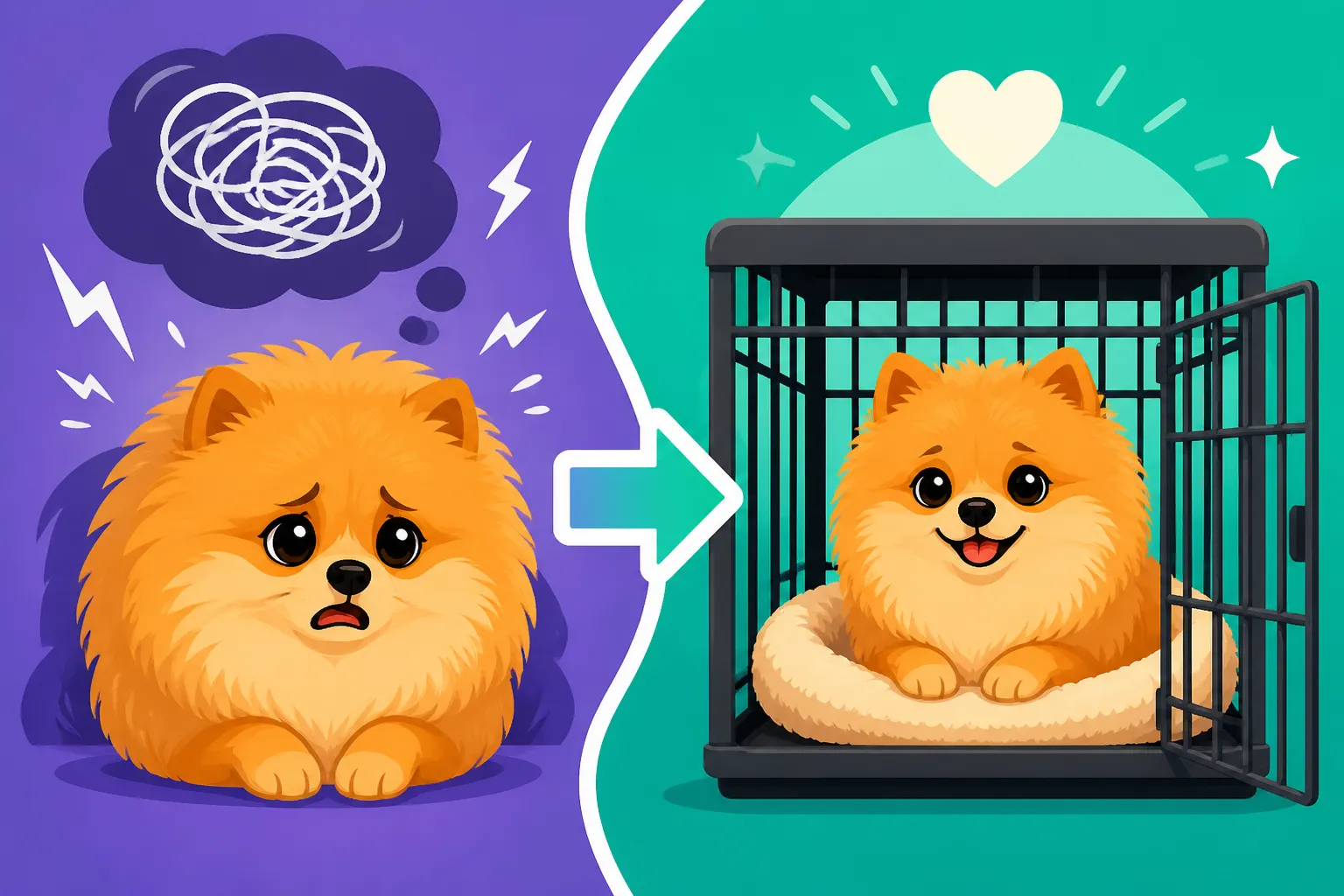
For some anxious Pomeranians, particularly those whose anxiety manifests as a need for a secure, small space, a crate can indeed be a huge comfort. Imagine a Pom who feels overwhelmed by the vastness of a house or the constant activity; a soft, covered crate can act like a personal hideaway. It offers a clear boundary and a predictable environment, which can be very reassuring to a dog that thrives on routine and predictability. If your Pom is prone to hiding under furniture or squeezing into tight spaces when stressed, a properly introduced crate can fulfill that same need for a 'den.'
The key here is positive association. If the crate is filled with soft bedding, special long-lasting treats, and perhaps a familiar scent item from you, and they are never forced into it or left for too long initially, it can become their safe zone. For Poms who struggle with external stimuli like loud noises, a crate with a blanket draped over it can dampen sounds and reduce visual triggers, helping them to settle during a thunderstorm, for example. In these instances, the crate isn't a punishment but a self-selected retreat, a place they willingly go to feel safe. This comfort can be especially vital for situations where you cannot supervise your dog, helping to manage their stress rather than letting it escalate unchecked. Whether a Pomeranian Copes With a Long Work Day depends heavily on how well they can self-soothe in their den.
When a Crate Exacerbates Anxiety
Unfortunately, for many anxious Pomeranians, particularly those suffering from severe separation anxiety, a crate can become a symbol of their worst fears – confinement and abandonment. If a Pom is already panicking about being left alone, being placed in a crate can heighten their sense of being trapped, intensifying their distress rather than alleviating it. This can lead to frantic scratching, chewing at the bars, excessive vocalization like barking or howling, and even self-injury as they try desperately to escape. Forcing an anxious Pom into a crate or leaving them in it for extended periods when they are clearly distressed can create a lasting negative association that is incredibly difficult to overcome.
Consider a Pomeranian whose anxiety peaks when you prepare to leave. If you then put them in a crate, they associate the crate directly with your departure and the ensuing panic. Instead of a den, it becomes a cage. This can lead to a worsening of anxiety symptoms, not only related to separation but also to the crate itself. It’s a vicious cycle where the crate, intended to help, becomes a trigger for even greater fear. In these cases, crating can cause more harm than good, potentially damaging your bond with your dog and making future training efforts even harder. If your Pom reacts with immediate panic, drooling, or frantic attempts to get out, it's a clear sign the crate is exacerbating their anxiety, and an alternative approach is needed. A Pomeranian That Screams the Moment You Leave is not going to benefit from being crated if it feels trapped.
| Aspect | Crate Benefits for Anxious Poms (If done correctly) | Crate Risks for Anxious Poms (If done incorrectly or for severe anxiety) |
|---|---|---|
| Sense of Security | Provides a den-like, safe retreat for calm dogs. | Can feel like a trap, increasing feelings of panic and confinement. |
| Behavior Management | Offers a controlled space to prevent destructive acts. | Escalates destructive behavior due to desperate escape attempts. |
| House Training | Encourages holding bladder, promotes clean habits. | May lead to soiling due to extreme stress, undermining training. |
| Travel/Vet Visits | Familiar safe space reduces stress during transport. | Heightens travel anxiety if the crate itself is a fear trigger. |
| Anxiety Reduction | Can reduce general anxiety by providing a predictable space. | Can exacerbate separation anxiety, leading to vocalization and self-harm. |
| Recovery | Offers quiet recovery post-surgery or illness. | Can hinder recovery if the dog struggles against confinement. |
Strategies for Successful Crate Training with an Anxious Pomeranian
If you decide to try crate training with an anxious Pomeranian, the approach must be gentle, gradual, and overwhelmingly positive. This isn't about forcing them to accept it; it's about making them choose to see it as a good place. It requires patience and a deep understanding of your Pom's individual emotional state.
Creating a Positive Association
The absolute cornerstone of successful crate training for any dog, especially an anxious Pomeranian, is to build strong, positive associations. This means the crate should always be linked with enjoyable experiences. Start by making the crate inviting. Place it in a busy, family area first, not tucked away in an isolated room, so your Pom doesn't associate it with being alone. Fill it with a super soft bed, cozy blankets, and special high-value treats that they only get inside the crate. Think delicious, smelly treats that they don't get at any other time.
Never, ever use the crate for punishment. If the crate becomes a place where they go when they've been naughty, they'll quickly develop a negative association. Instead, toss treats inside the crate throughout the day, leaving the door open, so they can wander in and out at will. Feed them their meals in the crate, again, with the door open. You want them to view the crate as a magical treat dispenser and a comfortable dining area. You can find a huge variety of chew toys and enrichment items on platforms like Amazon that can be given exclusively in the crate to further enhance this positive feeling. The more good things happen only inside the crate, the more they will gravitate towards it.
Gradual Introduction and Short Durations
Once your Pomeranian is willingly entering the crate to retrieve treats or eat their meals with the door open, you can start the process of briefly closing the door. This must be done incrementally. Close the door for just a second or two, then immediately open it and praise your Pom enthusiastically, perhaps offering another treat. Repeat this many times a day, slowly increasing the duration. It might take days, or even weeks, to get to just a few minutes with the door closed. The goal is to avoid any distress. If your Pom shows any sign of anxiety – whining, scratching, or even just a tense posture – you've moved too quickly. Revert to the previous step and slow down even further.
Only when your Pom is calm and comfortable for several minutes with the door closed should you attempt to leave the room for a few seconds. Again, return quickly, praise, and open the door. The duration of your absence, and the time they spend in the crate, should only increase if your Pom remains completely relaxed. This process is about building trust and demonstrating that you always return. For a step-by-step guide to this patient process, resources like BAXTER & Bella can offer structured courses that walk you through each stage, which can be invaluable for sensitive dogs. This careful, slow approach is essential for Crate Work With a Pomeranian Puppy That Cries and adult anxious Poms alike.
Essential Crate Setup for Comfort
The physical setup of the crate itself plays a massive role in whether your anxious Pomeranian will find it comforting or frightening. Firstly, size matters. The crate should be just large enough for your Pom to stand up, turn around, and lie down comfortably. If it's too big, they might use one end as a potty area, defeating the purpose of house training. If it's too small, they'll feel cramped and distressed. A wire crate with a divider can be adjusted as your Pom grows or if you need to size it down.
Inside, provide plush, comfortable bedding. This isn't just about softness; it's about creating a cozy, inviting space. Consider adding a small blanket or an old t-shirt with your scent on it to provide extra reassurance, especially if separation anxiety is a concern. Cover three sides of the crate with a blanket or a crate cover to create a den-like atmosphere, reducing visual stimulation and offering a sense of security. Ensure proper ventilation, especially in warmer climates. Always place fresh water in a spill-proof bowl that attaches to the crate bars. Finally, provide safe, engaging chew toys or puzzle toys filled with treats to keep them occupied and associate the crate with positive, independent activity.
Alternative and Complementary Approaches to Managing Anxiety
Sometimes, despite our best efforts, a crate just isn't the answer for an anxious Pomeranian. Or, even if crate training is successful, it's often just one piece of a larger puzzle when dealing with canine anxiety. A holistic approach that addresses the root causes of their stress is usually far more effective.
Building Independence and Confidence
A significant part of reducing anxiety, particularly separation anxiety, involves building your Pomeranian's overall independence and confidence. This means teaching them that being alone is okay and even enjoyable. Start by practicing very short periods of separation when you are still home. For instance, go into another room and close the door for a minute, then return. Gradually increase this time, making sure your departures and arrivals are low-key and calm, without fuss or drama. Don't make a big deal out of leaving or coming home, as this can heighten their anticipation and subsequent anxiety.
Encourage independent play by providing engaging puzzle toys or long-lasting chews that they enjoy on their own. Practice "stay" commands, increasing the distance and duration, to build their self-control and confidence in waiting. Enrolling in positive reinforcement obedience classes can also be incredibly beneficial for boosting a Pom's confidence and reinforcing a predictable routine. A dog that knows what's expected of them and feels capable of performing tasks often feels more secure in the world. Remember, Building a Pomeranian's Independence is a long-term project but yields significant results for their overall well-being.
Professional Guidance and Support
If your Pomeranian's anxiety is severe, or if you're struggling to make progress on your own, seeking professional guidance is always the wisest course of action. A certified professional dog trainer specializing in positive reinforcement and anxiety can assess your Pom's specific situation, identify triggers, and develop a tailored training plan. They can teach you techniques for counter-conditioning and desensitization, which are crucial for changing your dog's emotional response to their fears.
In some cases, especially with severe anxiety, your veterinarian might recommend consulting a veterinary behaviorist. These are veterinarians who have specialized in animal behavior and can prescribe medication to help manage anxiety symptoms in conjunction with behavior modification. Medications are not a cure-all but can significantly lower your Pom's stress levels, making them more receptive to training and behavior modification efforts. This combination of behavioral therapy and, if necessary, medication, can provide your anxious Pomeranian with the comprehensive support they need to live a calmer, happier life. Remember, you're not alone in facing these challenges, and there are experts ready to help both you and your precious Pom. Consider avenues like Whether a Pomeranian Needs a Private Trainer or reaching out to a vet behaviorist for specialized support when anxiety becomes overwhelming.
Disclaimer
This article is for general informational purposes only and does not constitute professional advice. Laws, prices and regulations vary by location and change over time. Consult a qualified professional for guidance on your specific situation.