Teaching a Pomeranian Its Name
It can be incredibly frustrating when you call your sweet little Pomeranian, and they seem to look right through you, trotting off to investigate a dust bunny instead. You feel like they know their name, but sometimes, especially when there are distractions, it's like they've suddenly developed selective hearing. This guide is here to walk you through the process of teaching your Pomeranian to not only recognize their name but to respond reliably, making your life together much safer and more harmonious.
Why Name Recognition is Crucial for Your Pomeranian
Teaching your Pomeranian its name might seem like a basic puppy skill, something you just do without much thought. But for these intelligent, sometimes independent little dogs, it's far more than just a polite convention. It's the absolute bedrock of their safety and your communication.
More Than Just a Cute Call
Imagine this scenario: you're at the dog park (in a safe, small-dog-only section, of course, because Why a Dog Park Is Dangerous for a Pomeranian), and suddenly your Pomeranian spots a fascinating leaf blowing away. They take off, full of curiosity. If they don't respond instantly to their name, that leaf could lead them straight into a potentially dangerous situation. Their name is the first step in getting their attention, a vital tool for recall and preventing them from darting into traffic, getting lost, or encountering an unsafe animal.
Beyond emergencies, name recognition builds the foundation for all other training. Every "sit," "stay," or "come" command begins with your dog's attention, and their name is the primary way you get it. Without that initial connection, teaching them anything else becomes a much bigger uphill battle. It might feel like your Pomeranian is just naturally independent, and while they certainly have that spirited Spitz quality that can make them seem to march to their own drum, a solid understanding of their name helps you channel that energy positively. Many owners find themselves asking Whether Spitz Independence Makes a Pomeranian Difficult, and while it presents unique challenges, strong name recognition helps bridge that communication gap.
The "Selective Hearing" Phenomenon in Small Breeds
We've all been there: you say your Pomeranian's name, perhaps even a few times, and they just blink at you or, worse, ignore you completely. It's easy to feel like they're being stubborn or even defiant. However, for many small breeds like Pomeranians, this "selective hearing" isn't defiance at all. It's often a lack of a strong, consistent, and positive association with their name, especially in the face of distractions.
Their world is full of fascinating sights, sounds, and smells. A crumb on the floor can be far more interesting than your voice. A squirrel outside the window? Forget about it! Our tiny companions often have a harder time filtering out these environmental stimuli and focusing on us unless we've built a rock-solid, incredibly positive connection to their name. If your Pomeranian hasn't been consistently rewarded for responding to their name, why should they bother? They're simply making logical choices from their perspective. The key is to make responding to their name the most rewarding choice they can make in any given moment.
Setting the Stage for Success: Pre-Training Essentials
Before you even utter your Pomeranian's name in a training context, it’s vital to prepare the environment and gather the right tools. Think of it like setting up a stage for a tiny, furry superstar – everything needs to be just right for their best performance.
Choosing the Right Environment and Time
The absolute golden rule for starting any new training with a Pomeranian is to begin in a quiet, low-distraction environment. Your living room, a quiet corner of the kitchen, or even a small, fenced yard when no one else is around, are ideal starting points. Avoid places with loud noises, other pets, or busy foot traffic. These little dogs can be easily overstimulated, and too many distractions will make it nearly impossible for them to focus on you. Building a strong foundation in a calm setting is crucial before you even think about adding external stimuli.
When it comes to timing, think "short and sweet." Pomeranians, for all their intelligence, can have a surprisingly short attention span, especially when they're young. How Long a Pomeranian Will Hold Focus is often not as long as you might hope! Aim for training sessions that last only 2-5 minutes, but do them frequently throughout the day – perhaps 3-5 times. This keeps the sessions fun, prevents boredom, and helps solidify the learning without overwhelming your pup. The best times are usually when your Pomeranian is slightly hungry (before a meal, not right after) and when they're not overly tired or wired. A tired puppy might be too sleepy to engage, while an overly energetic one might struggle to settle.
Gathering Your Training Arsenal
You wouldn't go into battle without your equipment, and training your Pomeranian is no different! Having the right tools on hand will make the process smoother and more effective.
First and foremost, you need high-value treats. These aren't just any old kibble. We're talking about small, soft, incredibly delicious morsels that your Pomeranian absolutely adores. Think tiny pieces of cooked chicken, cheese, hot dogs, or liverwurst. Something they don't get all the time. The treat should be small enough that they can swallow it quickly without much chewing, keeping the pace of the training session brisk. You can find excellent small-batch, high-value training treats on platforms like Amazon or through specialized pet stores.
Next, consider a clicker. While optional, a clicker is an amazing tool for precision training. It marks the exact moment your Pomeranian performs the desired behavior, which in this case, is looking at you or orienting towards you when their name is called. The sharp, consistent sound is much clearer than your voice alone and helps them understand what they're being rewarded for. Many online training programs, like those offered by BAXTER & Bella, advocate for clicker training and can guide you on its proper use.
Finally, bring your calm, positive attitude. Your energy is infectious. If you're frustrated or impatient, your Pomeranian will pick up on that, making them less likely to engage. Keep your voice light, happy, and encouraging. Training should always be a positive experience for your dog, building their confidence and strengthening your bond. If you find yourself getting frustrated, it's time to take a break and try again later.
Step-by-Step Guide to Teaching "Come When Called" (with Name)
Now that you've got your supplies and set the scene, it's time to dive into the actual training. Remember, consistency and positive reinforcement are your best friends here.
The Positive Association Game
This is where the magic begins. The goal is simple: your Pomeranian hears their name, and good things happen. We want to build an immediate, visceral positive association.
Step 1: The Name-Treat Connection.
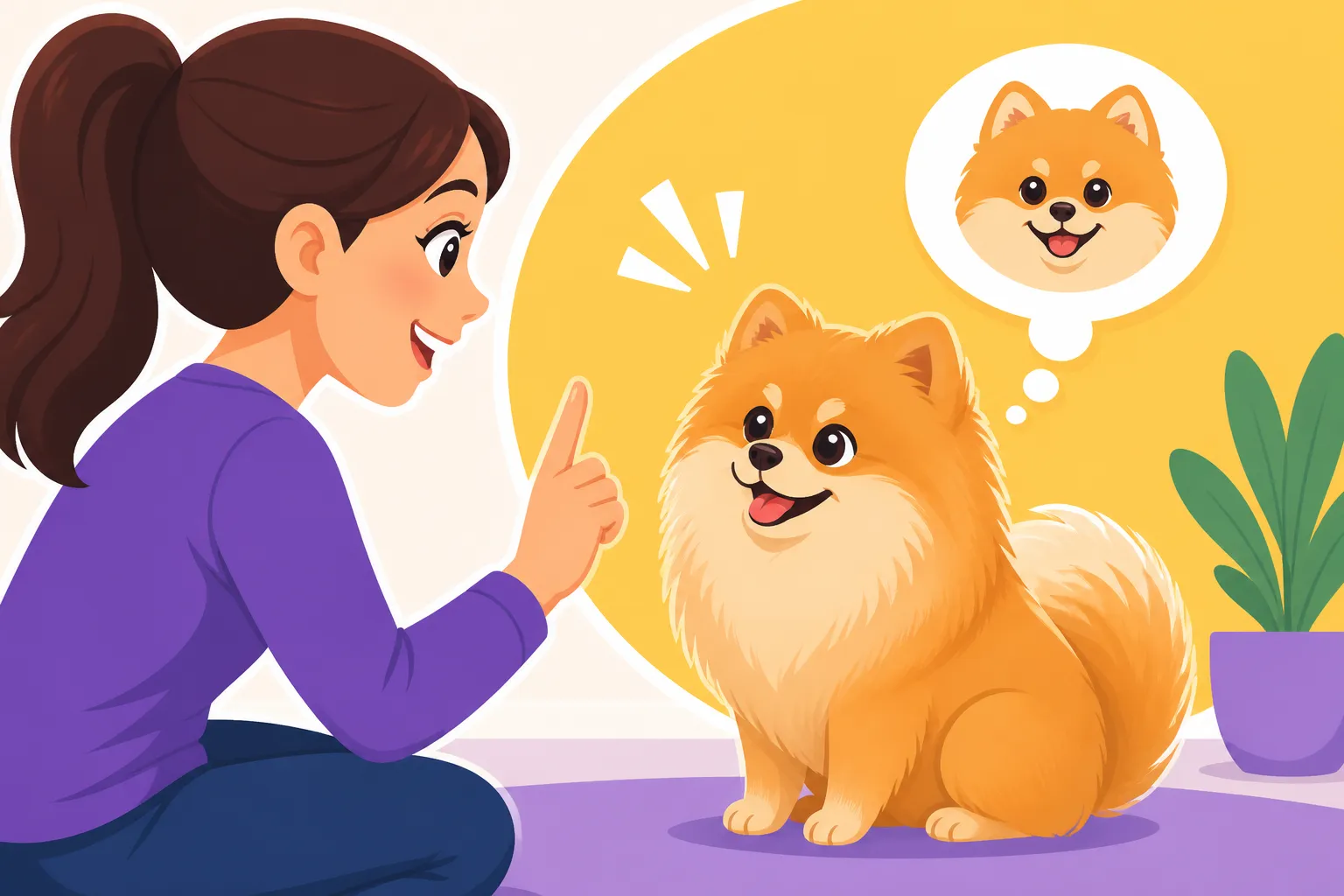
Sit on the floor in your quiet training area with your Pomeranian near you (but not necessarily looking at you). Have your high-value treats ready. Say your Pomeranian's name clearly and happily. The instant they glance at you, even for a split second, say "yes!" or click your clicker, and immediately give them a treat. Repeat this about 10-15 times in a session. Don't ask them to do anything else. Just name, look, treat.
The key here is speed. That "yes!" or click needs to happen exactly when they make eye contact or orient their ears towards you. This precision helps them understand "Oh, my name means good things and I should pay attention to the human!" You're essentially "charging" their name with positive meaning.
Step 2: Adding Slight Movement/Distance.
Once your Pomeranian is consistently looking at you the moment you say their name, start adding a tiny bit of distance or distraction. Take one small step away, say their name. If they look, "yes!" and treat. Or, if they're looking at a toy, hold a treat near your face and say their name. The goal is for their attention to snap to you, even if they were briefly engaged elsewhere. Keep it easy at first. If they don't respond, you've added too much distance or distraction too soon. Go back to Step 1.
Step 3: Gradually Increasing Distractions.
This is where you slowly introduce more real-world elements. Start by having a family member quietly walk across the room while you say the name. Then maybe a very low-volume TV in the background. Later, move to a slightly busier room, then perhaps the yard. Each time, if they respond to their name, lavish them with praise and that high-value treat. Remember, if they fail, the environment is too distracting. Reduce the distractions and try again.
A crucial rule to embed from day one: never use your Pomeranian's name for punishment or when you're upset. If you call their name and immediately scold them, they'll learn to associate their name with negative feelings, and they'll be far less likely to respond to it in the future. Their name should always predict something wonderful.
Integrating the Name with "Come"
Now that your Pomeranian has a strong positive association with their name, we can start to link it with the "come" command, which is essential for both safety and convenience.
Begin in your quiet training space again. Get down to your Pomeranian's level. Say their name in a happy, inviting tone, and as soon as they look at you, enthusiastically say "Come!" while backing away a step or two, making yourself exciting. Most Pomeranians will naturally follow you, especially if you're holding a treat. The moment they reach you, "yes!" or click, and give them their high-value reward. Make it a huge party!
Repeat this several times in short sessions. Gradually increase the distance you back away, and then later, try it when you're not backing up but simply standing. The key is to make "Name + Come!" a cue for an instant, joyful reunion that results in the best treat ever.
Consistency is key here. Every single member of your household needs to use the same method and the same cues. If one person uses the name for scolding or doesn't reward, it will confuse your Pomeranian and undermine your hard work. Consider enrolling in an online puppy course, like the one offered by BAXTER & Bella, for structured guidance on commands like "come." This is especially important for such a tiny dog whose safety can depend on a reliable recall. You might also want to look into The Week a Pomeranian Puppy Can Start Learning to understand the optimal time to begin these lessons.
Troubleshooting Common Pomeranian Training Hurdles
Even with the best intentions and the tastiest treats, you might hit some snags. Pomeranians are smart, but they also have their own unique quirks.
The Distraction Dilemma
This is perhaps the biggest challenge for many Pomeranian owners. You've got a perfectly responsive dog in your living room, but the moment you step outside or guests arrive, it's like their brain turns to mush.
The solution is a slow, methodical approach to generalization. You can't just jump from a quiet room to a busy park. You need to create a "distraction hierarchy."
Level 1: Minimal Distraction. Start back at square one in a slightly new, but still quiet, location. Maybe a different room in your house, or a quiet friend's house. Practice heavily there until your Pomeranian is responding 99% of the time.
Level 2: Controlled Distraction. Introduce a single, minor distraction. A toy they can see but not play with, another family member quietly moving in the background, very soft music. Build up success here before moving on. Make yourself more exciting than the distraction. Jiggle your treat bag, use an extra-squeaky happy voice, or even make a silly noise to grab their attention. On a site like Amazon, you can find training leashes that are long enough to give your Pom some freedom while keeping them safe as you work through higher distraction levels.
Level 3: Moderate Distraction. Move to a slightly busier area, like your backyard while neighbors are outside, or a quiet park area. Always keep your Pomeranian on a long line or leash for safety during this phase. If they fail, reduce the distraction. The goal is to set them up for success every single time. How Long a Pomeranian Will Hold Focus can sometimes feel like mere seconds in a distracting environment, so be patient.
The key is to never let your Pomeranian practice ignoring you. If you call their name and they don't respond, don't repeat it multiple times. Instead, get closer, gently guide their attention back to you (maybe tap their shoulder lightly or wave a treat), and then say their name once and reward the instant they look. This prevents them from learning that they can ignore their name.
When Your Pomeranian Seems to Ignore You
If you've been consistent and your Pomeranian is still giving you the cold shoulder, don't get discouraged. It's time for a little detective work and adjustment.
First, re-evaluate your treats. Are they truly high-value? What might have been exciting last week might be old news today. Try something new and even more delicious. Often, the higher the perceived value of the reward, the more motivated a Pomeranian will be to comply.
Second, check your consistency. Are all family members on board? Are you rewarding every single correct response, especially in the early stages? Inconsistency is a major reason why dogs struggle with commands.
Third, are you being clear and fair? If you've pushed too quickly into distracting environments, your Pomeranian might simply be overwhelmed, not defiant. Go back to basics in a quieter setting. Sometimes, with intelligent but independent breeds like Pomeranians, they might be testing boundaries or truly distracted rather than trying to be difficult. Remember that Pomeranians have a Spitz brain, and while they are eager to please their loved ones, they also have a strong sense of self. Understanding The Reward a Pomeranian Actually Cares About is vital for their training success. For example, some Poms prefer a quick game of tug or a special squeaky toy over a food treat for certain commands.
Fourth, consider if there's any negative association. Have you accidentally used their name in a scolding tone or linked it to something unpleasant? If so, you'll need to work extra hard to rebuild that positive connection. Make every interaction where their name is used overwhelmingly positive for a while.
Finally, remember that patience is a virtue, especially with these spunky little guys. Keep sessions short, keep them fun, and celebrate every tiny success. Your Pomeranian wants to connect with you, and with consistent, positive training, you'll build an unbreakable bond that starts with the sound of their name.
| Treat Value | Examples | When to Use |
|---|---|---|
| High | Small pieces of cooked chicken, cheese, hot dogs, liverwurst, freeze-dried meat treats | For new commands, high-distraction environments, to build strong association |
| Medium | Commercial soft training treats, kibble (if your Pom loves it), Cheerios, small bits of carrot | For practicing known commands in low-distraction areas, maintaining skills |
| Low | Dry kibble, plain dog biscuits | Rarely for training, perhaps as a reward for calm behavior outside of active training |
Disclaimer
This article is for general informational purposes only and does not constitute professional advice. Laws, prices and regulations vary by location and change over time. Consult a qualified professional for guidance on your specific situation.