Why a Pomeranian Should Not Be Left on a Couch
It’s a common sight: a tiny, fluffy Pomeranian curled up on the sofa, looking utterly adorable. As loving pet parents, it’s natural to want our little companions right there with us, enjoying the comforts of home. However, while the image of your Pom nestled into the cushions seems perfectly cozy, leaving a Pomeranian unsupervised on a couch, or any raised furniture, can actually be a recipe for disaster. These precious little dogs, with their delicate structures and adventurous spirits, face a surprising number of hazards when left to their own devices at elevated heights. This guide will walk you through the very real risks and offer practical, empathetic solutions to keep your beloved Pom safe and sound.
The Hidden Dangers of Sofa Heights for Tiny Poms
Pomeranians are small, but they don't always act like it. Their boundless energy and confidence often lead them to believe they are much larger and more invincible than they actually are. This disconnect between their self-perception and their physical fragility is where many of the risks arise when they're left on elevated surfaces like couches.
Fragile Bones and the Impact of Falls
One of the most immediate and concerning dangers for a Pomeranian on a couch is the risk of falling. Imagine your little fluffball, perhaps just four or five pounds, perched on the edge of a sofa that might be two feet off the ground. To them, that's like standing on the edge of a small cliff! Their bones are tiny and far more delicate than those of larger breeds. A short drop, or even an awkward landing from a jump, can lead to serious injuries.
We often see Pomeranians get a burst of excitement when their owner returns home, or when they spot a squirrel outside the window. In that moment of pure joy or intense focus, they might forget their footing or misjudge the distance, launching themselves off the furniture. A broken leg, a fractured rib, or even a traumatic brain injury from hitting their head on a hard floor isn't out of the realm of possibility. These aren't just minor bumps and bruises; they can mean emergency vet visits, costly surgeries, and weeks or months of painful recovery for your little one.
The Peril of Slipping Kneecaps (Patellar Luxation)
Pomeranians, like many small breeds, are unfortunately predisposed to a condition called patellar luxation, more commonly known as "slipping kneecaps." This is where the kneecap temporarily slips out of its groove. While some Poms are born with a genetic predisposition to this, environmental factors, especially repeated trauma from jumping, can exacerbate it or even bring it on in dogs who might otherwise have remained asymptomatic. You might notice a sudden skip in your Pom's step, or they might hold up a back leg for a few moments before continuing. The Skip in a Pomeranian's Back Leg can be a tell-tale sign.
When a Pomeranian repeatedly jumps on and off a couch, the impact and twisting motion on their knees put immense stress on these delicate joints. Even if they don't fall, each jump contributes to wear and tear. A sudden, uncontrolled landing from the sofa can easily cause the patella to luxate painfully, or worsen an existing mild case. This can lead to chronic pain, arthritis, and in severe cases, require expensive surgery to correct. It's a cruel irony that the very comfort we want to provide can contribute to such a painful condition. Why Jumping Off Furniture Wrecks a Pomeranian's Knees delves deeper into these specific risks.
Back and Neck Injuries from Unplanned Leaps
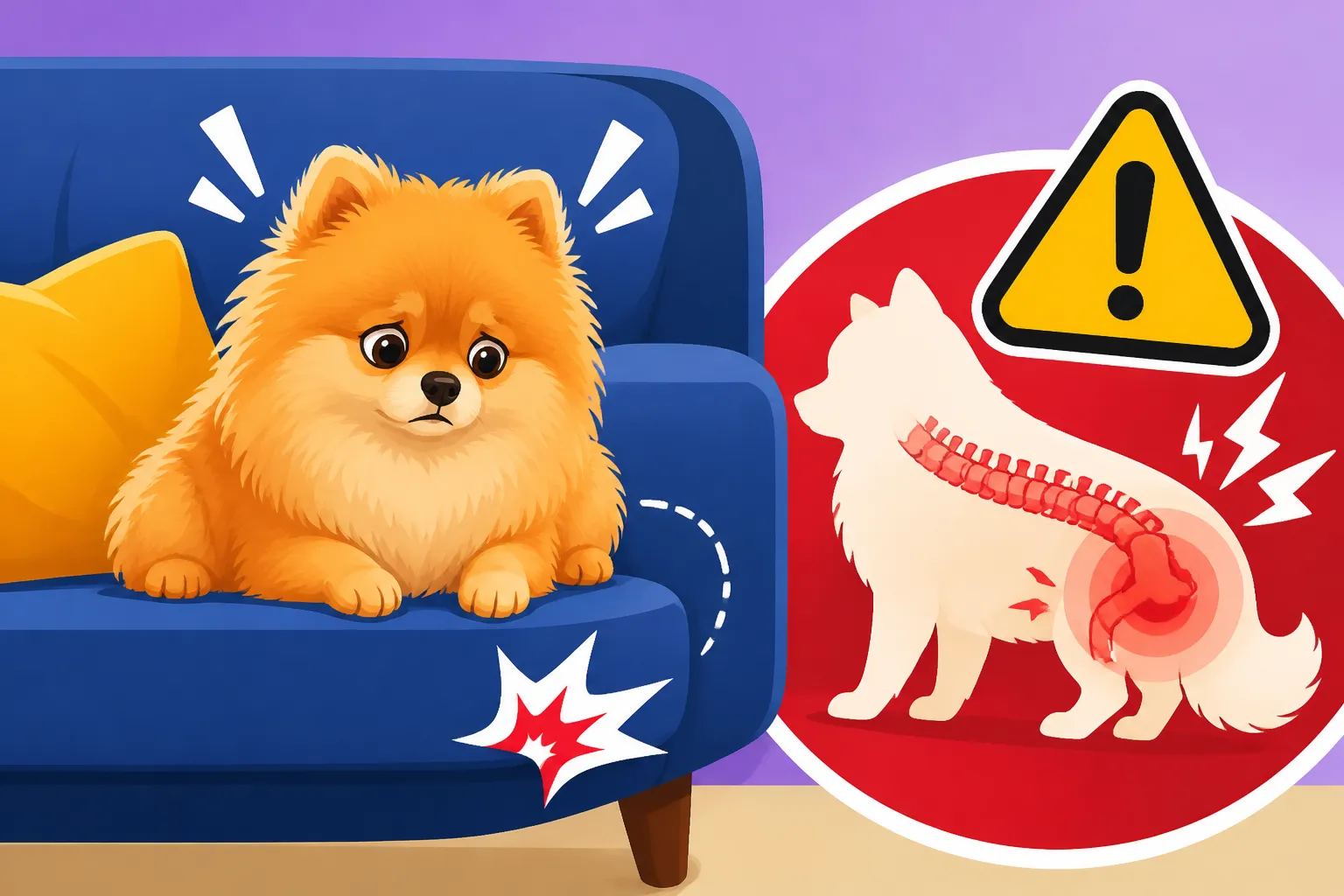
Beyond leg and head injuries, the spine and neck are also incredibly vulnerable. Small dogs can be susceptible to conditions like Intervertebral Disc Disease (IVDD), where the discs between their vertebrae can rupture or herniate, causing immense pain, nerve damage, and even paralysis. A wrong jump or a sudden twist when landing from the couch can trigger such an event.
Think about the way a Pomeranian contorts its body mid-air sometimes, or how it might land off-kilter. That seemingly innocuous movement can be enough to damage a disc in their delicate spine. The recovery from a spinal injury can be long, arduous, and heartbreaking, often involving strict crate rest, medications, or even extensive surgery. Preventing these jumps by not leaving them unsupervised on furniture is a huge step in protecting their long-term spinal health.
Beyond the Fall: Other Risks of Elevated Perches
While falls are the most obvious danger, leaving a Pomeranian alone on a couch presents a host of other, less apparent but equally significant, risks to their well-being and even their behavior.
Overheating and Entrapment in Cushions
Pomeranians are famous for their luxurious double coats, which are wonderful for keeping them warm but can also make them prone to overheating, especially in warmer climates or stuffy rooms. Cushions, blankets, and throws on a couch can create a little nest that quickly becomes too hot for a small dog with a dense coat to regulate their temperature effectively.
Beyond overheating, the soft, yielding nature of sofa cushions can also pose an entrapment risk. A small Pomeranian might burrow deep into a gap or under a heavy blanket, becoming unable to easily free themselves. This isn't just uncomfortable; it can restrict airflow and lead to respiratory distress, particularly for Poms with brachycephalic tendencies (though less common in purebred Poms than some other toy breeds) or those prone to The Honking Cough of a Pomeranian's Collapsing Windpipe. An owner might leave for just a few minutes, assuming their Pom is safe, only to return to a distressing situation.
Inaccessible Food, Water, and Potty Areas
When a Pomeranian is left alone on a couch, they are essentially confined to that elevated space. This means they can't access essential resources like their water bowl, food dish, or designated potty area on the floor. While we might think they can just hold it, a small Pomeranian's bladder is quite small, and they need frequent potty breaks. How Small a Pomeranian Puppy's Bladder Is is a good reminder of this.
Being unable to reach water can quickly lead to dehydration, especially if they're also overheating. If they have to relieve themselves and can't get down, they might have an accident on the couch, which isn't fair to them and can be frustrating for you. This repeated frustration or lack of access can even set back Why House Training a Pomeranian Drags On efforts or lead to behavioral issues around elimination. Their basic needs are paramount, and being stuck on a couch compromises their ability to meet those needs independently.
Reinforcing Unwanted Behaviors
Our homes are our safe spaces, but they also provide a canvas for shaping our dogs' behaviors. When a Pomeranian is always allowed on the couch, especially when unsupervised, it can inadvertently reinforce a few undesirable traits. One common issue is resource guarding. A Pom might begin to view the couch, or even your lap on the couch, as their territory. They might growl or snap if someone else tries to sit near them, or if you try to move them. Whether a Pomeranian Guards Its Owner's Lap explores this dynamic in more detail.
Additionally, a Pom perched on a couch often has a prime view out a window, leading to excessive alert barking at everything that moves outside – passersby, squirrels, other dogs. This constant stimulation can turn into a habit that's difficult to break and can be quite annoying for household members and neighbors alike. The Doorbell and the Pomeranian Response is a classic example of this. Training a dog to settle independently on their own bed on the floor can foster a more calm and less reactive temperament.
Creating a Safe and Independent Environment
So, what's a loving Pomeranian parent to do? The goal isn't to deny your Pom comfort or companionship, but rather to redirect their comfort to safer spaces and teach them appropriate boundaries. It's about proactive care and thoughtful environmental design.
The Importance of Designated "Ground-Level" Spaces
The absolute best way to ensure your Pomeranian's safety when unsupervised is to provide them with comfortable, secure, ground-level spaces. This means investing in a high-quality dog bed placed on the floor in a quiet corner, or setting up a safe playpen for when you can't actively supervise them. A cozy crate, with a soft blanket, can also become their personal den. These spaces should be easily accessible, free from hazards, and where they can find their food, water, and potty pads if needed.
Creating this "safe zone" isn't about punishment; it's about providing a sanctuary where they can rest, feel secure, and not be at risk of falling or getting into trouble. You can find excellent options for everything from orthopedic dog beds to sturdy playpens on platforms like Amazon, ensuring you get something perfectly sized for your pint-sized companion. A well-chosen Playpens for a Pomeranian Puppy can be a game-changer for safety.
Training for Safe Couch Access (If Desired)
If you absolutely want your Pomeranian to enjoy couch time with you, it needs to be a controlled and supervised activity. This means actively training them how to safely get on and off the furniture. Simply letting them jump freely is too risky. This is where ramps and steps come into play.
Teach your Pom to use a dog ramp or set of steps specifically designed for small breeds. This requires patience and positive reinforcement. Lure them up and down with treats, praising them enthusiastically for every successful navigation. You can even break it down into tiny steps, rewarding them for just putting a paw on the ramp initially. Organizations like BAXTER & Bella offer online training programs and resources that can guide you through teaching your Pom these important safety skills, making furniture access a deliberate and safe choice, not a perilous leap. Sofa Steps a Pomeranian Will Actually Use can guide you in choosing the right equipment.
Supervised Interaction and Play
When your Pomeranian is on the couch with you, it should be a time for calm, supervised cuddles and interaction. Avoid encouraging rambunctious play that could lead to an accidental fall. If your Pom gets a burst of energy, gently redirect them to the floor for playtime. Keep their favorite toys on the ground and engage them in games that tire them out safely.
Spending quality time with your Pom doesn't mean they always have to be at your eye level. Many Poms absolutely adore playing fetch in the living room, chasing a toy mouse, or engaging in a gentle tug-of-war game, all from the safety of the floor. This also strengthens your bond through shared activity, rather than simply passive proximity on the sofa. If you’re looking for ways to burn off some of that Pom energy, check out Games That Tire a Pomeranian Indoors.
Practical Tools and Habits for Pomeranian Safety
Protecting your Pomeranian from the dangers of elevated furniture goes beyond just saying "no." It involves adopting new habits and utilizing specific tools to create a safe home environment.
Investing in Ramps and Steps
This is perhaps the most critical investment for any Pomeranian owner who wants to allow their dog on furniture. Dog ramps and steps are designed to provide a gentle incline or manageable steps for small breeds, reducing the impact on their joints and eliminating the need for dangerous jumps. When choosing, consider the following:
| Feature | Description | Why It Matters for a Pomeranian |
|---|---|---|
| Height | Should match or exceed the height of your furniture | Too short, and they still have to jump; too tall, and it's too steep. |
| Width | Wide enough for comfortable ascent/descent without feeling cramped | A wider surface provides more stability and confidence. |
| Surface | Carpeted, non-slip fabric, or textured for grip | Smooth surfaces can cause slips, leading to falls even on the ramp/steps. |
| Stability | Sturdy construction that won't wobble or tip | Flimsy ramps can be terrifying for a small dog and negate the safety aspect. |
| Portability | Foldable or lightweight (if you need to move it) | Useful if you want to use it for different pieces of furniture or store it. |
You can find a wide variety of excellent, sturdy ramps and steps on marketplaces like Amazon. Look for options specifically marketed for small dogs, as larger dog ramps might be too steep or wide for a Pomeranian. Remember, consistency is key in teaching them to use these tools every single time they want to get on or off the furniture. For even more detailed guidance, see Bed Ramps Priced for a Pomeranian.
Regular Health Check-ups and Injury Prevention
Proactive veterinary care is indispensable for a breed like the Pomeranian. Regular check-ups allow your vet to monitor their joint health, assess for any early signs of patellar luxation or spinal issues, and provide advice on weight management, which is crucial for reducing stress on joints. The Checkup Schedule a Pomeranian Should Keep is an excellent resource for understanding what examinations are needed.
If your Pom has had a fall or shows any signs of limping, pain, or difficulty moving, don't hesitate to contact your vet immediately. Early intervention can often prevent a minor issue from becoming a major, debilitating one. Being attuned to their normal movement patterns will help you spot any subtle changes that might indicate a problem.
Environmental Proofing and Smart Living
Beyond the couch, consider other elevated surfaces in your home. Are there window sills, chairs, or beds that your Pomeranian might try to jump on or off? Take a look at your home from your Pomeranian's perspective.
- Restrict Access: When you can't supervise, use baby gates or a sturdy playpen to keep your Pom in a safe, ground-level area. This prevents them from accessing furniture or other potential hazards.
- Non-Slip Surfaces: If you have slick floors (hardwood, tile) near your furniture, consider placing non-slip rugs or runners down. This provides better traction for landings and reduces the risk of slips even on the floor.
- Consistent Training: Everyone in the household needs to be on the same page regarding furniture rules. If one person allows free jumping, it undermines any training you've done with ramps or steps.
By making a few thoughtful adjustments and committing to safe practices, you can ensure your adorable Pomeranian enjoys a comfortable, secure, and injury-free life in your home, whether they're snuggled on your lap or independently relaxing in their own special spot on the floor.
Disclaimer
This article is for general informational purposes only and does not constitute professional advice. Laws, prices and regulations vary by location and change over time. Consult a qualified professional for guidance on your specific situation.