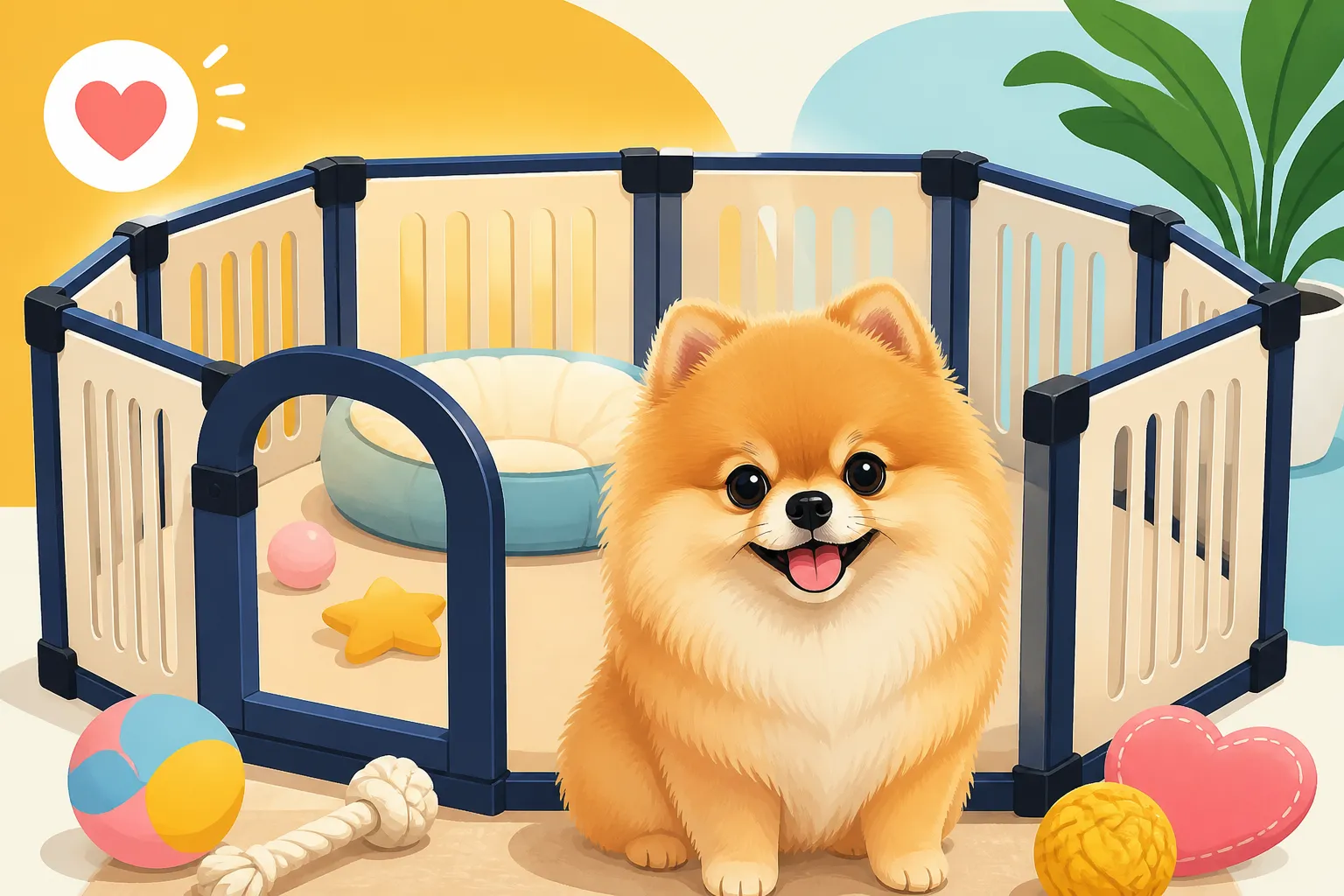
Playpens for a Pomeranian Puppy
Bringing a tiny Pomeranian puppy home is a whirlwind of joy, but it also comes with a big dose of worry. These little fluff balls are so small and curious, it feels like every corner of your house is suddenly a potential hazard. Many new Pom parents feel overwhelmed trying to keep their energetic little companion safe while also giving them the space they need to play and grow. This guide is all about how playpens can be your best friend in creating a secure, happy, and well-structured environment for your precious Pomeranian puppy.
Why a Playpen is a Lifesaver for Your Pomeranian Puppy
Let's face it, living with a Pomeranian puppy is like having a tiny, fluffy tornado in your home. They're adorable, but they're also explorers, chewers, and incredibly fragile. It’s impossible to keep a constant eye on them every second, and that’s where the magic of a playpen comes in. It provides a dedicated, safe zone where your puppy can be a puppy without you having to constantly hover and worry about what trouble they might find.
Safety First: Protecting Your Tiny Pom
Pomeranian puppies are notoriously small and, frankly, delicate. Everything in a typical home, from electrical cords to low-lying plants, forgotten shoes, or even the space under a recliner, can pose a serious threat. A curious pup might decide to gnaw on a charging cable, potentially leading to a dangerous shock. They could get tangled in drapes, squeeze into tight spaces and get stuck, or even fall down a flight of stairs if left unsupervised for just a moment. It's not about being overprotective; it's about being realistic about the vulnerabilities of a three-pound puppy.
Think about the sheer number of things at floor level that seem perfectly innocent to us but are an absolute magnet for a curious puppy. A dropped pill, a child's small toy, a crumb of human food that isn't safe for dogs – the list goes on. Even a bump or a fall from a low height can cause significant injury to such a small dog, potentially leading to expensive vet visits and a lot of heartache. A playpen acts as a physical barrier, ensuring that their exploration is limited to items you've pre-approved for their safety. This enclosed space offers peace of mind, allowing you to relax knowing your Pomeranian small enough to slip out unnoticed is contained and secure, even when you step away for a minute to answer the door or make dinner.
A Designated Space for Potty Training Success
One of the biggest hurdles for any new puppy owner is potty training, and Pomeranians, with their small bladders, can sometimes feel like an extra challenge. A playpen is an invaluable tool for establishing a consistent routine and preventing accidents all over your house. When your puppy has a confined area, they are much less likely to relieve themselves where they also eat and sleep. This natural instinct helps reinforce the idea that elimination should happen outside the playpen, ideally in a designated spot in your yard.
Within the playpen, you can even set up a specific "potty zone" if you're using puppy pads or an indoor grass patch, though I generally recommend getting them used to going outside as much as possible from day one. The key is consistency: take them out of the playpen and directly to their potty spot frequently, especially after waking up, eating, or playing. When they go, heap on the praise and treats, and then they can return to the playpen for supervised playtime. This method teaches them quickly where their "bathroom" is and helps avoid the confusion of having accidents in random spots around the house, which can really set back progress. For more on this, you might find How Small a Pomeranian Puppy's Bladder Is helpful.
Managing Energy and Preventing Destructive Chewing
Pomeranian puppies, despite their size, are bundles of energy! They love to play, explore, and yes, chew. Chewing is a natural and necessary behavior for puppies, especially when those sharp The Sharp Puppy Teeth a Pomeranian Uses on You are coming in. If left unsupervised in a larger space, this natural urge to chew can quickly turn into destructive behavior, targeting your furniture legs, favorite rugs, or anything else within reach. A playpen provides a contained environment where you can direct that energy and chewing instinct toward appropriate toys.
By filling the playpen with a variety of safe and engaging chew toys, puzzle toys, and interactive feeders, you give your puppy healthy outlets for their mental and physical stimulation. This not only saves your belongings but also helps to prevent boredom, which is often a root cause of destructive behavior. When you need to focus on something else, you can rest assured that your puppy is happily occupied and not tearing up your sofa. It's a fantastic way to teach them independent play, which is crucial for building a well-adjusted adult dog and helping them learn What a Bored Pomeranian Chews Up.
Choosing the Right Playpen for Your Pomeranian
So, you're convinced a playpen is the way to go – fantastic! But walking into a pet store or browsing online, you'll quickly realize there are a ton of options. It’s not just about picking the cutest one; it's about choosing the right playpen that will truly meet the needs of your little Pomeranian. Thinking through the details now will save you headaches (and possibly escape attempts!) down the road.
Size and Material Considerations
When it comes to playpen size, think about your Pomeranian's eventual adult size, even though they start tiny. While they only grow to be between three and seven pounds, they still need enough room to move around comfortably, stretch, play, and have separate areas for sleeping and potentially a potty spot. A playpen that’s too small will feel restrictive and stressful, rather than a safe haven. Aim for something that gives them at least enough space for a small bed, food and water bowls, and a few toys, with room to walk around. A square or rectangular shape often works best for maximizing usable space.
As for materials, you've typically got a few choices, each with its own pros and cons:
- Wire Playpens: These are very durable, easy to clean, and offer excellent visibility. They are often expandable, allowing you to customize the size as your puppy grows or your needs change. The downside is they can be heavy and less portable. Some pups might try to climb them, though Poms generally aren't big climbers.
- Plastic Playpens: Lighter than wire, these are often modular, allowing for flexible shapes and sizes. They are also easy to wipe down and can be quite sturdy. They might offer less visibility than wire, and some designs can feel a bit flimsy if not well-constructed.
- Fabric Playpens: These are typically very lightweight, collapsible, and excellent for travel or temporary setups. They often come with mesh windows for ventilation and visibility. However, they are less durable against determined chewers and clawers, and accidents are harder to clean thoroughly if they soak into the fabric. They are best for supervised short-term use or for pups past their intense chewing phase.
| Material Type | Pros | Cons | Best For |
|---|---|---|---|
| Wire | Durable, easy to clean, good visibility | Heavy, less portable, can look industrial | Permanent indoor setups, strong chewers |
| Plastic | Lightweight, modular, easy to clean | Can be less sturdy, less ventilation | Versatile indoor use, moderate chewers |
| Fabric | Portable, lightweight, travel-friendly | Less durable, harder to deep clean, not for chewers | Short-term use, travel, older pups, light chewers |
Essential Features and Accessories
Beyond just the basic structure, certain features and accessories can make your playpen much more functional and comfortable for your Pomeranian puppy. First and foremost, look for secure latches. A determined Pom, despite its size, can be surprisingly good at figuring out weak closures, and the last thing you want is an unexpected escape artist on your hands. Ensure the gate opens and closes smoothly but locks firmly.
Consider a waterproof, washable mat for the bottom of the playpen, especially during initial potty training phases. This makes cleaning up any accidents a breeze and protects your flooring. Some playpens even come with covers, which can be great for creating a den-like feel for your puppy, reducing anxiety, and preventing any ambitious little jumpers from making a break for it. An attached water bowl that clips to the side of the pen is also a fantastic idea, as it prevents spills and keeps their water fresh and accessible. Don't forget to fill the playpen with a rotating selection of appropriate toys – chew toys, soft toys, and even some puzzle toys to keep their minds engaged. You'll find a huge selection of playpens and all the best accessories for your tiny companion over at places like Chewy, making it easy to get everything you need in one go.
Indoor vs. Outdoor Use
Playpens are wonderfully versatile and can be used both indoors and outdoors, but each environment requires some specific considerations. For indoor use, the location is key (we'll dive into that more in the next section). You'll want to ensure the floor underneath is protected, especially if your puppy is still having accidents. If you have slick floors, a non-slip mat under the playpen can prevent it from sliding around and keep your puppy from slipping as they play.
When taking the playpen outside, remember your Pomeranian's unique needs. Their thick double coat can make them prone to overheating in direct sun, so always place the playpen in a shaded area. A fabric playpen with a mesh roof or a wire pen with a cover can provide necessary protection from both sun and potential aerial threats like hawks, which sadly see small dogs as prey. Never leave your puppy unsupervised outdoors in a playpen, even for a moment, as determined critters or even curious passersby could pose a risk. Make sure the ground is safe, free of pesticides or sharp objects, and consider adding a tarp or mat underneath to keep their paws clean and prevent them from digging out.
Setting Up and Introducing Your Pomeranian to the Playpen
You've got the perfect playpen selected, now it's time to set it up and introduce your precious Pomeranian puppy to their new special space. This isn't just about putting it together; it's about making it a positive, welcoming environment that your puppy will love and feel safe in. A successful introduction can make all the difference in how quickly your Pom adapts to and accepts their playpen.
Location, Location, Location
Choosing the right spot for your playpen in your home is more important than you might think. Your Pomeranian puppy thrives on being part of the family, even when they're in their designated safe space. Placing the playpen in a common area, like the living room or kitchen, where family activity happens, will help your puppy feel included and reduce feelings of isolation. They can see, hear, and even smell you, which is incredibly comforting for a young pup away from their littermates for the first time.
Avoid tucking the playpen away in a quiet, isolated room where your puppy will feel alone. This can lead to anxiety, excessive barking, and negative associations with the playpen itself. However, do ensure the location isn't too chaotic. Near a loud TV or a high-traffic doorway might be overstimulating. A corner of the living room, a quiet spot in the kitchen, or a den where you spend a lot of time are often ideal. Make sure the chosen spot is free from drafts, direct sunlight (which can lead to overheating), and any potential hazards within their reach inside or outside the pen. Sometimes people use a playpen as part of their strategy for Surviving the First Nights With a Pomeranian Puppy.
Making the Playpen a Happy Place
The key to playpen success is making it a supremely positive place for your Pomeranian. You want them to want to be in there, not see it as a punishment. Start by making it incredibly inviting:
- Comfort is King: Line the bottom with a soft, cozy bed or blanket. Add a favorite plush toy or a blanket that smells like you.
- Toy Paradise: Fill the playpen with a variety of safe, engaging toys. Rotate them frequently to keep things interesting. Think about durable chew toys and perhaps a puzzle feeder that dispenses treats.
- Treats & Praise: Introduce your puppy to the playpen with high-value treats and lots of verbal praise. Toss a few delicious little pieces of dried chicken from Ollie inside, let them go in to retrieve them, then offer more praise. Don't close the door immediately.
- Gradual Introduction: Start with very short periods. Let them explore, give them a treat, and then let them out. Gradually increase the time they spend inside, always ending on a positive note before they start to fuss. You can practice this during times when you're still nearby, working or reading.
- Mealtime Haven: Feed your puppy their meals inside the playpen. This helps them associate the space with something highly rewarding and essential.
Never use the playpen for punishment. It should always be seen as their safe, personal sanctuary. For more insights on positive training, consider Puppy Class Fees for a Three Pound Pomeranian.
Troubleshooting Common Playpen Challenges
Even with the best intentions, your Pomeranian puppy might not instantly fall in love with their playpen. It's common for puppies to cry, whine, or bark when first introduced to a new confined space, especially if they're used to being constantly with you. Patience and consistency are your two most important tools here.
If your puppy is crying, avoid immediately rushing over and letting them out, as this teaches them that crying gets them what they want. Instead, wait for a brief lull in the crying, then approach calmly and let them out. This reinforces quiet behavior. Ensure they've had a chance to potty and are not hungry or thirsty before putting them in. Sometimes, simply sitting near the playpen quietly and talking to them can provide comfort without rewarding the fussing. A covered playpen can also help some puppies feel more secure, like a little den.
For escape artists, double-check all latches and ensure there are no gaps they can squeeze through. If you have a wire playpen, make sure the mesh is small enough that they can't get their head stuck. If they're trying to climb, a playpen cover can deter them. Remember, any signs of illness or injury, especially if they try to escape and hurt themselves, should be addressed by a vet. Investing in a good pet insurance plan, like Healthy Paws, early on can really help manage unexpected costs if your adventurous pup ever gets into a mishap. Stay consistent, make the playpen a positive and safe place, and your Pomeranian will soon learn to love their special area.
Disclaimer
This article is for general informational purposes only and does not constitute professional advice. Laws, prices and regulations vary by location and change over time. Consult a qualified professional for guidance on your specific situation.