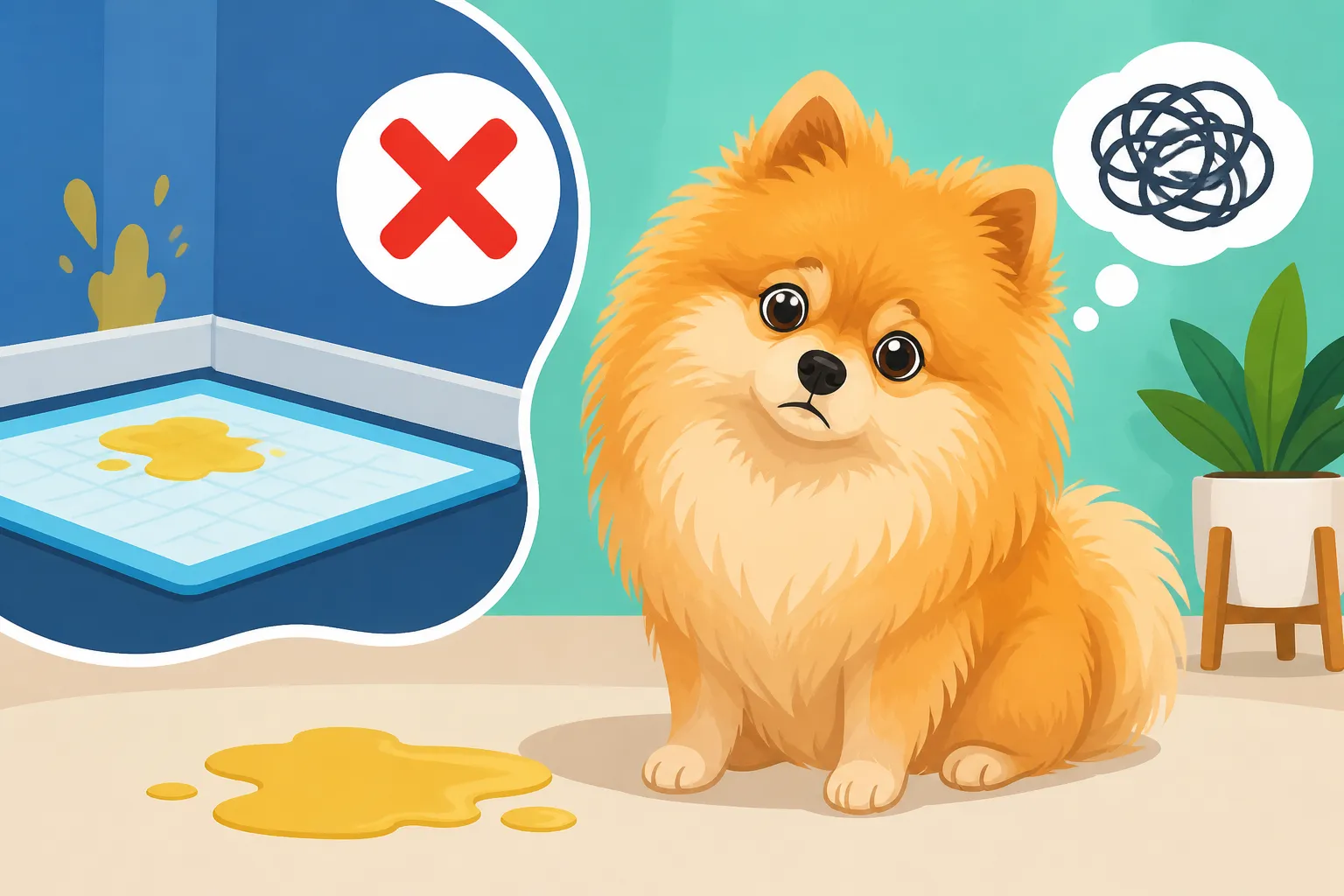
Why House Training a Pomeranian Drags On
Many Pomeranian owners find themselves utterly frustrated, watching weeks turn into months, and sometimes even years, as their tiny companion stubbornly refuses to grasp the concept of house training. It’s a common scenario: you’ve tried everything, from endless potty breaks to enthusiastic praise, yet one minute your Pom is playing happily, and the next, there’s an unexpected puddle or pile in the living room. This guide is here to shed light on why house training a Pomeranian can feel like an uphill battle and offer practical, empathetic advice to finally achieve success.
The Unique Challenges of House Training a Pomeranian
Let's be real: Poms are adorable, intelligent, and full of personality. But those very traits, combined with their small stature, can make house training an exercise in patience. It's not that they can't be trained; it's that there are several factors working against you from the start that often go unacknowledged.
The "Tiny Dog, Tiny Problem" Fallacy
One of the biggest hurdles we face as Pomeranian owners is the temptation to underestimate the impact of a small accident. A puddle from a Golden Retriever is a huge mess, undeniable and demanding immediate attention. A tiny spot from a Pomeranian? It's easy to miss, quick to clean, and sometimes, dare I say, almost cute in its smallness. This leads to a dangerous trap: we might not react with the same urgency or consistency, inadvertently teaching our Pom that these "tiny problems" aren't actually a big deal.
Think about it from your Pom's perspective. If they relieve themselves inside and you don't even notice for an hour, or you just quietly clean it up without any fuss, they aren't connecting the dots between their action and your disapproval. This lack of immediate, consistent feedback means the lesson never fully sinks in. For successful house training, every single indoor accident must be treated with the same level of concern, no matter how small.
The Pomeranian Personality: Smart but Selective
Pomeranians are sharp cookies. They learn quickly, pick up tricks with ease, and can be incredibly charming. But their intelligence often comes with a side of strong will and a definite opinion on how things should be done. This isn't always a bad thing – it makes them fascinating companions! However, when it comes to house training, it means they might decide that going outside in the rain or cold isn't their preferred option, especially when a perfectly comfortable rug or corner is available.
Their selective listening, when combined with their natural cleverness, can make them seem like they're being stubborn rather than simply confused. They know what you want, you think, but they just aren't doing it. In reality, they're often making a cost-benefit analysis: is the discomfort of going outside worth the praise, or is the comfort of staying inside more appealing? We need to stack the deck in favor of the "outside" option every single time. The Reward a Pomeranian Actually Cares About becomes paramount here.
Early Experiences and Breeder Practices
A Pomeranian's earliest experiences can significantly influence their house training journey. If a puppy was raised in an environment where they were allowed to eliminate freely within their living space, perhaps on puppy pads that were always present, they learn that it's perfectly acceptable to relieve themselves indoors. This is often the case with puppies from pet stores or less reputable breeders who prioritize convenience over proper early socialization and training.
This early conditioning can be incredibly difficult to undo. The puppy hasn't learned the fundamental concept of "den cleanliness"—that their sleeping and eating areas should be kept separate from their potty areas. When they come to your home, they simply continue the pattern they've always known, making your job much harder. It emphasizes the importance of understanding a puppy's background and choosing a reputable breeder who starts good habits from day one.
Size Matters: A Tiny Bladder and Fast Metabolism
One of the most fundamental reasons house training a Pomeranian can feel endless is purely biological. They're small dogs, and with that comes a tiny bladder and a metabolism that processes food and water at lightning speed. We often expect them to hold it for durations more suited to a much larger dog, leading to inevitable accidents.
How Often a Pomeranian Puppy Needs to Go
Let's talk logistics. A Pomeranian puppy, especially under six months old, has a bladder the size of a thimble. Seriously. They simply cannot hold their urine for very long, and their bowels move quickly after eating. Expecting them to go more than an hour or two without a potty break is setting them up for failure. This means constant vigilance and incredibly frequent trips outside.
Many new owners are shocked by just how often a tiny puppy needs to go out. We're talking every 30-60 minutes when they're awake, immediately after waking up, after playing, after eating, and right before bed. This isn't an exaggeration; it's a physiological reality. If you're not taking your puppy out that often, you're missing opportunities for success, and every indoor accident reinforces the wrong behavior. It's a huge time commitment, but crucial. How Small a Pomeranian Puppy's Bladder Is really dictates the schedule.
The Adult Pomeranian's Bladder Capacity
Even adult Pomeranians have smaller bladders than their larger counterparts, though they do gain more control. While they might be able to hold it for 3-4 hours during the day, expecting them to go 8+ hours while you're at work, or overnight without a proper routine, is still a stretch for many. They might manage it occasionally, but consistent success requires acknowledging their physical limitations.
Furthermore, factors like excitement, stress, or even a sudden loud noise can trigger an immediate urge to go, especially in a small dog who might be more sensitive to their environment. Just because they can hold it for a few hours doesn't mean they should be expected to, day in and day out. This builds pressure and can lead to anxiety, which itself can cause accidents. Providing ample opportunities to relieve themselves is key to preventing these incidents.
Metabolism and Digestion Speed
Pomeranians have a faster metabolism compared to larger breeds. This means food moves through their system more quickly, and they'll need to defecate sooner after eating. If you're feeding your Pom, say, at 7 AM, you should be preparing for a bowel movement within 30-60 minutes, sometimes even sooner. Missing this window almost guarantees an indoor accident.
Understanding this rapid digestive process is vital for proactive house training. It's not enough to just take them out "every few hours"; you need to anticipate their biological needs based on their feeding schedule. If you feed multiple small meals throughout the day, as is often recommended for Poms to prevent blood sugar drops, then your potty schedule needs to be equally frequent. This constant cycle can be exhausting for owners, but it's the reality of owning such a small, active breed. The Small Monthly Food Bill a Pomeranian Runs might be small, but the digestive cycle is fast!
The Appeal of Indoor Potty Solutions (and their pitfalls)
It’s completely understandable why so many Pomeranian owners turn to indoor potty solutions like pads or litter boxes. They offer convenience, especially for tiny dogs in apartments, or during inclement weather, or for owners with limited mobility. However, these solutions can become a double-edged sword, often prolonging the house training process rather than speeding it up.
Whether Indoor Pads Confuse a Pomeranian
The biggest issue with potty pads is that they teach your Pomeranian that it's okay to eliminate inside the house. While the goal is to teach them to go on a specific spot inside, the overarching lesson can be misinterpreted as "any soft, absorbent surface indoors is a bathroom." This is where the confusion kicks in. To your Pom, the potty pad looks and feels a lot like a rug, a bath mat, a throw blanket, or even a pile of laundry.
You might be celebrating a successful pee on the pad, while your Pom is quietly filing away the lesson: "Oh, this fluffy thing on the floor is a good spot!" This is why many Pomeranians trained exclusively on pads struggle to differentiate between the designated pad and other household textiles. It sets up a conflicting message that can be incredibly difficult to undo later if your ultimate goal is outdoor-only potty habits. Whether a Pomeranian Puppy Should Use Pads and Grass Both explores this dilemma further.
The Lure of Convenience for Owners
Let's be honest, indoor potty solutions are convenient for us. No need to bundle up in the rain or snow, no frantic dashes downstairs in the middle of the night, no worries about leaving your Pom alone for a few hours. This convenience, while tempting, can easily lead to a relaxation of the strict outdoor routine needed for true house training. If there's an easy indoor option, we might not push ourselves or our Pom as much to brave the elements.
This reliance on convenience can hinder the development of a strong outdoor preference. Every time your Pom uses an indoor pad, it's a missed opportunity to reinforce outdoor elimination. While pads can be a helpful temporary tool (e.g., for very young puppies, during illness, or for emergencies), they should be used strategically with a clear plan to transition to outdoors. If they become the primary solution, you're likely setting yourself up for long-term indoor accidents.
Transitioning From Pads to Outdoor Pottying
If you've started with potty pads, transitioning to outdoor pottying requires a deliberate and often frustrating effort. Your Pom has learned a strong habit, and you're essentially asking them to unlearn it and then learn a new one. This typically involves slowly moving the pad closer to the door, then outside the door, and eventually eliminating it entirely. But this isn't always a smooth process.
Many Pomeranians will resist going outside, especially if they've become accustomed to the comfort and security of an indoor spot. They might hold it until they come back inside, then promptly have an accident. This is where patience, consistency, and a "no pads inside" rule become crucial. You'll need to increase outdoor trips dramatically, provide high-value rewards for outdoor success, and manage indoor access tightly, often utilizing crate training or tethering. Crate Work With a Pomeranian Puppy That Cries can be a lifesaver during this transition.
Consistency is Key (and often Lacking)
House training, more than almost any other aspect of puppy raising, demands unwavering consistency. Even the smallest lapse can set you back days, if not weeks. Unfortunately, this is where many well-meaning owners struggle, leading to the dreaded "dragging on" feeling of Pomeranian house training.
Establishing a Predictable Routine
Dogs thrive on routine, and Pomeranians are no exception. A predictable schedule for potty breaks, meals, playtime, and sleep is the bedrock of successful house training. Your Pom needs to learn when they are expected to go, and this only happens if you consistently take them out at the same times every day. This includes first thing in the morning, last thing at night, after every meal, after every nap, and after every play session.
Any deviation from this routine can confuse your Pom and lead to accidents. If one day you take them out at 7 AM and the next it's 8:30 AM, their internal clock gets scrambled. It's tough, especially on weekends or holidays, but maintaining a strict schedule is paramount in the early stages. The more predictable you are, the faster your Pomeranian will understand and internalize the expected potty times.
Supervision: The Unsung Hero of House Training
This might sound obvious, but truly diligent supervision is perhaps the most overlooked element in house training. If your Pomeranian is loose in the house and not under your direct, watchful eye, they will find a hidden corner or a soft rug to have an accident. Every unsupervised moment is an opportunity for a setback.
Supervision doesn't just mean being in the same room. It means actively observing your Pom for any signs they might need to go: sniffing around, circling, looking antsy, or heading towards a secluded spot. When you see these signs, it's your cue to immediately scoop them up and take them outside. This active prevention of accidents is far more effective than reacting after the fact. When you can't actively supervise, your Pom should be crated, tethered to you, or confined to a puppy-proofed, easy-to-clean area. The Hours a Pomeranian Tolerates an Empty House highlights why this is so critical.
Reinforcement: Making Potty Breaks Positive
Positive reinforcement is the most powerful tool in your house training arsenal. When your Pomeranian successfully eliminates outside, it needs to be the absolute best thing that has ever happened to them. This means immediate, enthusiastic praise ("Good potty!"), a high-value treat (something they adore and only get for outdoor potties), and perhaps a short burst of play. The timing is crucial: the reward must be given within 1-2 seconds of them finishing their business, so they clearly associate the action with the positive outcome.
Conversely, if you take them out, they sniff around for five minutes, do nothing, and then come inside and immediately pee, that's a failure of reinforcement. You didn't reward the desired behavior, and they found a more comfortable option. Make outdoor potty breaks the most rewarding activity of their day. If they don't go, bring them inside, supervise closely, and try again in 10-15 minutes. Never punish for an outdoor "miss"; simply end the potty trip.
Communication Breakdown: When Accidents Aren't Accidents
Sometimes, what we perceive as stubbornness or a lack of understanding from our Pomeranian is actually a breakdown in communication or an underlying issue we haven't identified. It's easy to get frustrated, but taking a step back to re-evaluate is important.
Misinterpreting Potty Signals
Pomeranians, like all dogs, give subtle cues when they need to go, but these can be easy to miss, especially in busy households or if you're not intimately familiar with your specific Pom's tells. Some might pace, others might whine softly, some might stare intently at the door, and others might just suddenly stop playing and start sniffing the floor with unusual focus. For Poms, these signs are often more discreet than in larger breeds.
The problem arises when we miss these signals. If your Pom gives you a subtle cue, and you don't respond, they eventually learn that their signals aren't effective. So, they just go. We then come across the mess and wonder why they "didn't tell us." It's not that they didn't; it's that we didn't understand. Learning your Pomeranian's unique potty cues through careful observation is essential for proactive management and preventing accidents.
The Problem with Punishment After the Fact
Punishing your Pomeranian for an accident you discover minutes or hours later is not only ineffective but can be detrimental to your training efforts and your bond. Dogs live in the moment. If you scold them for a puddle they made half an hour ago, they have no idea why you're upset. All they learn is that sometimes, you're unpredictable and scary, especially when there's urine or feces around.
This can lead to several negative outcomes:
- Fear of you: Your Pom might become fearful of you, which damages trust and makes future training harder.
- Hiding accidents: Instead of learning not to go inside, they learn to hide their accidents. They might sneak off behind the couch or into another room, making it even harder for you to catch them in the act and intervene properly.
- Reluctance to go in front of you: They might become hesitant to eliminate even when you take them outside, fearing punishment, which compounds the problem.
The only effective "correction" for an indoor accident is to interrupt them as it's happening with a sharp noise (not a yell) and immediately rush them outside. If you discover a mess, clean it up thoroughly with an enzymatic cleaner (to eliminate odors that attract them back to the same spot) and resolve to supervise more closely next time.
Medical Issues Mimicking Potty Problems
Before you brand your Pomeranian as impossibly stubborn, it's crucial to rule out any underlying medical conditions. Urinary tract infections (UTIs) are incredibly common, especially in female dogs, and can cause frequent urination, urgency, and accidents even in perfectly house-trained dogs. Other conditions like bladder stones, kidney disease, or even diabetes can also manifest as house training regressions or difficulties.
If your previously house-trained Pomeranian suddenly starts having accidents, or if a puppy is simply not making any progress despite consistent training, a trip to the vet is absolutely necessary. A simple urine test can rule out a UTI, and other diagnostics can identify more serious issues. It's unfair to blame a dog for a behavior that might be caused by discomfort or disease. Whether an Adult Pomeranian Gets Hypoglycemia is another example of a medical condition that can affect a Pom's behavior and physical control, though less directly related to potty training.
Environmental Factors and Distractions
The world outside can be a big, overwhelming, and sometimes uncomfortable place for a small Pomeranian. These environmental factors can play a significant role in why they might be reluctant to do their business outdoors, thus prolonging house training.
A Pomeranian That Will Not Get Its Coat Wet
This is a classic Pomeranian dilemma! Their glorious double coats are not always appreciated when they get wet. Many Poms absolutely despise rain, snow, or even damp grass. They might go outside, hold it as long as possible, then make a mad dash back indoors only to relieve themselves on the nearest rug. It's not defiance; it's just pure discomfort.
To combat this, you might need to make outdoor potty breaks as quick and comfortable as possible. Consider a small dog raincoat or sweater for wet weather. Find a sheltered spot in your yard, or even use an umbrella to shield them. For apartment dwellers, this can be tougher, sometimes requiring a quick dash to a covered area or even a temporary indoor potty solution during extreme weather only, which is then removed immediately once the weather clears. Consistency even in bad weather is key, but so is understanding your Pom's comfort level. A Pomeranian That Will Not Get Its Coat Wet is a struggle many owners share.
Unfamiliar Smells and Scares Outdoors
For a tiny Pomeranian, the outdoor world is a sensory explosion. Every blade of grass holds a new smell, every rustle in the bushes could be a squirrel, and every distant siren is a potential threat. While these distractions are part of exploring the world, they can make it incredibly difficult for your Pom to focus on the task at hand: going potty. They might be too busy sniffing, scanning for danger, or just generally overstimulated to relax and relieve themselves.
This is especially true for puppies who are still getting used to new sights and sounds. If your Pom seems hesitant or overly distracted outside, try taking them to a very quiet, low-stimulus spot initially. Keep them on a short leash to prevent them from wandering too far and getting distracted. Only once they've done their business should you allow for a short, supervised play or sniff session as a reward.
Temperature Sensitivity
Pomeranians, with their thick coats, are often seen as being perfectly fine in cold weather. While their coat does offer insulation, their small size means they lose body heat more quickly, and their delicate paw pads can be sensitive to extreme temperatures. Walking on freezing pavement or scorching asphalt can be uncomfortable, even painful, leading to a reluctance to linger long enough to go potty.
Conversely, in very hot weather, their thick double coat can make them overheat quickly. They might associate going outside with discomfort due to heat, especially if they are pushed to stay out too long. Being mindful of weather conditions and adjusting potty break duration is crucial. In winter, quick trips and perhaps dog booties can help. In summer, early morning or late evening potty breaks on cool grass are preferable. This consideration helps make the outdoor experience more positive for your Pom.
Overcoming Setbacks and Stubbornness
Even with the best intentions and the most consistent routine, house training a Pomeranian can feel like a rollercoaster. Setbacks are common, and what appears to be stubbornness can often be a cry for a different approach or a reinforcement of past habits.
Regressions: Why They Happen and How to Address Them
You thought you had it! Weeks of no accidents, and then BAM – a puddle right in front of you. House training regressions are incredibly frustrating, but they are a normal part of the learning process, especially with Poms. They can happen for various reasons:
- Change in routine: A new work schedule, a vacation, or even just house guests can disrupt your Pom's predictability.
- Developmental stage: Adolescence can bring a temporary lapse in good manners as Poms test boundaries.
- Medical issue: As mentioned before, always rule out a UTI or other health problem first.
- Sloppy management: Did you get a little too relaxed with supervision? Did you miss a few potty cues?
When a regression happens, don't despair. Go back to basics: rigorous supervision, frequent scheduled potty breaks, crating when unsupervised, and enthusiastic rewards for outdoor success. Treat your Pom like a brand new puppy again for a few days or weeks until the good habits are firmly re-established. The Age a Pomeranian Puppy Becomes Reliable Indoors might not be as straightforward as you hope; sometimes it's a moving target!
Dealing with Marking Behavior
Male Pomeranians, even neutered ones, can develop a habit of marking territory inside the house. This is different from a full bladder accident; it's often small amounts of urine, usually on vertical surfaces like furniture legs, walls, or even your unsuspecting leg. Females can mark too, though it's less common. This behavior is driven by instinct and communication, not necessarily a lack of house training.
Addressing marking requires a multi-pronged approach:
- Medical check: Rule out a UTI, which can cause increased urgency and marking.
- Re-training: Go back to intense house training basics. Every time they lift a leg indoors, interrupt and take them out. Reward outdoor marking.
- Belly bands: For male Poms, a belly band (a washable wrap that goes around their waist and covers their privates) worn indoors can be a lifesaver. It doesn't solve the behavior, but it prevents messes and teaches them that marking indoors results in discomfort. You can find many options on Amazon. A Male Pomeranian That Marks the Furniture is a common, exasperating issue.
- Cleaning: Use enzymatic cleaners to completely remove the scent from marked spots.
- Stress reduction: Marking can be a sign of anxiety or insecurity. Identify and address any stressors in their environment.
Rebuilding Confidence After Repeated Failures
If house training has been a long, drawn-out affair with many accidents, both you and your Pomeranian might be feeling defeated. Your Pom might be anticipating your frustration, making them even more anxious and prone to mistakes. It’s crucial to reset and rebuild confidence.
This means becoming your Pom's biggest cheerleader. Every successful outdoor potty should be met with over-the-top praise and treats. Never get angry or frustrated when an accident happens; just clean it and recommit to better supervision. Create a "no-fail" environment where your Pom simply doesn't have the opportunity to make mistakes indoors. This might mean being attached to you by a leash (tethering) or spending more time in their crate when you can't actively watch them. The goal is to rack up a string of successes, however small, to show your Pom that they can do it, and that doing it correctly makes you incredibly happy.
When to Seek Professional Help
There comes a point when, despite your best efforts, you might feel completely stuck. House training a Pomeranian shouldn't be a never-ending saga. Knowing when to call in the cavalry can save your sanity and ultimately lead to a happier, better-adjusted Pom.
Recognizing When You're Stuck
It’s easy to feel guilty about needing help, but recognizing when you’ve hit a wall is a sign of responsible pet ownership, not failure. Here are some signs that it might be time to seek professional guidance:
- No progress after several months: If you've been diligently following a house training routine for months and are still having daily accidents.
- Frequent regressions: If you make progress, only to repeatedly slide backward.
- Frustration and despair: If you find yourself consistently angry, upset, or overwhelmed by the house training process.
- Behavioral issues alongside accidents: If accidents are accompanied by anxiety, fear, marking, or destructive chewing.
Remember, house training is foundational. If it's not working, it impacts your daily life and your dog's quality of life. Don't suffer in silence; there are professionals who can help.
The Role of a Certified Professional Dog Trainer
A certified professional dog trainer can be an invaluable resource, especially one with experience in small breed house training challenges. They can offer a fresh perspective, identify subtle issues you might be missing, and provide a tailored plan that works for your specific Pomeranian and your household.
A good trainer won't just tell you what to do; they'll help you understand why your Pom is behaving a certain way and teach you how to communicate more effectively. They can help with crate training strategies, recognizing potty cues, setting up effective routines, and transitioning off pads if needed. Services like BAXTER & Bella offer online puppy programs that can guide you through these challenges, providing structured advice and support from professionals without requiring in-person visits. They often emphasize positive reinforcement, which is crucial for sensitive breeds like Poms.
Veterinary Consultation for Underlying Issues
As always, a comprehensive veterinary check-up should be the very first step if you're struggling with house training, particularly if the problem emerged suddenly or seems resistant to all efforts. As mentioned, medical issues like UTIs, kidney problems, or even cognitive dysfunction in older Poms can directly cause house soiling.
Your veterinarian can rule out these physical causes, giving you peace of mind that you're dealing with a behavioral issue rather than a health one. Even if it's purely behavioral, your vet can offer advice on management strategies, discuss potential anxiety medications if stress is a factor, or refer you to trusted local trainers. A healthy Pomeranian is a more trainable Pomeranian.
Here's a quick reference table outlining common house training challenges and solutions for Pomeranians:
| Challenge / Symptom | Possible Reason | Action Plan |
|---|---|---|
| Frequent accidents indoors | Small bladder, fast metabolism, lack of routine | Increase potty breaks (every 30-60 min for puppies, every 2-3 hours for adults). Establish strict schedule. Reward enthusiastically outdoors. |
| Accidents on rugs/mats | Confusion with potty pads, learned behavior | Remove all indoor potty pads. Thoroughly clean accidents with enzymatic cleaner. Supervise constantly. Confine when unsupervised. |
| Reluctance to go outside (rain/cold) | Discomfort, fear of weather | Use a dog raincoat/sweater. Find sheltered potty spot. Make trips quick. Immediately reward. If truly extreme, a temporary indoor option only with immediate removal after bad weather passes. |
| Hiding to have accidents | Fear of punishment, past scolding | Stop all punishment. Focus solely on positive reinforcement for outdoor potties. Supervise strictly (tether/crate) to prevent hiding. Rebuild trust with gentle handling. |
| Marking indoors (especially males) | Territorial, anxiety, incomplete house training | Vet check for UTI. Use belly band indoors. Intense supervision. Reward outdoor marking. Clean with enzymatic cleaner. Address underlying stress. |
| Sudden regression | Change in routine, medical issue, lax management | Vet check first! Revert to puppy basics: frequent breaks, strict supervision, crating. Identify and resolve any changes to routine or stressors. |
| Not signaling to go out | Missed cues, learned helplessness | Observe closely to learn subtle signals. Immediately respond to any potential cue by taking them out. Consistently reward communication attempts (e.g., going to door, whining). |
| Overwhelmed/distracted outdoors | Sensory overload, lack of focus | Take to a quiet, low-distraction spot. Keep on a short leash. Do not allow play until business is done and rewarded. Gradually introduce more stimulating environments. |
Disclaimer
This article is for general informational purposes only and does not constitute professional advice. Laws, prices and regulations vary by location and change over time. Consult a qualified professional for guidance on your specific situation.