Tricks a Pomeranian Learns Quickly
Many Pomeranian owners often find themselves surprised by just how intelligent and quick-witted these fluffy little companions truly are. While they might have a reputation for being sassy or a bit stubborn at times, beneath that luxurious double coat is a sharp mind eager for engagement, especially when it comes to learning new tricks. If you've been struggling to keep your Pom focused or wondering what kind of tricks they can actually master, you're in the right place. This guide will reveal the specific types of tricks your Pomeranian can learn quickly, along with practical tips to make every training session a joyful, rewarding experience for both of you.
Tapping Into the Pomeranian Mindset for Quick Learning
Before we dive into specific tricks, it's crucial to understand how a Pomeranian's unique personality and intelligence influence their learning process. They're not just cute faces; they're clever, observant, and surprisingly capable, but they do have their quirks!
The Spitz Brain and Its Learning Quirks
Pomeranians descend from larger Spitz-type dogs, and they carry that lineage in their brains. This means they are intelligent, alert, and often have a strong sense of independence. They pick up new concepts remarkably quickly, often surprising owners with their ability to problem-solve or mimic behaviors. However, this intelligence also comes with a degree of self-sufficiency. A Pomeranian might learn a trick in a few repetitions, but whether they choose to perform it on command, especially if they're not in the mood or the reward isn't enticing enough, is another story entirely.
This isn't stubbornness in the traditional sense; it's more about their decision-making process. They weigh the options: "Is doing this trick worth the effort right now?" If the answer isn't a resounding "yes" in their little Pom brain, you might find yourself facing a fluffy wall of indifference. Understanding this independent streak is vital. You can read more about this in Whether Spitz Independence Makes a Pomeranian Difficult. It means that while they learn quickly, consistency in motivation and making training feel like a fun game, rather than a chore, is paramount. They’re smart enough to know when they're being bribed, so make the bribe good!
Short Attention Spans and High Motivation
Another key characteristic of Pomeranians is their often-short attention span, especially when they're young or if the training isn't engaging enough. While they are clever, they can quickly lose interest if a session drags on or becomes repetitive. This isn't a flaw; it's just how they're wired. Think of them as tiny, energetic scholars who prefer a variety of engaging mini-lessons over a long, boring lecture.
This means that successful trick training with a Pomeranian relies heavily on keeping sessions brief, dynamic, and highly motivating. We're talking 3 to 5 minutes at a time, scattered throughout the day. These short bursts of focused attention are far more effective than trying to force a 20-minute session that quickly devolves into your Pom staring blankly at you or deciding to explore the dust bunnies under the sofa instead. The quality of your reward is also incredibly important. What truly excites your Pomeranian? Is it a tiny piece of cheese, a sliver of cooked chicken, or their absolute favorite squeaky toy? The higher the value of the reward, the more engaged your Pom will be. You can dive deeper into this topic in The Reward a Pomeranian Actually Cares About and Training Session Length for a Pomeranian.
Positive Reinforcement is Key for Sensitive Souls
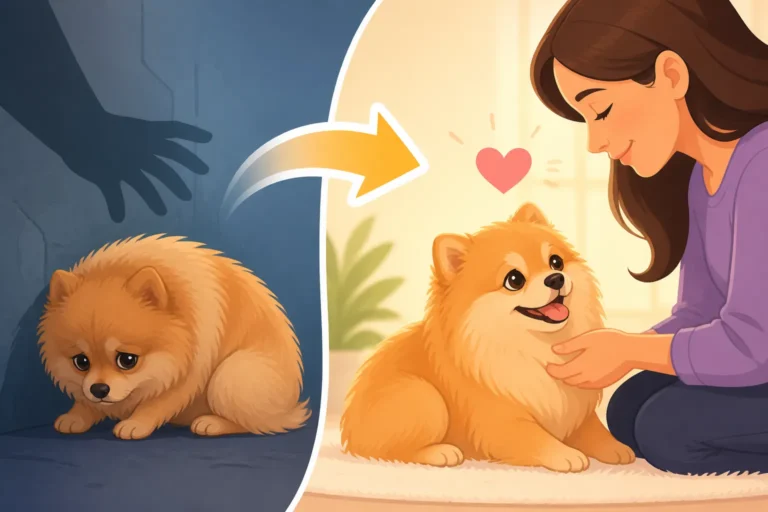
Pomeranians, despite their bold personalities, are often quite sensitive. They don't respond well to harsh words, yelling, or physical corrections. These methods can quickly shut them down, making them fearful, anxious, or simply disinclined to participate in any future training. Building trust and a strong bond with your Pom is foundational to successful trick training, and that bond is built on positive interactions.
Positive reinforcement, using rewards for desired behaviors, is not just the most humane method; it’s by far the most effective for a Pomeranian. When your Pom performs a trick correctly, even a partial attempt, immediately reward them with a high-value treat, enthusiastic praise, or a quick game. This creates a positive association, making them more likely to repeat the behavior. It's about showing them what you do want, rather than punishing what you don't. Never scold a Pomeranian for not performing a trick or for making a mistake. This can have lasting negative effects on their willingness to engage with you. If you're wondering how sensitive Poms are to verbal cues, exploring resources like Whether Corrections Backfire on a Pomeranian can offer more insight into their temperament.
Essential Foundation Tricks for Every Pomeranian
Before tackling the flashier tricks, it's vital to ensure your Pomeranian has a solid grasp of basic commands. These aren't just "tricks"; they're fundamental behaviors that build confidence, communication, and control, acting as stepping stones for more complex maneuvers.
Sit, Stay, and Come: The Building Blocks
These three commands are the bedrock of all dog training, and your Pomeranian is perfectly capable of mastering them quickly. "Sit" teaches them to settle down, which is invaluable in many situations, from greeting guests calmly to waiting for their meal. To teach "sit," hold a treat over their head, slowly moving it towards their tail. As their nose follows the treat, their rear will naturally lower. The moment their bottom touches the ground, mark the behavior with a verbal cue like "Yes!" or a clicker, and give them the treat.
"Stay" builds on "sit" by teaching impulse control. Start with very short durations and minimal distance. Have your Pom "sit," give the "stay" command, take one step back, count to one, then immediately return and reward. Gradually increase distance and time. This trick helps them understand that good things come to those who wait, a crucial lesson for an excitable Pom. "Come" is perhaps the most important command for safety and recall. Make coming to you the most rewarding thing ever. Start in a quiet room, call their name, say "Come!", and when they arrive, celebrate with treats, praise, and a short game. For more detailed guidance on recall, check out Building a Recall on a Pomeranian That Ignores You. Consistency and making these commands fun and rewarding are key.
Shake a Paw and High Five: Engaging Their Natural Tendency
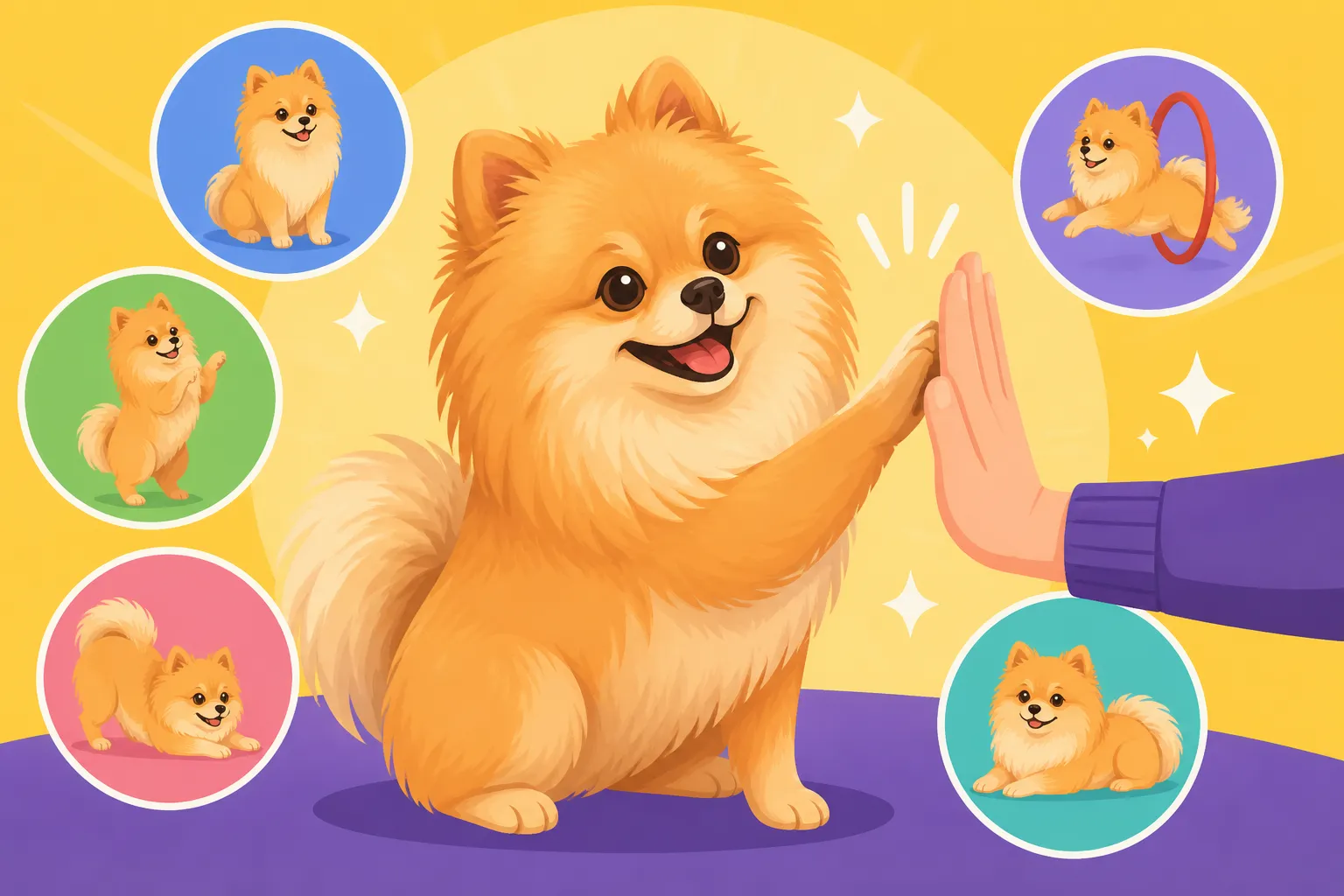
Many Pomeranians naturally offer a paw when they want attention or a treat, making "shake a paw" or "high five" surprisingly easy tricks to teach. Capitalize on this natural inclination! Start by asking your Pom to "sit." Then, gently take one of their paws in your hand, say "Shake" or "Paw," and immediately reward them. Repeat this several times. Eventually, you can offer your hand without taking their paw; they'll often lift it themselves. As they get the hang of it, they’ll associate the verbal cue with the action and the reward.
For "high five," you can adapt the "shake" command. Instead of taking their paw, present your open palm higher up, encouraging them to tap it with their paw. Again, mark and reward the moment their paw touches your hand. These tricks are excellent for building confidence and demonstrating how playful and smart your Pom truly is. They're also great for showing off to friends and family, which your little showman will likely enjoy!
"Down" and "Stand": Body Awareness and Control
Teaching your Pomeranian "down" (to lie down) and "stand" are not only practical commands but also fantastic for developing their body awareness and control, which can be beneficial for more advanced physical tricks. "Down" can be taught by luring. With your Pom in a "sit," hold a treat in front of their nose and slowly move it down towards the floor, then straight out away from them. Their nose will follow, and their body will naturally stretch out into a down position. As soon as they lie down, say "Down!", mark, and reward.
"Stand" can sometimes be a bit trickier, as many dogs prefer to sit or lie down. You can teach "stand" by luring your Pom from a "sit" position. Hold a treat in front of their nose and slowly move it forward, just enough to encourage them to stand up without stepping forward. The moment all four paws are on the ground in a standing position, say "Stand!", mark, and reward. These tricks help your Pomeranian understand how to manipulate their body on command, a skill that underpins many fun and intricate behaviors you might want to teach later on.
| Trick | Difficulty | Prerequisites | Benefits |
|---|---|---|---|
| Sit | Easy | None | Basic obedience, impulse control |
| Paw/Shake | Easy | Sit | Fun interaction, bonding |
| Down | Easy-Medium | Sit | Calming, advanced trick foundation |
| Stay | Medium | Sit, Down | Impulse control, safety |
| Spin/Twirl | Medium | Follow a lure, focus | Physical exercise, agility, fun |
| Play Dead | Medium-Hard | Down, Stay, comfortable with touching | Impressive, mental exercise |
| Retrieve | Medium | Focus, release command (optional) | Interactive play, useful for chores |
| Weave Through Legs | Hard | Follow a lure, focus, comfortable with legs | Agility, close communication, performance |
| Put Toys Away | Hard | Retrieve, drop on command, target training | Practical, mental stimulation, chaining commands |
| Balance a Treat | Hard | Stay, impulse control, stillness | Precision, patience, impressive |
Intermediate Tricks to Spark Joy and Challenge
Once your Pomeranian has mastered the basics, it's time to introduce tricks that are a bit more complex, requiring more coordination, focus, and multi-step learning. These are the tricks that truly highlight their intelligence and can be incredibly rewarding for both of you.
Spin and Twirl: Fun and Physically Engaging
"Spin" and "Twirl" are fantastic tricks that are relatively easy to teach and look incredibly impressive. They involve your Pomeranian rotating in a full circle, either clockwise or counter-clockwise. To teach "spin," hold a high-value treat close to your Pom's nose. Lure their nose in a circle, so their body naturally follows. As they complete the circle, say "Spin!" (or "Twirl!" for the other direction), mark the behavior, and give them the treat.
Start with a small, tight circle, and as they get the hang of it, you can gradually widen the circle and reduce the reliance on the lure, eventually replacing it with a hand signal or just the verbal command. These tricks are not only fun but also provide a great little burst of physical exercise, helping to burn off some of that boundless Pomeranian energy. They also help develop better body awareness and can be a stepping stone for more complex agility-style movements. Plus, who doesn't love watching a fluffy Pom spin on command?
Play Dead: The Dramatic Flair
Teaching your Pomeranian to "play dead" is a show-stopping trick that requires patience and builds on a solid "down" and "stay" command. This trick involves your Pom lying on their side, often with their head down, as if, well, playing dead! Start with your Pomeranian in a "down" position. Hold a treat to their nose and slowly lure their head towards their shoulder, encouraging them to roll onto their side. The moment they are on their side, even briefly, say "Bang!" (or your chosen cue), mark, and reward.
Some Poms might be hesitant at first, so be gentle and encouraging. You might need to physically help them roll over initially, gradually fading your assistance. Once they reliably roll onto their side, you can start adding a duration, asking them to "stay" in that position for a few seconds before rewarding. This trick is a wonderful mental exercise, teaching them to follow a complex sequence of movements and hold a position. It also requires a good degree of trust between you and your Pom, as they're exposing their vulnerable side to you.
Retrieve and Fetch: Making Play Purposeful
While some Pomeranians are natural retrievers, others need a little encouragement to bring a toy back. Teaching "retrieve" or "fetch" can be a highly rewarding trick that combines play with purpose, and it's fantastic for mental and physical stimulation. Start with a favorite toy and play with your Pom, encouraging them to pick it up. Once they have it, entice them to come closer to you with praise or a second, even higher-value treat. When they release the toy (or you gently take it), immediately reward them.
Gradually, you can add the "fetch" or "bring it" command as they pick up the toy and head back towards you. Make retrieving incredibly fun and exciting. Avoid chasing them for the toy, as this can turn it into a game of keep-away. Instead, always make coming back to you the most delightful part of the game. For Poms that aren't keen on retrieving, small, soft toys or even specially designed puzzle toys can be very engaging. You can find a wide variety of these on platforms like Amazon, offering different textures and challenges that might spark their interest. This trick can be incredibly useful, and you can even eventually teach them to retrieve specific items.
Advancing Their Repertoire: Clever Pom Challenges
Once your Pomeranian is a seasoned trickster with intermediate skills, you can introduce more complex and impressive tricks that truly showcase their intelligence and agility. These challenges often involve chaining multiple behaviors or requiring a higher degree of precision and focus.
Weaving Through Legs: A Cute Performance Piece
"Weaving through legs" is a charming trick that makes your Pomeranian look like a tiny dancer, gracefully moving between your legs as you walk. It requires good communication and coordination between you and your Pom. To start, hold a treat in one hand. With your Pom on one side of you, take a step forward with the opposite leg, creating an arch for your Pom to go under. Lure them through your legs with the treat. As they pass through, transfer the treat to your other hand, take another step with your other leg, and lure them through again.
The key is to keep the treats moving and the steps flowing, creating a continuous motion. Gradually, you'll fade the treat lure, replacing it with a hand signal or even just your body movement. This trick is wonderful for building close communication, body awareness for your dog, and can even be a precursor to more advanced dog sports like freestyle or canine choreography. It’s a real crowd-plepleaser and shows off how connected you and your Pomeranian are.
Putting Toys Away: The Tidy Pom
Wouldn't it be amazing if your Pomeranian could help clean up? Teaching them to "put toys away" is a practical and mentally stimulating trick that combines their retrieving skills with target training. This trick involves teaching your Pom to pick up a specific toy and place it into a designated basket or box. You'll need a clear basket and a few toys your Pom enjoys retrieving.
Start by teaching your Pom to drop a toy directly into the basket. Hold the toy over the basket, and when they drop it in, mark and reward enthusiastically. Once they understand this, scatter a single toy near the basket. Ask them to "take it" (if they know that command), then "bring it," and finally "drop it" into the basket. Gradually increase the distance and the number of toys. This trick can be complex, involving a chain of commands, and might benefit from structured online training programs that break down complex behaviors into manageable steps, such as those offered by BAXTER & Bella. It’s a wonderful example of how you can make training functional and engaging.
Balance and Target Work: Precision and Focus
Advanced tricks often involve a higher degree of precision, requiring your Pomeranian to perform specific actions with accuracy. "Balance a treat on their nose" and "target work" are excellent examples. For balancing a treat, start with a treat they love. Gently place it on the bridge of their nose, holding it for a split second, then quickly say "Take it!" and let them eat it. Gradually increase the duration you hold it on their nose before giving the "take it" command. This trick demands significant impulse control and patience from your Pom.
Target training involves teaching your Pomeranian to touch a specific object with their nose or paw on command. You can use a target stick, a post-it note, or even your hand. The moment they touch the target, mark and reward. This seemingly simple behavior can be chained into incredible sequences, like ringing a bell to go out, turning on a light switch, or even playing a miniature piano. These tricks develop fine motor control, enhance focus, and are a testament to your Pomeranian's capacity for intricate learning. They prove that these little dogs are capable of much more than just looking adorable.
Optimizing Your Training Sessions for Success
Teaching tricks to your Pomeranian isn't just about what you teach, but how you teach it. The right approach can make all the difference in keeping your Pom engaged, enthusiastic, and ready to learn.
The Power of High-Value Rewards
We've touched on this, but it bears repeating: the type of reward you use is critical for a Pomeranian. Unlike some breeds that might work for a piece of kibble, many Poms require something truly irresistible to keep their focus, especially in the initial stages of learning a new trick or when distractions are present. What makes your Pomeranian's eyes light up? Is it a tiny piece of boiled chicken, a smidge of cheese, hot dog slivers, or perhaps a dollop of peanut butter on a spoon? Experiment to find their ultimate motivators.
Remember that "high-value" doesn't necessarily mean "large." Pomeranians are small dogs, so their treats should be pea-sized or even smaller to avoid overfeeding and to ensure they can eat them quickly, allowing you to maintain momentum in your training session. Have a variety of treats on hand – some medium-value for known tricks, and super high-value for new or challenging ones. Sometimes, a favorite squeaky toy or a quick game of tug can also serve as an excellent reward, especially for Poms who are more play-motivated. Don't underestimate the power of enthusiastic verbal praise and gentle petting, but always pair it with something tangible, especially when building a new behavior.
Keeping Sessions Short, Sweet, and Frequent
As mentioned earlier, a Pomeranian's attention span is often limited. Trying to force a long training session will quickly lead to frustration for both of you. Instead, aim for multiple short sessions throughout the day. Think of it like this: three 5-minute sessions are far more effective than one 15-minute session. These brief bursts keep your Pom engaged, prevent boredom, and allow them to process what they've learned without getting overwhelmed.
Short sessions also end on a positive note. Always try to end a session after a successful repetition, even if it's just a simple "sit." This leaves your Pomeranian feeling accomplished and eager for the next session. If they're struggling with a new trick, revert to something they know well, have them perform it perfectly, and then end the session. This builds confidence and prevents them from associating training with struggle or failure. Consistency is key here; a little bit of training every day will yield much better results than sporadic, lengthy sessions. You can find more detail on optimal training lengths in Training Session Length for a Pomeranian.
Creating a Distraction-Free Learning Environment
When first introducing a new trick, it's essential to set your Pomeranian up for success by minimizing distractions. Start in a quiet room with no other pets, loud noises, or tempting toys lying around. A simple, uncluttered space allows your Pom to focus solely on you and the task at hand. This is especially important for easily distracted Poms, or for those learning complex commands.
As your Pomeranian masters the trick in a calm environment, you can gradually introduce mild distractions. Practice in different rooms of your house, then move to the backyard, and eventually to a quiet park. This process, known as "generalization," teaches your Pom that commands apply everywhere, not just in one specific location. For structured guidance on progressing through different training environments and tackling distractions, many online puppy and dog training programs can be incredibly helpful. Platforms like BAXTER & Bella often provide step-by-step lesson plans that account for increasing environmental challenges, ensuring your Pomeranian's tricks hold up in the real world. This gradual approach builds confidence and ensures the tricks are solid, regardless of what's happening around them.
Troubleshooting and Maintaining Trick Mastery
Even the smartest Pomeranian will hit a training plateau or seem to forget a trick from time to time. Don't get discouraged! Understanding common hurdles and how to overcome them will help you maintain your Pom's impressive repertoire and keep training enjoyable.
When Your Pomeranian Turns Selectively Deaf
Every Pomeranian owner has experienced it: you know your Pom knows a trick, but when you ask for it, you get a blank stare, a sniff of the floor, or a sudden intense interest in something (anything!) else. This "selective deafness" can be frustrating, but it's rarely malicious. More often, it's a sign that your Pomeranian is either bored, distracted, or simply deciding that the current reward isn't worth the effort. For a deeper dive into this phenomenon, check out The Pomeranian That Turns Selectively Deaf at One.
To overcome this, first, re-evaluate your rewards. Is what you're offering truly high-value enough? Sometimes, switching up the type of treat or toy can reignite their interest. Second, assess the environment. Are there too many distractions? If so, go back to a quieter space. Third, consider your energy and enthusiasm. Are you making the training fun? Poms thrive on positive energy. If you're feeling frustrated, take a break. Finally, ensure your commands are clear and consistent. Are you using the same word and hand signal every time? Inconsistency can confuse them. If they repeatedly refuse, don't nag. End the session on an easy command they will do, and try again later with a fresh approach.
Dealing with Distractions and Boredom
Distractions are a common enemy of trick training. A passing squirrel, a ringing doorbell, or even a dust motte can be more interesting than your enthusiastic pleas for a "spin." As discussed, always start training in a low-distraction environment. Once a trick is solid, gradually introduce distractions, but always set your Pom up for success. For example, if practicing "come" in the park, start on a long line, with very few people around. Reward heavily for even slight success.
Boredom can also set in if you're practicing the same tricks in the same way, day after day. To combat this, vary your routine. Introduce new tricks, practice old ones in different locations, or combine known tricks into new sequences. Use puzzle toys for mental stimulation, which you can easily find on Amazon, to break up training sessions and keep their minds active. You can also integrate tricks into your daily life – ask for a "sit" before opening the door, or a "paw" before giving them a meal. Making tricks functional keeps them relevant and prevents them from becoming stale. Explore Whether a Pomeranian Is Stubborn or Just Bored for more insights.
Practice Makes Perfect, But Keep it Fun
Like any skill, trick mastery requires consistent practice. However, "practice" doesn't have to mean formal, regimented training sessions every time. Integrate tricks into your playtime, short bursts of interaction, or even just when you're relaxing on the couch. Ask for a "down" while you're watching TV, or a "shake" when they nudge your hand. These informal practice opportunities reinforce the behaviors without feeling like "work."
Keep an eye on your Pomeranian's body language. If they seem bored, distracted, or unenthusiastic, it's time to either take a break, switch to a different trick, or bring out that super high-value reward. The goal is always to keep training a positive and joyful experience. Your Pomeranian should look forward to training with you, associating it with fun, treats, and positive attention. A happy, engaged Pomeranian is a master trickster, eager to learn and eager to please their favorite human. The journey of teaching tricks is not just about the tricks themselves; it's about strengthening your bond, building communication, and celebrating the incredible intelligence and charm of your beloved Pom.
Disclaimer
This article is for general informational purposes only and does not constitute professional advice. Laws, prices and regulations vary by location and change over time. Consult a qualified professional for guidance on your specific situation.