Socializing a Pomeranian Before Its Shots Finish
It’s a tough spot, isn’t it? You bring home that adorable, fluffy Pomeranian puppy, and everyone tells you how crucial early socialization is. You want your little furball to be confident and well-adjusted, but then the vet reminds you about the dangers of parvo and distemper before their full vaccination series. This guide will walk you through how to safely socialize your Pomeranian puppy, striking that delicate balance between essential exposure and vital protection.
Understanding the Critical Socialization Window
Bringing a new Pomeranian puppy home is such an exciting time! You're probably already envisioning all the wonderful adventures you'll share. But beyond the immediate joy, there's a really important developmental stage happening right under your nose: the critical socialization window. This isn't just a suggestion; it's a profound period in your puppy's life that shapes their entire personality and how they interact with the world.
This window typically runs from about 3 weeks to 16 weeks of age. For Pomeranian puppies, who often come home around 8 to 12 weeks, you've got a precious, finite amount of time left to introduce them to new sights, sounds, people, and experiences in a positive way. Think of it like a sponge; during these weeks, their brains are incredibly receptive to new information, and they're forming foundational impressions about what is safe, what is scary, and what is normal. If you're wondering when they can even start learning, it's pretty much as soon as their eyes open, though formal training begins a bit later. If you want to dive deeper into this, check out The Week a Pomeranian Puppy Can Start Learning.
Why This Period is Non-Negotiable
Failing to adequately socialize a Pomeranian puppy during this time can have lasting consequences. Pomeranians, despite their small size, can be quite feisty and prone to suspicion if not properly introduced to the world. Imagine your tiny fluffball growing up fearful of strangers, barking incessantly at every new sound, or nipping at other dogs because they simply weren't exposed to positive interactions early on. This isn't just about good manners; it's about their quality of life. A well-socialized Pomeranian is a confident Pomeranian, one who can navigate new situations without excessive fear or aggression.
The world is a big, sometimes overwhelming place, especially for a tiny creature barely larger than a teacup. Positive, controlled exposure now means fewer behavioral challenges later. It sets them up to be resilient, adaptable companions who can handle everything from a trip to the vet to a bustling holiday gathering. Without this crucial foundation, many adult Pomeranians develop anxieties, reactiveness, or phobias that are much harder to overcome later in life, often leading to a lifetime of stress for both the dog and their owner.
What Happens if Socialization is Missed
If this critical window closes without sufficient socialization, your Pomeranian puppy might develop a range of undesirable behaviors. They could become overly shy, retreating from new people or objects. They might exhibit fear aggression, barking and lunging at perceived threats like larger dogs or even children. Imagine having a Pomeranian who is so terrified of the vacuum cleaner that they shake uncontrollably, or who growls every time someone reaches to pet them. These behaviors aren't just inconvenient; they can be truly heartbreaking and limit the experiences you can share with your beloved pet.
It’s important to understand that fixing these issues later is exponentially harder. While adult dogs can certainly learn and adapt, overcoming deep-seated fears and anxieties developed during critical developmental stages requires immense patience, consistent positive reinforcement, and often the help of professional trainers or behaviorists. The ideal scenario is to prevent these problems from forming in the first place through smart, safe early socialization. This also extends to basic interactions like handling; if your puppy isn't gently handled and taught to accept it, you might find yourself with a Pomeranian that snaps when lifted. For guidance on this, consider Teaching a Pomeranian to Be Picked Up Properly.
The Very Real Risks of Early Exposure
While socialization is crucial, the equally important consideration is the health of your young puppy. Before their full series of vaccinations, Pomeranian puppies are highly susceptible to serious, sometimes fatal, diseases. This is where the dilemma for new owners often lies: how do you get them out into the world without exposing them to danger?
The Threat of Contagious Diseases
The biggest concern for unvaccinated puppies is highly contagious diseases like canine parvovirus (parvo) and canine distemper. These viruses are widespread in the environment and can survive on surfaces, grass, and even your shoes for extended periods. A single infected dog could shed the virus, and your puppy, with its immature immune system, could pick it up simply by sniffing a patch of grass where an infected dog previously walked. Pomeranian puppies, being so small, can be particularly vulnerable, and these illnesses can progress rapidly.
It's a frightening thought, and it's why your veterinarian emphasizes keeping your puppy away from public places like dog parks, pet stores with open access, or even areas where unknown dogs frequently relieve themselves. While the desire to expose your puppy to everything is strong, protecting their health must come first. Understanding Vaccine Timing for a Very Small Pomeranian Puppy is absolutely key to making informed decisions about where and when your puppy can safely go. This isn't about being overly cautious; it's about being responsible and protecting a fragile life.
Assessing Your Environment's Safety
Before even thinking about taking your unvaccinated Pomeranian puppy out, you need to become a detective of your immediate environment. Is your yard fully fenced and are you certain no unvaccinated animals have access to it? Do you know the vaccination status of your neighbors' dogs? These are crucial questions. If you live in an apartment building, common areas like lobbies, elevators, or shared dog runs are high-risk zones, as you can't guarantee the health status of every dog that has passed through.
Consider your own home and the homes of trusted friends or family members. If you're inviting a friend's fully vaccinated, healthy adult dog over for a supervised playdate, that's a much safer scenario than a trip to a public park. The key is absolute control over the environment and the other animals your puppy encounters. Never assume a public space is safe for an unvaccinated puppy, no matter how clean it looks. Even a stray squirrel could carry something, or a bird could drop something that was on contaminated ground.
Safe and Smart Socialization Strategies for Unvaccinated Puppies
Okay, so we know we can't just toss our tiny Pomeranian into a dog park before their shots are done. But that doesn't mean socialization stops! In fact, there are incredibly effective ways to introduce your puppy to the world safely and positively, all while minimizing disease risk. The goal is controlled exposure, not isolation.
Controlled Exposure to Sights and Sounds
You can expose your Pomeranian puppy to a vast array of new experiences without ever putting a paw on the ground in a public place. Think about what your puppy will encounter in their adult life: traffic noises, sirens, children playing, vacuums, doorbells, different types of flooring, people in hats, people with umbrellas. You can simulate many of these experiences in your own home or from a safe distance. Play sound effect recordings of busy city streets or thunderstorms at a low volume, gradually increasing it. Have friends and family visit, dressed in different outfits (hats, sunglasses, bulky coats) so your puppy learns to associate varied appearances with positive interactions.
Consider taking your puppy on car rides. Cradled safely in your lap (if you’re a passenger) or secured in a carrier in the car, they can see the outside world whiz by, hear the sounds of traffic, and experience motion without directly touching contaminated ground. You can even take them in a carrier to a busy park and simply sit on a bench, letting them watch the world from the safety of their little den. This provides visual and auditory stimulation without physical contact. For a truly comfortable carrier for your small Pomeranian, you might browse options on Amazon, which offers a wide selection perfect for little travelers.
Meeting Safe, Fully Vaccinated Dogs
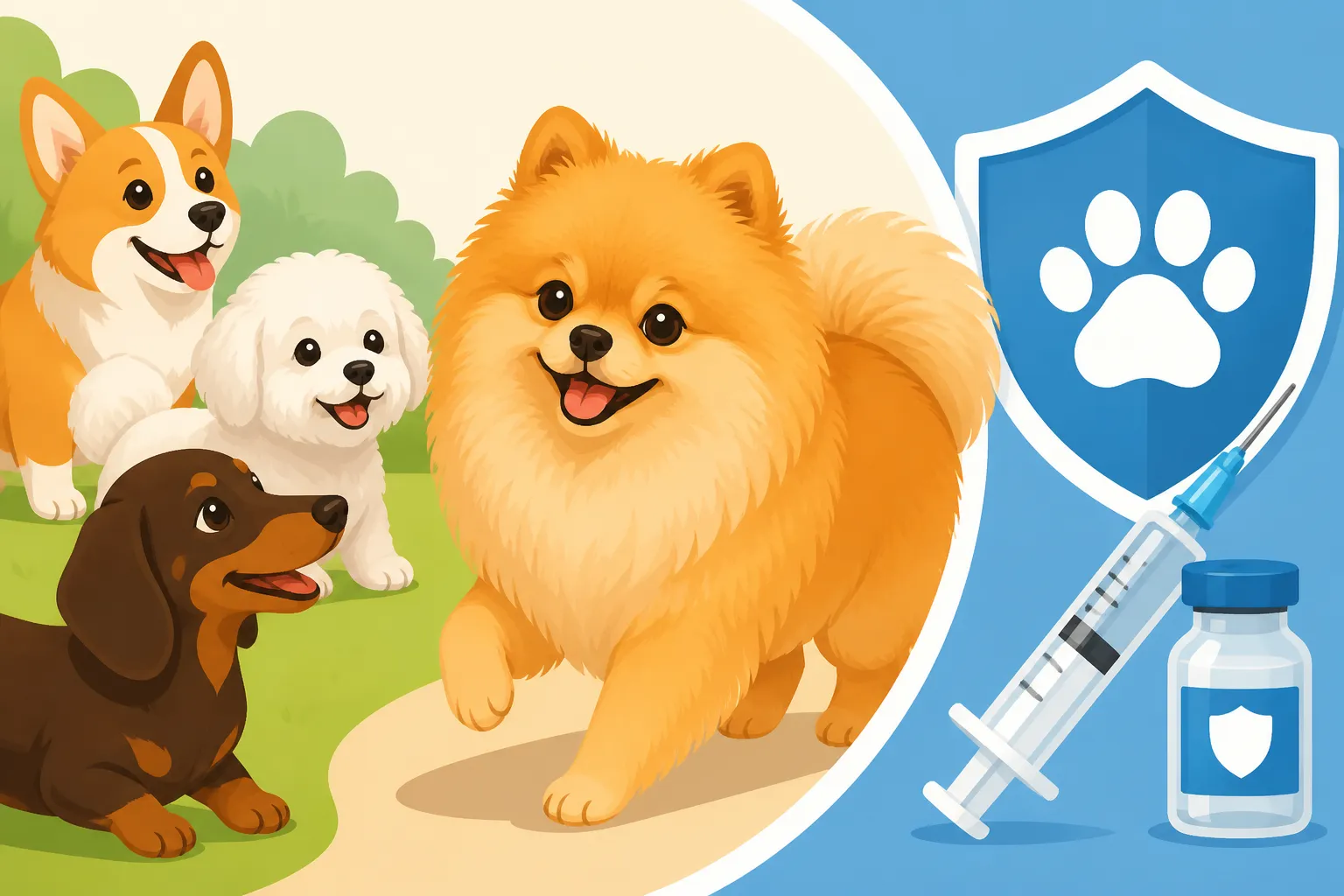
One of the most important aspects of socialization is learning how to interact with other dogs. However, this is also where the biggest health risk lies. The solution? Carefully selected, known, and fully vaccinated adult dogs. Do you have a friend or family member with a calm, friendly, up-to-date older dog? Arrange supervised playdates in your sterile home or a private, disinfected yard. These interactions teach your Pomeranian crucial canine communication skills: how to greet, how to play, and how to respect boundaries.
It's not just about playtime; it's about observing and learning. An older, well-adjusted dog can be an incredible teacher for a puppy, showing them the ropes of doggy etiquette. Make sure these interactions are always positive. If the older dog seems overwhelmed or the puppy is too rambunctious, separate them calmly. Remember, quality over quantity here. One or two positive interactions with a stable adult dog are far more valuable than many risky encounters with unknown dogs. If you're wondering Whether a Pomeranian Puppy Should Meet Big Dogs, the key is control and the older dog's temperament and vaccination status, not necessarily their size.
Introducing New People and Experiences
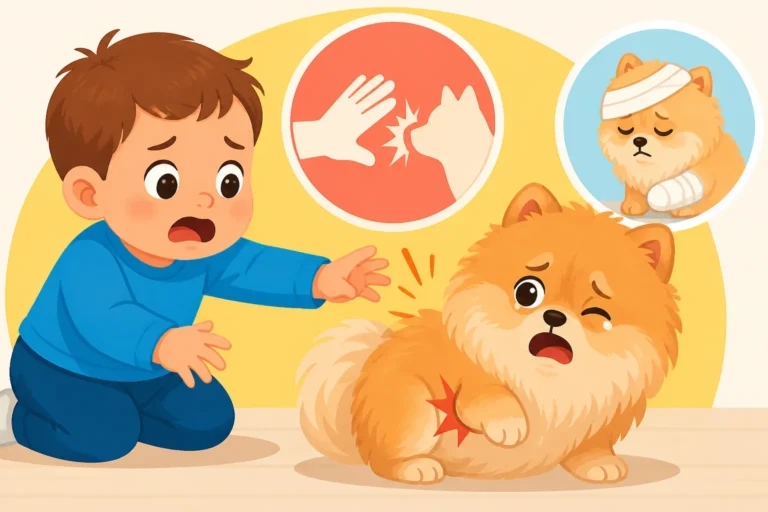
Your Pomeranian needs to learn that not all humans are you! Invite a diverse range of people into your home: men, women, children (supervised, of course!), people with different voices, heights, and appearances. Make these encounters positive with treats and gentle praise. Teach visitors how to appropriately interact with a small puppy – no sudden movements, no grabbing, always offering a hand to sniff first. If you have children in the house, ensure they are taught how to correctly interact with a Pomeranian, as tiny puppies are delicate. This is so important that we have a whole article on A Pomeranian in a House With Small Children.
Exposure isn't just about living beings. It's about textures, objects, and environments. Let your puppy walk on different surfaces in your home: carpet, tile, wood, a crinkly mat. Introduce them to stairs (but be mindful of their tiny joints, as Why Stairs Threaten a Pomeranian Puppy's Kneecaps explains). Let them explore new toys of different materials. The more positive experiences they have in a controlled setting, the more resilient they will become when they encounter these things in the wider world later.
Puppy Classes as a Controlled Environment
Many professional dog trainers offer "puppy kindergarten" or "puppy preschool" classes specifically designed for young puppies who haven't completed their full vaccination series. Reputable programs will require proof of first vaccinations and maintain strict cleaning protocols to ensure a low-risk environment. These classes are a fantastic way for your Pomeranian puppy to socialize with other puppies of a similar age and size, learn basic obedience commands, and build confidence in a structured setting. They are often one of the safest ways to get crucial puppy-on-puppy socialization during this critical window.
In these classes, trainers often have activities that involve safe exposure to different objects, sounds, and gentle handling exercises. It's a goldmine for owners seeking that balance of safety and socialization. If you're looking for structured guidance even before a formal class, online resources or virtual puppy classes can provide excellent foundational training and socialization exercises you can do at home. Services like BAXTER & Bella offer comprehensive online puppy programs that guide you through at-home socialization, exposure, and training, giving you the tools to create a confident, well-adjusted Pomeranian even before they are fully cleared for public outings. Understanding what these classes might cost can also be helpful; see Puppy Class Fees for a Three Pound Pomeranian.
Here's a quick comparison of safe vs. risky socialization methods for an unvaccinated Pomeranian puppy:
| Socialization Method | Risk Level (Pre-Vaccination) | Benefits for Puppy | Key Considerations |
|---|---|---|---|
| Safe & Recommended | |||
| Puppy Classes (vetted) | Low | Puppy-on-puppy play, basic training, new people/sights | Ensure facility requires proof of vaccinations & has strict cleaning protocols. |
| Car Rides (carrier) | Very Low | Exposure to traffic, sights, motion, new smells | Always secure puppy in a carrier for safety. |
| Home Visits (trusted, vaccinated dogs) | Low | Canine communication, appropriate play | Ensure guest dog is fully vaccinated, healthy, and has a good temperament. |
| Exposure to various surfaces/objects at home | Very Low | Desensitization to textures, sounds, sights | Introduce new items slowly, make it positive with treats. |
| Meeting diverse, gentle people at home | Very Low | Positive human interactions, varied appearances | Instruct guests on gentle handling and positive reinforcement. |
| Risky & Not Recommended | |||
| Dog Parks | High | Uncontrolled dog interactions, disease exposure | Unknown vaccination status, high risk of disease/injury. |
| Pet Stores (allowing loose pets) | High | Exposure to unknown dogs/surfaces | High traffic, potential for disease transmission. |
| Public Walking Paths/Grass | High | Environmental exploration | Other dogs' waste, potential for virus survival on surfaces. |
| Unsupervised play with unknown dogs | High | Potential for negative experiences, injury | Risk of bullying, injury, or instilling fear. |
Continuing Socialization After Full Vaccination
The day your veterinarian gives your Pomeranian puppy the all-clear for public outings is a huge milestone! It's an exciting moment, but it's important to remember that socialization isn't a one-and-done event. It's an ongoing process throughout your dog's life, and for your Pomeranian, the period immediately after full vaccination is crucial for building on the safe foundation you've already laid.
Expanding Their World Safely
Once your Pomeranian has completed their vaccination series, you can gradually start introducing them to more diverse environments. Start with quiet, low-traffic areas and slowly increase the intensity. Think about a stroll around the block in your neighborhood, then perhaps a quiet corner of a pet-friendly outdoor shopping center, or a local park during off-peak hours. The key word here is "gradually." Don't rush into a crowded farmer's market or a bustling downtown street on day one. Always observe your Pomeranian's body language. Are they curious and confident, or are they showing signs of stress like tail tucked, ears back, or excessive licking of their lips?
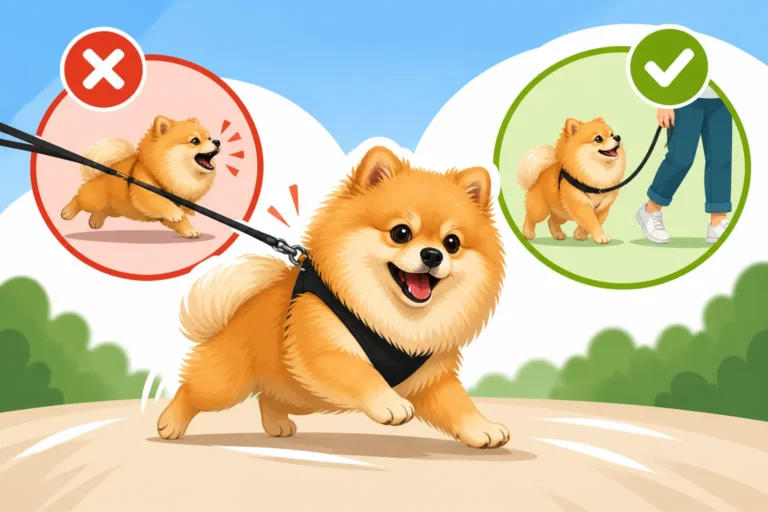
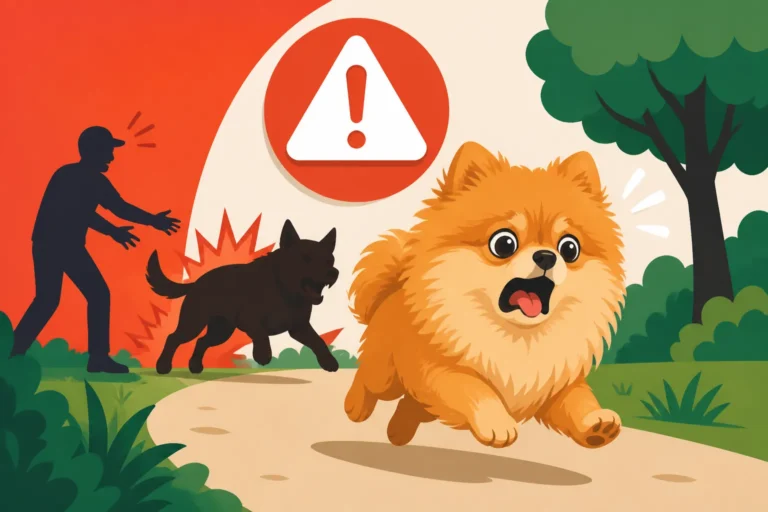
Keep interactions positive and rewarding. Bring high-value treats and praise to reinforce calm, happy behavior in new situations. This is also a good time to introduce them to other well-mannered dogs on leash, always asking owners if their dog is friendly before allowing interaction. Remember, even after vaccination, not all public spaces are ideal for a small Pomeranian. For instance, Why a Dog Park Is Dangerous for a Pomeranian explains why busy, uncontrolled environments can be overwhelming and even risky for such a tiny breed. Your vigilance in assessing situations for your Pomeranian's safety and comfort remains paramount.
Addressing Lingering Fears or Anxieties
Even with the best early socialization, some Pomeranians might still develop specific fears or anxieties, especially if they had a negative experience or simply have a more sensitive personality. If your Pomeranian suddenly seems fearful of men with beards, or becomes agitated around vacuum cleaners, it's important to address these issues promptly and gently. Don't force them into situations that scare them; instead, work on positive desensitization and counter-conditioning.
This involves gradually exposing them to the feared stimulus at a very low intensity, pairing it with something positive like their favorite treats or praise. For example, if they fear the vacuum, start by simply having it visible across the room while you give treats, then slowly move it closer, turn it on briefly, and so on, always staying below their fear threshold. If you're dealing with separation anxiety, which can sometimes manifest even in well-socialized dogs, resources like The Hours a Pomeranian Tolerates an Empty House can provide guidance. If an anxiety or fear seems overwhelming or isn't improving with your efforts, don't hesitate to consult a professional dog trainer or a veterinary behaviorist. Early intervention is always best for helping your beloved Pomeranian live a happy, confident life.
Disclaimer
This article is for general informational purposes only and does not constitute professional advice. Laws, prices and regulations vary by location and change over time. Consult a qualified professional for guidance on your specific situation.