A Pomeranian That Chases the Family Cat
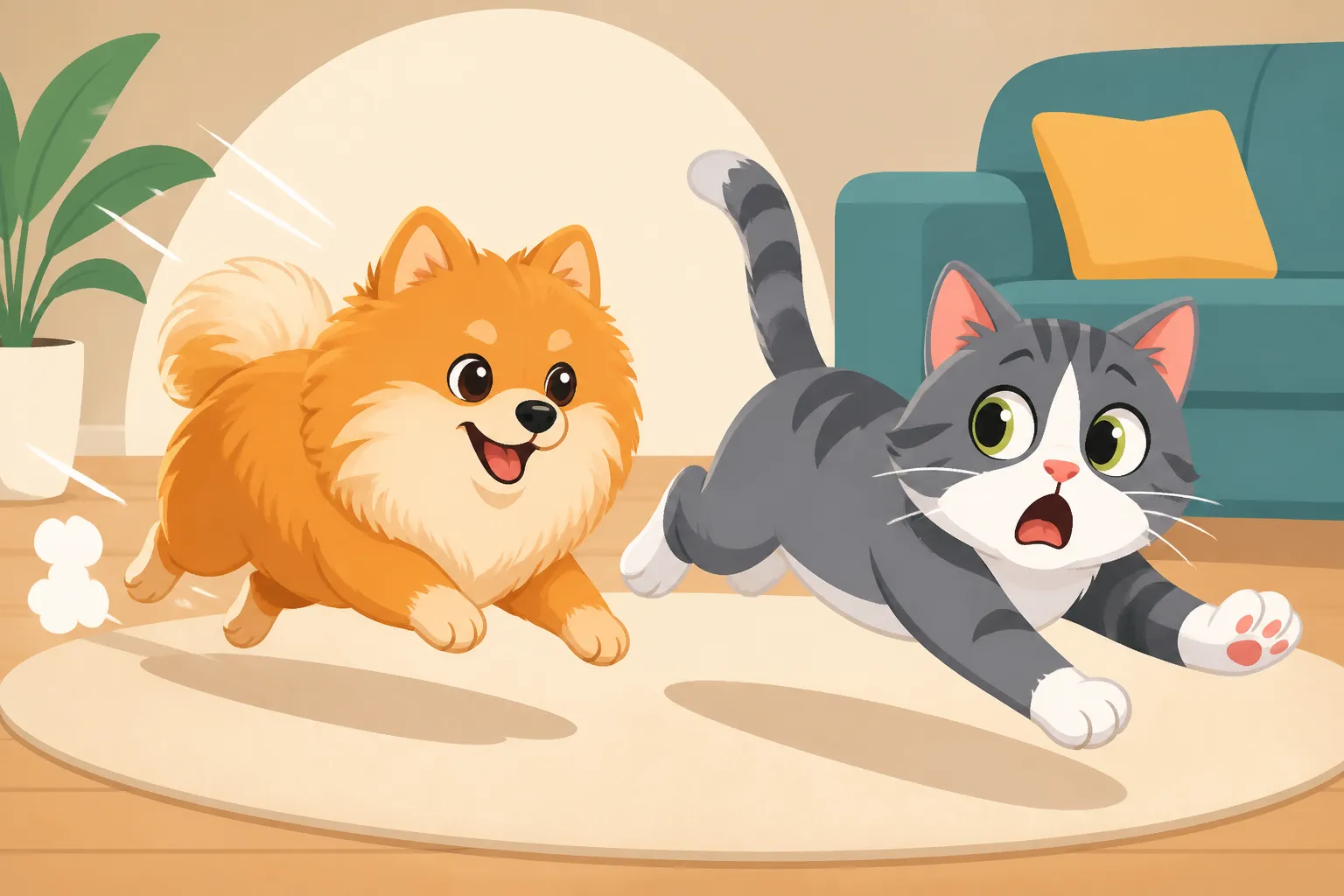
It's incredibly frustrating, and often quite startling, when your sweet little Pomeranian suddenly transforms into a tiny predator, relentlessly pursuing your unsuspecting family cat across the living room. Many Pomeranian owners find themselves caught between their two beloved pets, wondering if peace is even possible. This guide is here to walk you through understanding why your Pom might be chasing your feline friend and, more importantly, to give you practical, empathetic strategies to manage this behavior and foster a more harmonious multi-pet household.
Understanding Why Your Pomeranian Chases the Cat
When you picture a Pomeranian, you probably envision a fluffy, charming lap dog, right? It's easy to forget that beneath all that floof lies a dog with a rich history rooted in Spitz breeds, who were originally much larger working dogs. Their ancestors weren't just pretty faces; they had jobs, and some of those jobs involved chasing and alerting.
The Pomeranian's Innate Drive
Many dogs, especially those from Spitz or terrier backgrounds, carry a strong prey drive. This isn't necessarily a malicious intent to harm; it's an instinctual urge to chase, capture, and sometimes "dispatch" small, fast-moving objects. To a Pomeranian, a cat darting across a room can look remarkably like a squirrel or a rabbit, triggering that ancient wiring. They aren't thinking, "Oh, there's Fluffy, my companion," but rather, "Movement! Must pursue!" This isn't a sign of a "bad" dog; it's just a dog being a dog, acting on a deeply ingrained impulse. Understanding Whether a Pomeranian Has Prey Drive can help you reframe this behavior not as defiance, but as instinct.
Play vs. Prey: Decoding the Behavior
It's crucial to differentiate between genuine prey drive and boisterous play. Sometimes, a Pomeranian might chase a cat simply because they want to play, and the cat's reaction (running away) inadvertently rewards the chase. This often happens when the Pomeranian lacks appropriate outlets for its energy or hasn't learned proper canine play etiquette.
Consider the context:
- Prey Drive: The chase is intense, focused, and often involves body language like a low crouch, stiff tail, and single-minded pursuit. The Pom might try to nip or pounce with a predatory intent, even if it's just a mock kill. The cat is typically terrified, hissing, swatting, or bolting for cover.
- Play Behavior: The chase might be more loose, with play bows, exaggerated movements, and pauses. The Pomeranian might bark excitedly rather than with a focused intensity. The cat, while potentially annoyed, might also engage in playful swatting or even run back to initiate another chase, indicating a mutual, albeit sometimes rough, play dynamic.
The key is observing the intent behind the chase and the reaction of the cat. A truly terrified cat isn't playing.
The "Small Dog Syndrome" Factor
Sometimes, smaller dogs, including Pomeranians, can develop what's often referred to as "small dog syndrome." This isn't a clinical diagnosis, but rather a set of behaviors where a small dog acts overly assertive, bossy, or even aggressive towards other animals (or people), often due to a lack of proper boundaries or socialization. If your Pom feels insecure or hasn't been taught impulse control, they might try to exert dominance or simply get their way by chasing the cat. This isn't a breed-specific trait, but rather a learned behavior often enabled by well-meaning owners who might inadvertently allow behaviors in a tiny dog that they wouldn't tolerate in a larger one. It’s important to remember that even a five-pound Pomeranian needs clear rules and expectations.
Setting the Stage for Peace: Initial Management Strategies
Before you can tackle the root causes, you need to create an environment where your cat feels safe and your Pomeranian learns that chasing the cat is not an option. This is about prevention and immediate redirection.
Creating Safe Zones for Your Cat
One of the most immediate and impactful steps you can take is to give your cat high-security safe zones. Cats are arboreal by nature; they feel safest when they can survey their territory from above or retreat to a place inaccessible to dogs.
- Vertical Space: Invest in tall cat trees, shelves, or wall-mounted perches that your Pomeranian simply cannot reach. Place these in rooms where your cat spends a lot of time. Even a simple, sturdy bookshelf can become a cat haven if you clear a few shelves and add a soft blanket.
- Cat-Only Rooms/Areas: Designate certain rooms or areas as cat-only. You can achieve this with baby gates that have a small cat door, or by installing a "cat door" into a regular door that's too small for your Pom to squeeze through. This gives your cat a guaranteed escape route and a place to decompress without canine interference. This is absolutely critical for your cat's well-being and stress levels.
Leash and Tether Training for Your Pomeranian
This might sound extreme for a little indoor dog, but it's incredibly effective for breaking the chase habit and teaching impulse control. The goal here is management, not punishment.
- Indoor Leash: For a period, keep your Pomeranian on a lightweight house leash whenever they are not crated or in a secure pen. This leash should be short enough that you can easily step on it or grab it if your Pom fixates on the cat, but long enough for them to move comfortably. You're not "walking" them; you're simply giving yourself a way to intervene instantly.
- Tethering: When you can't actively supervise (e.g., you're cooking dinner, working from home), tether your Pomeranian to a piece of furniture near you. Make sure the tether is long enough for them to lie down comfortably but short enough to prevent them from reaching the cat. Provide them with a comfy bed and a safe chew toy. This teaches your Pom that even when you're busy, you're still in charge of their interactions and that they can't just roam and harass the cat. Brands like BAXTER & Bella offer excellent online training resources that often cover concepts like tethering for impulse control in a positive manner.
Supervised Interactions and Redirection
Every interaction between your Pom and your cat should be under your direct supervision, especially initially. This means no unsupervised free-for-alls.
- Active Monitoring: Keep an eagle eye on your Pomeranian's body language. The moment you see them stiffen, crouch, or fixate on the cat, gently interrupt them. This isn't about scolding, but about breaking the focus before the chase even starts.
- Immediate Redirection: When you interrupt, immediately redirect your Pomeranian to an appropriate activity. This could be a favorite toy, a short training session for a trick they know, or a chew. The idea is to show them that focusing on you and appropriate activities leads to good things, while focusing on the cat does not. Keep a variety of enticing toys on hand. For example, a crinkly toy mouse from Amazon might redirect their attention quickly.
- Reward Calmness: Whenever your Pomeranian ignores the cat or displays calm, relaxed behavior in the cat's presence, mark that moment and reward it with a high-value treat or praise. You're actively shaping the behavior you want to see.
Training for Harmony: Long-Term Solutions
Once you have management in place, you can start actively training your Pomeranian to coexist peacefully with your cat. This takes consistency, patience, and a lot of positive reinforcement.
Teaching "Leave It" and Recall Around the Cat
These two commands are absolute game-changers for inter-species harmony. They give you powerful tools to interrupt unwanted behavior and bring your dog back to you.
- "Leave It": Start practicing "Leave It" away from the cat first, using less exciting objects. Hold a treat in your hand, tell your Pom "Leave It," and cover it with your hand. The moment they look away from the treat, mark it with a verbal cue like "Yes!" and reward them with an even better treat from your other hand. Gradually increase the difficulty, placing treats on the floor, then further away. Once mastered with objects, you can start practicing with the cat in the room, keeping your Pom on a leash. If they look at the cat, say "Leave It." When they shift their gaze to you, reward them. The Reward a Pomeranian Actually Cares About is crucial here – find what truly motivates them!
- Reliable Recall: A rock-solid recall means you can call your Pomeranian away from anything, including a tempting cat. Practice "Come" in a low-distraction environment first, making it a super fun game with high-value rewards. Gradually introduce distractions. If your Pom starts to focus on the cat, use your recall word (e.g., "Fido, Come!") and reward them generously when they respond. Never use recall for punishment; it must always be associated with positive experiences. Building a Pomeranian's Independence through consistent training, including recall, will serve you well.
Positive Reinforcement for Calm Behavior
This is the cornerstone of effective training. You want your Pomeranian to associate the cat with positive experiences, not just with being told "no."
- "Relax" on a Mat: Teach your Pomeranian to go to a designated mat or bed and relax. Start by luring them onto the mat, rewarding them for settling. Slowly introduce the cat into the same room while your Pom is on their mat. Reward heavily for staying on the mat and remaining calm. If they break position to eye the cat, calmly guide them back to the mat.
- Treats for Tranquility: Carry small, pea-sized treats with you throughout the day. Whenever your Pomeranian and cat are in the same room and your Pom is not chasing, staring, or exhibiting any unwanted behavior, quietly drop a treat near your Pom. This teaches them that the cat's presence equals good things, without drawing direct attention to the cat. This subtle conditioning can be incredibly powerful. Many small breed-appropriate training treats can be found on Amazon.
- Structured Play: Ensure your Pomeranian gets plenty of appropriate playtime with you every day. Tug, fetch, or puzzle toys are great ways to burn energy and satisfy their natural drives in a constructive manner. Games That Tire a Pomeranian Indoors can be especially helpful.
Increasing Exercise and Mental Stimulation for Your Pom
A bored or under-exercised Pomeranian is much more likely to create their own "fun," which often involves bothering other pets. Poms might be small, but they have surprising amounts of energy and intelligence.
- Daily Walks: Provide consistent daily walks, even if they're short. These walks offer physical exercise, mental stimulation through new smells and sights, and a chance to bond with you. Just be mindful of their delicate windpipes; a harness is always recommended over a collar. For sensitive windpipes, a properly fitted harness is key, as discussed in Harnesses Fitted for a Pomeranian's Windpipe.
- Training Sessions: Engage your Pomeranian in short, frequent training sessions throughout the day. Poms are intelligent and love to learn tricks. Even 5-10 minutes of training a few times a day can tire them out mentally. Tricks a Pomeranian Learns Quickly can be a great place to start, building confidence and focus.
- Puzzle Toys: Incorporate puzzle toys into their routine, especially when you need them to be entertained independently. These toys dispense treats as your dog manipulates them, providing a mental workout and a distraction from the cat. Just be sure to choose puzzle toys small enough for their delicate mouths. Puzzle Toys Small Enough for a Pomeranian are readily available.
Here's a quick comparison of behaviors to watch for:
| Behavior | Indication | Recommended Action |
|---|---|---|
| Stiff body, fixed stare on cat | Potential prey drive or escalation | Interrupt immediately with "Leave It" or a sound, redirect to a toy/training. |
| Loose body, play bows, happy barks | Play invitation | Monitor closely. If cat tolerates, allow brief play. If cat is stressed, interrupt and redirect Pom. |
| Cat runs, Pomeranian chases excitedly | Learned chase behavior | Leash/tether Pomeranian. Prevent chase. Reward calm disengagement. |
| Pomeranian ignoring cat | Ideal behavior | Quietly reward with a treat or praise. Reinforce the calm coexistence. |
| Cat hisses, swats, retreats | Stress, discomfort, fear | Remove Pomeranian or secure cat in its safe zone. Do not force interaction. Prioritize cat's safety and comfort. |
When to Seek Professional Help
Even with the best intentions and consistent effort, some behaviors are deeply ingrained or complex and require an extra layer of expertise. Knowing when to call in the cavalry is not a sign of failure, but responsible pet ownership.
Recognizing When the Behavior Escalates
If your Pomeranian's chasing escalates beyond playful harassment to actual aggression—meaning they are consistently nipping, biting, or showing clear intent to harm the cat, or if the cat is becoming injured—it's time to get professional help immediately. Other red flags include:
- The cat shows persistent signs of stress, such as over-grooming, hiding constantly, urinating outside the litter box, or refusing to eat.
- Your Pomeranian becomes possessive over the cat, guarding them from you or other family members.
- The chasing behavior is accompanied by growling, snarling, or snapping directed at the cat, even when the cat isn't moving.
- You feel overwhelmed, frustrated, or fearful for either pet's safety, despite implementing management strategies.
Finding a Qualified Trainer or Behaviorist
Don't just pick the first person you find; look for a professional who specializes in positive reinforcement and has experience with inter-species dynamics.
- Certifications Matter: Look for trainers certified by reputable organizations such as the Certification Council for Professional Dog Trainers (CCPDT) or the Karen Pryor Academy (KPA). For more severe issues, a Certified Professional Dog Behaviorist (CPDT-KA or CDBC) might be necessary.
- Positive Reinforcement Focus: Ensure their methodology aligns with humane, force-free training. Avoid anyone who suggests aversive tools like shock collars, choke chains, or harsh physical corrections, especially with a small and sensitive breed like a Pomeranian. These methods can damage the bond with your dog and exacerbate fear-based aggression.
- Experience with Multi-Pet Households: Ask prospective trainers about their experience helping dogs and cats coexist. They should be able to offer specific strategies tailored to your unique household situation and be sensitive to the needs of both species.
Working with a professional can provide fresh insights, help you identify subtle cues you might be missing, and develop a customized plan to create a peaceful home for everyone. It's a journey, but with patience and consistency, a harmonious household with both your Pomeranian and your cat is absolutely achievable.
Disclaimer
This article is for general informational purposes only and does not constitute professional advice. Laws, prices and regulations vary by location and change over time. Consult a qualified professional for guidance on your specific situation.