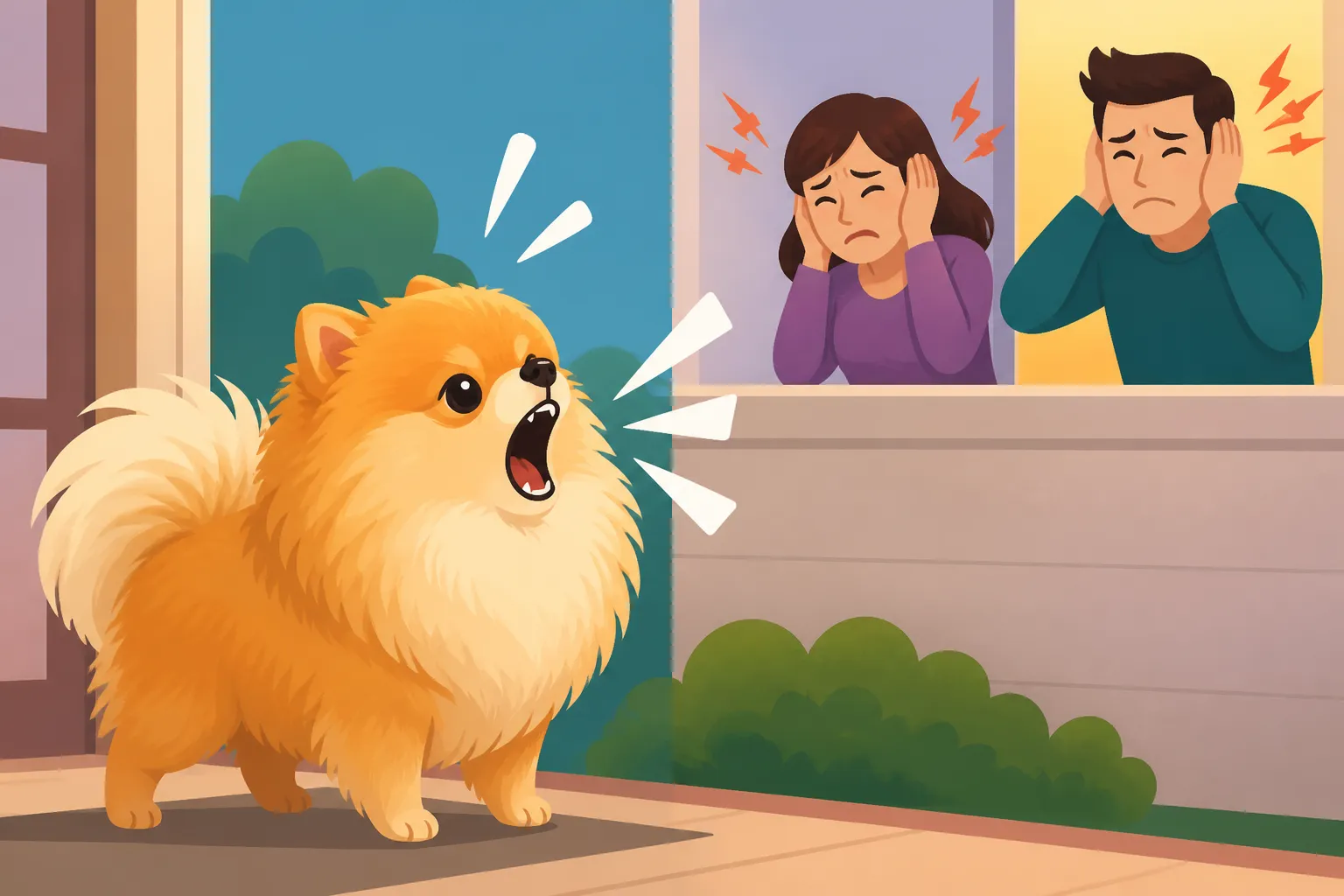
Neighbors and a Pomeranian’s Voice
One of the most common frustrations for Pomeranian owners, and indeed for their neighbors, is the enthusiastic vocalizations that can sometimes feel incessant. While Poms are renowned for their vibrant personalities and charming fluff, they also come equipped with a surprisingly loud and persistent bark that, if unchecked, can lead to strained relationships with the people next door or even within your own home. This guide is dedicated to helping you understand why your beloved Pomeranian might be sounding off so much, and more importantly, how you can work towards a calmer, quieter household that fosters peace with your neighbors.
Understanding the Pomeranian's Vocal Nature
Let's face it, Pomeranians are not known for their silent contemplation. They are a vocal breed, and for good reason! Their history and inherent traits contribute greatly to their tendency to bark. It's not usually out of malice, but rather a deep-seated instinct and a way they communicate with the world around them.
Why Pomeranians are So Vocal
Pomeranians descend from much larger Spitz-type dogs, often employed as watchdogs on farms or boats. While their size has diminished dramatically over generations, that keen awareness and instinct to alert have remained firmly intact. Think of your little Pom as a pint-sized alarm system. They might be small, but they see it as their job to let you know about everything: the leaf blowing past the window, the squirrel attempting a daring raid on the bird feeder, the distant sound of a delivery truck, or even just the mail carrier's footsteps outside. They truly believe they are protecting their den and their family, which, in their mind, is a huge responsibility! This ingrained watchdog mentality means they are often quick to react to perceived intrusions or changes in their environment.
Moreover, their high intelligence and energetic nature mean they need mental stimulation. A bored Pomeranian is a busy Pomeranian, and sometimes that business translates directly into barking. If they aren't given enough engaging activities, puzzles, or opportunities for mental exercise, they might resort to "making their own fun" – and that often involves telling everyone within earshot about it. It’s their way of saying, "Hey, I'm here! And I'm bored!" or "Something's happening! Pay attention!"
The Types of Barks That Annoy Neighbors
Not all barks are created equal, especially in the ears of a neighbor. Understanding the type of bark can help you identify the root cause and address it more effectively. The most common complaints usually stem from persistent, high-pitched, or repetitive barking.
One classic example is the alert bark, often triggered by movement outside a window or a sound at the door. It's usually a rapid-fire series of barks, increasing in intensity as the stimulus gets closer. This is where The Doorbell and the Pomeranian Response comes into play. If your Pom barks every time someone walks by or the doorbell rings, that repetitive noise can quickly grate on a neighbor's nerves, especially if their window is right next to yours.
Then there's the boredom bark or attention-seeking bark. This one might be more drawn out, sometimes accompanied by whining or pawing. It's often louder, more mournful, or simply incessant, because the dog is trying to get a reaction. If you rush to comfort or scold your dog every time they bark for attention, you're inadvertently reinforcing the very behavior you want to stop. Similarly, separation anxiety can manifest as prolonged, distressed barking, howling, or crying when left alone. This isn't just annoying; it's a clear sign of distress for your pup and can lead to serious friction with neighbors who hear it all day. Understanding Whether a Pomeranian Barks From Fear or Habit can be crucial in distinguishing between these types of barks.
Identifying Triggers for Neighborhood Barking
Pinpointing why your Pomeranian barks is the first step toward finding a solution. It's rarely random; there's almost always a trigger, even if it's not immediately obvious to us humans.
External Stimuli: Sights, Sounds, and Smells
For many Pomeranians, the outside world is a constant source of fascinating, and bark-worthy, events.
Sights: A prime offender is the window. If your Pomeranian has unfettered access to a window overlooking a busy street, a shared garden, or even just a sidewalk, they're likely to bark at every passerby, dog, cat, or delivery truck. Their small size often gives them a perfect vantage point on sofas or chairs, making them excellent, albeit noisy, neighborhood watchdogs. The sheer volume of visual stimuli can keep them in a perpetual state of "alert," making it impossible for them (and your neighbors) to relax.
Sounds: Pomeranians have incredibly sensitive hearing. What might be a faint rustle to you could be a full-blown declaration of war to your Pom. The clanking of garbage cans, children playing down the street, a car door slamming, another dog barking a block away, or even the distant rumble of thunder can all set off a barking spree. Apartment living can exacerbate this, as sounds travel easily through shared walls and floors. You might not even realize the tiny sounds that are setting your dog off. Whether Apartment Walls Muffle a Pomeranian is a common concern for urban Pom owners, and often the answer is "not enough!"
Smells: While less obvious to us, a dog's nose is incredibly powerful. The scent of a squirrel that ran across your lawn hours ago, a neighbor's barbecue, or another dog's scent left on a lamppost can all be intriguing enough to provoke a bark. They're investigating the world through their nose, and sometimes that investigation comes with a verbal commentary.
Internal Factors: Boredom, Anxiety, and Attention-Seeking
Sometimes, the triggers for barking come from within your Pomeranian. These are often more complex to address but equally important.
Boredom: This is a huge one. Pomeranians are smart, active dogs. If they're left alone for long periods without adequate mental or physical stimulation, they will find ways to entertain themselves. Unfortunately, barking at anything and everything that moves or makes a sound is a highly effective way for them to relieve boredom and expend energy. A Pom lying around all day with nothing to do is a prime candidate for becoming a nuisance barker. They might chew, pace, or, most commonly, bark at imaginary foes. Regular exercise and engagement are vital to prevent this.
Anxiety: Fear and anxiety are powerful motivators for barking. This can range from mild apprehension to full-blown separation anxiety or generalized fear. A dog who is truly afraid of strangers, other dogs, or loud noises might bark excessively as a defensive mechanism. They're trying to make the scary thing go away. If your Pomeranian is barking when left alone, accompanied by destructive chewing or house-soiling, it's a strong indicator of separation anxiety. A Pomeranian That Screams the Moment You Leave is experiencing genuine distress, not just being naughty.
Attention-Seeking: Poms learn quickly what gets a reaction from their humans. If every bark, even an annoying one, results in you looking at them, talking to them, or rushing to their side, they've successfully trained you. They learn that barking is a reliable way to get what they want, whether it's food, playtime, a walk, or simply your gaze. This kind of barking often escalates because the dog gets better at demanding attention. It's a classic example of operant conditioning, and it can be a tough habit to break once established.
Proactive Strategies to Minimize Neighbor-Annoying Barks
Dealing with an established barking problem can be tough, but proactive management and foundational training can make a world of difference. It's about setting your Pomeranian up for success from the get-go.
Soundproofing and Environmental Management
Controlling your Pomeranian's environment is one of the quickest ways to reduce reactivity to external triggers.
Blocking Visual Stimuli: If your Pom barks at everything outside the window, limit their access. Close curtains or blinds, especially in rooms overlooking busy areas. Consider applying frosted window film to lower panes if you still want natural light. You can also use baby gates or strategically placed furniture to block access to problematic windows. This isn't about punishing your dog; it's about reducing their stress and the number of things they feel compelled to alert you about.
Muffling Sounds: While full soundproofing is often impractical, you can reduce noise infiltration. Heavy curtains, area rugs, and even strategically placed bookshelves filled with books can help absorb sound. Playing calming music or white noise can also help mask external sounds, making them less jarring for your sensitive Pom. This creates a more peaceful environment for your dog, reducing their perceived need to bark at every little disturbance. For those in apartments or close-knit communities, this is particularly vital for neighborly peace.
Enrichment and Exercise for a Quieter Pom
A tired Pom is a good Pom, and a mentally stimulated Pom is often a quieter Pom.
Physical Exercise: While Pomeranians are small, they still need regular physical activity. Daily walks, even short ones, provide crucial physical exercise and mental stimulation through sniffing new scents. Remember to use a harness designed to protect their delicate windpipe, as Why a Collar Threatens a Pomeranian's Windpipe is a serious concern. Two to three short walks a day can help them burn off excess energy. Even indoor play with toys can be effective. A game of fetch down a hallway or chasing a favorite toy can make a big difference.
Mental Enrichment: This is often overlooked but is incredibly important for intelligent breeds like Pomeranians. Puzzle toys that dispense treats, snuffle mats, and engaging chew toys can keep their minds busy and redirect their energy away from barking. Rotating toys regularly keeps them novel and interesting. For example, a KONG toy stuffed with peanut butter or wet food and frozen can provide a long-lasting, quiet activity. Many such items are readily available on platforms like Amazon. Enrolling in online training programs, like those offered by BAXTER & Bella, can also provide structured mental challenges and help you teach your Pomeranian new skills, which is fantastic mental exercise. Think about learning Tricks a Pomeranian Learns Quickly to keep them engaged.
| Type of Enrichment | Benefit for Barking | Examples |
|---|---|---|
| Physical Activity | Burns excess energy, reduces boredom-induced barking | Daily walks, indoor fetch, agility exercises (if vet approved) |
| Puzzle Toys | Provides mental challenge, occupies time, redirects focus | KONGs, snuffle mats, treat-dispensing balls |
| Chew Toys | Satisfies natural chewing instinct, can be calming | Durable rubber chews, dental chews (appropriate size) |
| Training Sessions | Mental stimulation, strengthens bond, teaches impulse control | Learning new tricks, obedience commands, online courses |
| Scent Work | Taps into natural instincts, mentally tiring | Hide-and-seek with treats, sniff games |
Foundation Training for Impulse Control
Basic obedience training is not just about manners; it's about building a language between you and your Pomeranian and teaching them impulse control.
"Quiet" Command: This is a game-changer. You need to teach your Pomeranian what "quiet" means before they're in a full-blown barking frenzy. Start by letting them bark a few times at a neutral trigger (like a knock on the door). Then, hold a treat to their nose. The moment they stop barking to sniff the treat, say "Quiet!" and reward them. Repeat this many times, gradually increasing the duration of silence required before the reward. Eventually, you can pair "quiet" with a visual cue like a raised finger. This teaches them to respond to your command even when excited.
"Leave It" and "Look at Me": These commands are invaluable for redirecting attention from triggers. "Leave It" can be used for objects or even a person walking by that might otherwise provoke barking. "Look at Me" is fantastic for gaining their focus when you anticipate a trigger. Practice these in calm environments first, gradually introducing distractions. A good foundation in obedience, as taught through programs like BAXTER & Bella, can significantly reduce reactive barking by giving your Pom an alternative, desired behavior. Learning How Long a Pomeranian Will Hold Focus will be key to success.
Addressing Established Barking Habits with Neighbors in Mind
Once barking habits are firmly in place, it takes consistent effort and a multi-faceted approach to change them. This often involves both training and managing expectations, especially with your neighbors.
Desensitization and Counter-Conditioning for Triggers
This is about changing your Pomeranian's emotional response to something that usually makes them bark. Instead of seeing the mail carrier as an intruder to be barked at, you want them to associate the mail carrier with something positive.
Desensitization: Gradually expose your Pomeranian to the trigger at a low intensity, where they don't react. For instance, if they bark at people walking by the window, start by having them far enough from the window that they don't bark, or at a time when fewer people are out. Slowly, over many sessions, reduce the distance or increase the exposure. The goal is to keep them under their barking threshold.
Counter-Conditioning: While desensitizing, you pair the trigger with something wonderful, like high-value treats or a favorite toy. So, if your Pom usually barks at a knock, you practice fake knocks at a low volume, and immediately give a treat before they can bark. The idea is that the knock predicts a treat, not an intruder. For example, if your Pomeranian barks at the mail carrier, stand by the window with your Pom on a leash (to prevent charging) and give them a super delicious treat every time the mail carrier approaches before they start barking. The moment the mail carrier passes, the treats stop. This changes their association from "scary person" to "treat dispenser." This technique can be applied to many triggers, helping your Pom become calmer and more confident. The Age a Pomeranian Starts Alert Barking can often be mitigated with early desensitization.
Managing the Bark When You're Not Home
This is often the trickiest part, as you're not there to interrupt the behavior. However, there are strategies to help.
Cameras and Monitoring: Invest in a pet camera (many options on Amazon) that allows you to see and even speak to your Pomeranian remotely. This not only helps you understand what triggers their barking when you're away but also allows you to intervene with your voice or dispense treats to redirect them. Seeing their behavior firsthand is invaluable for tailoring your approach.
Enrichment Before You Leave: Before you head out, make sure your Pomeranian has had a good walk, some playtime, and is mentally tired. Then, leave them with a high-value, long-lasting chew or a frozen puzzle toy. This gives them a positive association with your departure and something engaging to do while you're gone. These items can significantly reduce Whether a Pomeranian Barks When Left Alone.
Professional Assistance: If separation barking is severe, involving howling, destructive behavior, or continuous vocalization, it's likely true separation anxiety. This requires a dedicated training plan, potentially with medication prescribed by a vet, and often the guidance of a professional behaviorist. Simple tips won't solve it; it's a deep-seated anxiety that needs careful, structured intervention.
Communicating with Your Neighbors
This step is often overlooked but is absolutely crucial. Open and honest communication can prevent small annoyances from escalating into major conflicts.
Be Proactive: Don't wait for a complaint. If you know your Pomeranian is vocal, especially when you're not home, approach your neighbors first. A simple "Hey, I just wanted to apologize if my dog's barking has been a bother. We're actively working on training, and I'm really committed to addressing it" can go a long way. This shows respect and responsibility.
Ask for Feedback (Constructively): Ask them specifically when the barking occurs and what triggers they've noticed. This information can be incredibly helpful for your training plan. For instance, they might tell you your Pom barks for 15 minutes every time the mail truck comes, or that it’s worst between 1 PM and 3 PM. Remember to listen without getting defensive.
Share Your Efforts: Let your neighbors know what you're doing. "We just got a new camera to monitor his barking when we're out," or "We're working with a trainer on his alert barking." This demonstrates your commitment and shows them you're taking their concerns seriously. Sometimes just knowing you're trying is enough to ease tensions. Offering a small gesture, like a plate of cookies, can also foster goodwill. Building a positive relationship can help your neighbors be more understanding during the training process.
When Professional Help is Needed
While many barking issues can be managed with consistent effort at home, there are times when it's wise, and even necessary, to call in the experts. Don't feel like a failure if you need to; some behaviors are complex and require specialized knowledge.
Consulting a Veterinarian to Rule Out Medical Issues
Before assuming all barking is behavioral, it's always a good idea to have your Pomeranian checked by your vet. Excessive or sudden onset barking could be a symptom of an underlying medical problem.
Pain or Discomfort: A dog in pain might bark more than usual, either due to discomfort, to alert you to their pain, or simply because they're feeling irritable. Conditions like arthritis, dental issues (which are common in Pomeranians, as discussed in Dental Disease in a Mouth the Size of a Pomeranian's), or even an ear infection could lead to increased vocalization.
Cognitive Dysfunction (in Older Poms): Senior Pomeranians can develop cognitive dysfunction syndrome, similar to dementia in humans. This can manifest as increased barking, especially at night, disorientation, changes in sleep patterns, and house-soiling. If your older Pom has started barking more, particularly without a clear trigger, a vet check is essential.
Sensory Impairment: As Poms age, they can lose their sight or hearing. A dog who suddenly can't see or hear as well might become more anxious or vocal in response to things they can no longer perceive clearly. A vet can diagnose these issues and help you manage them. Your vet might also discuss Cough Suppressants for a Pomeranian if a medical condition like tracheal collapse is contributing to their vocalizations.
Working with a Certified Professional Dog Trainer or Behaviorist
For persistent, complex, or severe barking problems, especially those linked to anxiety or aggression, a professional can provide tailored guidance.
Certified Professional Dog Trainers (CPDT-KA): A good trainer can observe your Pomeranian's barking, identify triggers you might have missed, and teach you effective training techniques. They can help you implement desensitization and counter-conditioning protocols, teach impulse control, and refine your "quiet" command. They will focus on positive reinforcement methods, showing you how to reward desired behaviors rather than just punishing unwanted ones. Organizations like the Certification Council for Professional Dog Trainers (CCPDT) offer certifications to look for.
Veterinary Behaviorists (DACVB): These are veterinarians who have gone on to specialize in animal behavior, similar to a human psychiatrist. They are qualified to diagnose and treat behavioral disorders, including severe separation anxiety, generalized anxiety, or fear-based aggression that contributes to barking. They can prescribe medication if necessary, often as a tool to help reduce your dog's anxiety to a level where training can be more effective. If you've tried everything else and the barking persists, or if you suspect a deeper anxiety issue, a board-certified veterinary behaviorist is the highest level of expertise you can consult. They can provide a comprehensive treatment plan that combines behavioral modification, environmental management, and pharmacological interventions. Finding A Behaviorist Charges for a Barking Pomeranian should be seen as an investment in your peace of mind and your Pomeranian's well-being.
Disclaimer
This article is for general informational purposes only and does not constitute professional advice. Laws, prices and regulations vary by location and change over time. Consult a qualified professional for guidance on your specific situation.