The Part of Pomeranian Ownership Nobody Mentions
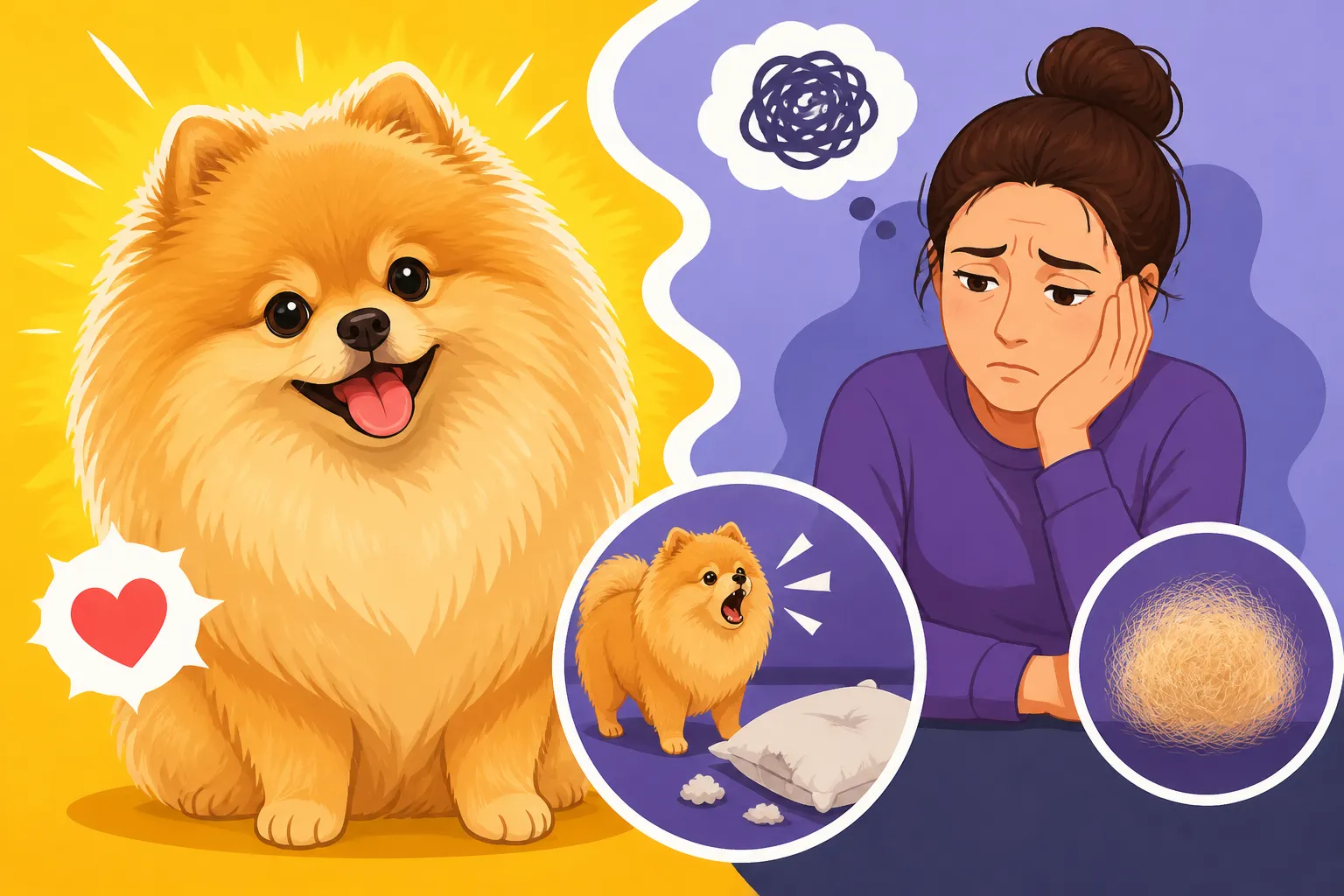
A Pomeranian can look like a little cloud who fits neatly into your life, until the coat needs brushing again, the doorbell sets off a barking spell, or you realize how easily a small dog can get hurt. This guide covers the less obvious parts of Pomeranian ownership, from daily care and training to costs, safety, and the routines that make life easier for both of you.
The everyday work behind that fluffy coat
Grooming is more than a quick brush
A Pomeranian’s coat has a dense undercoat beneath longer guard hairs. That plush appearance is lovely, but it can hide tangles close to the skin, particularly behind the ears, under the collar or harness, around the legs, and beneath the tail. A quick pass over the top may make the dog look tidy while leaving small mats underneath.
Work in sections, gently separating the coat so you can check down to the skin. A comb is useful for checking whether you’ve reached through the dense areas; if it catches, pause and ease the hair apart rather than yanking. Regular, brief sessions are usually less stressful than one long session after tangles have built up. If your Pomeranian is restless, try a few minutes at a time and reward calm standing or lying down.
Bathing is only one part of grooming. The coat needs to be dried thoroughly, and brushing a wet or tangled coat without care can cause discomfort or breakage. Many owners find that the real challenge is fitting grooming into ordinary life: between work, errands, and a dog who would rather investigate the brush than stand still. A predictable routine can help. For a closer look at the coat’s structure, see The Guard Hair and Undercoat of a Pomeranian and Working a Pomeranian's Coat in Sections to the Skin.
Clipping can have consequences
A teddy bear look may seem like an easy way to keep a Pomeranian neat, especially after a hot summer walk or a bout of matting. But a close clip is not a simple shortcut. The coat may grow back unevenly or take a long time to recover, and in some dogs it may not return to its previous texture or fullness. A trim that tidies the feet, sanitary area, and outline is different from shaving down the body.
If mats are tight against the skin, it can be tempting to cut them out at home. That’s risky because loose skin can be pulled into the mat, making it difficult to see where the hair ends and skin begins. A groomer can assess whether the coat can be worked through safely or needs a careful trim. If you’re choosing a groomer, ask what they plan to remove and be clear that you want to preserve the double coat unless there is a specific welfare reason to do otherwise. Related guidance is in Trims a Pomeranian Can Safely Have and Whether a Groomer Should Ever Shave a Pomeranian.
The small-dog realities people underestimate
A tiny dog still needs boundaries and training
Pomeranians are alert, lively dogs. Their size doesn’t mean they’ll quietly occupy a cushion all day, and their tendency to notice noises can turn a passing dog, a hallway sound, or a delivery at the door into a barking event. It’s easy to accidentally reinforce the behavior by shouting, rushing to the window, or picking the dog up every time it reacts. From the dog’s perspective, all that attention may make the moment more exciting.
Instead, work on calm responses before barking becomes the only routine. Reward your dog for noticing a sound and then turning back to you, or teach a simple cue that directs them to a mat or another quiet spot. Manage the environment where you can: close a view of a busy street, use a fan to soften hallway noise, or give your dog a comfortable space away from the front door. Some barking is normal communication, but repeated, intense barking may also reflect fear, frustration, or difficulty being alone. The broader behavior challenges are explored in Why a Pomeranian Barks at Everything That Moves.
House training can also take patience. A small dog has a small bladder, and a puppy may need more frequent opportunities to go outside than a new owner expects. Cold rain, wet grass, or a noisy street can make a hesitant puppy reluctant to go. Set a steady schedule, accompany the puppy, and reward toileting in the right place. Accidents are information: they may mean the interval was too long, the puppy was distracted, or the routine needs adjusting. Punishing an accident after the fact won’t teach the dog where to go. For practical detail, see Why House Training a Pomeranian Drags On.
Being small means planning for safety
Pomeranians can be bold around dogs much larger than themselves. That confidence can be charming until a larger dog plays roughly, or your Pom rushes toward a dog whose body language you haven’t had time to read. Supervise introductions, give the small dog room to retreat, and don’t assume a dog park is a safe place simply because your Pomeranian is friendly. A leash, a secure harness, and a little distance can help you keep encounters controlled.
At home, falls and jumps deserve attention too. A dog that leaps off a high bed or sofa may land awkwardly, especially if it is young, older, or already has joint trouble. Consider steps or a ramp and teach your dog to use them rather than relying on luck. Keep an eye on children, guests, and other pets around the dog; a small Pomeranian can be injured by an unintentional tumble or an enthusiastic hug. Why Carrying a Pomeranian Everywhere Creates the Problem offers a useful perspective on balancing protection with confidence, while Ramps for a Pomeranian That Jumps Off the Sofa looks at one common household hazard.
A harness that fits well can reduce pressure on the neck during walks. This is especially worth discussing with your veterinarian if your dog coughs, makes a honking sound, or has a diagnosed windpipe condition. Avoid letting a Pomeranian pull against a collar, and don’t treat a persistent cough as just a breed quirk. The signs and context matter; The Honking Cough of a Pomeranian's Collapsing Windpipe explains why breathing symptoms deserve attention.
The costs and care that aren’t obvious at first
Routine expenses are only part of the picture
Food portions may be small, but the overall cost of caring for a Pomeranian isn’t determined by how much kibble fits in the bowl. Grooming, preventive veterinary care, dental care, supplies, and training all contribute. Unexpected needs can add more, particularly if a dog develops dental or orthopedic problems. The point isn’t to assume your Pomeranian will become ill; it’s to plan for the possibility rather than being surprised by a bill or a sudden change in routine.
A simple household budget can make the ongoing work easier to see. Track predictable expenses separately from an emergency reserve, and review your plan when your dog’s needs change. Keep veterinary records and ask the clinic what care is due next, rather than relying on memory. If you compare food, grooming tools, or basic supplies online, Chewy may be one place to check product options, but choose items based on your dog’s needs and confirm medical or dietary decisions with your veterinary team.
Dental care is a frequent source of surprise for owners of toy breeds. Crowded teeth and retained baby teeth can make home brushing and professional dental assessments particularly important. A dog may keep eating even when its mouth is uncomfortable, so watch for changes such as reluctance to chew, dropping food, pawing at the mouth, or worsening breath. Brushing gradually, using dog-safe toothpaste, and building a routine can help, but home care does not replace a veterinary dental exam. See Daily Tooth Care in a Pomeranian's Crowded Mouth for more on what that routine involves.
Small portions make consistency important
Because a Pomeranian weighs little, treats and table scraps can add up faster than many owners realize. A few extra bites may seem insignificant, but repeated snacks can affect body condition over time. Use small training rewards, count them as part of the day’s food, and check your dog’s shape by feeling for the ribs through the coat rather than judging by fluff alone.
It can help to measure meals instead of estimating them by eye. If you change food, do so gradually unless a veterinarian advises otherwise, and pay attention to appetite and stool. A picky day is frustrating, but repeatedly switching meals or adding richer toppings can teach a dog to wait for something more exciting. Persistent refusal to eat, vomiting, diarrhea, unusual tiredness, or other concerning changes call for veterinary advice, especially in a very small puppy. For feeding details, see Feeding a Dog That Weighs What a Pomeranian Weighs.
When shopping for food or everyday supplies, Chewy can help you compare formats and ingredients in one place, but a product label is not a substitute for individualized advice. If your dog has allergies, a medical condition, or a special diet, ask your veterinarian what to look for before changing foods. Keeping a record of what your dog eats and how it responds can make follow-up conversations more useful.
| Part of ownership | What can catch new owners off guard | A practical habit |
|---|---|---|
| Coat care | Tangles can form close to the skin even when the outer coat looks brushed | Check in sections and keep sessions short and regular |
| Training | Barking and house training may need steady, patient practice | Reward the behavior you want and keep a predictable routine |
| Safety | Small size makes falls and rough play more consequential | Supervise interactions and provide safe steps or ramps |
| Health care | Dental and other veterinary needs can be easy to underestimate | Keep records, schedule checkups, and set aside a care reserve |
| Feeding | Treats can add up quickly for a small dog | Measure meals and include rewards in the daily plan |
Building a life that works for both of you
A repeatable routine beats a perfect one
Pomeranians often do well when the day has familiar cues. A regular rhythm for meals, bathroom breaks, walks, play, grooming, and rest can make behavior easier to understand. The routine doesn’t need to be rigid. It just needs to be dependable enough that your dog isn’t guessing when the next chance to go outside or settle down will come.
Make care manageable by pairing tasks with moments that already happen. Brush for a few minutes after a walk, check paws when you come inside, and handle ears or teeth during a calm part of the day. Keep grooming tools where you’ll actually use them, not tucked away in a closet that turns every brush session into a project. For toys or grooming items, Chewy may be useful for comparing choices, but select sizes and materials carefully so they suit a small dog and can be used safely.
Also plan for the difficult days. A Pomeranian may refuse a walk in heavy rain, bark at unexpected noise, or need more help navigating furniture as it ages. Having a familiar indoor game, a quiet resting area, and a backup toileting plan can prevent one disruption from turning into a stressful evening. If your dog’s behavior changes suddenly, consider discomfort or illness as well as training; a veterinary check can help rule out physical causes.
The bond is rewarding, but it takes attention
Pomeranians are often deeply involved in household life. They may follow you from room to room, watch visitors closely, and want to be part of whatever is happening. That closeness can be lovely, but it can also make departures, busy homes, or long stretches alone difficult. Practice short, calm separations and reward your dog for settling independently. A second dog is not a guaranteed fix for distress, and a companion can add work rather than remove it.
Think honestly about your schedule and the care you can sustain. A Pomeranian may suit an apartment or a smaller home, but that doesn’t mean exercise, enrichment, grooming, and training disappear. A dog left alone for long stretches may need a carefully arranged break, a trusted sitter, or a gradual plan to build independence. Look for the pattern behind the behavior: a dog that panics when you leave needs a different response from one that barks briefly at a passing sound. The Pomeranian That Cannot Be Left Alone and Building a Pomeranian's Independence offer related guidance.
The less-mentioned side of Pomeranian ownership is not that the breed is impossible or constantly fragile. It’s that the small body, abundant coat, bright temperament, and close attachment all ask for ongoing attention. A thoughtful routine helps you keep that attention practical: grooming before mats form, training before habits settle in, safe choices around furniture and larger dogs, and steady veterinary care rather than waiting for a problem to become urgent. The more you understand those everyday demands, the easier it is to enjoy the funny, affectionate companion underneath the fluff.
Disclaimer
This article is for general informational purposes only and does not constitute professional advice. Laws, prices and regulations vary by location and change over time. Consult a qualified professional for guidance on your specific situation.