Marco, Victoria’s Pomeranian, and the Year 1888
It’s a common misconception that the Pomeranian we know and adore today has always been this tiny, fluffy ball of charisma. Many people stumble upon old paintings or historical records and are quite surprised to see ancestors of the breed looking more like medium-sized farm dogs than the lap warmers we welcome into our homes. This guide aims to pull back the curtain on a truly pivotal moment in Pomeranian history: the year 1888, and the little dog named Marco who changed everything, thanks to an unexpected royal endorsement.
The Royal Endorsement: Queen Victoria's Affection for Pomeranians
Before Queen Victoria entered the picture, the Pomeranian was a far cry from the dainty companion dog we recognize today. These were hardy, robust dogs, well-suited to working life in harsh climates. Understanding this historical context is key to appreciating just how transformative Victoria's influence truly was.
The Pomeranian Before Victoria: A Larger European Dog
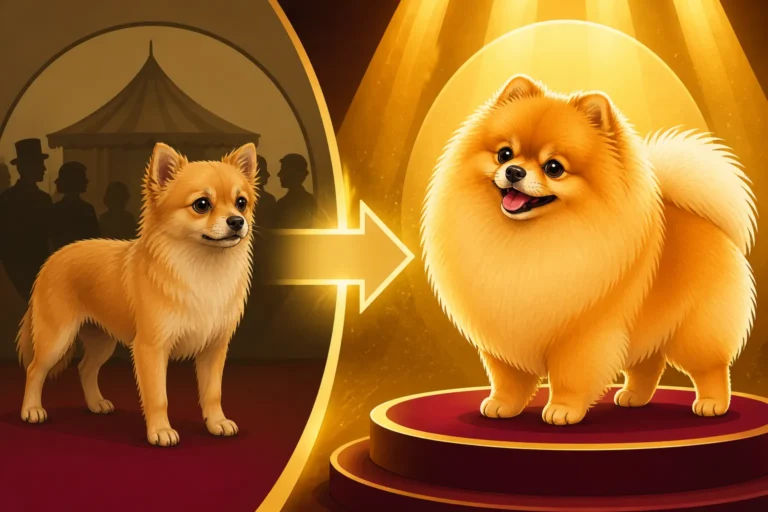
Imagine a dog weighing perhaps 20 to 30 pounds, possibly even more, with a thick double coat, pricked ears, and a watchful, intelligent expression. This was the Pomeranian's ancestor. These dogs hailed from the historical region of Pomerania, an area now split between Germany and Poland. They were essentially scaled-down versions of larger Spitz breeds, serving as farm dogs, herding animals, and general-purpose companions to the local populace. They were excellent watchdogs, their keen senses and alert nature making them invaluable for protecting property and livestock. Their robust build meant they could withstand the often-cold, damp weather of Northern Europe, and their intelligence made them trainable for various tasks. If you encountered one on a street in the early 1800s, you might mistake it for a small, sturdy farm dog, certainly not the regal little fluffball that would grace the laps of aristocracy. For more on their origins, consider The German Spitz Family a Pomeranian Belongs To and The Twenty Five Pound Pomeranian of the 1800s.
These early Pomeranians were admired for their resilience and loyalty. They weren't bred for show rings or fashion statements; their value lay in their utility and companionship. Their coats were dense and practical, providing insulation against the elements, and their size was conducive to an active life. While they possessed the characteristic Spitz traits – a foxy face, small erect ears, and a tail carried over the back – these features were more rugged and less refined than what we see in modern Poms. They truly embodied the spirit of the working Spitz, a testament to their northern heritage and purpose-driven breeding.
How Victoria Discovered the Breed
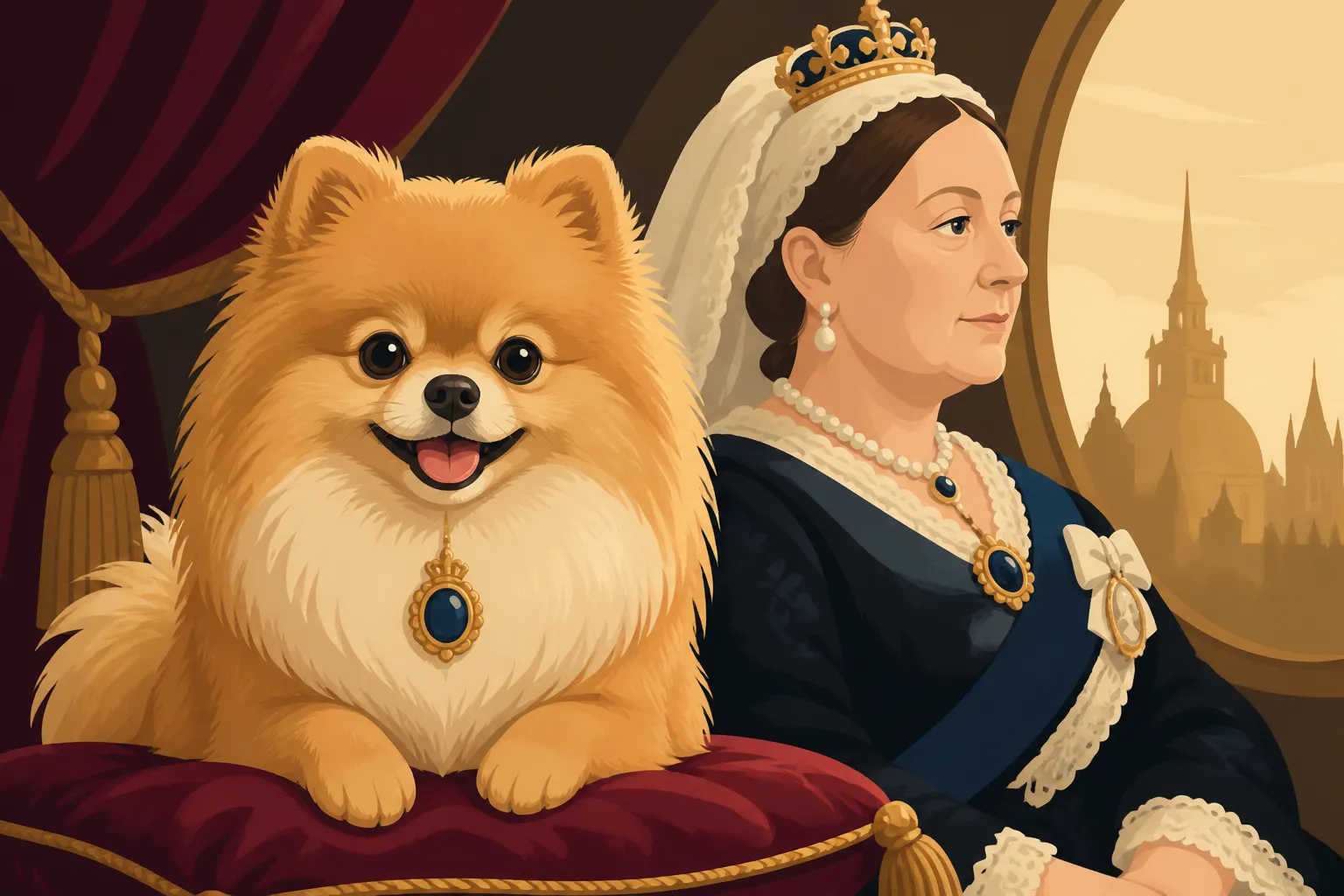
Queen Victoria, a keen dog lover throughout her life, had a particular soft spot for a variety of breeds. Her passion for canines led her to seek out new and interesting specimens during her travels across Europe. It was during a trip to Florence, Italy, in 1888, that she first encountered the dogs that would forever change the destiny of the Pomeranian breed. She was reportedly captivated by their vibrant personalities and compact, yet undeniably charming, appearance. While still larger than modern Poms, these Italian examples were smaller than the ones more commonly seen in Germany and Pomerania itself.
Victoria was instantly smitten, acquiring several of these "Spitz" dogs. It wasn't just their looks; it was their intelligence, their vivaciousness, and their affectionate nature that truly won her over. She was a monarch who valued companionship, and these dogs, with their alert expressions and lively dispositions, proved to be perfect confidantes. Her acquisition wasn't a fleeting fancy; she dedicated herself to their care and even took an active role in promoting them. Her passion was so strong that she established her own Pomeranian breeding kennel at Windsor, demonstrating a serious commitment to the breed's future. This royal patronage marked the unofficial beginning of the Pomeranian's transformation from a regional working dog to a beloved international companion. The specific lineage of some of these dogs is explored in The Italian Spitz Behind Victoria's Pomeranians.
Marco's Moment: The Pomeranian Who Captured a Queen's Heart
Among the dogs Queen Victoria brought back from Italy, one, in particular, stood out and earned a special place in her heart: Marco. His individual story is often cited as the primary catalyst for the dramatic shift in the breed's popularity and physical characteristics.
The Specifics of Marco and His Personality
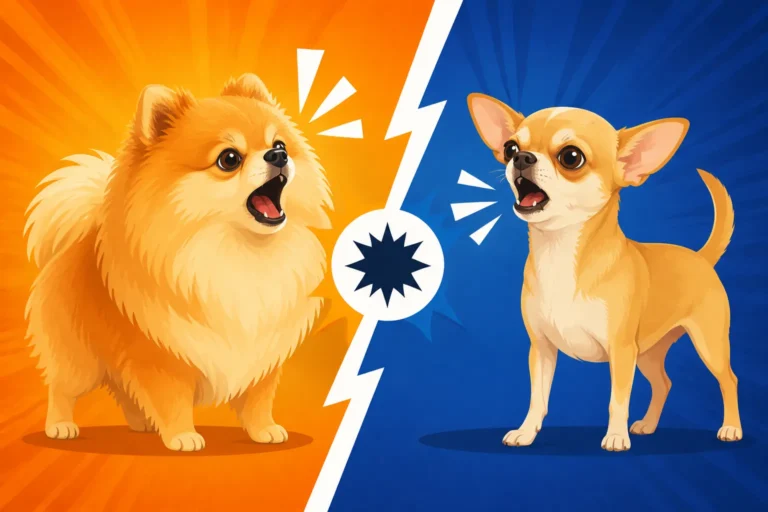
Marco was a striking little dog, especially for his era. While Queen Victoria acquired several Pomeranians during her trip to Florence, Marco was arguably the most famous and certainly the most influential. He reportedly weighed around 12 pounds, which, while still larger than today's show Pomeranians, was considerably smaller than the typical Pomeranians of the 19th century that often tipped the scales at 20-25 pounds or more. This relatively compact size was a significant factor in his appeal to the Queen. Marco wasn't just small; he was intelligent, lively, and possessed that quintessential Pomeranian spark. He was bold, curious, and utterly devoted to his royal owner, traits that only endeared him further to Victoria.
His rich sable coat and intelligent eyes, combined with his affectionate demeanor, made him an instant favorite. He quickly became the Queen's constant companion, accompanying her almost everywhere. This intimate relationship was crucial, as it showcased the breed not just as a pretty face, but as a loyal, engaging, and highly personable pet. Marco proved that these smaller Spitz dogs were more than just ornamental; they offered genuine companionship and could thrive in the close confines of royal life, which naturally resonated with the public's desire for similar domestic pets.
The Imperial Touch: Marco's Influence on Royal Life
Marco's presence in Queen Victoria's life wasn't merely a private affair; it was a public spectacle that dramatically elevated the Pomeranian's profile. As a monarch renowned for her love of animals, particularly dogs, any breed she favored instantly gained immense prestige and public interest. Marco was no exception. He was often seen by her side, a small, vibrant presence accompanying the most powerful woman in the world. This visibility was unprecedented for a breed previously relegated to obscurity.
Victoria ensured Marco's prominence, allowing him to be photographed and even exhibited in dog shows. This royal endorsement transformed the Pomeranian from a relatively unknown, larger Spitz type into a highly desirable accessory for the British aristocracy and, subsequently, the wider public. Imagine the impact of seeing the Queen herself proudly displaying her cherished little dog – it sent a clear message: the Pomeranian was a breed worthy of adoration. She owned a number of Pomeranians over the years, proving her continued devotion, as discussed in Whether Queen Victoria Owned More Than One Pomeranian. This imperial stamp of approval not only fueled a demand for the breed but also set the stage for its dramatic evolution in size and appearance over the following decades.
The Pivotal Year: 1888 and the Breed's Transformation
The year 1888 itself wasn't just when Queen Victoria acquired Marco; it was a watershed moment that culminated in a chain of events that reshaped the Pomeranian breed's future entirely. Her actions that year, and in the immediate aftermath, would have repercussions still felt today.
The Impact of Marco's Exhibition
While Queen Victoria acquired Marco and several other Pomeranians in Florence in 1888, the true "pivotal moment" often cited by breed historians relates to her decision to exhibit Marco and other Pomeranians at the Crufts dog show shortly thereafter. Crufts, already a prestigious event, gained an extraordinary level of public attention when it was known that the reigning monarch would be entering her own dogs. Marco, weighing in at a mere 12 pounds, was a sensation. This public display by Queen Victoria, personally endorsing and exhibiting her smaller Pomeranians, created an immediate and overwhelming demand for dogs of a similar stature.
Before this, the Pomeranian classes at dog shows were typically filled with much larger specimens, reflecting their historical working background. Marco's appearance shattered those expectations. The image of the powerful Queen with her delicate yet spirited companion captured the imagination of the public and breeders alike. This wasn't just about a dog winning a ribbon; it was about a royal seal of approval that effectively re-categorized the breed in the public consciousness. Suddenly, the smaller size was not just acceptable but highly desirable, marking a definitive turning point for the breed. The 1891 Show That Changed the Pomeranian further solidified this shift, but 1888 was the spark.
Shifting Desires: The Demand for Smaller Poms
The moment Marco stepped into the public eye alongside Queen Victoria, a seismic shift occurred in what people expected and desired from a Pomeranian. Before 1888, the general public wasn't clamoring for tiny companion dogs; the larger, more robust Spitz types were the norm. But with the Queen's visible preference for Marco, a dog weighing a mere 12 pounds, the fashion dramatically changed overnight. People wanted what the Queen had – a miniature version of the majestic Spitz. This wasn't just a slight preference; it became a strong market demand that breeders simply couldn't ignore.
Breeders, keen to capitalize on this newfound popularity, quickly began to focus their breeding programs on reducing the size of their dogs. The goal was to produce Pomeranians that mimicked Marco's delicate stature, or even smaller. This rapid selection for smaller specimens fundamentally altered the breed's genetic trajectory. It was a conscious effort to miniaturize, driven directly by royal taste. Without Victoria and Marco, it's highly probable that the Pomeranian might have remained a larger, working-type dog, or at least its miniaturization would have occurred far more gradually, if at all. This period directly led to How the Pomeranian Halved in Size in One Lifetime.
Breeding for Smallness: The New Pomeranian Standard
The demand for smaller Pomeranians, sparked by Queen Victoria's affection for Marco, led to an intentional and rapid breeding effort to reduce the breed's size. This wasn't merely a happy accident; it was a deliberate strategy that fundamentally reshaped the Pomeranian.
The Rapid Reduction in Size
Following 1888, breeders across England and Europe embarked on an intense period of selective breeding. Their primary objective was clear: produce Pomeranians that were significantly smaller than their ancestors. This meant carefully choosing the smallest dogs and bitches from litters, even if they might have been considered "runts" by previous standards, to carry on the desired trait. It was a challenging task, as reducing size too quickly can sometimes bring unforeseen health consequences, but the market demand was powerful. This wasn't just about shrinking the dog; it was about maintaining the breed's distinctive Spitz characteristics – the erect ears, the foxy face, and especially the glorious double coat – while drastically cutting down on their overall mass.
This process required a deep understanding of genetics, even if rudimentary by today's standards, and a keen eye for desired traits. Breeders would focus on dogs that showed a natural inclination towards a smaller frame, sometimes even cross-breeding carefully with other smaller toy breeds (though this was done cautiously to preserve the Pomeranian "type"). The result was a dramatic decrease in the average weight of the Pomeranian within just a few generations. By the turn of the 20th century, the 20-pound Pomeranian was largely a thing of the past, replaced by dogs weighing closer to 7-10 pounds, a clear step towards the toy breed we recognize. This intensive breeding showcases How Breeders Selected Pomeranians Down in Size.
Establishing the Modern Pomeranian Look
Beyond merely reducing size, the breeding efforts post-1888 also concentrated on refining the overall "look" of the Pomeranian to align with the emerging aesthetic preferences for a companion dog. While the larger ancestors certainly had double coats, the emphasis shifted to cultivating an even more profuse and stand-off coat that created the iconic "puffball" silhouette. Breeders meticulously selected for dogs with denser undercoats and longer, harsher guard hairs, enhancing the breed's luxurious appearance. The ruff around the neck and the plume of the tail, previously functional for warmth, became exaggerated for visual appeal, framing the face and adding to the toy-like charm.
The foxy expression was also refined, with breeders favoring smaller, more almond-shaped dark eyes and a shorter muzzle that still retained its wedge-like shape without being overly flat-faced. Ears became smaller and set high, contributing to the alert, intelligent gaze. The goal was to create a dog that, despite its diminutive size, exuded elegance and presence. This selective breeding resulted in a consistent "type" that was eventually codified in breed standards. The current The Weight the Pomeranian Standard Requires reflects this historical shift towards a much smaller, more refined animal, one that still proudly carries the distinct features cultivated during this pivotal period of development.
The Enduring Legacy: Victoria's Gift to the Pomeranian Breed
Queen Victoria's patronage and Marco's celebrity status had an irreversible impact on the Pomeranian breed, cementing its place as a beloved companion animal and influencing its trajectory for generations to come.
Popularity Boom and Global Spread
The "Victoria effect" wasn't confined to the British Isles; it sparked a global phenomenon. Once word spread that the Queen adored these small, spirited dogs, their popularity soared not only throughout England but also across Europe and eventually to North America. Suddenly, owning a Pomeranian became a status symbol, a subtle nod to royal taste and elegance. Breeders, recognizing the immense demand, began exporting these smaller, refined Poms to enthusiasts around the world. This marked the true beginning of the Pomeranian's journey to becoming an internationally recognized and cherished breed.
Dog clubs dedicated to the Pomeranian sprang up, breed standards were formalized, and the Pomeranian began to appear regularly in dog shows far beyond Crufts. The appeal was universal: a small size made them suitable for city living and easy travel, while their intelligent, affectionate nature made them ideal companions. This surge in popularity meant that many more breeding lines were established, further solidifying the breed's characteristics and ensuring its survival and proliferation. If you visit Chewy or any other major pet supply retailer, you'll see countless products tailored specifically for toy breeds like the Pomeranian, a testament to their enduring popularity. This widespread adoration led to The Countries Where Pomeranians Are Most Registered becoming a common occurrence.
A Lasting Image: The Pomeranian as a Companion Dog
Perhaps Queen Victoria's most profound legacy, alongside the breed's physical transformation, was solidifying the Pomeranian's role as the quintessential companion dog. Before her time, Pomeranians were more utilitarian, valued for their working capabilities or as hearty farm dogs. Victoria, however, cherished Marco and her other Poms specifically for their companionship, their warmth, and their ability to bring joy. This image of a powerful monarch finding solace and delight in her tiny canine friends resonated deeply with the public.
It shifted the perception of the Pomeranian from a working animal to a cherished member of the family, a role it continues to excel in today. The modern Pomeranian, with its compact size, affectionate demeanor, and undeniable charm, is a direct result of this historical shift in purpose. They are bred to be lap dogs, playmates, and loyal shadows, enriching the lives of their owners with their spirited personalities. Even in their later years, these dogs remain devoted companions, as explored in The Pomeranian That Sat With Victoria at the End. This enduring image is Victoria's gift to every Pomeranian owner: a legacy of companionship that makes these tiny dogs such magnificent additions to our lives.
From Farm Dog to Lap Dog: A Transformative Journey
The journey of the Pomeranian from its larger, working ancestors to the beloved toy breed of today is a fascinating one, undeniably shaped by the influence of Queen Victoria and her beloved Marco. Their story isn't just a historical footnote; it's the very foundation of the breed's modern identity.
| Feature | Pre-1888 Pomeranian (Ancestral Type) | Post-1888 Pomeranian (Victoria's Influence) |
|---|---|---|
| Typical Weight | 20-30+ pounds | 10-15 pounds (initially), trending towards 3-7 pounds |
| Primary Role | Farm dog, herding, watchdog | Companion, lap dog, show dog |
| Appearance | More robust, sturdy, less refined | Daintier, more profuse coat, refined features |
| Coat Emphasis | Functional for warmth and protection | Exaggerated for aesthetics, dense, stand-off |
| Public Perception | Regional, utilitarian | Prestigious, fashionable, royal favorite |
| Breeding Focus | Hardiness, working ability | Size reduction, refinement, companion traits |
| Visibility | Limited to specific regions and communities | International acclaim, widespread popularity |
This table clearly illustrates the dramatic shift in the Pomeranian's characteristics and role. From a sturdy, utilitarian dog, it was transformed into a delicate yet spirited companion, perfectly suited for domestic life. This evolution highlights the powerful impact that cultural trends and influential figures can have on breed development.
When you bring home a new Pomeranian puppy, perhaps ordering their first collar, leash, or cozy bed from a pet supplier like Chewy, remember that little Marco and Queen Victoria played a huge part in making that tiny bundle of joy a reality. Their legacy isn't just in the breed's size, but in the very idea of the Pomeranian as a devoted, loving, and utterly captivating companion. It's a history that reminds us how deeply intertwined human affection and canine evolution can become, creating the wonderful dogs we share our lives with today. For tips on caring for that magnificent double coat, check out The Double Coat That Makes a Pomeranian and Why It Stays On, and for understanding their nutritional needs, see Feeding a Dog That Weighs What a Pomeranian Weighs.
Disclaimer
This article is for general informational purposes only and does not constitute professional advice. Laws, prices and regulations vary by location and change over time. Consult a qualified professional for guidance on your specific situation.