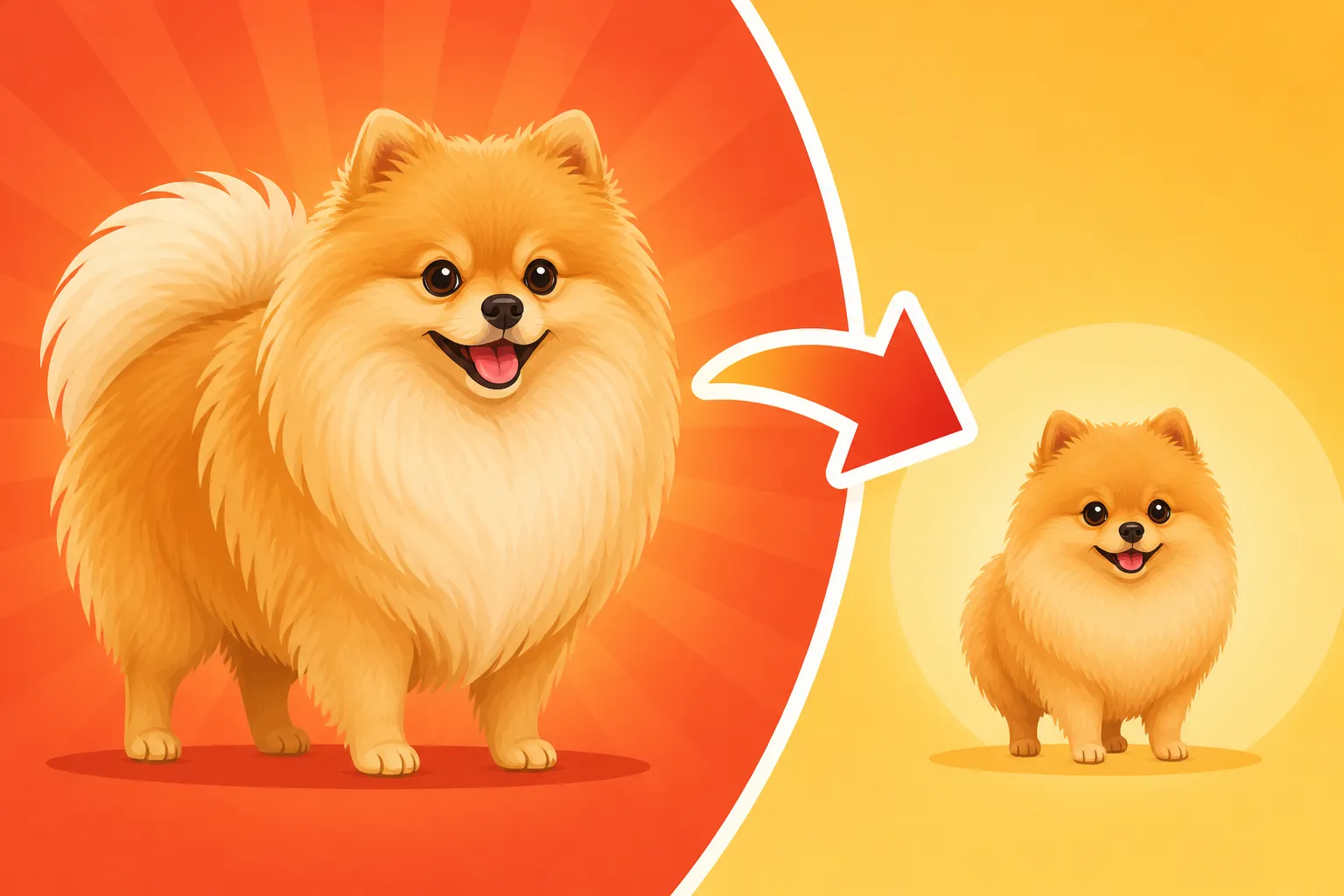
How the Pomeranian Halved in Size in One Lifetime
It's easy to look at a Pomeranian today, tucked into a handbag or curled up on a lap, and assume they've always been this tiny. But for those of us who have delved into the breed's rich history, there's a fascinating truth: the Pomeranian we know and love today is drastically smaller than their ancestors. This dramatic reduction in size, almost by half, happened incredibly quickly, largely within a single human lifetime, and it forever changed the breed.
The Ancestral Giants: Tracing the Pomeranian's Northern European Lineage
Before they became the fluffy, diminutive companions we adore, Pomeranians hailed from a line of much larger, robust working dogs. Understanding their origins helps us truly appreciate the transformation they underwent. These weren't delicate lap warmers; they were dogs built for colder climates and active lives.
From Working Dogs to Companions: The Original Spitz Breeds
The Pomeranian belongs to the ancient Spitz family of dogs, a group characterized by their thick double coats, erect ears, and tails that curl over their backs. These dogs originated in northern Europe and Asia, where they were prized for their resilience and utility in harsh environments. Think of breeds like the Samoyed, Norwegian Elkhound, or Keeshond – these are the distant cousins, hinting at the Pomeranian's more substantial past. Their roles were varied and demanding, ranging from pulling small sleds and herding livestock to guarding homes and property.
In their homeland of Pomerania, a historical region spanning parts of modern-day Germany and Poland, these dogs were known simply as Spitz. They were rugged, intelligent, and capable of enduring cold weather and long working days. Their size was an asset, allowing them to handle farm chores and stand their ground. To learn more about their working past, check out Pomerania and the Sled Dogs Behind the Pomeranian and The German Spitz Family a Pomeranian Belongs To.
Envisioning the Early Pomeranian: A Twenty-Five Pound Powerhouse
Imagine a Pomeranian that weighs closer to twenty-five or even thirty pounds. That’s roughly the size of many of these early dogs in the 1800s. They were sturdy, with strong bones and a more elongated body structure than the compact form we see today. Their faces were often more fox-like, with a longer muzzle, reflecting their working dog heritage rather than the "baby doll" or "teddy bear" faces some seek now.
These larger Poms had the same glorious double coat, but perhaps it wasn't quite as profuse or "stand-off" as the modern show dog's. Their presence would have been more commanding, their bark deeper, and their overall demeanor less "toy dog" and more "miniature guard dog." When we discuss The Twenty Five Pound Pomeranian of the 1800s, it truly puts into perspective the massive shift in breeding goals.
Life's Work: What the Larger Pomeranian Was Bred For
These formidable ancestors weren't just decorative; they had jobs to do. They were adept at guarding livestock, alerting farmers to intruders with their keen senses and alert barking. Their thick coats protected them from the elements while they worked outdoors, whether herding ducks or simply keeping watch over the farmyard. Their size made them robust enough to handle the rigors of farm life, yet small enough to be manageable companions for their human families.
The idea of a Pomeranian being an essential part of a working farm might seem foreign today, but it speaks volumes about their inherent intelligence, bravery, and durability before the push for miniaturization began. They were dogs of substance, earning their keep and commanding respect.
The Royal Catalyst: Queen Victoria's Impact on Pomeranian Size
The shift from a robust farm dog to a delicate lapdog can largely be attributed to one incredibly influential person: Queen Victoria of England. Her personal preference dramatically altered the trajectory of the breed, popularizing the smaller version and setting a new trend for breeders.
A Queen's Affection: Marco and the Rise of the Smaller Pom
Queen Victoria was a passionate dog lover, and during a trip to Florence, Italy, in 1888, she encountered a Pomeranian named Marco. What set Marco apart from the typical Poms of the time was his relatively small size—he weighed only about 12 pounds. This was still larger than today's standard, but significantly smaller than the 20-30 pound dogs that were common. Victoria was captivated. She brought Marco home, and his presence in the royal household immediately drew attention to the smaller type of Pomeranian.
Marco's influence was profound. He was shown at Crufts in 1891, a pivotal moment that cemented the smaller Pomeranian's appeal. Suddenly, everyone wanted a Pomeranian like the Queen's, and breeders began to focus on producing tinier versions to meet this burgeoning demand. This royal endorsement was the single most important factor in the breed's rapid miniaturization. Dive deeper into this history with Queen Victoria, Marco and the Pomeranian and The 1891 Show That Changed the Pomeranian.
The Art of Miniaturization: How Breeders Achieved the Smaller Stature
Once Queen Victoria's preference for smaller Pomeranians became clear, breeders across Europe, especially in England, began a deliberate program of selective breeding. This involved carefully selecting the smallest, most diminutive individuals from each litter to breed together. Over successive generations, this focused effort gradually reduced the average size of the Pomeranian. It was a conscious and intensive process aimed at refining the breed's appearance to match the new ideal.
This wasn't just about size; breeders also started emphasizing traits like a more compact body, a shorter muzzle to create a "baby doll" or "fox-like" expression, and an even more abundant, "stand-off" coat. The goal was to create a truly exquisite companion dog, perfectly suited for aristocratic laps and elegant homes, a stark contrast to their working ancestors. You can learn more about this process in How Breeders Selected Pomeranians Down in Size.
The Race for the Ring: Show Standards and the Demand for Petite Poms
The burgeoning popularity of dog shows in the late 19th and early 20th centuries further fueled the drive for miniaturization. Show rings became the arena where breeders competed to produce the "best" examples of the breed, and increasingly, "best" meant "smallest." Breed standards were developed and revised to reflect this shift, with lower weight and height requirements becoming the norm. Judges favored the tiny, heavily coated specimens, reinforcing the breeding trends.
This competitive environment meant that any dog falling outside the increasingly small size requirements was often overlooked for breeding. The demand for petite Poms wasn't just a fleeting fashion; it became enshrined in the very definition of the breed, creating a powerful incentive for breeders to continue selecting for smaller and smaller dogs.
From Robust to Refined: The Modern Pomeranian's Diminutive Size
Today, the Pomeranian is firmly established as a toy breed, and their small size is one of their most defining characteristics. It's a direct result of those decades of careful, and sometimes intense, selective breeding.
Defining the Standard: Today's Ideal Weight and Height
The current breed standards across major kennel clubs generally define the ideal Pomeranian weight as falling between three and seven pounds. Their height typically ranges from six to seven inches at the withers. This is a far cry from their twenty-five-pound ancestors! This specific size range is considered optimal, balancing the desire for a small, portable companion with the need for a healthy, structurally sound dog.
While some individuals might fall slightly outside this range, these guidelines serve as the benchmark for what constitutes a well-bred, type-correct Pomeranian today. For a detailed breakdown, see The Three to Seven Pounds a Pomeranian Is Allowed. These small dimensions mean everything from their food portions to their required living space is dramatically different from their larger progenitors.
A Historical Comparison: Would Victoria's Poms Meet Today's Criteria?
It's a fascinating thought experiment: if Queen Victoria's beloved Marco, at around 12 pounds, were to enter a modern dog show, would he even be recognized as a Pomeranian, let alone place in the ribbons? The answer is almost certainly no. Marco would be considered too large by today's breed standards. The ideal Pomeranian of the late 19th century was still a work in progress, a transitional form between the larger ancestors and the truly tiny dogs we see now.
This comparison highlights just how much the breed evolved in such a short period. The characteristics that breeders now strive for—extreme compactness, very short muzzle, and dense, stand-off coat—were still developing during Victoria's time. This sheds light on Whether Victoria's Dogs Would Be Pomeranians Today.
Beyond Size: The Signature Stand-Off Coat
While size was the primary focus of miniaturization, the Pomeranian's iconic coat also underwent significant development. The desire for a more profuse, "stand-off" double coat, giving them their characteristic fluffy, rounded appearance, was another key trait breeders cultivated. This opulent coat, with its dense undercoat and long, straight guard hairs, became just as defining as their small stature.
Achieving this coat requires careful breeding and dedicated grooming. It's a hallmark of the breed, contributing greatly to their overall appeal and distinguishing them from other Spitz breeds. Understanding The Stand Off Coat a Pomeranian Must Have is crucial for any Pom owner. This luxurious coat, alongside their tiny size, solidified the Pomeranian's image as a captivating companion animal.
The Double-Edged Sword of Miniaturization: Health and Breeding Concerns
While the creation of the petite Pomeranian brought immense popularity and joy to countless owners, such rapid and intense selective breeding for size isn't without its challenges and potential downsides, particularly regarding health.
The Risks of Extreme Smallness: What "Teacup" Breeding Costs
The drive for ever-smaller Pomeranians has led some breeders to aim for dogs well below the established three-pound minimum. These ultra-tiny dogs are often marketed as "teacups." While adorable, breeding for such extreme smallness can unfortunately come with significant health risks. These tiny individuals may suffer from fragile bones, making them more prone to fractures from even minor falls. They can also be more susceptible to hypoglycemia (low blood sugar), especially as puppies, due to their underdeveloped metabolic systems.
Other issues can include a delicate immune system, dental problems due to crowded jaws, and an increased risk of hydrocephalus, a condition where fluid builds up in the brain. The financial and emotional toll on owners of "teacup" Pomeranians can be substantial. For more on this, consider The Health Cost of Breeding Pomeranians Under Three Pounds and Whether a Teacup Pomeranian Is Structurally Sound. Reputable breeders prioritize health and temperament over extreme size.
The Debate: Is the Pomeranian Being Bred Too Small?
Among responsible breeders and Pomeranian enthusiasts, there's an ongoing discussion about whether the breed is, in some instances, being bred too small. The consensus is that while the standard range of 3-7 pounds is generally healthy, pushing beyond the lower end of that spectrum can introduce unnecessary risks. The goal should always be to produce dogs that are not only beautiful and true to type but also robust and healthy.
This debate often centers on finding the balance between aesthetic appeal and canine welfare. Many believe that sacrificing health for minuscule size is a disservice to the breed and to the future well-being of these beloved companions. Exploring Whether the Pomeranian Is Being Bred Too Small delves into the nuances of this important conversation.
Genetic Considerations and Responsible Breeding Practices
Responsible breeders understand that the intense selection for small size can sometimes inadvertently concentrate other genetic traits, both good and bad. This is why thorough health testing of breeding dogs is paramount. Parents should be screened for common conditions that can affect Pomeranians, such as luxating patellas (slipping kneecaps), cardiac issues, and eye problems.
A good breeder will aim for dogs within the healthy size standard, prioritizing genetic diversity and overall health clearances to ensure they are producing sound puppies. They strive to avoid perpetuating any genetic weaknesses that might arise from over-focusing solely on size. This commitment helps safeguard the breed's future, ensuring that Pomeranians remain cherished companions for generations to come.
Living with a Modern Pomeranian: Adapting to Their Small Stature
Owning a modern Pomeranian means embracing their tiny size and all the unique care considerations that come with it. From their daily needs to ensuring their safety, life with a small Pom requires a thoughtful approach.
Tailored Care: Meeting the Needs of a Tiny Companion
Because of their diminutive size, modern Pomeranians have very specific care requirements. Their meals, for instance, are incredibly small. A five-pound Pomeranian might only eat a quarter to a half cup of high-quality kibble per day, divided into several tiny meals, especially when they're puppies to prevent blood sugar drops. Owners often find themselves searching for small-breed specific kibble that is perfectly sized for their tiny mouths and delicate digestive systems, and sites like Chewy offer a fantastic array of choices.
Grooming, too, is a tailored affair. Their abundant double coat, while beautiful, requires regular brushing to prevent mats, but you need brushes and combs appropriate for their small bodies. Even toys need to be chosen carefully; anything too large or hard could pose a choking hazard or damage their small teeth.
Protecting Fragile Bodies: Preventing Injuries and Accidents
A Pomeranian's small stature also means they are more prone to certain types of injuries. A fall from a sofa or bed, which a larger dog might shrug off, can result in a serious fracture for a tiny Pom. Their delicate windpipes are also a concern, making harnesses a much safer option than collars for walks.
Owners must be vigilant about "small dog syndrome," not just in terms of behavior, but in terms of physical protection. This means ensuring children are taught how to interact gently with them, making sure larger pets understand their fragility, and even Pomeranian-proofing the home by providing ramps or steps for furniture. Why Jumping Off Furniture Wrecks a Pomeranian's Knees is a prime example of a common household risk. Many owners find appropriate ramps and steps, along with tiny harnesses, easily on Chewy.
The Heart of a Lion in a Teeny Body: Temperament and Personality
Despite their dramatic reduction in size, Pomeranians have largely retained the bold, inquisitive, and intelligent spirit of their larger Spitz ancestors. They are often described as having a "big dog personality" in a small package. They are alert, curious, and notoriously brave, sometimes to their own detriment when encountering much larger dogs or perceived threats.
This strong personality means they benefit immensely from early socialization and consistent training. They might be small, but they thrive on mental stimulation and a clear understanding of boundaries. Their tiny bodies house a spirited, loyal companion who, with proper care and training, brings endless joy and character to their families.
Historical Size Comparison of Pomeranians
To truly grasp the transformation of the Pomeranian, let's look at a side-by-side comparison of their historical and modern characteristics.
| Feature | Early Pomeranian (1800s) | Modern Pomeranian (Today) |
|---|---|---|
| Average Weight | 20-30+ pounds | 3-7 pounds |
| Average Height | Roughly 12+ inches at the withers | 6-7 inches at the withers |
| Primary Role | Farm work, guarding, herding | Companion animal, show dog |
| Muzzle Type | Longer, more fox-like | Shorter, more compact (fox/baby doll) |
| Bone Structure | More robust, sturdy | Finer boned, delicate |
| Coat Profuseness | Thick, weather-resistant double coat | Extremely dense, "stand-off" double coat |
| Prominent Factor | Utility, working ability | Aesthetics, companionship |
| Health Concerns | Fewer related to size | Potential issues with extreme miniaturization |
Disclaimer
This article is for general informational purposes only and does not constitute professional advice. Laws, prices and regulations vary by location and change over time. Consult a qualified professional for guidance on your specific situation.