The Twenty Five Pound Pomeranian of the 1800s
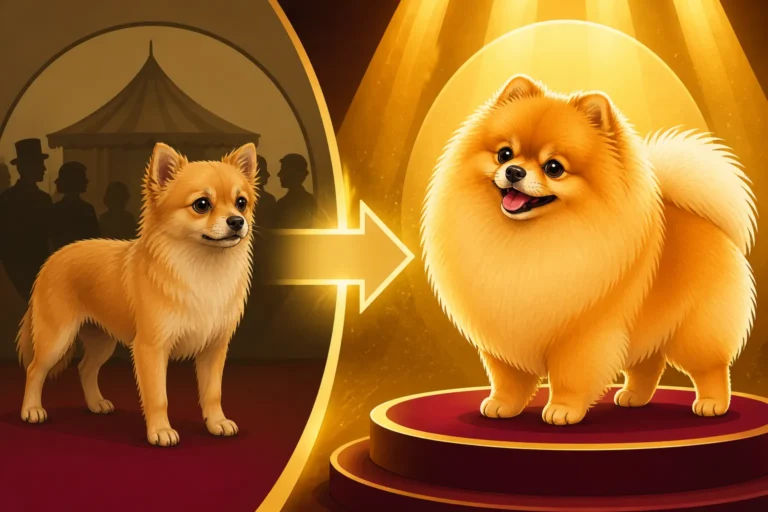
We all picture those fluffy little bundles of joy, weighing just a few pounds, scampering around our homes. It's almost hard to imagine a Pomeranian that tips the scales at 25 pounds, isn't it? The tiny, spirited companion we know today feels a world away from such a description. But believe it or not, that's precisely what many of their ancestors looked like back in the 1800s. This guide will take you on a fascinating journey to explore the surprising history of the Pomeranian, revealing how these once much larger, robust dogs transformed into the delicate, beloved companions we adore today, a transformation driven by selective breeding and royal preference.
The Pomeranian's Stout Northern Ancestry
It’s easy to look at a modern Pomeranian, with its dainty paws and delicate frame, and assume it always existed in this miniature form. But the truth is, our little fluffballs descend from much larger, hardier working dogs of the Arctic and Northern European regions. They carry the ancient lineage of the Spitz family, a group known for their thick coats, pointed ears, curled tails, and impressive resilience. This heritage paints a very different picture from the lapdog image many of us hold.
The Working Spitz the Pomeranian Descends From
Imagine dogs built for endurance, braving harsh climates and performing essential tasks alongside humans. That's the blueprint from which the Pomeranian emerged. Their ancestors include larger German Spitz varieties, like the German Spitz (Mittel) and the German Spitz (Gross), and even more imposing breeds like the Samoyed and Norwegian Elkhound. These dogs weren't bred for their ability to fit into a handbag; they were bred for their working prowess. They needed stamina, intelligence, and a sturdy physique to survive and thrive in challenging environments.
These larger Spitz dogs were invaluable to their human companions. They served as guard dogs, keeping watch over homes and livestock, their keen senses and alert barking making them excellent sentinels. Their thick double coats, a hallmark of the Spitz family and something our modern Pomeranians still proudly wear, provided crucial insulation against freezing temperatures. This ancestral trait helps us understand why The Double Coat That Makes a Pomeranian and Why It Stays On is so unique and important for the breed, even if they're now primarily indoor pets.
Whether the Pomeranian Was Ever a Sled Dog
While the Pomeranian itself was not a sled dog in the traditional sense, its larger ancestors certainly shared genetic links with those magnificent dogs that pulled sleds across icy landscapes. The common thread among these breeds is their "Spitz" type, which refers to a specific look and set of characteristics – wedge-shaped heads, small erect ears, and tails that curl over their backs. These traits are evident in everything from the mighty Siberian Husky to our tiny Pomeranian.
The idea that a Pomeranian, even a larger 1800s version, could pull a sled seems comical today. However, their distant relatives, particularly those originating further north, were absolutely used for hauling and transport. The smaller German Spitz varieties, while not pulling sleds, were more commonly employed as farm dogs and guardians. They were robust, alert, and capable of covering ground, far from the fragile image often associated with the modern toy breed. Their purpose was practical, not purely ornamental.
Life in Pomerania: Their Original Home and Purpose
The very name "Pomeranian" gives us a direct clue to their origins. This breed isn't named for a fanciful trait or a celebrated breeder, but for a specific geographical region where they truly blossomed and became recognized. Understanding this region and its history is key to appreciating the initial development of these dogs, before their dramatic size reduction.
Where Pomerania Sits and Why the Breed Is Named for It
Pomerania is a historical region in Central Europe, situated along the southern coast of the Baltic Sea, divided between present-day Germany and Poland. It's a land of forests, lakes, and a rugged coastline, known for its agricultural roots and maritime activities. It was in this area, populated by industrious farming communities and coastal towns, that the larger German Spitz dogs thrived and became known as the "Pomeranian."
These dogs were essentially the regional Spitz type that had been bred and developed there for generations. They weren't just random canines; they were an integral part of the working landscape, valued for their intelligence, loyalty, and protective instincts. The name stuck, even as the dogs later migrated and underwent significant changes, forever linking them to this fascinating European locale. Which Country the Pomeranian's Homeland Is In Now provides more insight into the modern geographical context of this historic region.
What the Original Pomeranian Was Kept For
The Pomeranian's ancestors, the 20-25 pound dogs of the 18th and early 19th centuries, were far from lap companions. Their primary roles were those of working farm dogs. They were superb guardians, possessing a keen awareness of their surroundings and a ready bark to alert their owners to anything unusual. Whether it was a stranger approaching the property, an animal straying too close to the livestock, or simply an unexpected noise in the night, these dogs were on high alert.
Beyond their watch-dog duties, they also likely played a role in herding and general farm utility. They were versatile dogs, robust enough to handle the daily grind of farm life, agile enough to chase off small pests, and intelligent enough to be reliable companions. Their thick coats, which we now primp and brush for beauty, were then a necessary shield against the elements, allowing them to spend significant time outdoors. This history is why, even today, some Pomeranians retain a surprising amount of independence and a strong, confident bark despite their small stature.
Queen Victoria's Influence: The Turning Point for Size
While larger Pomeranians had been known in Europe for centuries, their destiny took a dramatic turn with the arrival of one particularly influential figure: Queen Victoria. Her love for the breed, and specifically for smaller specimens, sparked a breeding revolution that irrevocably changed the Pomeranian from a sturdy working dog to a dainty companion.
The Twenty Five Pound Pomeranian of the 1800s
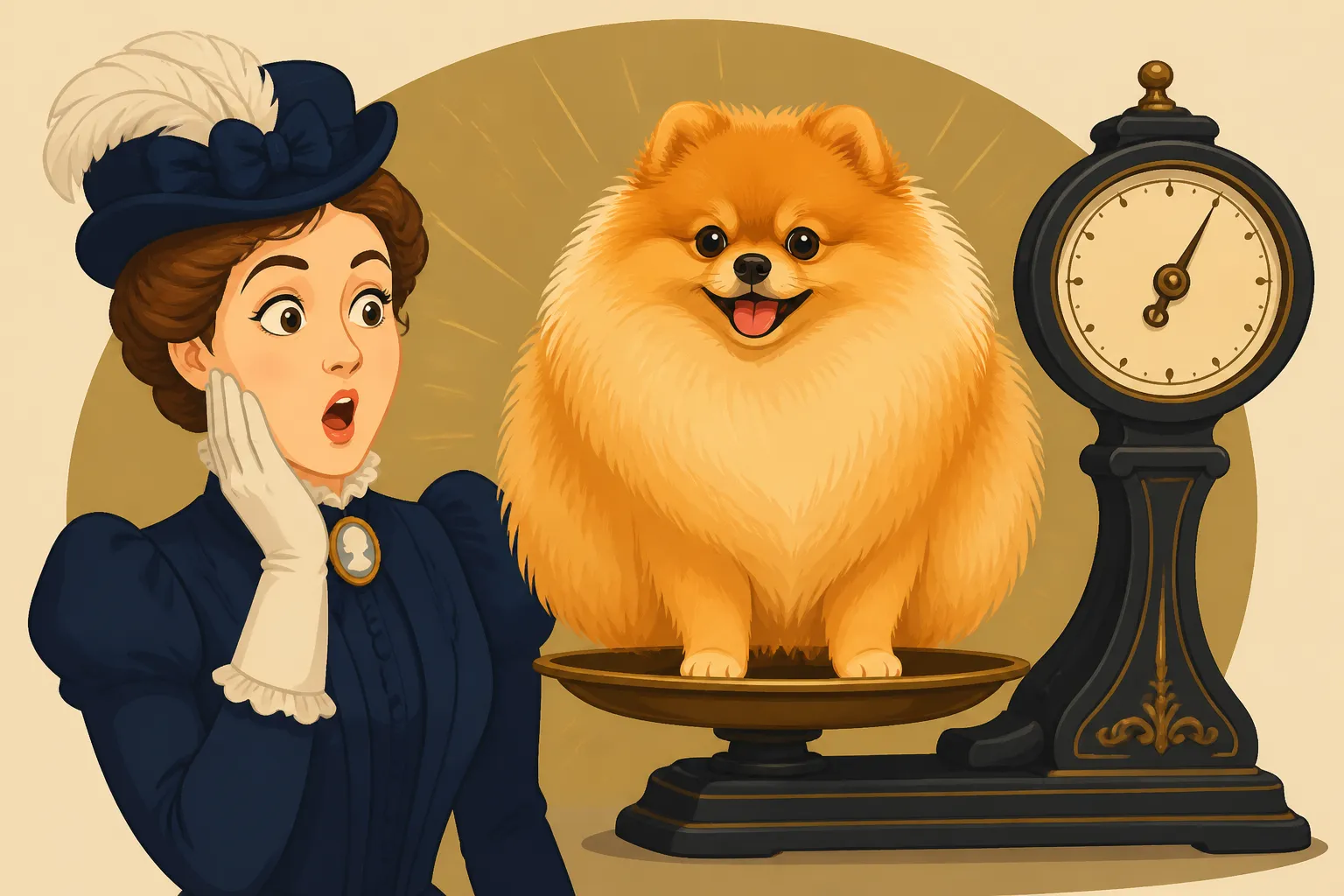
Before Queen Victoria's reign, Pomeranians were generally much larger. Historical records and illustrations from the 18th and early 19th centuries depict dogs weighing anywhere from 10 to 25 pounds, sometimes even more. These dogs were substantial, with strong bone structure and broad chests, reflecting their working dog heritage. They were often white, black, or cream in color, and while fluffy, their coats weren't always as profuse as the modern show-ring Pomeranian.
Imagine a dog that's roughly the size of a modern Shetland Sheepdog or a larger Beagle, but with that distinctive Spitz appearance – curled tail, pointed ears, and a dense coat. That's closer to the Pomeranian of the early 1800s. They were admired for their intelligence and vibrant personalities, but their size certainly placed them outside the "toy dog" category we associate with them today. This larger size was simply the norm, a natural expression of their ancestral type, rather than a deviation.
How Breeders Selected Pomeranians Down in Size
The real shift began in 1888 when Queen Victoria visited Florence, Italy, and fell in love with a small red sable Pomeranian named Marco. Marco reportedly weighed around 12 pounds, a much smaller size than was typical for the breed at the time. The Queen was captivated by his diminutive stature and brought him back to England, where she began to breed Pomeranians with a clear preference for smaller dogs. Her influence was immense, and suddenly, the "smaller is better" trend took hold.
Breeders, eager to cater to royal preference and the surging demand from the aristocracy and fashionable society, began selectively breeding the smallest Poms from their litters. This meant intentionally pairing smaller individuals together, over multiple generations, to reduce the overall size of the breed. It was a conscious and sustained effort, focusing on those puppies that were naturally smaller or considered "runts" by previous standards. This intensive breeding program drastically altered the Pomeranian's physical characteristics, shrinking them from their 25-pound ancestors to the much lighter dogs we recognize today. This rapid reduction in size, while creating the popular toy breed, also sometimes came with health considerations, which is something we discuss further in What Teacup Breeding Costs a Pomeranian.
Modern Pomeranian vs. Ancestor: A Tale of Two Sizes
The transformation of the Pomeranian is one of the most remarkable stories in dog breeding. From robust working dogs to delicate companions, their evolution highlights the power of selective breeding. Comparing today's Pomeranian to its 1800s ancestor reveals just how profound this change truly was.
Whether Victoria's Dogs Would Be Pomeranians Today
It’s an interesting thought experiment: if Queen Victoria's beloved Marco, at his 12 pounds, were to enter a modern dog show, would he be recognized as a Pomeranian? The answer is complex. While he undoubtedly had the foundational characteristics – the fluffy coat, pointed ears, and curled tail – his size would likely place him outside the ideal range for today's show ring. The modern breed standard generally calls for Pomeranians weighing between 3 and 7 pounds, with many show dogs falling on the lower end of that spectrum.
Marco's 12 pounds, while small for his era, would be considered quite large by contemporary standards. He might be registered as a Pomeranian based on lineage, but in terms of conforming to the breed's current aesthetic, he would be an anomaly. This illustrates just how dramatically the breed has been refined over the last century and a half. The focus shifted not just to smaller size but also to more profuse coats, shorter muzzles, and a more compact body type. You can learn more about these changes in How the Pomeranian Halved in Size in One Lifetime.
The German Spitz Sizes Above the Pomeranian
To truly understand the legacy of the larger Pomeranian, we need to look at its close relatives within the German Spitz family. These breeds have largely maintained the larger sizes that were once common for the Pomeranian. They represent the "before" picture, showcasing what the Pomeranian's ancestors looked like before Victoria's influence took full effect.
| German Spitz Variety | Approximate Weight Range (Adult) | Typical Role/Characteristics |
|---|---|---|
| Keeshond | 35-45 pounds | Companion, watch dog |
| German Spitz (Gross) | 38-45 pounds | Farm guard, companion |
| German Spitz (Mittel) | 23-29 pounds | Farm guard, companion |
| Pomeranian | 3-7 pounds | Companion, lap dog |
As you can see from the table above, the German Spitz (Mittel), or Medium German Spitz, is a direct size echo of the 25-pound Pomeranians of the 1800s. These dogs share many physical and temperamental traits with our modern Poms but on a much larger scale. They are robust, alert, and possess that characteristic "Spitz smile." Seeing a Mittel Spitz today is almost like glimpsing a living portrait of the Pomeranian's past. While you might not find specific Mittel Spitz food or accessories at your local Chewy, you can certainly find large-breed equivalents that would suit their needs. These relatives remind us of the incredible journey the Pomeranian has taken, from a sturdy farm dog to the miniature darling of today.
Why the Size Reduction Mattered for Health
The dramatic reduction in the Pomeranian's size, while fulfilling a demand for smaller companion animals, wasn't without its consequences. Rapid selective breeding for extreme traits can often lead to a concentration of certain health issues. It's a trade-off that many breeds have faced, and the Pomeranian is no exception. Understanding this history helps us be more vigilant about their care today.
The Impact on Bone Structure and Fragility
When you take a dog designed to be sturdy and reduce its size by a factor of four or five within a few generations, there's bound to be an impact on its physical structure. The bones become finer, the joints smaller, and the overall frame more delicate. This increased fragility means that modern Pomeranians are more susceptible to certain orthopedic problems that their larger ancestors might have shrugged off.
For instance, Slipping Kneecaps in a Five Pound Pomeranian, medically known as patellar luxation, is a common issue in the breed. A simple jump off a sofa, which wouldn't phase a 25-pound farm dog, can cause significant injury to a small Pomeranian's knee. Similarly, the delicate nature of their throats makes them prone to The Honking Cough of a Pomeranian's Collapsing Windpipe, a condition rarely seen in larger, more robust Spitz varieties. Owners today must be incredibly mindful of these vulnerabilities, ensuring their homes are Pomeranian-proofed with ramps and steps, and being cautious during play. Even simple products from retailers like Chewy, such as elevated food bowls or small breed specific harnesses, can make a huge difference in their daily well-being.
Increased Susceptibility to Specific Conditions
Beyond orthopedic issues, the drive for extreme miniaturization and certain aesthetic traits has also led to a higher prevalence of other health concerns in the modern Pomeranian. The very traits that make them so adorable – their tiny size, profuse coats, and compact heads – can sometimes predispose them to specific problems.
For example, toy breeds, including Pomeranians, can be prone to Blood Sugar Crashes in a Pomeranian Puppy, or hypoglycemia, especially as young puppies. Their small bodies have less glycogen storage, making it crucial to feed them frequently. Dental problems are another significant concern; their small mouths often struggle to accommodate all their teeth, leading to crowding, decay, and early tooth loss. Dental Disease in a Mouth the Size of a Pomeranian's is a stark reality for many Pom owners, requiring diligent home care and regular veterinary dentals. While the 1800s Pomeranian might have had a more robust jaw and fewer issues with overcrowding, the compact skulls of their descendants present a new set of challenges that modern owners must actively manage.
Breeding Practices and the Future of the Pomeranian
The journey of the Pomeranian from a sizable working dog to a beloved toy companion is a testament to selective breeding. However, it also serves as a reminder of the responsibilities that come with shaping a breed. Responsible breeding practices are crucial for ensuring the long-term health and well-being of these wonderful dogs.
The Role of Responsible Breeders Today
Today's responsible Pomeranian breeders understand the breed's history and the potential pitfalls of breeding for extreme traits. They prioritize health, temperament, and structural soundness over simply producing the smallest or most "fashionable" dogs. This means carefully screening breeding stock for genetic health issues common in the breed, such as patellar luxation, cardiac conditions, and eye problems. They aim to produce dogs that conform to the breed standard, which typically outlines a healthy size range, without going to extremes.
These breeders also focus on providing proper nutrition, early socialization, and a healthy environment for their puppies, ensuring they get the best start in life. They are transparent about their dogs' health clearances and are happy to discuss the lineage and care practices. When looking for a Pomeranian puppy, seeking out a breeder who prioritizes these aspects is paramount to bringing home a healthy, well-adjusted companion who embodies the best of both the modern Pomeranian and its resilient ancestors. Reputable breeders often recommend specific small breed puppy foods, available through retailers like Chewy, to support proper development.
Balancing Historical Type with Modern Standards
The challenge for Pomeranian enthusiasts and breeders today is to find a balance. While the tiny, fluffy companion is undeniably popular, there's a growing appreciation for maintaining structural integrity and avoiding the health problems associated with excessively small or "teacup" breeding. The breed standard serves as a guide, outlining the ideal characteristics for a healthy and typical Pomeranian.
While we certainly won't be seeing 25-pound Pomeranians again in the show ring, there is a thoughtful conversation within the breed community about ensuring that dogs are not bred to be so fragile that they suffer from preventable ailments. The goal is to celebrate the Pomeranian's unique charm while safeguarding its health and longevity. Understanding their journey from a larger, more robust past helps us appreciate the care and responsibility needed to preserve their future. Discussions about The Three to Seven Pounds a Pomeranian Is Allowed highlight these ongoing efforts to maintain a healthy and appropriate size for the breed, ensuring they can enjoy long, happy lives free from unnecessary health complications.
Disclaimer
This article is for general informational purposes only and does not constitute professional advice. Laws, prices and regulations vary by location and change over time. Consult a qualified professional for guidance on your specific situation.