Pomeranian or Yorkshire Terrier for Coat Work
Choosing between a Pomeranian and a Yorkshire Terrier for coat work is not simply a choice between a fluffy dog and a silky one. A Pomeranian sheds and needs careful brushing through a dense double coat; a Yorkie’s long, fine hair tangles and keeps growing. This guide explains the daily upkeep, grooming styles, tools, and trade-offs so you can picture the real routine.
Pomeranian and Yorkshire Terrier coats compared
The basic difference between the coats
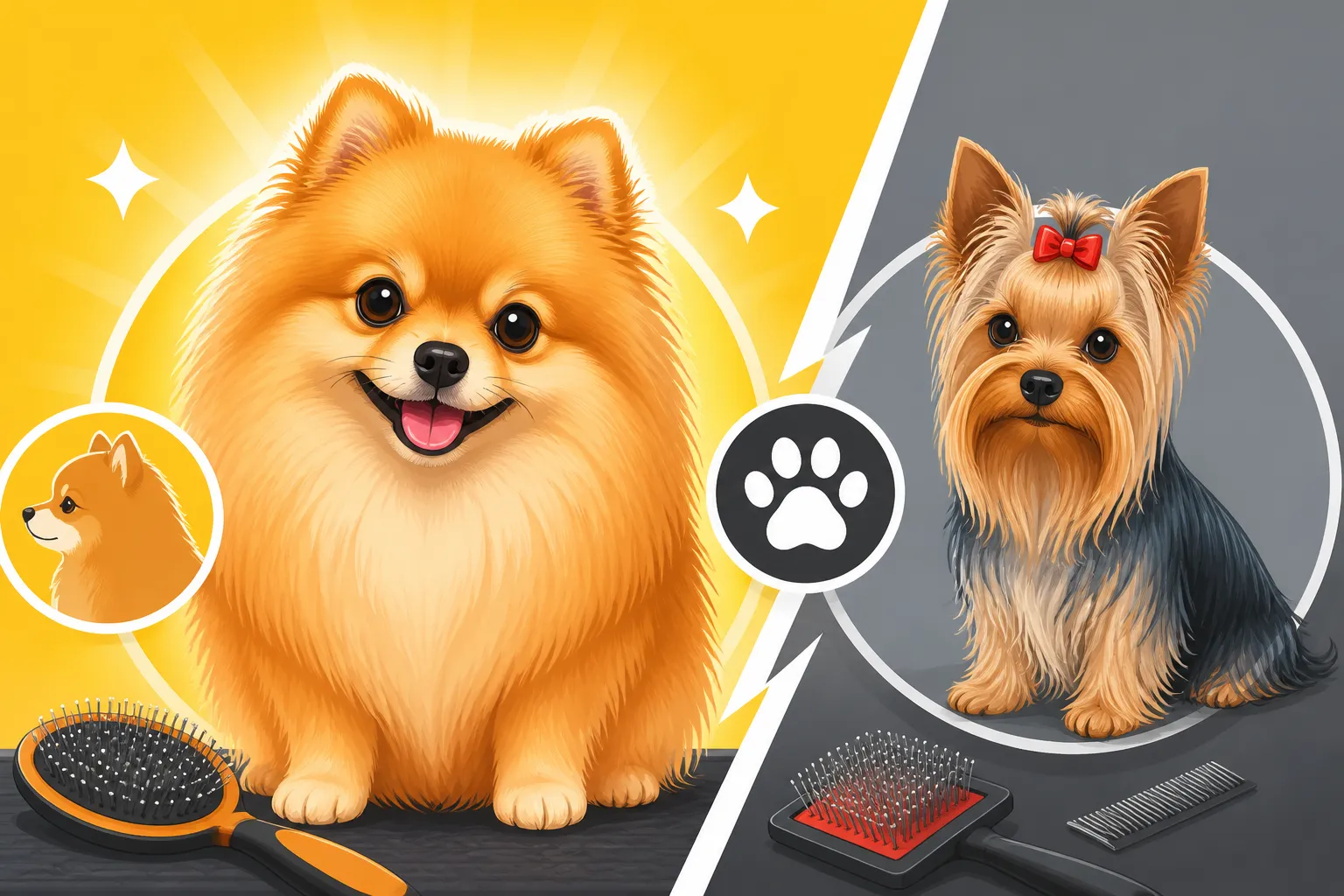
A Pomeranian has a double coat: a soft, dense undercoat beneath longer, harsher guard hairs. That plush outline takes regular brushing to keep tangles from forming close to the skin. Pomeranians also shed, with heavier coat changes at certain times of year and during puppy coat transitions. Loose undercoat can collect in brushes, on furniture, and in the spots where your dog naps.
If you want a closer look at how the layers work, The Guard Hair and Undercoat of a Pomeranian explains why brushing through the outer fluff alone is not enough. A Pom can look perfectly puffed up while small tangles are already forming underneath, especially behind the ears, under the front legs, around the collar or harness, and in the britches.
A Yorkshire Terrier typically has a single coat of fine, silky hair that keeps growing. It tends to shed less noticeably than a Pomeranian’s coat, but that does not make it maintenance-free. Fine hair can knot quickly, particularly if it is long, damp, or rubbed by clothing and harness straps. A Yorkie kept in a long coat may need careful daily combing to prevent mats.
The difference is often less about which breed is “easy” and more about which kind of work you prefer. With a Pom, you manage a thick coat and loose undercoat. With a Yorkie, you manage length, tangling, and regular trimming. Either dog can need a professional groomer, and either can become uncomfortable if coat care is neglected.
| Coat-work factor | Pomeranian | Yorkshire Terrier |
|---|---|---|
| Coat structure | Dense double coat with undercoat and guard hairs | Usually a single coat of fine, silky hair |
| Shedding | Noticeable loose coat, with seasonal changes | Often less visible shedding, but loose hairs can still occur |
| Main home-grooming challenge | Reaching through the coat to prevent hidden mats | Preventing fine hair from tangling and matting |
| Common coat style | Natural outline with tidy feet and sanitary areas | Short pet trim or longer flowing coat |
| Clipping considerations | Avoid shaving the coat close unless a veterinarian recommends it for a medical reason | Regular clipping is common, especially in a shorter pet style |
| Typical owner preference | Someone comfortable brushing a fluffy coat and managing shedding | Someone comfortable combing fine hair and keeping up with trims |
What “low shedding” does and does not mean
A Yorkie’s coat may leave less loose hair around the home than a Pomeranian’s, which can make everyday cleanup feel easier. But less visible shedding does not mean less brushing. Fine strands can wrap around one another and tighten into mats, particularly where the coat is longest. If a Yorkie wears a topknot, that area also needs gentle upkeep so hair does not pull around the eyes or tangle at the base of the tie.
Pomeranian shedding is more obvious, but loose hair is not always a sign that the coat is in poor condition. Regular brushing helps remove dead undercoat before it collects in clumps. The key is to work systematically and reach the skin without scraping or damaging it. How Many Times a Week a Pomeranian Is Brushed offers more detail on building a consistent brushing routine.
Neither breed should be chosen on shedding alone. If loose hair is a major concern, think about the whole household routine: who will brush the dog, how often you can schedule grooming, whether you are comfortable vacuuming more often, and whether you can keep a long coat free of tangles. A dog whose coat is easy to brush in theory may still be a poor fit if the required routine does not suit your week.
What coat care looks like at home
Brushing a Pomeranian without missing the undercoat
For a Pom, brushing should be more than a quick pass over the fluffy surface. Work in small sections and gently separate the coat so you can see the skin. A suitable brush can loosen surface tangles, while a comb helps you check whether the coat is clear all the way through. Take extra care behind the ears, beneath the harness, under the legs, and around the tail.
The method matters as much as the tool. Pulling hard on a snag can hurt, and brushing too roughly can irritate the skin or break coat. If you find a mat, pause and work gently rather than trying to rip through it. A tight mat close to the skin may need help from a professional groomer or veterinarian, especially if the skin underneath looks red or sore. The step-by-step approach in Working a Pomeranian's Coat in Sections to the Skin can help you understand why thorough, gentle brushing beats a fast surface brush-out.
A practical routine might look like this: check the coat briefly each day, then set aside regular, calm sessions for a fuller brush and comb-through. If your Pom wears a harness, inspect the spots where it sits after walks. A quick check can catch rubbing and tangles before they become painful knots. For owners still building their technique, The Slicker and Pin Brush a Pomeranian Needs is a useful companion topic.
Keeping a Yorkie’s fine hair untangled
A Yorkie’s home routine depends heavily on coat length. A short pet trim can make daily care simpler, but the coat still needs regular brushing and combing. A longer coat needs more attention, because loose strands can snag on bedding, clothing, furniture, and the dog’s own legs. Pay attention to the chest, belly, armpits, behind the ears, and any place where a collar or harness rubs.
Use gentle strokes and avoid dragging a brush through a knot. If you reach a tangle, hold the hair close to the skin so you are not pulling on the dog, and work from the ends of the knot inward. A comb can help identify small tangles that a brush might glide over. If the Yorkie flinches, turns away, or repeatedly tries to leave, take a break and make the session shorter and more rewarding rather than turning grooming into a struggle.
A longer coat also needs protection from everyday mess. Hair around the face may need to be secured safely so it does not obstruct vision, and the coat can collect food or moisture around the muzzle. After outdoor walks, check for debris caught in the legs and belly. If the coat is repeatedly matting despite careful care, a shorter trim may be kinder and more realistic than trying to maintain a long style.
Bathing and drying are part of the job
Both breeds need coat care beyond brushing. Bathing can help remove dirt and keep the coat comfortable, but frequent washing without a good reason can dry or irritate the skin. Use products intended for dogs, rinse thoroughly, and follow your groomer’s or veterinarian’s advice if the dog has sensitive skin or a diagnosed skin condition.
Drying is especially important for a Pomeranian’s thick coat. A damp undercoat can take a long time to dry fully, and brushing a wet or fragile coat carelessly can cause breakage. A Yorkie’s fine hair may dry faster, but it can tangle as it dries if it is left to mat against itself. In either case, use a gentle approach and keep the dog comfortable rather than rushing through the process.
If you are gathering basic supplies, Chewy can be one place to compare dog brushes, combs, shampoos, and grooming supplies. The best choice is the one that suits the coat and your dog’s tolerance, not the one with the most impressive-looking tool. If you are unsure whether a product is appropriate, ask your groomer or veterinarian before using it.
Grooming styles, tools, and professional help
A Pomeranian’s trim should preserve the coat
A Pomeranian’s appearance can tempt owners to ask for a dramatic short clip, especially when the dog sheds or seems hot. But the double coat is not simply extra hair to remove. Close shaving or aggressive clipping can alter how the coat grows back, and regrowth may be uneven or fail to return as expected. If a severe matting problem or medical need makes clipping necessary, discuss the plan with a veterinarian and an experienced groomer.
For routine upkeep, many owners ask for tidy feet, a neatened outline, and sanitary trimming rather than a close shave. A groomer familiar with double-coated breeds can help maintain a clean shape while avoiding unnecessary removal of coat. Learn more in Trims a Pomeranian Can Safely Have and Why a Shaved Pomeranian May Not Regrow.
If a groomer suggests shaving a Pom for convenience, ask what problem the clip is meant to solve and whether a less drastic option is possible. There are times when coat condition or medical care changes what is practical, but a style preference alone is worth discussing carefully. Bring a photo of the trim you want and explain that preserving the coat is important to you.
A Yorkie’s trim can be adapted to your schedule
Yorkie owners have more flexibility in how much coat length to maintain. A short, practical pet trim is often easier to brush and less likely to collect debris. A longer style can look beautiful, but it usually asks more of the owner: regular combing, careful handling, and attention to coat condition between professional appointments.
A shorter cut does not eliminate grooming. Hair continues to grow, so a Yorkie still needs trimming, bathing, nail care, and checks around the face and feet. The advantage is that the home routine may be easier to manage, particularly for a busy household or a dog that dislikes long brushing sessions. Ask the groomer to show you how to maintain the chosen style between visits.
A good groomer should listen to your priorities, explain what is achievable for the dog’s coat, and be willing to adjust the style if your home routine is not working. If your Yorkie comes home with a coat that mats quickly or makes daily care stressful, tell the groomer what you are seeing and consider a more manageable length next time.
Choose tools for the dog in front of you
The right brush depends on coat type, coat length, and the dog’s comfort. A Pomeranian often needs tools that can reach through dense coat without scraping the skin. A Yorkie may need a gentler brush and a comb suited to fine hair. In both cases, grooming tools should feel comfortable in your hand and should not make your dog tense before you even begin.
When shopping, compare the tool’s design and intended coat type rather than assuming one brush works equally well for every dog. Chewy may help you browse a range of combs and brushes, but ask a groomer to demonstrate how to use a tool safely if you are new to home grooming. A brush used with too much pressure can cause discomfort even if it is a suitable model.
You do not need to turn grooming into an elaborate production. Keep sessions calm, reward cooperation, and stop before your dog is overwhelmed. If brushing has become a battle, start with a few gentle strokes and build gradually. For extra guidance on establishing a workable routine, see The Grooming Schedule a Pomeranian Runs On.
Which breed may suit your coat-care preferences
A Pomeranian may fit you if
A Pomeranian may suit you if you enjoy brushing and like the look of a full, fluffy coat. You will need to accept visible shedding and learn how to check the undercoat, rather than simply smoothing the outside. The coat also needs a groomer who understands how to maintain its natural structure, particularly if you want a rounded, tidy appearance without a close clip.
Think honestly about the small, recurring tasks. Can you set aside brushing time even when work is busy? Will you check the coat after walks and around harness contact points? Are you comfortable with some loose hair in the home? If those jobs feel manageable, the Pom’s coat work can become a pleasant routine instead of a surprise chore.
A Pomeranian is not necessarily the more demanding dog in every household. Someone who enjoys brushing a dense coat may prefer it to managing long, fine hair that mats easily. The right fit depends on what kind of care you are willing to repeat—not just what coat looks easiest in a photo.
A Yorkshire Terrier may fit you if
A Yorkie may be a better match if you prefer less obvious shedding and are comfortable arranging regular trims. A short pet style can make day-to-day brushing more manageable, while a long coat is a commitment to frequent combing and careful maintenance. If you have limited time, talk with a groomer about a practical trim before deciding that a Yorkie will be low-maintenance.
Consider how your dog will spend the day. A Yorkie who plays outdoors, wears a harness, or spends time on soft furnishings may collect tangles even with a shorter coat. If you are hoping for a long, flowing look, make sure the daily combing is something you can realistically maintain rather than a routine you plan to begin someday.
Whichever breed you choose, remember that coat care can change with age, health, and lifestyle. A puppy’s coat may differ from its adult coat, and an older dog may need shorter, gentler sessions. If grooming suddenly seems painful or the coat changes noticeably, check with a veterinarian instead of assuming the problem is purely cosmetic.
A simple decision checklist
Before bringing either breed home, picture an ordinary week—not an idealized grooming day. Ask yourself whether you would rather deal with loose undercoat and careful section-by-section brushing, or fine hair that needs detangling and regular trimming. Consider whether you prefer to learn home grooming, rely on a professional for some tasks, or combine the two.
It can also help to speak with people who live with each breed and ask what they actually do between appointments. Ask about mats, coat changes, time spent brushing, and what happens when a dog dislikes grooming. For a Pomeranian, look beyond the fluffy silhouette and read The Double Coat That Makes a Pomeranian and Why It Stays On. If your main concern is clipping, Whether a Pomeranian Should Ever Be Clipped Short can help frame the questions to raise with a groomer.
Ultimately, the better choice is the coat routine you can maintain kindly and consistently. Pomeranians bring shedding and a dense coat that needs thorough brushing; Yorkshire Terriers bring fine hair that can tangle and often needs trimming. Neither is a wash-and-go breed, but both can be comfortable and tidy when the care plan fits the dog and the household.
Disclaimer
This article is for general informational purposes only and does not constitute professional advice. Laws, prices and regulations vary by location and change over time. Consult a qualified professional for guidance on your specific situation.