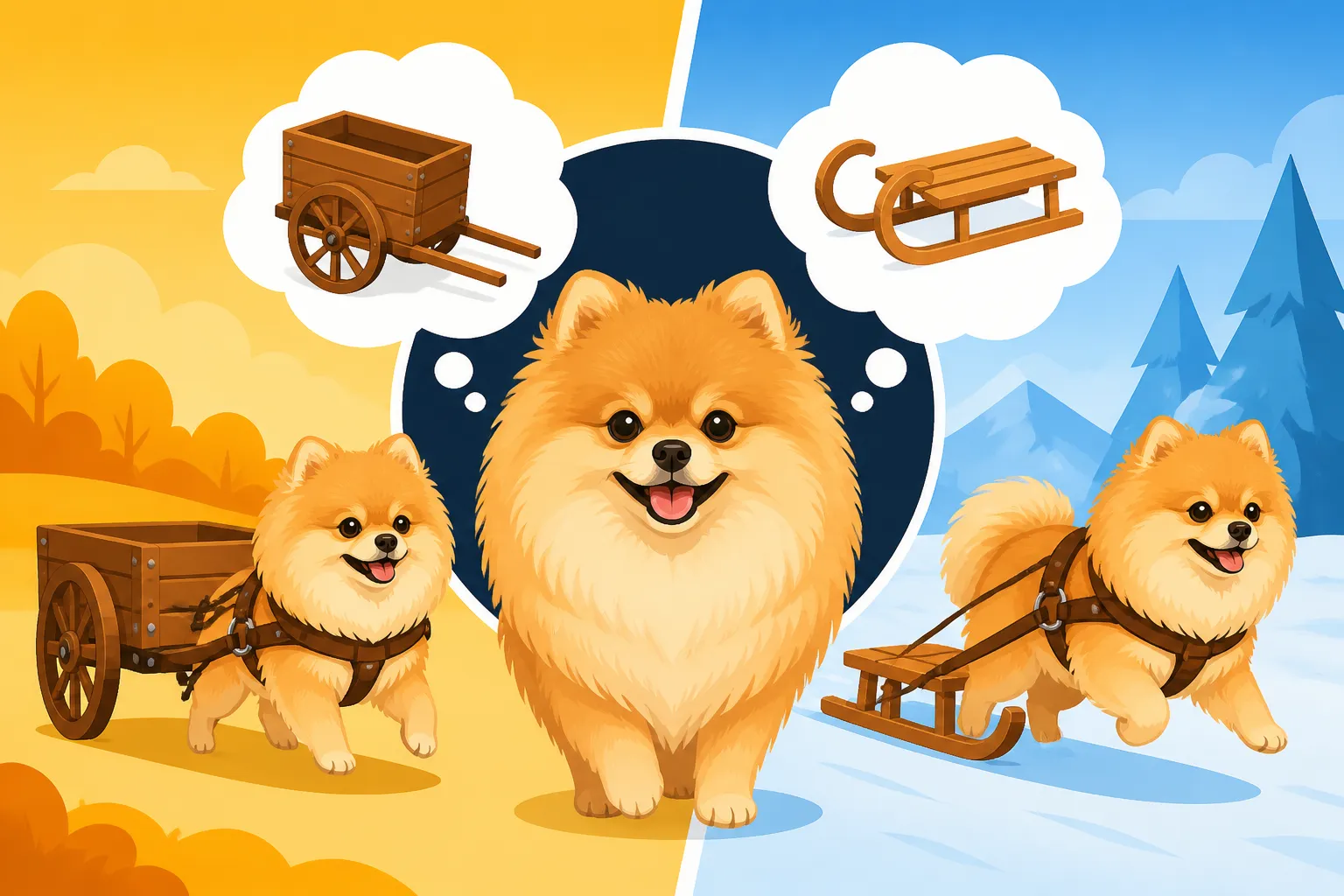
Whether Pomeranians Pulled Carts or Sleds
Many Pomeranian owners, or those simply charmed by these fluffy companions, often look at their small, spirited dogs and wonder about their roots. Given their clear Spitz heritage, a common question pops up: did these tiny dynamos once pull carts or sleds, like some of their larger Northern relatives? It's a fascinating thought, conjuring images of miniature sled teams, but the reality of the Pomeranian's history tells a slightly different, though no less interesting, tale. This guide delves into the historical roles of the Pomeranian, exploring their ancestry and the unique path they took from rugged working dogs to beloved lap companions.
The Northern Spitz Ancestry: A Glimpse into the Pomeranian's Roots
When you look at the strong, sturdy build of a Siberian Husky or a Samoyed, you immediately picture them straining against a harness, pulling a sled across snowy landscapes. Even the thought of a German Spitz, a larger cousin, might bring to mind a vigilant farm dog, keeping watch. It's easy to assume our little Pomeranians, with their fox-like faces and curled tails, share this exact working past. After all, they are part of the Spitz family, a group renowned for their utilitarian roles, from hunting to herding to pulling. But while the Pomeranian's lineage traces back to these larger, hardworking dogs of the Arctic and Northern Europe, their direct history as cart or sled pullers is actually quite limited, if not entirely absent.
Tracing Back to Larger Working Dogs
The Pomeranian's story begins with the larger, powerful Spitz-type dogs of the Arctic regions. These ancient breeds were indispensable to human survival, used for everything from hunting and guarding to, yes, pulling sleds over vast, frozen terrains. Think of the formidable Malamutes or the agile Huskies; these are the distant relatives that share the same foundational genetic blueprint as our little Poms. These larger ancestors had the sheer size, muscle, and endurance necessary for such demanding tasks. They were built for cold climates, with dense double coats and powerful legs, perfectly adapted for hauling heavy loads or navigating deep snow.
However, as humans began to settle and form agricultural communities, the need for pure sled dogs in many regions diminished. Dogs were still vital, but their roles diversified. This shift eventually led to the development of various German Spitz types, which were still robust but generally smaller than their Arctic forebears. These dogs, which form The German Spitz Family a Pomeranian Belongs To, were more likely to be found guarding farms, herding small livestock, or acting as watchdogs, rather than pulling heavy loads. They were still workers, no doubt, but their jobs required vigilance and intelligence more than brute force.
The Divergence from Heavy-Duty Labor
The Pomeranian specifically evolved from these more moderate-sized German Spitz dogs, not directly from the massive sled dogs. The region of Pomerania, straddling parts of modern-day Germany and Poland, is where the breed began to take its distinct shape. This wasn't a land known for vast, icy wildernesses requiring sled teams. Instead, it was an area of farms and towns, where a smaller, alert companion dog was more valuable. The Pomeranian's ancestors, though larger than today's Poms, were likely already diverging from the heavy-duty pulling roles of their distant northern cousins. They were robust, but their purpose was shifting towards companionship and property guardianship rather than labor.
The double coat, while characteristic of all Spitz breeds and excellent for insulation, became more about aesthetic appeal and less about pure survival in extreme conditions as the breed developed. The dense undercoat and long guard hairs, which contribute to The Stand Off Coat a Pomeranian Must Have, certainly protected them from the elements, but it was a coat suited for a cooler European climate, not necessarily the Arctic tundra where true sled dogs thrived.
From Mighty Herders to Miniature Companions: The Pomeranian's Size Evolution
The most significant factor in understanding why Pomeranians didn't pull carts or sleds is their dramatic reduction in size over the centuries. What started as a moderately sized dog underwent a fascinating transformation, largely influenced by human preference and selective breeding. This shrinking process meant that any capacity for heavy physical labor was gradually bred out, favoring traits more suited for a companion animal.
The Twenty-Five Pound Ancestor
It's truly mind-boggling for many to learn that the Pomeranian, as we know it today, is a mere shadow of its former self in terms of physical stature. The ancestors of today's Pomeranians were substantially larger, often weighing closer to 20-30 pounds, sometimes even more. Imagine a dog that size! This is roughly The Twenty Five Pound Pomeranian of the 1800s. At this weight, they would have been far more capable of working roles, such as herding sheep or cattle, or guarding a property. They were sturdy, resilient dogs, and while they still weren't designed for pulling heavy sleds over long distances like a Husky, they certainly weren't delicate lap dogs.
These larger Poms would have possessed a robust bone structure and musculature far exceeding that of their modern descendants. Their size would have allowed them to navigate challenging terrain and endure longer periods of activity. Their purpose was practical; they earned their keep. The idea of these dogs pulling small carts, perhaps for carrying light farm produce or assisting in small tasks, isn't entirely outlandish for their historical size, though specific evidence of this is rare. However, the true sledding function, as seen in the far north, remained beyond their scope due to their more moderate build and role.
Queen Victoria's Influence and the Miniaturization Trend
The real game-changer for the Pomeranian's size came in the late 19th century, largely thanks to the discerning eye of royalty. Queen Victoria, Marco and the Pomeranian played a pivotal role in popularizing the smaller version of the breed. During a trip to Florence, Italy, she encountered a much smaller Pomeranian and immediately fell in love. Her passion for these miniature dogs set a new trend. Breeders, eager to meet the royal demand and the burgeoning fancy for smaller companion animals, began selectively breeding for reduced size.
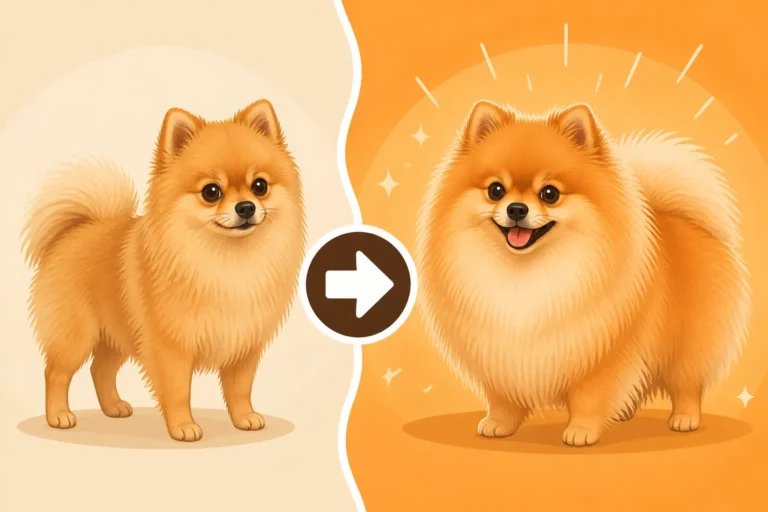
This concerted effort to miniaturize the breed was incredibly effective. Within a single lifetime, the Pomeranian's average weight was almost halved. This is precisely How the Pomeranian Halved in Size in One Lifetime. The focus shifted dramatically from a working dog to an exquisite toy companion. Traits like delicate features, abundant fluffy coat, and a charming, spirited personality became paramount. A dog weighing 3-7 pounds simply doesn't have the physical capacity for heavy pulling. Their bone structure is too fine, their muscle mass insufficient, and their overall build too fragile for such tasks. Trying to make a modern Pomeranian pull a cart or sled would not only be impractical but also cruel and dangerous, risking serious injury to their delicate skeletal system and windpipe.
What Early Pomeranians Actually Did: Farm Life and Guardianship
So, if they weren't pulling sleds, what were these larger, earlier Pomeranians doing? Their lives were far from idle. They were valuable members of the household and farm, fulfilling roles that suited their size, intelligence, and protective instincts. Their historical tasks were more about vigilance, companionship, and deterring small pests than brute strength.
Vigilant Farm Watchdogs
Before their transformation into purely companion animals, Pomeranians and their direct ancestors were highly valued as watchdogs on farms and homesteads. Their keen senses and alert nature made them excellent alarms. A farmer's biggest worry was often predators or intruders, and a dog that could bark loudly and persistently at the first sign of anything unusual was incredibly useful. These dogs weren't necessarily meant to fight off a wolf or a human intruder, but their incessant barking would certainly alert the farmer or other, larger dogs to the presence of danger.
Their moderate size allowed them to be agile and move quickly around the property. They could patrol the barnyard, dart through fields, and keep an eye on things without requiring the vast food resources of a much larger guard dog. They might have been tasked with keeping small vermin, like rats or mice, out of grain stores, though this would have been a secondary benefit rather than a primary role. Their presence alone, coupled with their sharp barks, offered a significant deterrent to many common farm nuisances. You can imagine an early Pomeranian, perhaps a sturdy 15-pounder, standing watch atop a hay bale, observing its domain and letting out a piercing bark at the approach of a stranger.
Valued Companions and Status Symbols
Even in their larger forms, Pomeranians held a significant place as companions. Their intelligence, loyalty, and spirited nature made them endearing to their human families. As societies became more affluent, dogs like the Pomeranian began to transition from purely utilitarian roles to cherished household members. This shift was gradual but certainly predates Queen Victoria's intervention. People enjoyed their company, their lively presence, and their engaging personalities.
As time went on, and particularly with the rise of the European aristocracy and gentry, dogs also became status symbols. Owning a beautiful, exotic-looking dog like the Pomeranian, even in its larger form, indicated a certain level of wealth and leisure. These dogs were increasingly found lounging on velvet cushions rather than working in fields. Their beauty, elegant coats, and lively disposition made them perfect for this role. The need for their services as workers diminished as they became more prized for their aesthetic appeal and companionship. This is a common trajectory for many breeds that originated as working dogs but found their niche in the homes of the wealthy and influential.
Modern Pomeranian 'Work': Brain Games and Canine Sports
While our modern Pomeranians are far removed from any sled-pulling history, they are by no means idle or unintelligent. Their Spitz heritage still imbues them with a sharp mind, an eager spirit, and a surprising capacity for "work"—just a very different kind of work! Today's Poms excel in various canine sports and activities that challenge them mentally and physically, without putting stress on their delicate frames.
Agility, Obedience, and Rally Stars
Don't let their small size fool you; Pomeranians are incredibly intelligent and athletic little dogs. Many thrive in canine sports like agility, obedience, and rally. In agility, they might not be clearing massive jumps, but they navigate tunnels, weave poles, and scale A-frames with impressive speed and precision. Their keen intelligence means they pick up commands quickly, and their desire to please (and to earn a tasty treat, which you can find a great selection of at Chewy) makes them excellent students in obedience and rally.
These activities are fantastic for channeling their natural energy and intelligence. A bored Pomeranian can become a vocal or destructive one, so providing mental and physical enrichment is key. Owners who participate in these sports often rave about how quickly their Poms learn complex sequences and how much joy they get from working alongside their humans. These modern "jobs" allow Pomeranians to express their working dog roots in a safe, fun, and highly rewarding way. You might be surprised to see a tiny Pom tearing through an agility course with the speed and focus of a much larger dog! The Trick Titles a Pomeranian Picks Up Easily is a testament to their smarts.
Therapy Dogs and Companionship
Beyond competitive sports, many Pomeranians find their true calling as therapy dogs. Their gentle nature, cuddly size, and undeniable charm make them perfect candidates for visiting hospitals, nursing homes, and schools. They bring immense comfort and joy to people who need it most. The sheer happiness a Pomeranian can bring to a lonely patient or a child learning to read is a form of "work" that is incredibly valuable and perfectly suited to their temperament.
Their small stature means they can easily be held or sit on laps, providing direct, soothing contact. This role taps into their inherent desire for connection and their ability to form deep bonds with humans. While they're not pulling anything physical, they are pulling heartstrings and providing emotional support, which is arguably a more profound and impactful form of "work" in our modern society. They prove that true strength isn't always about muscle, but about the size of one's heart. These roles perfectly illustrate how they are still working dogs, just in a different capacity than their ancestors. And for their health and comfort in these roles, finding the right gear, like comfortable harnesses, is essential, and often found easily on platforms like Chewy.
Pomeranians and Exercise Needs
Even though they don't pull sleds, Pomeranians still have definite exercise needs. A common misconception is that because they're small, they don't need much activity. This isn't true! While they don't require miles of running, they do need daily walks and opportunities to play. A good 20-30 minute walk twice a day, plus some indoor play, is usually sufficient. This helps keep them physically fit, mentally stimulated, and prevents behavioral issues.
Regular exercise is also crucial for managing their weight. A healthy weight is vital for a Pomeranian's overall wellbeing and can help mitigate issues like Whether Weight Gain Worsens a Pomeranian's Windpipe or Slipping Kneecaps in a Five Pound Pomeranian. Ensuring they get enough activity, along with a balanced diet (which you can easily find small-breed specific options for at Chewy), is a core part of responsible Pomeranian ownership.
| Role Type | Ancestral Spitz Dogs (e.g., Samoyed, Malamute) | Early Pomeranian Ancestors (20-30 lbs) | Modern Pomeranian (3-7 lbs) |
|---|---|---|---|
| Primary Function | Sled pulling, hunting, guarding | Farm guardianship, herding, companionship | Companion, therapy, canine sports |
| Physical Build | Large, powerful, robust | Medium, sturdy, agile | Small, delicate, agile |
| Working Capability | High (endurance, strength) | Moderate (alertness, limited strength) | Low for physical labor, High for mental |
| Example Tasks | Hauling supplies, tracking prey | Alerting to intruders, managing small livestock | Agility courses, cuddles, tricks |
| Adaptation | Extreme cold, vast distances | Farm environments, family homes | Urban living, close companionship |
In conclusion, while the Pomeranian shares its ancient lineage with powerful Northern Spitz breeds that did pull sleds and carts, the breed itself took a distinct evolutionary path. Through centuries of selective breeding, culminating in the preferences of figures like Queen Victoria, the Pomeranian transformed from a moderately sized farm watchdog into the beloved, miniature companion we know today. Their historical role was more about alert guardianship and companionship, and their modern "work" continues this tradition by engaging their sharp minds and affectionate spirits in activities like therapy, agility, and simply being the most charming members of our families. They may not pull sleds, but they certainly pull at our heartstrings.
Disclaimer
This article is for general informational purposes only and does not constitute professional advice. Laws, prices and regulations vary by location and change over time. Consult a qualified professional for guidance on your specific situation.