The Pomeranian Against the American Eskimo Dog
It's completely understandable to feel overwhelmed when you're trying to choose between two amazing dog breeds, especially when they share so many superficial similarities but hide profound differences. You look at a Pomeranian, then an American Eskimo Dog, and you think, "They both have that fluffy, Spitz-type coat, they're both intelligent, and they both have that alert expression." But peeling back those initial layers reveals a world of distinction in size, temperament, and daily care that could make one a perfect fit for your home and the other a constant challenge. This guide will meticulously break down the Pomeranian and the American Eskimo Dog, exploring their histories, physical traits, personalities, and care needs to help you make an informed decision that truly suits your lifestyle.
The Historical Roots and Lineage: Spitz Breeds, Big and Small
Both the Pomeranian and the American Eskimo Dog share a common ancestor in the ancient Spitz family of dogs, but their journeys diverged significantly, leading to the distinct breeds we know and love today. Understanding their origins is key to appreciating their inherent traits and how they might fit into your life. It’s like looking at two cousins; they share a family tree, but their upbringing and experiences have made them unique individuals.
Tracing the Pomeranian's Northern European Past
The Pomeranian's story begins in the region of Pomerania, an area now split between Germany and Poland, which truly surprises many people. When they see these tiny fluffballs, they often envision them originating from some delicate, manicured European court. However, their ancestors were sturdy, much larger Spitz dogs, similar to the modern-day German Spitz breeds, weighing upwards of 25 to 30 pounds. These dogs were workers, primarily herding sheep and pulling small carts, enduring the harsh northern climate with their dense double coats.
The breed's transformation into the miniature companion we adore today largely took place in England, thanks to royal enthusiasts like Queen Victoria in the late 19th century. She brought back a particularly small Pomeranian from Italy, named Marco, weighing a mere 12 pounds, and her passion for smaller dogs influenced breeders to selectively breed for reduced size. This isn't just a fun historical tidbit; it explains why Pomeranians, despite their small stature, still possess a big dog personality and a robust double coat designed for cold weather, not just looking pretty on a lap. It's truly fascinating to consider Queen Victoria, Marco and the Pomeranian and how one monarch's preference shaped an entire breed.
The American Eskimo Dog's German Origins
Despite its name, the American Eskimo Dog (often affectionately called an "Eskie") also traces its roots back to Germany. Its ancestors were the German Spitz, specifically the white varieties, which were popular performing dogs in circuses and vaudeville acts across Europe and later, America. These intelligent and agile dogs enchanted audiences with their tricks and striking appearance. When anti-German sentiment rose during World War I, breeders in the United States decided to rename the German Spitz to the more patriotically sounding "American Eskimo Dog" to avoid negative associations.
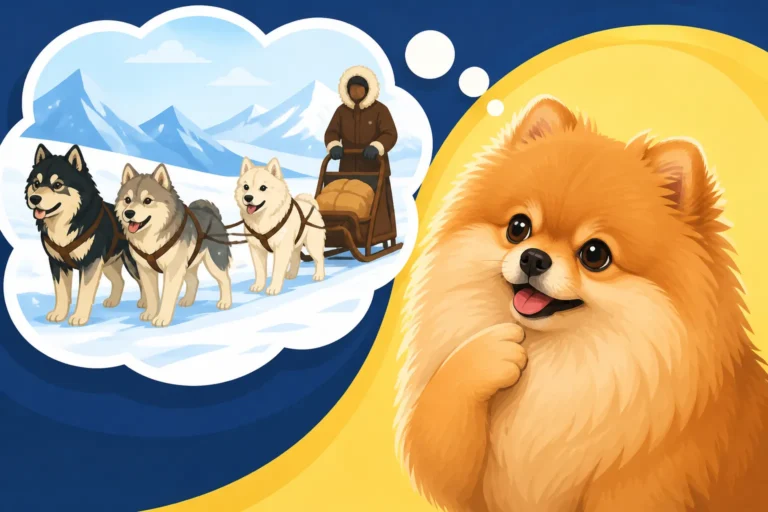
So, while the name suggests a connection to the Arctic or indigenous cultures, the Eskie is purely European in its heritage. They were never sled dogs or used for hunting seals. Their white coat, which is so distinctive, was likely favored for its showmanship and cleanliness in performance settings. This origin as a working performer speaks volumes about the Eskie's inherent intelligence, eagerness to please, and energetic nature. They weren't just pretty faces; they were athletes and entertainers.
How Size Diverged in These Northern Dogs
The divergence in size between these two breeds is perhaps their most obvious distinction. While both descended from larger German Spitz dogs, the selective breeding pressures applied to each were quite different. For the Pomeranian, the drive was explicitly towards miniaturization, encouraged by royal patronage and the desire for lap companions. Over generations, breeders focused on producing smaller and smaller individuals, resulting in the toy breed we recognize today, typically weighing between 3 and 7 pounds. The goal was to create an elegant, compact dog with a huge, fluffy coat.
The American Eskimo Dog, on the other hand, maintained a more moderate size range, with three distinct varieties: Toy, Miniature, and Standard. Even the Toy Eskie is generally larger than a Pomeranian, usually weighing up to 10 pounds. The Miniature Eskie typically ranges from 10 to 20 pounds, and the Standard Eskie can be anywhere from 25 to 35 pounds or more. This range reflects their continued role as active, robust companions and performers, where extreme miniaturization was not the primary goal. Their medium size allowed them to retain more of the physical prowess of their larger Spitz ancestors, making them agile and capable of more strenuous activities than their Pomeranian cousins.
Physical Distinctions: More Than Just a Matter of Size
While both breeds share that iconic Spitz look – upright ears, a foxy face, and a plume tail carried over the back – a closer examination reveals numerous differences beyond their weight classes. These distinctions aren't just cosmetic; they impact their grooming needs, exercise capacity, and even how they interact with their environment.
Head, Muzzle, and Eye Differences
Both breeds possess alert, intelligent expressions, but the specific contours of their faces differ. The Pomeranian is known for its "fox-like" or "baby doll" face, with a delicate, finely chiseled muzzle that tapers to a small, dark nose. Their eyes are typically dark, almond-shaped, and set to give them a lively, inquisitive look. The overall impression is one of dainty alertness. Some breeders even distinguish between Fox Face, Baby Doll and Teddy Bear Pomeranians, emphasizing these subtle facial nuances.
The American Eskimo Dog, regardless of its size variety, has a slightly broader head and a more substantial muzzle in proportion to its skull. Their eyes are also dark and almond-shaped, but their expression often conveys a deeper sense of keenness and intelligence, perhaps reflecting their history as performers who needed to pay close attention to cues. Their overall facial structure is more robust, less delicate than a Pomeranian's, fitting their larger build. You'll notice a distinct difference in how the muzzle meets the skull—the Pomeranian often has a more pronounced stop, while the Eskie's transition can be smoother.
Coat Type and Grooming Needs: A Shared Double Coat, Different Scales
Ah, the glorious double coat! Both the Pomeranian and the American Eskimo Dog are famous for their magnificent, fluffy coats, which are a hallmark of the Spitz family. This double coat consists of a harsh, long outer guard coat and a soft, dense undercoat. This structure serves to insulate them from both cold and heat, acting like a natural thermostat. However, the amount of coat and the frequency of grooming required scale with size.
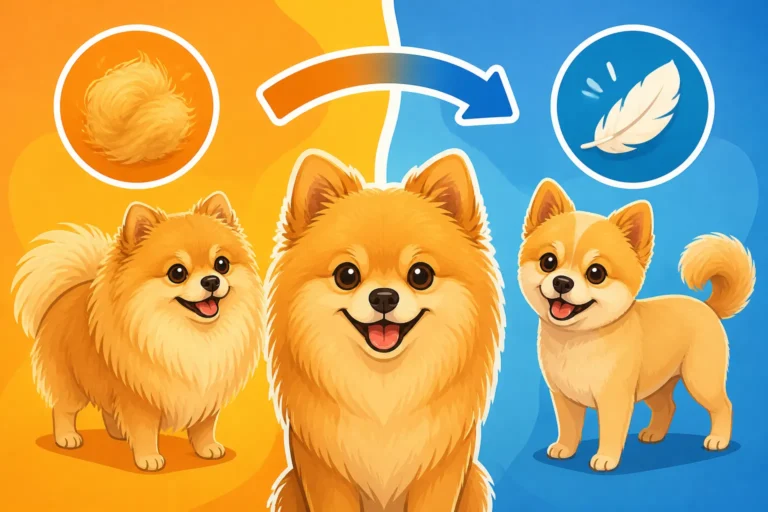
A Pomeranian's coat is often described as a "stand-off" coat because the dense undercoat pushes the longer guard hairs away from the body, creating that characteristic round, puffy appearance. This coat requires significant attention to prevent matting and maintain its health. Daily brushing, or at least every other day, is crucial. You'll need to work in sections, getting down to the skin to ensure the undercoat isn't packing up and creating painful mats, especially behind the ears, in the armpits, and under the harness. Neglecting this leads to major issues and potentially costly professional grooms. Working a Pomeranian's Coat in Sections to the Skin is a fundamental skill every Pom owner needs. You'll want good quality tools, which you can often find at places like Chewy, to ensure you're not damaging their delicate fur.
The American Eskimo Dog also boasts a dense double coat, but depending on its size, the sheer volume of hair can be even more substantial than a Pomeranian's. Standard Eskies, in particular, have impressive ruffs and britches. While their coat typically doesn't stand off quite as dramatically as a Pomeranian's, it still requires regular, thorough brushing several times a week, if not daily during shedding seasons. Their white coat can also show dirt more easily, meaning more frequent bathing might be necessary for some owners. Both breeds experience "coat blows," usually twice a year, where they shed their entire undercoat, and during this time, grooming becomes an almost daily marathon.
Size and Structure: Toy vs. Miniature/Standard
The most obvious physical difference lies in their size. A Pomeranian is strictly a toy breed. Adult Poms typically weigh between 3 and 7 pounds and stand about 6-7 inches tall at the shoulder. Their bone structure is fine, and they are delicately built, making them surprisingly fragile despite their bold demeanor. This small size means they are prone to certain injuries, such as slipping kneecaps (Slipping Kneecaps in a Five Pound Pomeranian) or tracheal collapse (The Honking Cough of a Pomeranian's Collapsing Windpipe), if not handled carefully.
The American Eskimo Dog comes in three size varieties:
- Toy: 6-10 pounds, 9-12 inches tall. While still small, even a Toy Eskie feels more substantial than a Pomeranian.
- Miniature: 10-20 pounds, 12-15 inches tall. This is a very popular size, offering a compact yet sturdy companion.
- Standard: 25-35+ pounds, 15-19 inches tall. These are medium-sized dogs, quite robust and athletic.
Even the smallest American Eskimo Dog has a more robust bone structure and a sturdier build than a Pomeranian. They are less prone to the delicate skeletal issues that sometimes plague the tiny Poms, though they are not immune to their own set of breed-specific health concerns. The Eskie's structure lends itself to more vigorous activity and can withstand more accidental bumps and jostles, which is a significant consideration for families with active children or other pets.
Here's a quick comparison table:
| Feature | Pomeranian | American Eskimo Dog (Toy/Mini/Standard) |
|---|---|---|
| Typical Weight | 3-7 pounds | Toy: 6-10 lbs; Miniature: 10-20 lbs; Standard: 25-35+ lbs |
| Typical Height | 6-7 inches | Toy: 9-12 in; Miniature: 12-15 in; Standard: 15-19 in |
| Muzzle Type | Fine, delicate, fox-like | Broader, more substantial |
| Coat Care | Daily to every other day brushing, prone to mats | Several times a week, prone to shedding, dirt shows easily |
| Bone Structure | Fine, delicate | More robust, sturdy |
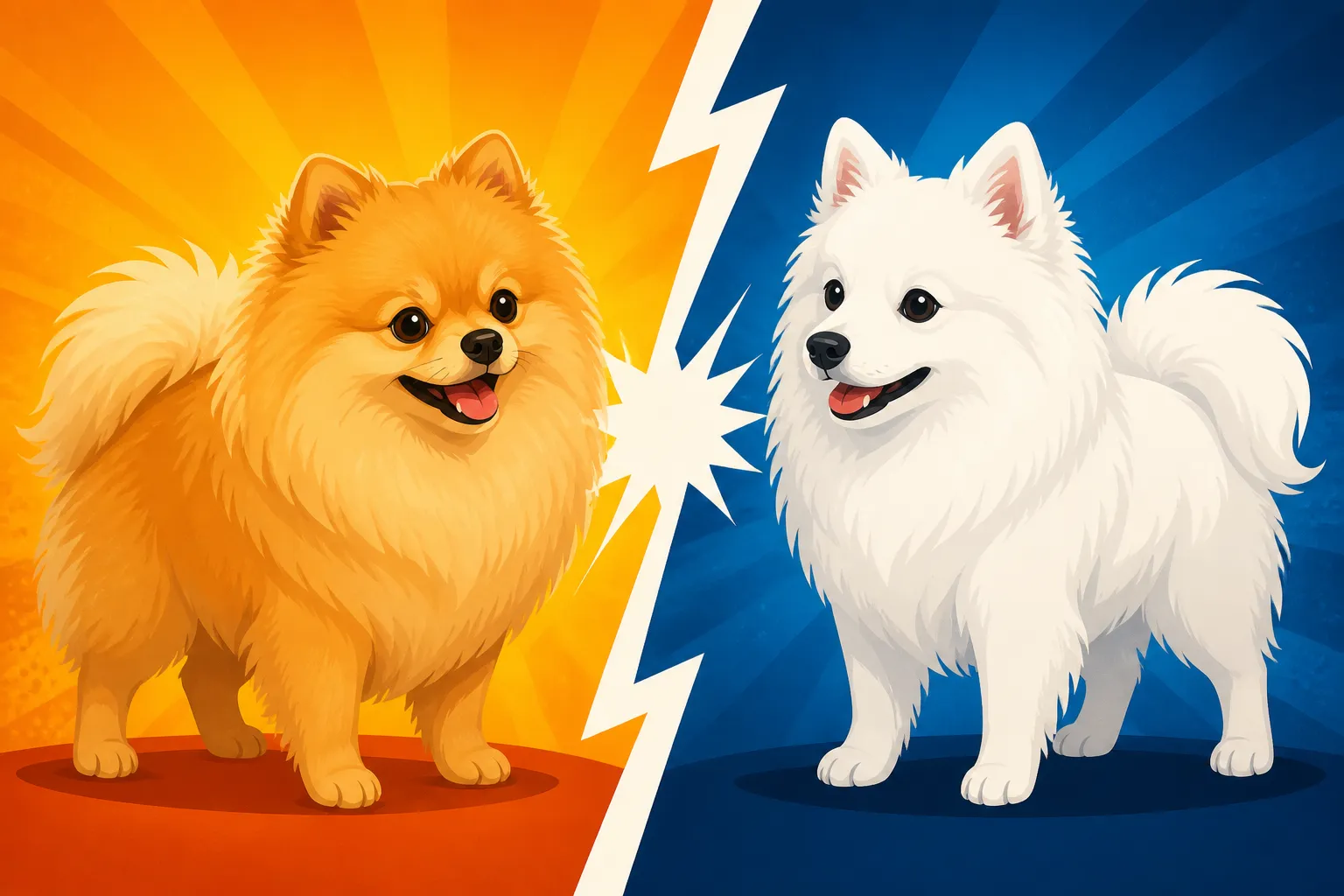
| Primary Color | Wide range (orange dominant) | Predominantly white |
Temperament and Personality: Boldness in Different Packages
Both Pomeranians and American Eskimo Dogs are known for their intelligence, vivacious personalities, and strong bonds with their families. However, the expression of these traits often differs due to their size and historical roles. It's like comparing a feisty bantam rooster to a confident farm dog; both have a strong presence, but they exert it in different ways.
The Pomeranian's Outsized Personality
For such a tiny dog, the Pomeranian has an incredibly big personality. They are often described as "big dogs in little bodies." Poms are notoriously intelligent, curious, and often quite fearless. They don't seem to realize how small they are and will readily challenge dogs many times their size. This boldness can be endearing but also problematic, as it can lead to dangerous situations if not managed. Owners often report their Poms as being sassy, demanding, and full of character.
Pomeranians form deep attachments to their primary caregivers and can be prone to separation anxiety if not properly conditioned to alone time. The Pomeranian That Cannot Be Left Alone is a common challenge for owners. They thrive on being the center of attention and love to be involved in family activities. They are also known for their alert barking – they will let you know about everything from the mail carrier to a leaf blowing by outside. This can be a challenge for apartment dwellers or those with close neighbors, so understanding The Doorbell and the Pomeranian Response is crucial for effective training. Their intelligence means they can be a joy to train, learning tricks and commands quickly, but it also means they can be master manipulators if allowed.
The American Eskimo Dog's Alert and Eager Nature
American Eskimo Dogs are also highly intelligent and eager-to-please, traits that were honed during their years as performing dogs. They are typically lively, playful, and incredibly alert. Eskies tend to be a bit more reserved with strangers than Poms initially, but once they accept someone, they are usually friendly. They are fiercely loyal to their families and make excellent watchdogs, often vocalizing to announce visitors or anything out of the ordinary. This vocal tendency is something potential owners should be aware of, similar to Poms, though their barks might be a bit more substantial.
Eskies are known for their playful nature and often retain a puppy-like exuberance well into adulthood. They love to learn and excel in dog sports like agility, obedience, and rally, showcasing their innate intelligence and athleticism. This eagerness to work and interact makes them highly trainable, but it also means they need mental stimulation to prevent boredom, which can lead to destructive behaviors. They thrive on having a "job" to do, even if that job is just playing fetch or learning new tricks.
Socialization Needs for Both Breeds
Both breeds, being highly intelligent and alert Spitz dogs, require early and consistent socialization to develop into well-adjusted adults. Without it, their natural wariness or boldness can escalate into undesirable behaviors.
For Pomeranians, socialization means exposing them to a wide variety of sights, sounds, people, and other well-behaved dogs from a young age. Because of their small size, it's easy for owners to inadvertently overprotect them, limiting their exposure to the world. However, this can lead to a fearful or reactive dog that barks excessively or snaps out of anxiety. It's essential to teach children Teaching a Child to Hold a Pomeranian properly and safely, as their small size makes them vulnerable to accidental injury. They need to learn to be comfortable on the ground and not always carried, preventing them from developing "small dog syndrome" where they believe they rule the roost.
American Eskimo Dogs also benefit immensely from early socialization. Due to their watchdog tendencies and potential initial reserve with strangers, positive experiences with new people and places are vital. They need to learn appropriate greetings and manners to ensure they don't become overly vocal or timid. Socialization with other dogs is important, but careful introductions are key, especially for Standard Eskies, who can have a strong presence. Their confidence, while generally a positive trait, needs to be channeled appropriately through training and exposure.
Training, Exercise, and Living Needs: Adapting to Their Worlds
Understanding the daily demands of each breed—how much exercise they need, their trainability, and what kind of environment they thrive in—is critical for ensuring a happy and healthy life together. Neither is a "set it and forget it" kind of dog; both require active participation from their humans.
Exercise Requirements and Energy Levels
You might assume that a tiny Pomeranian needs very little exercise, and while they don't need miles of running, they are far from couch potatoes. Poms have bursts of energy and love short walks, playtime in a secure yard, and indoor games. Two short walks a day (15-20 minutes each) are usually sufficient, combined with plenty of indoor play. Mental stimulation, through puzzle toys or training sessions, is just as important as physical exercise for these intelligent little dogs. Over-exercising a young Pomeranian can even be detrimental to their delicate joints.
The American Eskimo Dog, being a larger and more athletic breed, requires more substantial exercise. Miniature and Standard Eskies need at least 30-60 minutes of vigorous exercise daily, which can include brisk walks, jogging, hiking, or playing fetch. They have excellent stamina and enjoy activities that challenge both their bodies and minds. Toy Eskies will still need regular walks and playtime, though perhaps slightly less intensity than their larger counterparts. Without adequate exercise, Eskies can become bored and destructive, channeling their energy into barking, chewing, or digging.
Trainability and Intelligence: Spitz Smart Cookies
Both breeds are highly intelligent, a common trait among Spitz dogs, and generally eager to please their owners, making them very trainable. However, their intelligence can also lead to stubbornness or manipulative behavior if not handled with consistent, positive reinforcement training.
Pomeranians are quick learners and excel at obedience and trick training. They thrive on positive reinforcement, praise, and small, high-value treats. However, they can sometimes have a short attention span, so keeping training sessions fun, varied, and brief is essential. Consistency is key with Poms, especially concerning house training, which can sometimes be a challenge due to their small bladders and potential preference for indoor piddle pads. Addressing Why House Training a Pomeranian Drags On often comes down to dedication and routine. Finding treats small enough for their tiny mouths, like those available on Chewy, can also make a huge difference in motivation.
American Eskimo Dogs are renowned for their intelligence and trainability. Their circus background is a testament to their ability to learn complex commands and routines. They respond wonderfully to positive reinforcement methods and thrive when given clear expectations and consistent guidance. Eskies love mental challenges and genuinely enjoy the process of learning. They can be exceptional in dog sports, making them a great choice for active owners who want to pursue canine activities. Their intelligence also means they need ongoing mental engagement to prevent boredom and keep them sharp.
Ideal Living Environments for Each Breed
The ideal living environment for each breed is largely dictated by their size, exercise needs, and vocal tendencies.
A Pomeranian can thrive in an apartment or a house with a small yard, as long as their exercise needs are met with walks and indoor play. Their small size makes them adaptable to various living situations, but their propensity for barking can be an issue in close quarters. They do best in homes where they are not left alone for extended periods, or where arrangements are made for their companionship and mental stimulation. They are not suited for outdoor living and should always be indoor dogs, safe from predators and extreme weather.
An American Eskimo Dog can also do well in an apartment, provided they receive sufficient daily exercise and mental stimulation. However, a house with a securely fenced yard where they can run and play would be more ideal, especially for Miniature and Standard varieties. Their vocal nature means potential issues for apartment living if not managed through training. Eskies are active and need space to move, and they thrive on being an integral part of family life. Like Pomeranians, their thick double coat insulates them, but they are not meant to live outdoors permanently; they need to be inside with their human family.
Health Considerations and Lifespan: Miniature vs. Medium Dog Realities
While both breeds are generally healthy, their size differences directly impact the types of health issues they are predisposed to. Understanding these can help you prepare for potential challenges and ensure you provide the best possible care throughout their lives.
Common Ailments in Pomeranians
Pomeranians, due to their small size, are prone to a specific set of health issues. Some of the most common include:
- Luxating Patellas: This is when the kneecap slips out of place, causing lameness. It's incredibly common in small breeds and can range in severity. Grading Patellar Luxation in a Pomeranian helps veterinarians determine the best course of action, which sometimes includes surgery.
- Tracheal Collapse: The cartilage rings of the trachea (windpipe) weaken and collapse, leading to a characteristic "honking cough." This condition can be exacerbated by collars, excitement, or obesity. The Honking Cough of a Pomeranian's Collapsing Windpipe is a serious concern for many Pom owners.
- Dental Disease: Their small mouths are prone to overcrowding, which leads to tartar buildup, gum disease, and early tooth loss. Daily tooth brushing and regular professional dental cleanings are crucial. Dental Disease in a Mouth the Size of a Pomeranian's is almost a certainty without diligent care.
- Hypoglycemia: Especially in puppies, blood sugar crashes can occur if they don't eat regularly. Blood Sugar Crashes in a Pomeranian Puppy are a critical concern for new owners.
- Alopecia X (Black Skin Disease): A mysterious skin condition causing hair loss, often mistaken for other issues. Why Pomeranian Owners Call Alopecia X Black Skin Disease is a frequent topic among breeders and owners.
- Heart Issues: Like many small breeds, they can be prone to certain heart conditions later in life.
A Pomeranian's average lifespan is typically 12 to 16 years, though some well-cared-for individuals can live even longer, sometimes even past seventeen, Pomeranians That Live Past Seventeen. Good breeding practices and preventive care are paramount.
Health Concerns for American Eskimo Dogs
American Eskimo Dogs, while generally robust, also have breed-specific health concerns to be aware of:
- Luxating Patellas: Similar to Pomeranians, Eskies can also suffer from slipping kneecaps, though perhaps with less frequency and severity in the larger varieties.
- Hip Dysplasia: More common in medium to large breeds, this is a malformation of the hip joint. While not as prevalent as in giant breeds, it's still a concern, especially in Standard Eskies.
- Progressive Retinal Atrophy (PRA): A group of degenerative eye diseases that can lead to blindness. Reputable breeders will screen for this condition. Clouding Eyes in a Pomeranian Past Ten touches on similar age-related eye issues.
- Diabetes Mellitus: Eskies seem to have a higher predisposition to developing diabetes.
- Thyroid Issues: Hypothyroidism is another condition occasionally seen in the breed.
The average lifespan for an American Eskimo Dog is typically 12 to 15 years, with the smaller varieties often living longer than the larger Standards. Again, responsible breeding and excellent veterinary care contribute significantly to their longevity.
General Lifespan Expectations
Both breeds generally have good lifespans for their respective sizes. Toy breeds often live longer than giant breeds, and within the Spitz family, both Poms and Eskies tend to be relatively long-lived companions. The key takeaway here is that both breeds benefit immensely from preventative veterinary care, a high-quality diet (you can find excellent small breed formulas on Chewy), and maintaining a healthy weight. Regular check-ups are vital, especially as they age, to catch any potential health issues early.
Making the Right Choice: Which Spitz is for You?
Choosing between a Pomeranian and an American Eskimo Dog isn't just about picking the cuter one; it's about finding the best match for your lifestyle, your home environment, and your commitment level. Both are fantastic breeds, but they require different considerations.
Lifestyle Compatibility
Your daily routine and activity level are huge factors. If you're someone who enjoys quiet evenings, short strolls, and prefers a dog that fits in a handbag, a Pomeranian might be your perfect companion. They adapt well to apartment living and are content with indoor play and shorter outings. They thrive on close human companionship and being involved in every aspect of your life. However, if you travel a lot and plan to take your dog with you, their small size often makes them ideal for in-cabin flights or easy carrying in a sling or carrier. Remember their delicate nature means they are less suited for homes with very young, boisterous children who might accidentally injure them.
If you're more active, enjoy outdoor adventures, and are looking for a dog that can keep up with hiking, jogging, or dog sports, an American Eskimo Dog might be a better fit. Even the Toy Eskie is generally more robust and capable of more sustained activity. They need more substantial exercise than a Pom and will happily participate in longer walks or runs. They are also wonderful family dogs and can generally cope better with the energy of older children, provided both dog and children are taught respect and boundaries. Their intelligence means they need a good amount of mental stimulation, so if you're keen on training or canine sports, an Eskie will shine.
Commitment to Grooming and Care
Make no mistake, both breeds are high-maintenance when it comes to their glorious double coats. This is not a "wash and wear" situation.
A Pomeranian's dense, stand-off coat requires daily or every-other-day brushing to prevent mats, especially in areas of friction like under a harness or behind the ears. Without proper and consistent grooming, their coat can quickly become tangled and matted, leading to skin issues and discomfort. Professional grooming every 4-8 weeks is often recommended, which adds to the overall cost of ownership. The Grooming Bill Nobody Warns a Pomeranian Owner About can be quite substantial over their lifetime. You will also need to commit to daily dental care due to their predisposition to dental disease.
An American Eskimo Dog's coat, while equally beautiful, also demands regular attention. Several times a week, a thorough brushing session is necessary to remove loose hair, prevent mats, and keep their white coat pristine. During their seasonal coat blows, daily brushing becomes essential to manage the shedding. Because they are larger, grooming an Eskie can take more time and effort than grooming a Pom. Their white coat can also show dirt more readily, potentially requiring more frequent baths. Like Poms, they also benefit from regular dental care.
Family Dynamics and Other Pets
Consider your existing family members, both human and animal.
For families with very young children or rambunctious toddlers, a Pomeranian might be a risky choice. Their delicate bones are easily fractured by accidental drops or rough handling. Many breeders will not place a Pom puppy in a home with children under a certain age for this very reason. If you have other larger, boisterous dogs, a Pom might also be at risk of accidental injury during play, even if the larger dog is well-intentioned. Their "big dog in a little body" attitude can also lead them to pick fights they can't win.
An American Eskimo Dog, especially a Miniature or Standard, is often a more suitable choice for families with older children who understand how to interact respectfully with a dog. Their sturdier build makes them more resilient to the typical bumps and tumbles of family life. Eskies can be excellent companions for children, often enjoying games of fetch and active play. When properly socialized, they generally get along well with other dogs and even cats, though introductions should always be supervised and managed carefully.
Ultimately, both the Pomeranian and the American Eskimo Dog are intelligent, devoted, and charming companions. Your decision hinges on how much exercise you can provide, your commitment to their extensive grooming needs, and whether their size and temperament align with your household's unique rhythm and dynamics. Whichever you choose, be prepared for a lifetime of love, laughter, and a whole lot of brushing!
Disclaimer
This article is for general informational purposes only and does not constitute professional advice. Laws, prices and regulations vary by location and change over time. Consult a qualified professional for guidance on your specific situation.