Whether a Pomeranian’s Ancestors Worked in Snow
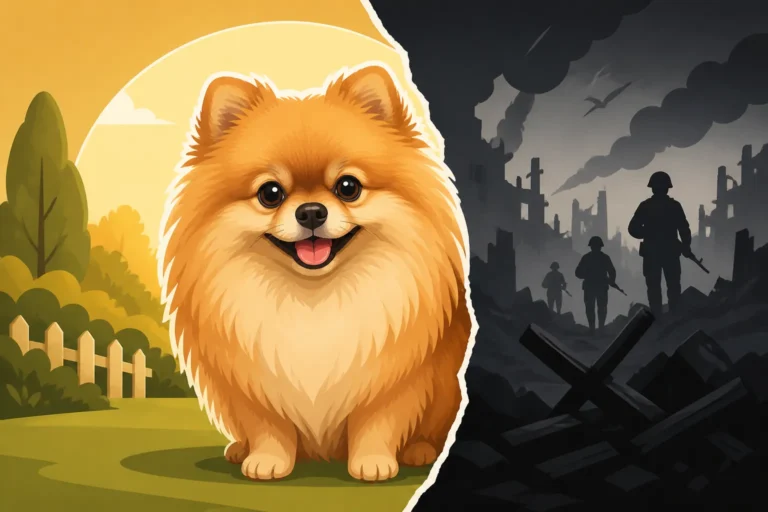
A Pomeranian’s ancestors were part of a much larger family of northern and central European Spitz dogs, many of which lived in cold, snowy regions. That does not prove that Pomeranians themselves pulled sleds or performed one specific snow job. This guide separates what is known about the breed’s background from what can only be inferred, and explains what that history means for today’s tiny companion dog.
What Pomeranian ancestry can tell us about snow
The Pomeranian came from a wider Spitz family
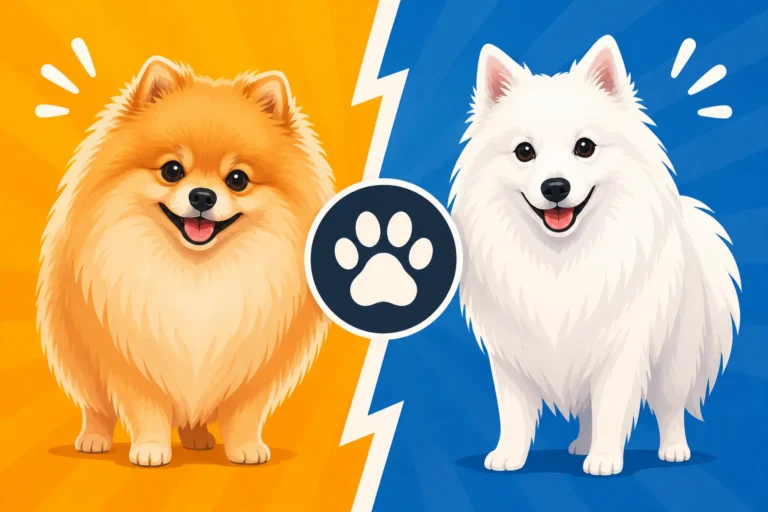
Pomeranians belong to the Spitz family, a group of dogs typically associated with features such as a dense coat, pointed ears, a curled or carried tail, and a foxlike face. The family includes dogs from several regions and with different working histories. It is more accurate to think of the Pomeranian as one modern, small member of that broad family than as a direct copy of a particular sled dog.
The breed’s name comes from Pomerania, a historic region along the southern Baltic coast. That region’s setting and climate help explain why people often connect Pomeranians with cold-weather dogs. But a place name is not a job description: it does not tell us exactly what every dog in the region did, or prove that the Pomeranian’s immediate ancestors worked in deep snow. For more on the geography behind the breed’s name, see Where Pomerania Sits and Why the Breed Is Named for It.
The Pomeranian’s earlier relatives were larger than the toy-sized dogs familiar today. Over generations, people selected smaller dogs, changing the breed’s size and role. That history matters when imagining the past: a larger Spitz-type dog could have been more useful for practical work than a modern Pomeranian weighing only a few pounds. It is still important, though, not to treat every larger northern dog as a documented Pomeranian ancestor. The German Spitz Family a Pomeranian Belongs To offers more context on the family relationship.
Cold-weather adaptations are not proof of a snow job
A thick coat can help a dog cope with cold, and the Pomeranian’s double coat is often one reason people picture the breed in winter landscapes. Yet a physical feature alone cannot establish a specific historical task. A dog may have a warm coat because of its ancestry and local environment without having been trained to haul a sled, herd livestock, or work outdoors all day.
This distinction is easy to lose in simplified breed stories. “Northern-looking dog” can become “sled dog” in a sentence or two, even when the evidence does not show that Pomeranians were used for that purpose. The more cautious conclusion is that Pomeranians have roots in a wider Spitz population shaped by people and environments in which cold weather was familiar. The specific work done by particular dogs likely varied by community, time, and place.
For a closer look at the difference between a family resemblance and a documented working role, read The Working Spitz the Pomeranian Descends From and Whether the Pomeranian Was Ever a Sled Dog. These topics help place the breed in context without turning a plausible connection into a certainty.
What the ancestors may have done
Spitz dogs had more than one possible role
Historically, dogs in Spitz groups were not all bred for the same task. Depending on the local community, larger dogs could have helped with guarding, alerting people to unfamiliar activity, accompanying families, or other practical work. Some Spitz breeds are associated with hunting or pulling loads, but those roles should not automatically be assigned to every breed in the family.
For Pomeranian ancestors, it is safest to discuss possibilities rather than claim a single proven occupation. The dogs may have been valued for usefulness as well as companionship, but the available breed story does not establish that every early Pomeranian was a worker. The Pomeranian’s later development as a smaller companion dog also makes it especially important to distinguish the breed’s older relatives from the dog as it is known today.
If you are curious about the kinds of roles associated with early dogs in the region, What the Original Pomeranian Was Kept For and Whether Early Pomeranians Guarded Livestock explore those questions. The titles point to topics worth separating carefully: a breed may have a broad working background without one task being confirmed for every dog.
Why the sled-dog idea persists
The sled-dog association is understandable. Pomeranians share some recognizable traits with other Spitz dogs, and people often connect those traits with cold climates and northern working breeds. Their ancestors were also larger than today’s Pomeranians, making it tempting to imagine a miniature breed that once did the same work as a much bigger sled dog.
But resemblance is not direct evidence. A curled tail, dense fur, or pointed ears may be shared across related dogs without proving that they shared the same job. Nor does the fact that a dog’s ancestors lived in a cold region establish that they pulled sleds. Those claims need specific historical support, not just a visual comparison.
A helpful way to think about it is to separate three questions: Did the Pomeranian’s wider family include working dogs? Yes, the Spitz family includes dogs with working histories. Did Pomeranians descend from larger dogs? Yes, the breed was reduced in size over time. Can we confidently say that Pomeranians themselves were regular sled-pullers? That is a much stronger claim and should not be presented as settled fact.
| Claim | What can reasonably be said |
|---|---|
| Pomeranians belong to the Spitz family | Yes. They are part of a broader family of dogs with distinctive Spitz traits. |
| Earlier Pomeranians were larger | Yes. The modern toy-sized breed developed through selection for smaller size. |
| The breed has northern and European connections | Yes, but a regional connection does not establish one particular job. |
| Pomeranians were sled dogs | This is often repeated, but it should not be treated as proven simply because of their appearance or family resemblance. |
| A modern Pomeranian is built for snow work | No. Today’s small companion dog should not be expected to perform the work of a larger working breed. |
How the modern breed became small
Selection changed size and purpose
The Pomeranian’s history is not only a story of ancestry; it is also a story of people choosing which traits they wanted in dogs. Over generations, breeders selected smaller dogs, helping create the toy-sized Pomeranian recognized today. As that happened, the breed’s practical role shifted toward companionship rather than heavy outdoor work.
This is one reason the phrase “Pomeranians used to pull sleds” can be misleading. It blurs the difference between a modern breed and the larger dogs within its extended background. A family tree can connect small companion dogs to larger working relatives without meaning the smaller descendants performed the same tasks. For more on that change, see How Breeders Selected Pomeranians Down in Size.
The change in size also altered what is sensible for owners to expect. A modern Pomeranian can enjoy a brisk walk and may relish a safe sniff around a snowy yard, but that does not make it a hardy expedition dog. A small body loses heat more quickly than a larger one, and deep snow can be tiring or difficult to move through. A dog’s individual age, health, coat condition, and comfort matter more than a romantic picture of its ancestors.
A double coat is useful, but it is not winter armor
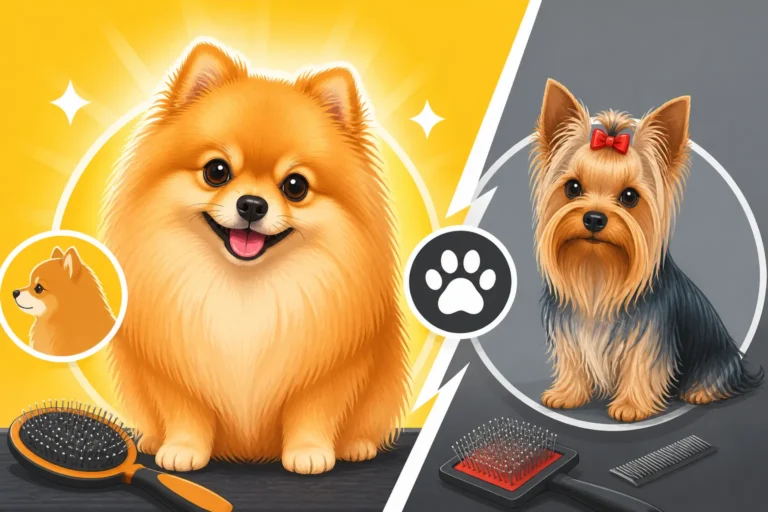
The Pomeranian’s coat has two layers: a softer undercoat and longer outer guard hairs. This structure can provide insulation, but it does not make every Pomeranian comfortable in every cold-weather situation. Wind, wet fur, icy ground, and long exposure can all affect comfort. A coat can also become damp or tangled, and snow may collect in the feathering around the legs and paws.
Owners sometimes assume that a fluffy dog never needs help outdoors. In practice, watch the dog rather than relying on appearance. Shivering, lifting paws, slowing down, seeking shelter, or repeatedly trying to turn back are signs to end the outing and warm up indoors. A short, supervised trip through light snow is very different from a long walk in freezing, windy weather.
The coat also needs routine care to remain in good condition. Regular brushing helps prevent tangles and mats, especially where a harness rubs or snow clings. If you are setting up a grooming routine, The Double Coat That Makes a Pomeranian and Why It Stays On explains why coat maintenance matters. For modern winter-specific considerations, Whether a Pomeranian's Coat Handles Snow and Whether a Pomeranian Suits a Cold Climate are useful companion reads.
What this history means for Pomeranians today
Let your dog set the pace in winter
A Pomeranian can enjoy cold-weather outings, but “can go outside” is not the same as “is suited to prolonged snow exposure.” Start with brief trips and notice how your dog responds. Keep outings shorter when the ground is icy, snow is deep, or wind makes the temperature feel harsher. Very young puppies, older dogs, and dogs with health problems may need extra caution.
Paw care deserves attention too. Snow, ice, and road salt can irritate a dog’s feet, while long hair between the pads can collect clumps of snow. After a walk, check the paws and gently remove any ice or grit. If you are shopping for routine grooming and paw-care supplies, Chewy is one place owners may browse for brushes and other basic dog-care items. Choose tools and products based on your dog’s needs, and ask your veterinarian before using a topical product if your dog has sensitive or damaged skin.
Clothing is not automatically necessary for every Pomeranian, but a well-fitted layer may help some dogs in cold or wet conditions. It should not restrict movement, rub under the legs, or trap moisture against the coat. If you are considering a jacket or paw protection, Chewy may be a convenient retailer to check alongside local pet shops, but fit and your dog’s comfort matter more than the label or style. Introduce any new gear gradually indoors so your dog can get used to it before heading out.
Separate breed history from a modern dog’s needs
Breed history can be fascinating, but it should not be used as a reason to push a small dog past its comfort level. A Pomeranian does not need to prove its northern ancestry by staying outside in snow. Its wellbeing depends on practical choices: keeping outings appropriate, drying the coat when needed, checking paws, and providing a warm place to rest.
Consider a familiar winter scenario: you take your Pomeranian outside, and after a few minutes it starts lifting one paw and turning toward the door. The most useful response is not to insist that a thick coat means it should be fine. Head inside, check for packed snow or irritation, dry the dog, and shorten the next outing. If the dog appears persistently uncomfortable or develops a skin or paw problem, ask a veterinarian for guidance.
When shopping for a brush, coat-care supplies, or a properly fitting winter layer, Chewy can be one option to compare with other retailers. The historical connection to Spitz dogs may explain why the Pomeranian has a plush coat, but day-to-day care should be guided by the individual dog in front of you. That distinction keeps a compelling breed story from becoming an unsafe expectation.
Disclaimer
This article is for general informational purposes only and does not constitute professional advice. Laws, prices and regulations vary by location and change over time. Consult a qualified professional for guidance on your specific situation.