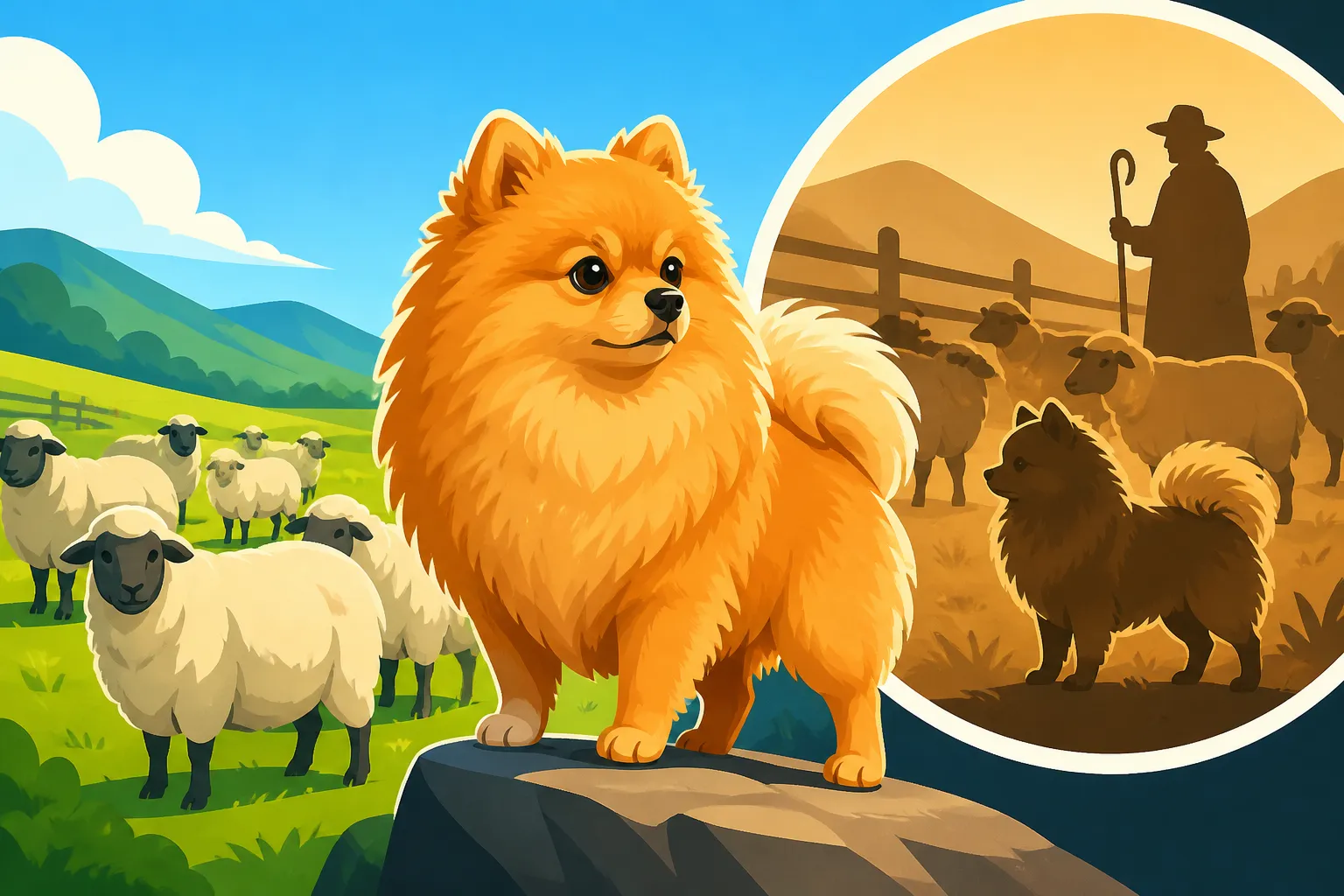
Whether Early Pomeranians Guarded Livestock
Many new Pomeranian parents, or those simply curious about these fluffy, vivacious little dogs, often wonder about their historical roots. It’s natural to look at their dense coats and alert expressions and imagine them in some grand, ancient role. One common question that pops up is whether these early Pomeranians, the ancestors of our modern-day companions, were ever used to guard livestock. It’s a fascinating thought, picturing a much larger version of our beloved Pom standing watch over sheep or cattle. This guide is going to dive deep into the origins of the Pomeranian, debunking some myths and shedding light on their true, impressive, and very different working past.
The Ancestry of the Pomeranian: Tracing Their Spitz Roots
To understand whether early Pomeranians guarded livestock, we first need to trace their lineage back through the millennia. The Pomeranian didn't just appear out of nowhere, perfectly formed as the tiny companion dog we know today. Rather, they are a direct descendant of the ancient Spitz family of dogs, a group renowned for their thick double coats, erect ears, wedge-shaped heads, and often curled tails. These dogs originated in the Arctic and sub-Arctic regions, where their hardy physical traits were essential for survival.
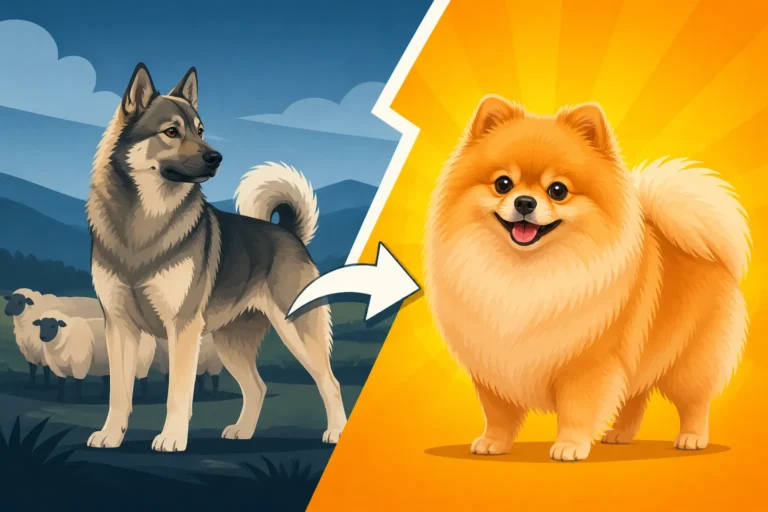
Think of breeds like the Siberian Husky, Alaskan Malamute, Samoyed, and Norwegian Elkhound. These are all part of the vast Spitz family, and many of them certainly did have working roles involving guarding, pulling sleds, or hunting alongside humans in harsh environments. The lineage of our little Pomeranian is directly tied to these larger, more rugged working dogs. The early ancestors of the Pomeranian were much larger than the tiny companions we cherish now, weighing in closer to twenty or even thirty pounds. This larger size gave them a more robust presence, allowing them to fulfill practical duties alongside their human families.
This ancestral connection often leads people to make assumptions about the Pomeranian's original job description. It’s easy to connect the dots and think, "Well, if they were larger and came from working Spitz stock, then surely they must have been guarding something important, like livestock." However, while their larger relatives did undertake such tasks, the specific role of the Pomeranian's direct ancestors tells a slightly different, though equally compelling, story. We often talk about The German Spitz Family a Pomeranian Belongs To in the context of their shared physical traits, but their individual histories diverged significantly over time.
The Original Role of the Pomeranian's Ancestors: Not Livestock Guardians
Despite their larger Spitz heritage, the early Pomeranians, specifically the dogs named for the Pomerania region of Central Europe, were generally not livestock guardians in the traditional sense. When we think of true livestock guardian dogs (LGDs) like Great Pyrenees, Anatolian Shepherds, or Maremma Sheepdogs, we picture massive, independent, fiercely protective breeds whose sole purpose was to live among the flock and deter predators, often with little direct human supervision. This was not the Pomeranian's primary role.
Instead, the larger ancestors of the Pomeranian were primarily all-purpose farm dogs. They were companions, protectors of the homestead (not necessarily the far-flung flock), and often served as general watchdogs. Their loud, alert bark, which is still a hallmark of the modern Pomeranian, would have been invaluable for alerting farmers to intruders, whether human or animal, approaching the house or barnyard. They might have chased away small predators like foxes or weasels that threatened poultry or smaller farm animals, but they weren't typically left out in pastures overnight to fend off wolves or bears like dedicated LGDs.
These dogs were very much integrated into the family and farm life. They might have accompanied their owners on travels, serving as loyal protectors. Their intelligence and eagerness to please, traits still evident in our Poms today, would have made them adaptable to various tasks around the homestead. While they weren’t actively herding or guarding livestock in the manner of a Border Collie or a Great Pyrenees, they certainly contributed to the overall security and daily operations of the farm. Understanding Pomerania and the Sled Dogs Behind the Pomeranian can give us a broader picture of the Spitz family's diverse working heritage, even if the Pomeranian's specific niche was different.
The Transformation from Farm Dog to Fashion Accessory
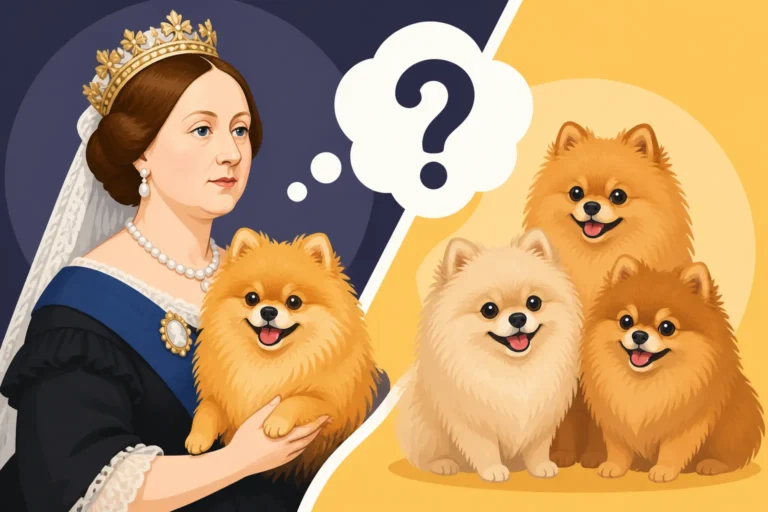
The journey from a sturdy farm dog to the lap-sized companion Queen Victoria famously adored is one of the most remarkable transformations in canine history. It wasn't a sudden shift, but a gradual process influenced by changes in society and the preferences of dog fanciers. As people moved from rural to urban settings, and as the concept of "pets" became more formalized, the demand for large, utilitarian farm dogs began to wane, especially among the burgeoning leisure class.
European royalty and aristocracy, in particular, took a liking to these beautiful, fluffy Spitz dogs, but preferred smaller versions that could be kept indoors as companions. This created a strong incentive for breeders to selectively breed for reduced size, leading to the dramatic decrease in the Pomeranian’s weight and stature over just a few generations. The dogs were still full of personality and charm, but their role shifted entirely from practical duties to being pampered pets and status symbols. This deliberate selection for smaller size is a huge part of How the Pomeranian Halved in Size in One Lifetime.
It's important to remember that this shift didn't erase their innate Spitz qualities. Even today, our Poms retain that alert nature, the confident demeanor, and the sometimes surprisingly deep bark of their larger ancestors. They might not be chasing foxes off the property anymore, but they’ll certainly let you know if the mail carrier dares to approach the front door! This instinct for watchful guardianship, albeit on a much smaller scale, is a direct echo of their farm dog past.
Distinguishing Between Guarding and Alerting
It’s easy to confuse the concept of "guarding" with "alerting," especially when discussing smaller breeds like the Pomeranian. True livestock guardian dogs are bred for centuries to protect animals from serious threats, often engaging in direct confrontation. They possess a specific set of traits, including independence, a strong protective instinct, and the physical prowess to stand their ground against large predators. They are calm observers until a threat emerges, at which point they become formidable defenders.
The early Pomeranian's role, as an all-purpose farm dog and watchdog, leaned much more heavily into alerting. Their primary function was to signal the presence of anything unusual or threatening to their human family. This meant barking loudly and persistently to draw attention. While they might have deterred smaller pests or barked at strangers, they weren't expected to fight off a pack of wolves single-handedly. Their value was in their vigilance and their ability to raise the alarm, allowing human intervention. This alert barking is a trait that continues to this day, and is a big reason Why a Pomeranian Barks at Everything That Moves.
Even now, Pomeranians are famous for their "big dog bark" in a small package. They are incredibly aware of their surroundings and quick to announce visitors, passing squirrels, or even a leaf blowing across the yard. This isn't guarding in the traditional sense, but rather a scaled-down version of their ancestral watchdog duties. When you buy toys or specialized food for your Pomeranian from a retailer like Chewy, you're not outfitting a working dog, but a beloved companion whose instincts still harken back to a practical past. Similarly, when choosing supplies, it's about what suits The Three to Seven Pounds a Pomeranian Is Allowed rather than a twenty-pound farm dog.
Modern Pomeranians: A Legacy of Loyalty, Not Livestock
So, to definitively answer the question of whether early Pomeranians guarded livestock: generally, no, not in the way dedicated livestock guardian breeds did. Their ancestors were versatile farm dogs and watchdogs, valued for their alertness and companionship, rather than for directly protecting flocks in open pastures. Their primary utility was in alerting their human family to potential dangers, a trait that continues to resonate strongly in the breed today.
The transformation into the small, fluffy companion dog we adore was a result of selective breeding driven by changing societal preferences. While they shed their working duties, they never lost their intelligent, alert, and fiercely loyal nature. Today's Pomeranians are cherished family members, bringing joy, laughter, and sometimes a surprising amount of protective barking to our lives. If you are ever wondering about The First Signs a Pomeranian Is Aging, you’ll appreciate how their enduring vitality is a testament to their hardy ancestry.
When you're searching for the perfect harness or comfortable bed for your little Pom, you might browse sites like Chewy, knowing that you're providing for a companion animal whose needs are far removed from those early farm dogs. However, their history reminds us that even the smallest breeds carry a rich tapestry of purpose and evolution within their genes. Their confidence, their voice, and their unwavering loyalty are all echoes of a time when their larger ancestors played a crucial role in safeguarding the human home, if not the sheep, in the vast, open fields.
This long history also helps us appreciate many of their quirks. For instance, understanding their origins can shed light on Whether a Pomeranian Is Hardier Than It Looks or why they exhibit certain behaviors. Even when simply browsing the variety of foods available on Chewy, it’s worth considering formulas that support their unique needs as a small breed, acknowledging the journey their breed has taken. The grooming needs alone, with that magnificent double coat, are a direct link to their cold-weather ancestors, something detailed in The Double Coat That Makes a Pomeranian and Why It Stays On.
Here's a brief look at how the early Spitz traits evolved into the modern Pomeranian:
| Trait | Early Pomeranian Ancestors (Spitz) | Modern Pomeranian (Companion) |
|---|---|---|
| Size | 20-30+ lbs (9-14+ kg) | 3-7 lbs (1.4-3.2 kg) |
| Primary Role | All-purpose farm dog, watchdog, companion | Companion, family pet, show dog |
| Protective Instinct | Alerting to intruders, deterring small pests | Alert barking at perceived threats, territorial |
| Habitat | Farms, rural homesteads, accompanying owners on travels | Urban homes, apartments, suburban houses |
| Diet | Whatever was available, often scraps and hunted prey | Specially formulated small-breed kibble or fresh food |
| Grooming Needs | Minimal, natural maintenance for harsh environments | Regular brushing, bathing, professional grooming |
| Training Focus | Obedience for farm tasks, vigilance | House training, socialization, companion manners |
Understanding this evolution helps us appreciate the Pomeranian not just as a cute face, but as a breed with a deep, practical history that still informs their wonderful personalities today. From their large, guarding ancestors to their modern-day pampered status, these dogs have truly seen it all!
Disclaimer
This article is for general informational purposes only and does not constitute professional advice. Laws, prices and regulations vary by location and change over time. Consult a qualified professional for guidance on your specific situation.