Whether Victoria Bred Pomeranians Herself
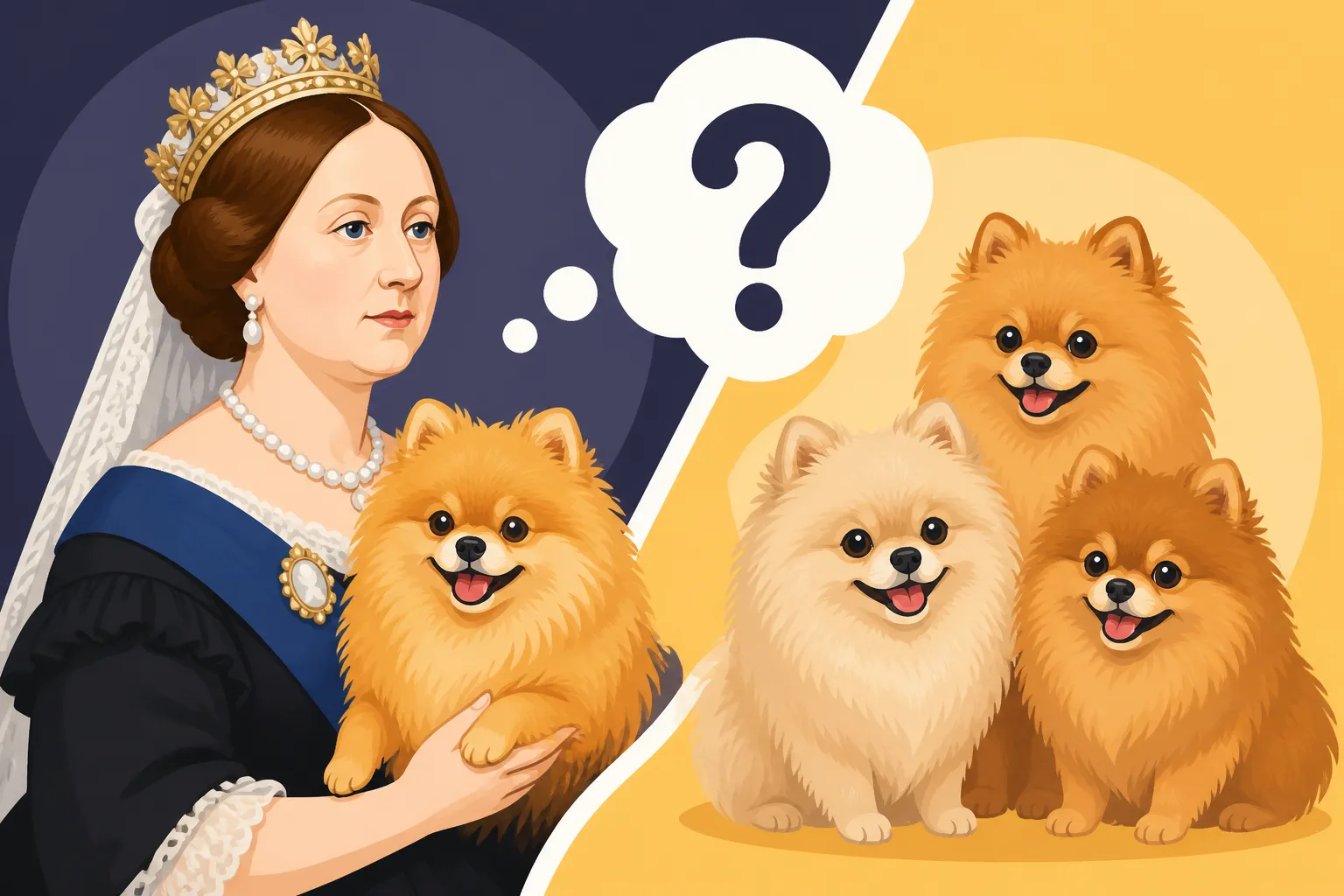
It's a common and fascinating question that many Pomeranian enthusiasts ponder: did Queen Victoria, the monarch who arguably catapulted the breed to international fame, actually get her hands dirty with breeding herself? We know she adored her Poms, especially her beloved Marco, but the extent of her personal involvement in their propagation is a detail that often gets lost in the mists of history. This guide will delve into the intricacies of royal patronage and explore just how much influence the formidable queen had on shaping the Pomeranian breed we cherish today.
Queen Victoria's Pivotal Role in Pomeranian Transformation
Before Queen Victoria entered the scene, Pomeranians were quite a different dog. They were larger, often weighing upwards of 20-30 pounds, and were primarily valued for their working capabilities in regions like Pomerania (modern-day Germany and Poland). They were watchdogs, flock guardians, and general farm utility dogs – far removed from the dainty lapdogs we know today. Their coats were rugged, their builds more robust, and their colors tended towards the more utilitarian whites, creams, and blacks. They were dogs of substance, not necessarily of delicate beauty.
Discovering the Charm of the Smaller Pomeranian
Queen Victoria's love affair with Pomeranians truly blossomed during her travels to Florence, Italy, in the late 1880s. It was there that she encountered the smaller, more refined versions of the German Spitz dogs, ancestors of our modern Poms. These dogs, notably smaller than the ones common in northern Europe, captivated her instantly. Her most famous acquisition from this trip was a little dog named Marco, a beautiful red-sable male weighing in at a mere 12 pounds. Marco's charm, intelligence, and exquisite smaller size were a revelation to the Queen. This encounter proved to be a pivotal moment, not just for Victoria, but for the entire Pomeranian breed worldwide. His presence quickly overshadowed the larger, more traditional types.
Marco wasn't just a pet; he was a symbol of a new ideal. His vibrant coloring and compact size sparked a fervent desire in the Queen to see more dogs like him. She was utterly enchanted, and this enchantment had far-reaching consequences. Her public adoration for Marco, and other smaller Poms she acquired, quickly set a new trend. People wanted what the Queen had, and suddenly, the demand for smaller, more decorative Pomeranians surged. Her influence truly marked a turning point in the breed's history, as chronicled in Marco, Victoria's Pomeranian, and the Year 1888.
The Royal "Seal of Approval" and Breed Standards
When Queen Victoria showed her Pomeranians, particularly Marco, at prestigious events like Crufts in 1891, it solidified their status and catapulted them into the public eye as a desirable companion breed. Her participation in these shows wasn't just about winning ribbons; it was about bestowing a royal "seal of approval" on a particular type of Pomeranian. She was essentially saying, "This is the ideal." Her preference for dogs weighing under 12 pounds had an almost immediate effect on breeders. It wasn't just a suggestion; it became a directive for what was considered fashionable and valuable in the breed.
Breeders, eager to gain recognition and cater to the elite market, quickly began to shift their breeding programs. The goal became to produce smaller, more compact dogs with denser, stand-off coats and the striking colors Victoria admired. This wasn't about the Queen personally overseeing matings in a kennel, but rather her powerful influence dictating the direction for countless breeders across the British Empire and beyond. Her taste shaped the very characteristics that would eventually become enshrined in the breed standard. It's a prime example of how a single influential figure can dramatically alter the course of a breed's development, as breeders diligently began figuring out How Breeders Selected Pomeranians Down in Size to meet this new demand.
Examining the Royal Kennels: Breeding or Patronage?
It's tempting to imagine Queen Victoria, resplendent in her finery, personally ushering a male Pomeranian to a female for breeding. However, the reality of royal animal husbandry in the Victorian era was a bit more structured and delegated. While her passion for animals, especially her dogs, was undeniable, the day-to-day operations of managing a royal kennel would have fallen to dedicated staff.
The Structure of Victorian Royal Animal Husbandry
Royal households during Victoria's reign were immense operations, employing vast numbers of staff for every conceivable task, including the care of various animals. The royal kennels were no exception. These facilities were managed by highly skilled and knowledgeable kennel masters and their assistants, whose job it was to ensure the health, well-being, and often the breeding of the monarch's animals. Queen Victoria was known to be very hands-on with her pets, enjoying their company and overseeing their general welfare. She had a deep personal connection to each of her dogs, and we know Whether Queen Victoria Owned More Than One Pomeranian she did, indeed, own many. She spent considerable time with them, but the meticulous details of a breeding program would typically be handled by her specialized staff.
Her role would have been more akin to that of a primary director or patron. She would express her preferences, approve specific dogs for acquisition, and likely even have a say in which dogs were selected for mating, but the actual physical act of breeding, whelping, and raising litters would have been the responsibility of her experienced staff. They would report to her, seek her approval, and execute her vision for the animals under their care. This delegation was standard practice for a monarch with vast responsibilities.
Selecting and Acquiring Breeding Stock for the Desired Type
So, while Queen Victoria might not have been "breeding" in the sense of a hands-on hobby breeder, she absolutely fostered a breeding program through her influence and resources. She didn't just stumble upon Marco; she sought out and acquired these smaller types of Pomeranians because they appealed to her aesthetic. Her staff would have been dispatched to find dogs that matched her ideal, which meant going to breeders who were already producing these daintier Poms or encouraging existing breeders to lean into these traits. This constant demand from the highest echelons of society created a powerful incentive for breeders to produce dogs that met the Queen's stringent, albeit unspoken, criteria.
Think of it this way: if the Queen expressed a desire for a particular type of flower, her royal gardeners wouldn't just find one; they would cultivate and propagate it, possibly even acquiring new seeds or plants from far and wide to meet her exact specifications. The same principle applied to her dogs. Her acquisition of dogs from various lines that exhibited the desired traits effectively created a royal breeding pool. This influence was a far cry from the larger, The Twenty Five Pound Pomeranian of the 1800s that had been common, pushing breeders towards a new vision for the breed. These breeders, keen to maintain healthy lines, would have used the best available resources, including high-quality foods and supplements, perhaps even sourcing specialized small breed kibble and grooming supplies from trusted retailers like Chewy to ensure their dogs were in top condition to gain royal notice.
The Lasting Impact: A Breed Redefined by Royal Taste
Queen Victoria's patronage was a game-changer. Whether she personally orchestrated every mating or not, her role as a tastemaker fundamentally altered the trajectory of the Pomeranian breed. The dogs we see today are, in many ways, a living legacy of her personal preferences.
The Pomeranian's Dramatic Shift in Size and Appearance
The most striking change, directly linked to Queen Victoria's preferences, was the dramatic reduction in the Pomeranian's size. From being robust, medium-sized dogs weighing 20-30 pounds, the breed rapidly transitioned to the toy-sized companions we recognize today, typically ranging from 3 to 7 pounds. This wasn't a gradual evolutionary process; it was a concentrated effort by breeders over a relatively short period, driven by royal demand. Her influence was so profound that the breed literally halved in size within a single lifetime, illustrating How the Pomeranian Halved in Size in One Lifetime.
Beyond size, her preference also solidified other key traits. The dense, double coat that stands off the body, the lively, intelligent expression, and the variety of vibrant colors (with orange and sable becoming particularly popular) were all characteristics she admired. Her personal collection, featuring dogs like Marco, essentially became the living embodiment of the new "breed standard" long before formal standards were uniformly adopted. Even the iconic "fox-like" face became a desirable trait, differentiating it from other Spitz types. While her favored dogs were smaller than their ancestors, it's an interesting thought experiment to consider Whether Victoria's Dogs Would Be Pomeranians Today compared to our modern show winners.
Royal Legacy in the Modern Pomeranian World
The ripple effect of Queen Victoria's patronage continues to this day. Every time you see a tiny, fluffy Pomeranian prancing down the street, you're witnessing the direct result of a royal preference expressed more than a century ago. Her influence demonstrates how powerful a single individual's taste can be in shaping an entire breed. It underscores the responsibility that comes with such influence, especially when it encourages changes that might have health implications, such as the push for extreme smallness, which is why topics like What Teacup Breeding Costs a Pomeranian are so important to discuss.
Modern breeders, though far removed from royal patronage, still operate within a framework established by this history. They strive for specific traits outlined in today's breed standards, which are themselves a distillation of past preferences. Owners invest in high-quality nutrition, specialized grooming tools found on Chewy, and regular veterinary care to maintain the health and beauty of their Poms. These decisions, from the type of food to the frequency of grooming, all contribute to maintaining the breed's characteristics. The Pomeranian, a descendant of The German Spitz Family a Pomeranian Belongs To, remains a testament to the enduring power of royal taste, reminding us of a time when a queen's affection for a small dog could change its destiny forever. Even the dominance of certain colors, like the orange, which gained immense popularity during her reign, still has a strong presence today, making The Orange Pomeranian and Why It Dominates a fascinating part of their history. The breed standard today still values these traits, requiring a specific weight range, as outlined in The Weight the Pomeranian Standard Requires.
| Pomeranian Trait | Pre-Victorian Era (Roughly Pre-1880s) | Victorian Influence (Late 1800s – Early 1900s) | Modern Breed Standard (Approximate) |
|---|---|---|---|
| Average Weight | 20-30+ pounds | 10-12 pounds (Victoria's ideal) | 3-7 pounds |
| Primary Role | Working dog, watchdog, flock guardian | Companion, show dog | Companion, show dog |
| Key Aesthetic | Robust build, utilitarian appearance | Smaller size, dense coat, refined features | Compact, profuse double coat, foxy expression |
| Coat Density | Functional, weather-resistant | Thick, stand-off, abundant | Profuse, double-coated, full ruff |
| Color Preference | Whites, blacks, creams (working colors) | Orange, sable, black (more varied) | Wide variety, vibrant colors preferred |
In conclusion, while Queen Victoria herself might not have been hands-on in the breeding shed, her profound adoration and immense influence undeniably orchestrated a monumental shift in the Pomeranian breed. She didn't just own them; she redefined them, setting a standard that resonates in every Pomeranian we meet today.
Disclaimer
This article is for general informational purposes only and does not constitute professional advice. Laws, prices and regulations vary by location and change over time. Consult a qualified professional for guidance on your specific situation.