Whether a Double Coated Pomeranian Copes With Heat
A Pomeranian’s thick double coat can make a summer walk feel worrying, especially when the dog is panting before you are. The coat helps insulate against both cold and heat, but it does not make a Pom immune to overheating. This guide explains what the coat does, how to reduce heat risk, which signs call for urgent help, and why shaving usually is not the answer.
How a Pomeranian’s double coat responds to heat
What the outer coat and undercoat do
A Pomeranian has two layers of coat: longer guard hairs on the outside and a softer, dense undercoat beneath. The guard hairs help protect the skin from the elements, while the undercoat provides insulation. Together, those layers help the dog manage changes in temperature, but they are not a built-in cooling system.
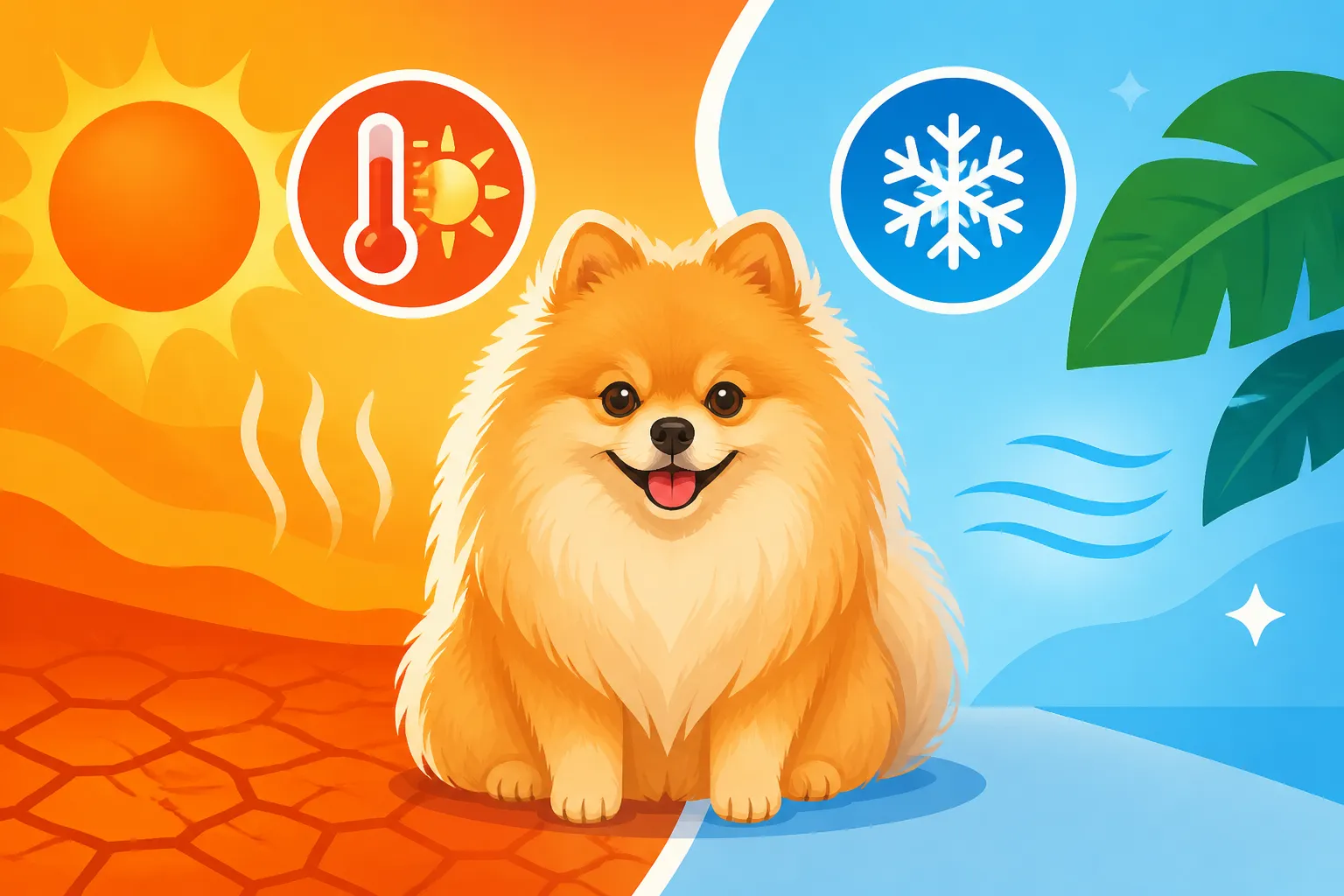
Dogs primarily cool themselves by panting. Their ability to shed heat depends on their surroundings, activity level, hydration, and general health. A thick coat can also hold warmth close to the body, particularly if it is matted or packed with loose undercoat. So it is reasonable to be cautious when the weather is hot, even though the coat serves a protective purpose.
If you want to understand the structure more closely, The Guard Hair and Undercoat of a Pomeranian explains how the layers differ. The important practical point is that the coat should be maintained, not removed wholesale, to help it do its job.
Does a thick coat protect a Pom in summer
The coat offers some protection from direct sun and changes in temperature, but it cannot prevent overheating. A Pomeranian may still become dangerously hot in a warm room, a parked car, direct sun, or during a long walk on a humid day. Small dogs can also be close to hot pavement, and their short legs may bring them nearer to the heated surface than a larger dog’s legs do.
Think of the coat as insulation rather than air conditioning. It can reduce direct exposure to the skin, but it does not cancel out heat, humidity, exertion, or lack of shade. How a Double Coated Pomeranian Handles Summer offers more detail on the balance between coat care and warm-weather comfort.
Why shaving is not a reliable cooling shortcut
It may seem kind to clip a Pomeranian very short when summer arrives. But shaving the double coat down to the skin is not a dependable way to keep the dog cool. It removes some of the coat’s protection from sun and may expose sensitive skin to sunburn, irritation, and scratches. In some dogs, the coat may also grow back unevenly or with a changed texture.
A tidy trim around the feet or sanitary area is different from shaving the body. If your Pom is heavily matted, uncomfortable, or struggling with coat care, ask a veterinarian or an experienced groomer about the safest way to address it. For a deeper look at the risks, see Why a Shaved Pomeranian May Not Regrow.
Practical ways to keep a Pomeranian comfortable in warm weather
Adjust walks around the heat
Walk during the cooler parts of the day, such as early morning or later in the evening. Avoid the hottest hours, especially in places where pavement and sidewalks stay warm after sunset. In Phoenix, for example, a walk that feels manageable in the shade can still expose a Pom to scorching pavement; in humid Houston, panting may be less effective at releasing body heat.
Keep outings shorter when the weather is warm, and turn back if your dog begins lagging, panting heavily, or seeking shade. Choose grassy routes where possible and take breaks in cool, shaded areas. A quick bathroom trip may be enough on a particularly hot day; indoor play or gentle training can replace a longer walk.
The hand test—placing the back of your hand on pavement for several seconds—can help flag a surface that is too hot, but it is not a guarantee that a route is safe. Shade, wind, humidity, and the dog’s own tolerance matter too. The Pavement Temperature That Burns a Pomeranian covers this concern in more detail.
Make cool resting places easy to find
Keep fresh water available and let your dog choose a cool resting spot indoors. Air conditioning can be especially helpful during heat waves. If you do not have it, improve airflow, close blinds against direct sun, and provide a shaded, well-ventilated area. Never leave a dog in a parked car, even briefly, because the interior can heat rapidly.
A cooling mat may offer a comfortable place to lie down, but it should be an option rather than the only way your dog can cool off. Check that the mat is intact and follow its care instructions. Some owners compare available cooling mats and other supplies through retailers such as Chewy, but a product cannot make an unsafe room or outdoor outing safe. Whether a Cooling Mat Reaches Through a Pomeranian's Coat discusses what to expect from this type of accessory.
| Situation | Safer choice | Avoid |
|---|---|---|
| Warm afternoon | Keep activity indoors or take a brief shaded potty break | A long walk in direct sun |
| Hot pavement | Choose grass or postpone the walk | Assuming a quick route is safe without checking the surface |
| Home feels warm | Provide water, shade, airflow, and a cooler resting area | Leaving the dog in a sunlit room without a way to move |
| Heavy panting after activity | Stop, move to a cooler place, and assess closely | Encouraging the dog to continue exercising |
| Heat wave | Use short, quiet outings and indoor enrichment | Relying on a shaved coat as heat protection |
Keep the coat clean, brushed, and free of mats
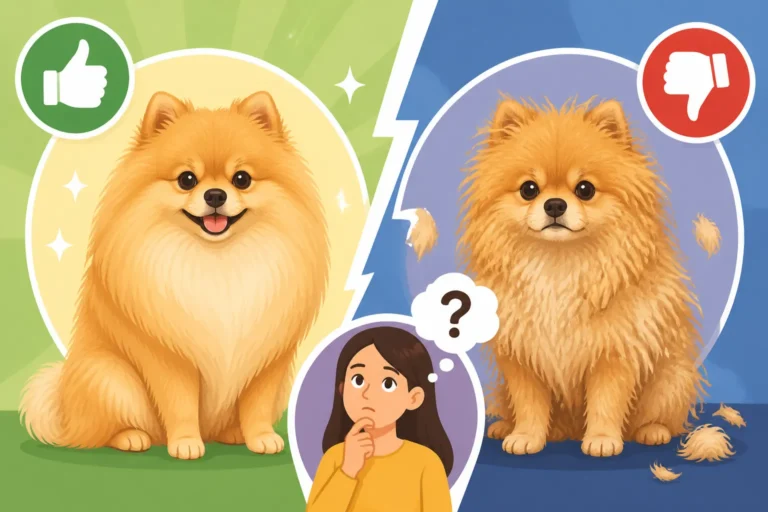
Regular brushing helps remove loose undercoat and lets you check the skin. Work gently in sections so you can reach through the coat rather than brushing only the fluffy surface. Pay attention to areas where tangles often form, such as behind the ears, under the harness, around the legs, and beneath the tail.
A matted coat can trap debris and make skin checks difficult. However, aggressive brushing or using the wrong tool can irritate the skin or damage coat. If mats are tight to the skin, do not pull hard or snip close to the body with scissors; it is easy to cut skin hidden under the fur. A groomer or veterinarian can help decide how to remove them safely.
Some owners use Chewy to browse brushes, combs, and coat-care supplies, but the best tool is one your dog tolerates and that suits the coat’s condition. If your Pom becomes distressed during brushing, pause and build up the routine gradually rather than turning grooming into a struggle.
Recognizing overheating and knowing when to act
Early signs that your Pom may be too hot
Panting after exercise is normal, but persistent or unusually intense panting deserves attention. Other warning signs can include restlessness, seeking shade, drooling more than usual, bright red or unusually pale gums, weakness, and difficulty settling. A dog that seems less responsive or unsteady needs prompt attention.
Look at the whole picture rather than relying on one sign. A Pom who pants briefly after a short walk and quickly settles in a cool room is different from a dog whose breathing stays fast, whose energy drops, or who seems confused. If you are unsure, stop activity, move the dog to a cooler place, offer access to water, and contact a veterinary clinic for advice.
The risk can increase with strenuous exercise, high humidity, poor ventilation, or a health condition that affects breathing or circulation. A dog’s age and body condition can matter too. The Temperature That Is Too Hot for a Pomeranian explores why there is no single temperature that guarantees safety for every dog.
What to do if you suspect heatstroke
Heatstroke is an emergency. If your Pomeranian is collapsing, disoriented, vomiting, having trouble breathing, or unable to stand normally after heat exposure, contact an emergency veterinarian immediately and begin moving the dog out of the heat. Do not wait to see whether the symptoms pass.
While arranging veterinary care, move your dog to a cooler, shaded or air-conditioned area. You can use cool—not icy—water to wet the body and improve airflow with a fan if one is available. Do not wrap the dog in wet towels, which can hold warmth against the body, and do not force water into the mouth. Follow the veterinary team’s instructions and go in for assessment even if your Pom seems to improve; complications can develop after the initial episode.
Chewy may be one place owners look for basic supplies such as a water bowl or cooling mat, but no accessory replaces urgent veterinary care when heatstroke is suspected. If the dog’s condition is worsening, focus on getting professional help rather than trying several products at home.
When to contact your veterinarian
Contact your veterinarian if your Pom repeatedly struggles in ordinary warm weather, pants heavily at rest, has a cough or noisy breathing, or takes an unusually long time to recover after mild activity. These signs may have causes beyond heat, and a veterinary examination can help identify what is going on.
If a dog has previously had heat-related illness, ask the clinic for a tailored warm-weather plan. You can discuss appropriate exercise, coat care, hydration, and any underlying health issues. For more advice on reducing heat exposure during a hot spell, see Getting a Pomeranian Through a Heat Wave.
A simple warm-weather routine for your Pom
Before going outside
Check the conditions, including sun, humidity, and the temperature of the route. Choose a shorter outing during a cooler part of the day, bring water if you will be away from home, and use a well-fitted harness rather than attaching a lead to a collar. A harness does not prevent overheating, but it avoids putting leash pressure directly on the throat.
If your dog already seems tired or is panting indoors, skip the walk and offer a quiet alternative. A few minutes of gentle indoor training, a food puzzle, or a calm sniffing game can provide engagement without adding much physical strain.
During and after the outing
Keep the pace easy and let your Pomeranian stop. Watch for changes in breathing, posture, energy, or coordination. When you get home, offer water and a cool place to rest, then check that your dog settles normally. Avoid encouraging another burst of play immediately after the walk, particularly on a hot day.
For summer supplies, Chewy can be a convenient place to compare basics such as lightweight water bowls or grooming tools, but choose items that suit your dog and use them alongside sensible heat precautions. A cooling product should never be treated as permission to exercise in dangerous conditions.
The main takeaway about the double coat
A Pomeranian’s double coat is useful protection, but it does not stop heat illness. Keep the coat maintained, avoid shaving it close, schedule walks for cooler conditions, and make shade, water, and a comfortable indoor resting place available. Most importantly, treat unusual panting, weakness, confusion, or collapse as a reason to act quickly rather than waiting for the dog to “cool down on its own.”
Disclaimer
This article is for general informational purposes only and does not constitute professional advice. Laws, prices and regulations vary by location and change over time. Consult a qualified professional for guidance on your specific situation.