Telling a Pomeranian From a Volpino
A fluffy white Spitz puppy can look remarkably like a small Pomeranian, and photos alone can make the distinction frustratingly unclear. The most reliable clues are adult size, coat color, proportions, documented ancestry, and the breed standard—not a teddy-bear face or a seller’s label. This guide explains how to tell a Pomeranian from a Volpino Italiano and what to check before choosing either breed.
The clearest differences between a Pomeranian and a Volpino
Pomeranians and Volpino Italianos share the upright ears, curled tail, pointed muzzle, and abundant coat typical of Spitz breeds. That family resemblance is real, but the breeds are not interchangeable names for the same dog. A Volpino is a distinct Italian breed, while the Pomeranian is a small German Spitz breed developed as a companion dog.
Size and body proportions
Size is often the most useful first clue, particularly when comparing adult dogs. A typical Pomeranian stands about 6 to 7 inches at the shoulder and commonly weighs around 3 to 7 pounds. The Volpino Italiano is generally taller and more substantial, with adults often standing roughly 10 to 12 inches and weighing about 9 to 12 pounds. Individual dogs vary, so those ranges are clues rather than a reliable breed test on their own.
A Pomeranian usually gives a compact, short-backed impression. Its outline is small and tightly proportioned, with a plush coat that can make the dog appear larger than it is. A Volpino tends to have a slightly longer, more visibly balanced outline and more height on the leg. In a side-by-side comparison, the Volpino may look like a larger Spitz cousin rather than a Pomeranian that has simply grown extra fluffy.
Coat volume can trick the eye. A full-coated Pomeranian may look broader and taller than its frame really is, while a freshly groomed or shedding Volpino may look less substantial than expected. If you are assessing a dog in person, look at its feet, legs, and body beneath the coat, and ask for a measured shoulder height and a current weight. The breed’s typical size is explained further in The Three to Seven Pounds a Pomeranian Is Allowed.
Coat color and expression
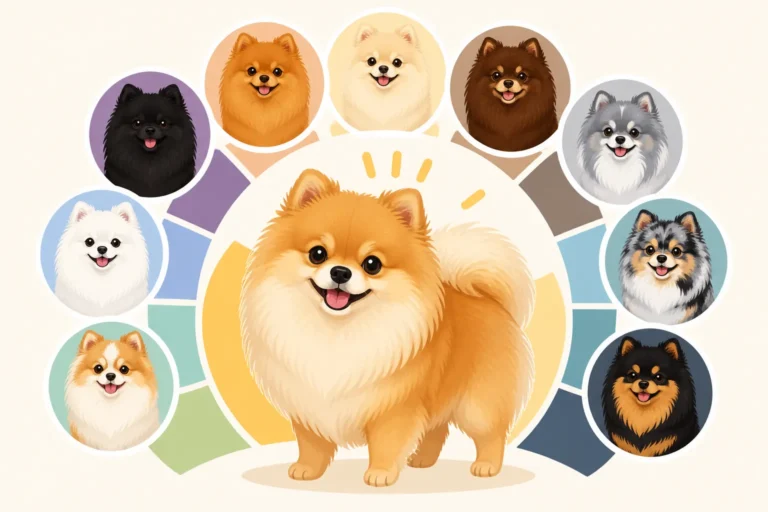
Color can provide a helpful hint. Pomeranians come in a wide range of colors and patterns, including orange, black, cream, sable, parti-color, and others. Volpino Italianos are most often white; red is also associated with the breed. A white Spitz is not automatically a Volpino, of course, but a solid white dog with Volpino-like proportions may be worth investigating more closely.
Facial expression is less dependable than it may seem. Both breeds can have a foxlike face, small erect ears, dark eyes, and a curled plume of a tail. Individual head shapes vary, and grooming can change a dog’s apparent outline. A round “teddy bear” look, for example, may come from coat styling rather than a meaningful breed distinction. For a closer look at Pomeranian color possibilities, see Every Color a Pomeranian Comes In.
| Feature | Pomeranian | Volpino Italiano |
|---|---|---|
| Typical adult size | About 6 to 7 inches tall and 3 to 7 pounds | Often about 10 to 12 inches tall and 9 to 12 pounds |
| Common coat colors | Many colors and patterns | Most commonly white; red is also associated with the breed |
| Overall outline | Compact and short-backed | A little taller and more visibly balanced |
| Shared Spitz features | Erect ears, curled tail, dense coat, alert expression | Erect ears, curled tail, dense coat, alert expression |
| Best confirmation | Reliable pedigree and registration records | Reliable pedigree and registration records |
The table describes common breed tendencies, not a substitute for records. A dog outside a typical size range may still have a legitimate pedigree, while a dog that looks exactly like a breed may not have documented ancestry.
Why looks alone cannot confirm a breed
A photograph can suggest a breed, but it cannot establish one. Coat length, camera angle, age, body condition, and trimming all change what you see. If the question matters for registration, responsible breeding, or a planned adoption, traceable records are far more useful than appearance.
Puppies can be especially hard to identify
Puppies change dramatically as they grow. Their adult coat may not have come in, their proportions may still be shifting, and a fluffy puppy can look more like a ball of fur than a clearly identifiable breed. A small Volpino puppy and a Pomeranian puppy may therefore appear remarkably similar in a listing photo.
Ask for the puppy’s date of birth, current weight, the parents’ sizes, and clear pictures of both parents. A breeder should be able to explain the puppy’s documented ancestry and show appropriate records. Be cautious if someone relies only on claims such as “rare Pomeranian,” “oversized Pom,” or “Volpino type” without providing paperwork that supports the label.
If you are considering a puppy because it is advertised as unusually tiny, remember that a small size claim does not prove a separate breed or guarantee a particular adult weight. Extremely small dogs can also require extra care. How Small a Pomeranian Can Safely Be Bred offers more context on why size marketing deserves careful questions.
Pedigree records matter more than a breed guess
A pedigree is the clearest way to confirm whether a dog is registered as a Pomeranian or a Volpino Italiano. Review the paperwork carefully, check that the puppy’s identifying details match the records, and ask which registry issued them. A registration document is useful evidence, but it should be consistent and traceable rather than presented as a substitute for basic health and background information.
If you are adopting an adult dog without records, it may not be possible to determine its exact breed with certainty. A veterinarian or experienced breed specialist can describe the dog’s physical traits, and a DNA test may offer additional clues, but neither appearance nor a test result should be treated as a pedigree. In everyday life, a dog’s health, temperament, and care needs matter more than whether its label is exact.
This is also where breed history can help with context, but not replace proof. Pomeranians belong to the German Spitz family, while the Volpino Italiano has a distinct Italian breed history. Their shared Spitz features explain why they can look alike; they do not mean that one is simply a regional name for the other. For background on the Pomeranian’s breed group, read The German Spitz Family a Pomeranian Belongs To and Whether a Pomeranian Is Actually German.
Temperament, grooming, and everyday care
Both breeds are alert, lively companion dogs, and both may be vocal when something catches their attention. Breed tendencies can help you prepare, but the individual dog’s temperament, experiences, and training matter just as much. Neither breed should be chosen on appearance alone.
Personality is individual, even within a breed
Pomeranians are often bold and attentive, with a habit of noticing movement, sounds, and visitors. Volpino Italianos are also alert and can be quite vocal. In either breed, barking may become a challenge if a dog has little practice settling after a noise or greeting visitors calmly. Reward-based training, predictable routines, and gradual exposure to everyday sights and sounds can help.
Do not assume that a Volpino will be quieter because it is less familiar to you, or that every Pomeranian will bark constantly. Meet the adult dogs if you can, ask how they behave at home, and notice how they recover after excitement. A confident dog that can pause and settle may be easier to live with than one that stays worked up, regardless of breed.
Both are small dogs, so supervision and gentle handling matter. Jumping down from furniture, rough play, or being handled carelessly can put a little dog at risk. If your household includes children or larger dogs, think about safe introductions and protected resting spaces, not just whether the dog seems friendly at first meeting. The related guide The Home a Pomeranian Belongs In can help you consider how a small companion dog fits into your household.
Coat care and equipment should suit the individual dog
Both breeds have dense coats that need regular attention. Routine brushing helps remove loose hair and lets you check for tangles, especially around areas where friction occurs, such as behind the ears, under the legs, and where a harness sits. A well-kept coat is not just a cosmetic issue: mats can pull at the skin and become uncomfortable.
A Pomeranian’s coat often creates a dramatic ruff and a rounded outline, while the Volpino’s coat may look more uniformly white and stand away from the body. Grooming can blur those distinctions, so do not use a recent haircut as your main identification clue. Avoid close clipping unless a veterinarian recommends it for a specific reason; double coats may not grow back as expected after shaving. More on that concern is available in Why Shaving a Pomeranian Can End Its Coat.
Choose supplies based on the dog in front of you. A harness should fit securely without pressing on the throat or restricting movement, and brushes should suit the coat rather than simply being marketed for a particular breed. Chewy can be one place to compare basic grooming tools and harness styles, but fit and safe use matter more than the store or product label. Before buying anything, measure your dog and check that the item is appropriate for its size and coat.
How to choose or identify the right dog
If you are trying to identify a dog already in your home, start with its records and physical measurements. If you are choosing a puppy, focus on responsible sourcing, health information, and a realistic understanding of the adult dog’s needs. Those steps help avoid disappointment when a dog’s appearance changes as it matures.
A practical checklist for identification
- Check the paperwork. Look for a pedigree or registration record that identifies the dog’s breed and matches its individual details.
- Measure the dog. Record height at the shoulder and weight, then compare them with the general breed ranges. Do not judge from coat volume alone.
- Consider color as a clue, not proof. Many colors are normal for Pomeranians, while white is especially common in Volpino Italianos. Neither fact confirms ancestry.
- Ask about the parents. Their size and documented breed background can help explain what to expect from a puppy.
- Look at health and behavior. Ask about veterinary care, known health concerns, socialization, and the dog’s daily routine.
- Get professional help if it matters. A veterinarian or knowledgeable breed specialist can evaluate the dog’s features, while official records remain the strongest evidence of pedigree.
A reputable source should be comfortable answering reasonable questions and should not pressure you to decide immediately. If the seller cannot explain the dog’s history or provide consistent records, treat the breed claim as unconfirmed rather than filling in the gaps with guesses. The Papers a Pomeranian Breeder Should Provide offers a useful checklist for evaluating breeder documentation.
Choosing between them in real life
If you want a very small companion and prefer the broad range of Pomeranian coat colors, a Pomeranian may be the better fit—but remember that its small size does not eliminate grooming, training, or veterinary needs. If you are drawn to the white Italian Spitz and are comfortable with a somewhat larger dog, look for a Volpino Italiano through a source that can document the breed. In either case, meet the dog when possible and ask how its temperament and care needs fit your household.
Think through practical details before bringing a dog home. Where will it sleep? How will you prevent falls from sofas or beds? Who will brush the coat and arrange veterinary visits? If you are comparing food or everyday supplies, Chewy may help you review options, but your veterinarian can advise on nutrition for a dog’s age, health, and body condition. For a small dog with a full coat, routine grooming and a properly fitted harness are often more useful planning considerations than buying accessories based on breed marketing.
The key distinction is straightforward: a Pomeranian and a Volpino Italiano are separate breeds with a noticeable family resemblance. Size, proportions, and coat color can point you in the right direction, but documented ancestry is the reliable way to confirm the label. If you are welcoming either dog into your life, the best choice is the individual whose needs, temperament, and care requirements suit your home.
Disclaimer
This article is for general informational purposes only and does not constitute professional advice. Laws, prices and regulations vary by location and change over time. Consult a qualified professional for guidance on your specific situation.