Whether the Pomeranian Nearly Vanished During the Wars
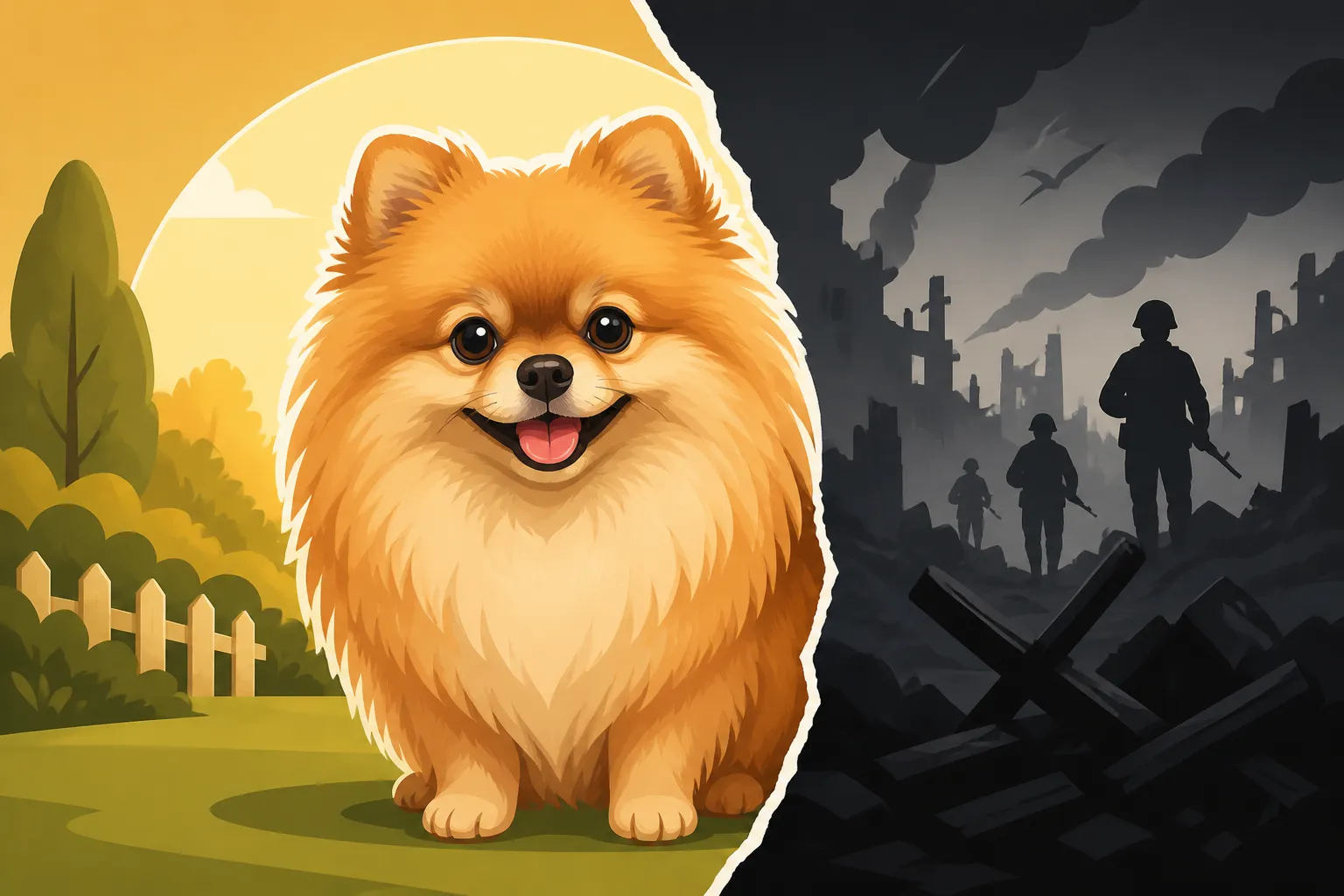
A tiny Pomeranian can seem far removed from the upheaval of the First and Second World Wars, but wars disrupted homes, breeding programs, travel, and access to everyday resources across Europe. Did the breed nearly disappear? The short answer is no: there is no clear basis for saying Pomeranians were on the brink of extinction worldwide. The fuller story is about disruption, not disappearance.
Did the Pomeranian Nearly Vanish During the Wars
What “nearly vanished” would mean
A breed can become less common in one country or region without nearing extinction everywhere. To say a breed nearly vanished would imply that its population fell so low that it was in danger of disappearing altogether. That is a much stronger claim than saying breeding slowed, shows were interrupted, or individual dogs were lost during wartime.
For Pomeranians, the available historical picture supports caution. War brought severe disruption to people and animals, and European dog breeding could not continue as usual. But the breed also had a presence outside the places most directly affected by the fighting. Pomeranians had reached Britain and the United States well before the Second World War, giving the breed a wider base than a dog kept only in its original region.
It is helpful to separate the breed’s name and roots from its modern population. Pomerania is a historic region on the southern coast of the Baltic Sea, and its borders and political identity changed over time. That regional history is part of the breed’s story, but it does not mean that every Pomeranian lived there. Where Pomerania Sits and Why the Breed Is Named for It offers more context on the place behind the name.
Why war made ordinary breeding difficult
Wartime conditions affect the practical details of keeping and breeding dogs. People may be displaced, homes may be destroyed, and travel becomes difficult. Food, veterinary care, and safe housing can also be harder to obtain. A planned litter or a carefully maintained breeding program may be put on hold simply because people are focused on survival.
These pressures were not unique to Pomeranians. They could affect dogs of many breeds, especially where fighting or shortages disrupted daily life. A breeder might lose access to a suitable mate, move away from a kennel, or decide not to raise puppies when resources were scarce. Even when dogs survived, records and pedigrees could be lost or left incomplete.
That is different from evidence that the breed as a whole nearly disappeared. A careful historical answer should acknowledge the disruption without turning it into a dramatic extinction story. The Pomeranian’s survival was helped by its presence in multiple countries, while the broader dog world changed around it.
How the Pomeranian Was Established Before the Wars
From regional working dogs to a small companion breed
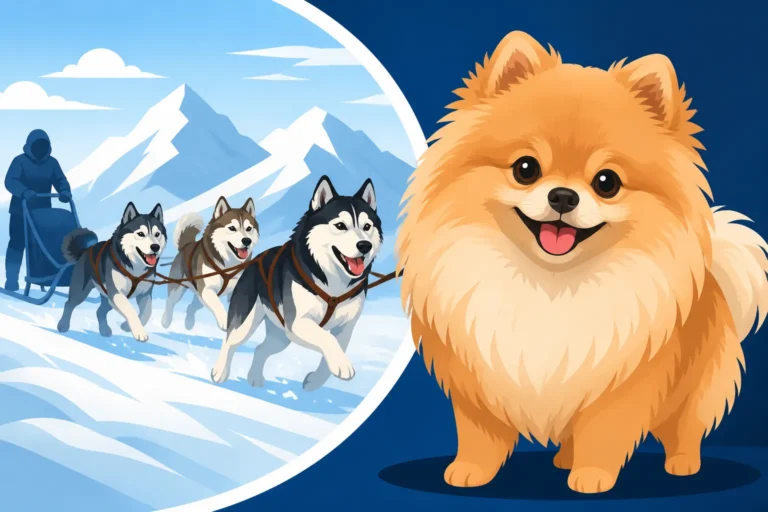
The Pomeranian’s ancestors belonged to the broader Spitz family, a group of dogs known for features such as erect ears, a curled tail, and a dense coat. The dogs associated with the breed’s early history were larger than the small companion Pomeranian familiar today. The Working Spitz the Pomeranian Descends From explains the connection between the breed and its larger Spitz relatives.
Over generations, breeders selected for smaller size and the qualities that suited companion life. The change was not an overnight transformation, and it did not erase the breed’s relationship to its larger ancestors. Rather, the Pomeranian became a distinct small dog through sustained breeding choices. The history of that change is explored in The Twenty Five Pound Pomeranian of the 1800s and How Breeders Selected Pomeranians Down in Size.
That established history matters when considering wartime survival. By the time the world wars began, the Pomeranian was not simply a local dog confined to one part of Europe. It had already become known and bred in other places, making its history less vulnerable to a single region’s upheaval.
The breed had already spread beyond Pomerania
Pomeranians became especially familiar in Britain during the nineteenth century, and the breed also developed a foothold in the United States. Queen Victoria’s interest helped bring public attention to smaller Pomeranians, though her role is best understood as part of a wider shift in popularity and breeding rather than the sole cause of the breed’s transformation. When Pomeranians First Reached England and Marco, Victoria's Pomeranian, and the Year 1888 provide more detail on this period.
The breed’s organized presence continued to develop through clubs, shows, and formal registration. Those institutions helped people identify and record dogs, although they could not protect every animal from the consequences of war. For context on the American timeline, see The Year Pomeranians Entered the AKC Stud Book.
A breed with populations in different countries has more resilience than one whose entire breeding population is concentrated in a single place. That does not mean overseas populations were untouched by global conflict. It does mean that a disruption in one region would not automatically erase every Pomeranian elsewhere.
| Historical factor | Possible effect on Pomeranians | What it does not prove |
|---|---|---|
| Displacement and damaged homes | Dogs and breeding plans could be lost or interrupted | That the entire breed was close to extinction |
| Shortages and reduced access to care | Keeping and raising dogs could become harder | That all countries faced identical conditions |
| Interrupted travel and shows | Breeders had fewer chances to meet or compete | That breeding stopped everywhere |
| Established populations abroad | The breed had a wider base beyond its region of origin | That overseas dogs were unaffected by war |
| Lost or incomplete records | Later histories may have gaps | That no Pomeranians survived in a region |
What the World Wars Could Have Changed
Breeding, records, and dog shows
When societies are disrupted, the organized parts of a breed’s life can suffer even if dogs continue to exist. Shows may be cancelled, clubs may pause their activities, and breeders may be unable to travel. Those changes can make it harder to compare dogs, maintain breeding plans, or preserve detailed records.
A family may also keep a dog without participating in formal breeding or showing. Such dogs might not appear in the records that historians later rely on. As a result, the surviving written history can be incomplete: a quiet period in show records is not the same as proof that no Pomeranians were being kept.
The same distinction matters when reading claims that a breed “almost disappeared.” A sharp interruption in organized activity can sound like a population collapse, but those are different things. For Pomeranians, it is reasonable to recognize that war likely interrupted some breeding and recordkeeping while avoiding claims that the breed was nearly wiped out.
A changing Europe and a breed with an international life
The two world wars reshaped borders, communities, and daily life across Europe. Pomerania itself was part of a region whose political geography changed, but the Pomeranian dog had already acquired an identity that extended beyond that place. The breed’s name reflects its history; it does not describe the limits of its later range.
The modern Pomeranian also reflects generations of breeding choices made in more than one country. The dog now recognized as a small companion breed is not simply a snapshot of an older regional Spitz. Its size, appearance, and public identity changed over time. How the Pomeranian Halved in Size in One Lifetime explores that longer transformation.
This wider history helps explain why a simple “nearly vanished” narrative misses the point. War could damage local breeding networks and disrupt people’s lives without bringing the breed itself to the edge of extinction. The Pomeranian’s survival is better understood as a result of continuity across communities and countries, alongside the rebuilding of organized breeding after periods of upheaval.
What the Pomeranian’s Survival Means Today
A living breed is more than its historical records
A breed’s survival is not measured only by the number of show champions or the completeness of pedigrees. Family pets matter too, even when they do not appear in formal records. Across generations, dogs kept as companions helped maintain the breed’s everyday presence while clubs and breeders worked to preserve recognizable types.
The modern Pomeranian remains connected to its Spitz background, but its needs are those of a very small dog with a thick coat and a compact frame. Owners can support an individual dog through routine veterinary care, sensible feeding, careful grooming, and safe handling. For everyday supplies, some owners compare options at local shops and online retailers such as Chewy; the important thing is choosing items that fit the dog rather than assuming one product suits every Pom.
That modern care advice is not evidence of wartime survival, of course. It is simply a reminder that a breed’s history continues through the ordinary responsibilities of living with the dog today. A brush that reaches the undercoat, for example, is more useful than a tool chosen only because it looks convenient. A discussion of coat care is available in The Double Coat That Makes a Pomeranian and Why It Stays On.
How to read dramatic claims about breed history
When you encounter a statement that Pomeranians “nearly vanished,” look for what the claim actually describes. Is it referring to one country, a particular kennel, a drop in show entries, or a loss of records? Those may all be meaningful historical events, but none alone proves that the breed was close to extinction worldwide.
Also notice whether a source distinguishes between the First and Second World Wars. They were separate conflicts with different timelines and circumstances. Combining them into one sweeping account can make a complicated history sound simpler—and more certain—than the evidence allows.
Finally, remember that the Pomeranian’s story stretches well beyond the wars. Its roots lie in the broader Spitz family, its size changed through selective breeding, and its popularity grew in countries far from the region that gave it its name. For a fuller look at the breed’s changing identity, Whether Victoria's Dogs Would Be Pomeranians Today is a useful companion topic.
The most balanced conclusion is that wars disrupted dog keeping and breeding, as they did many parts of life, but Pomeranians were not confined to one vulnerable population. The breed had already spread internationally, and its history continued after the conflicts. “Nearly vanished” overstates what can safely be concluded; “faced disruption but survived” is the more careful description.
Disclaimer
This article is for general informational purposes only and does not constitute professional advice. Laws, prices and regulations vary by location and change over time. Consult a qualified professional for guidance on your specific situation.