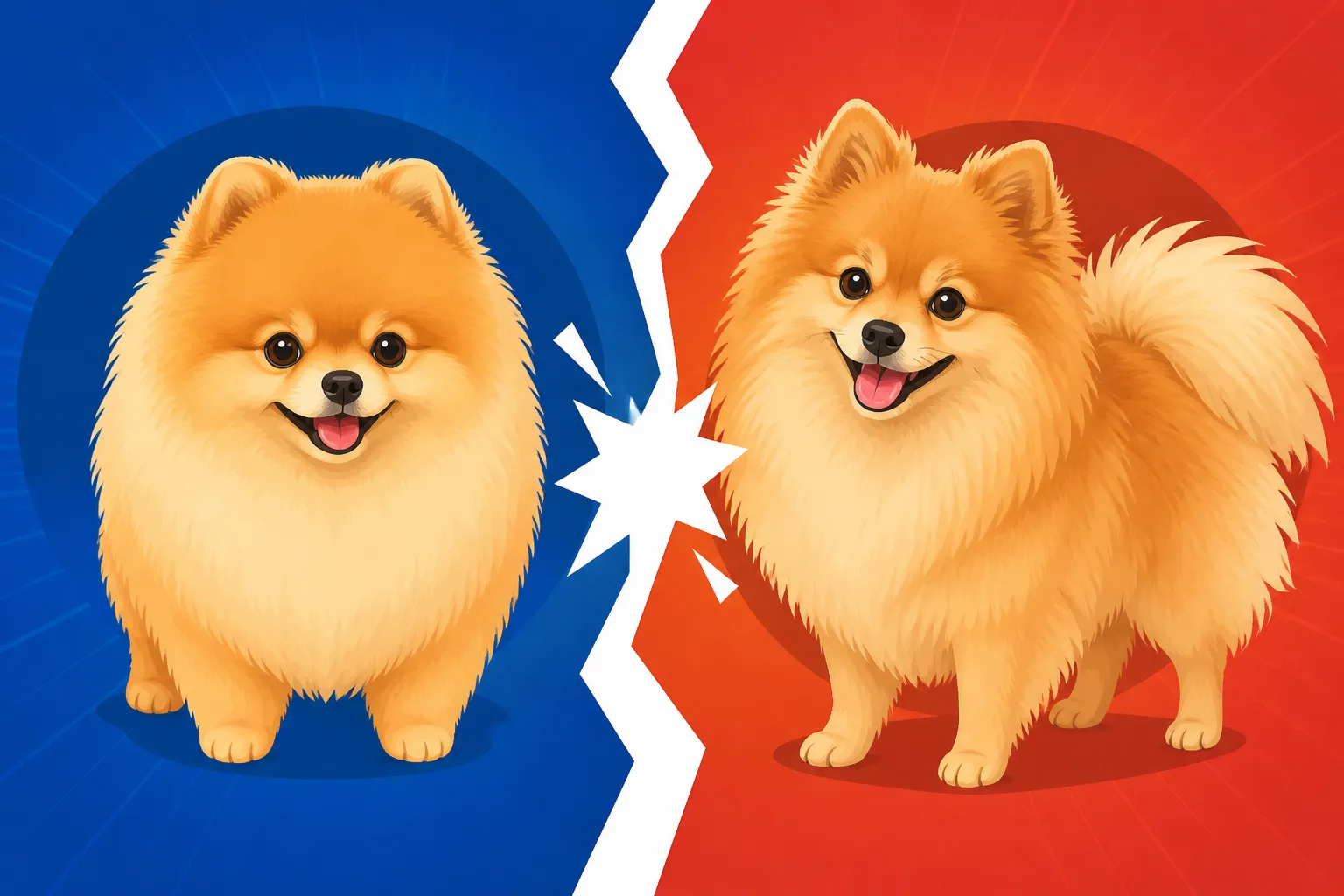
Whether British and American Pomeranians Split Apart
A British-bred Pomeranian and an American-bred Pomeranian can look noticeably different, which makes it easy to wonder whether they are separate types or even separate breeds. Usually, they are not: both are Pomeranians, but breeding preferences, show standards, and individual family lines can shape their appearance. Here’s how to understand those differences without treating a national label as a guarantee.
Are British and American Pomeranians the same breed?
One breed, shaped by different breeding traditions
The short answer is that “British Pomeranian” and “American Pomeranian” are generally descriptions of where a dog was bred or which breeding tradition influenced its family—not names for two officially separate breeds. A Pomeranian born in the United States does not become a different breed from a Pomeranian born in Britain. Both belong to the small Spitz family, with the familiar double coat, alert expression, and tail carried over the back. The German Spitz Family a Pomeranian Belongs To
That said, dogs from different countries can develop a recognizable “look” over generations. Breeders make choices about which dogs to pair, and judges reward dogs that best match the standard used in their show system. When those preferences differ, the dogs produced by each breeding community may tend to differ too. The distinction is a matter of tendencies, not a hard dividing line: there are British Pomeranians that resemble many American show dogs, and American-bred dogs with traits people associate with British lines.
It also helps to separate a dog’s ancestry from its registration. A Pomeranian may have British, American, or mixed international ancestry while being registered with a particular kennel organization. Registration documents can tell you about recorded lineage and eligibility in that registry; they don’t mean every dog from that country shares one appearance or temperament.
Why their looks can seem different
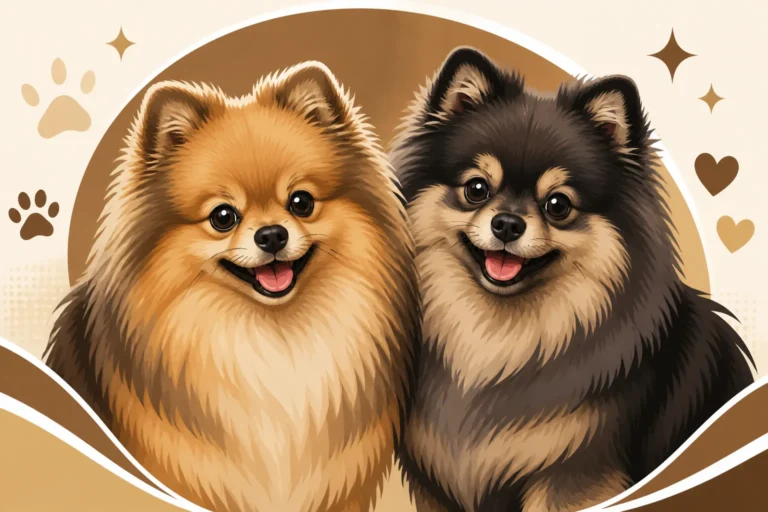
People often describe American show Pomeranians as compact, short-backed, and especially plush, with a small, rounded-looking face. Some British-bred dogs are described as having a more substantial outline or a less exaggerated expression. Those descriptions can be useful shorthand when comparing photographs, but they are not reliable rules for identifying every dog.
A fluffy coat can also make a dog’s build hard to judge. The outline may look broader or more compact depending on coat condition, grooming, age, and the angle of a photograph. A puppy’s proportions change as it matures, and the coat can go through conspicuous stages before the adult coat fills in. A photo alone is rarely enough to establish whether a dog is British type, American type, or a blend.
The same caution applies to claims about personality. A national label does not tell you whether an individual dog is confident, vocal, easy to groom, or comfortable around other dogs. Those traits are influenced by the individual dog, its early experiences, health, and training. If you are choosing a puppy, learning about the parents and the breeder’s care practices is more useful than relying on a type label.
How history and show standards influenced the difference
Britain’s role in developing the modern Pomeranian
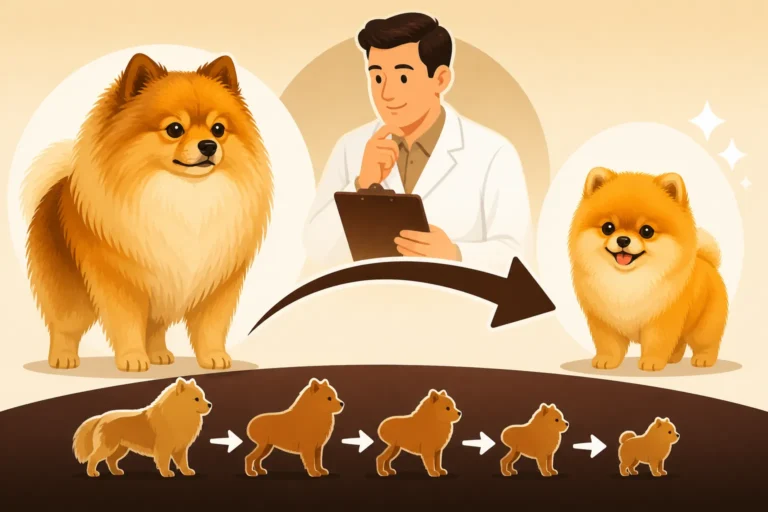
The breed’s history is tied to the wider German Spitz family. The Pomeranian developed as breeders selected smaller dogs from a larger Spitz background, and dogs brought to Britain became part of the breed’s changing history. The Pomeranians of earlier periods were not necessarily the tiny, heavily coated companions many people picture today. The Twenty Five Pound Pomeranian of the 1800s
Over time, British breeders and enthusiasts helped establish preferences for a smaller companion dog with a recognizable outline. Later, Pomeranians spread through international breeding and showing communities, where local organizations and breeders continued developing their own lines. This history is one reason the modern breed can show variation without being divided into separate national breeds.
The story is not a simple one-way sequence in which Britain created one type and America created another. Dogs, breeders, and ideas crossed borders, and international pedigrees can combine ancestry from several countries. A puppy bred in the United States may have British ancestors; a dog bred in Britain may descend from lines developed elsewhere. Nationality is only one small part of a pedigree.
Standards guide judging, but they do not make every dog identical
Kennel organizations describe the desired characteristics of a breed in written standards. Those standards guide judges in the show ring and give breeders a shared reference point. The American Kennel Club and the UK Kennel Club each have their own breed standard and show framework. Their wording and emphasis may differ, but the existence of separate standards does not establish two separate Pomeranian breeds.
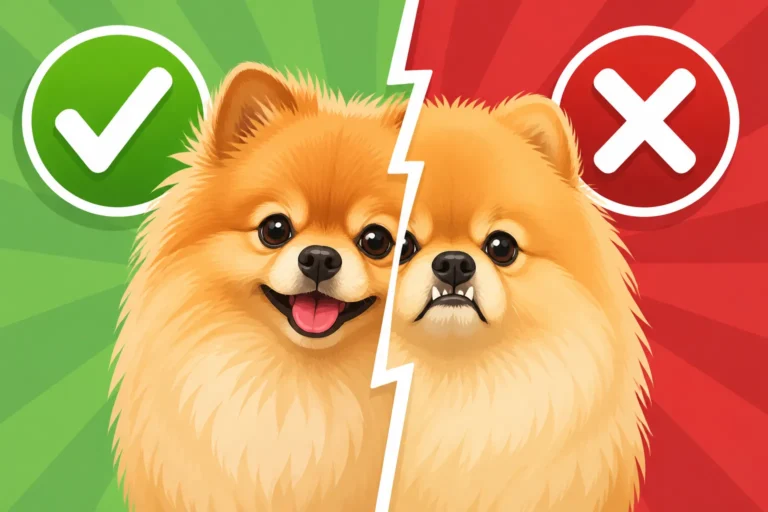
A standard is a description of an ideal, not a promise that every registered dog will match it perfectly. Even within a single country, breeders may have different priorities, and individual dogs vary. One line may emphasize a particular head shape or coat presentation, while another may place more emphasis on balance and overall structure. The details of the head and expression are only part of the whole picture. The Head and Expression a Pomeranian Judge Wants
The stand-off double coat is another defining feature that can influence a dog’s outline and show presentation. Coat length and fullness can make two similarly built dogs look quite different, especially when one is in full coat and the other is between coat stages. The Stand Off Coat a Pomeranian Must Have A groomed show dog can also appear more sculpted than a companion dog whose coat is simply clean and brushed.
| What you are comparing | What may differ | What the difference does not prove |
|---|---|---|
| Breed standards | The wording and judging emphasis of national organizations | That British and American Pomeranians are separate breeds |
| Appearance | Head, outline, coat presentation, and proportions in particular lines | That every dog from one country shares the same look |
| Pedigree | The countries and kennels represented in a dog’s ancestry | That the dog’s birthplace defines its type |
| Show presentation | Grooming, handling, and preparation for the ring | That a show appearance reflects everyday coat condition |
| Temperament | Individual behavior and early social experiences | That a national label predicts personality |
What to look at when comparing a British and American Pomeranian
Focus on the individual dog, not just the label
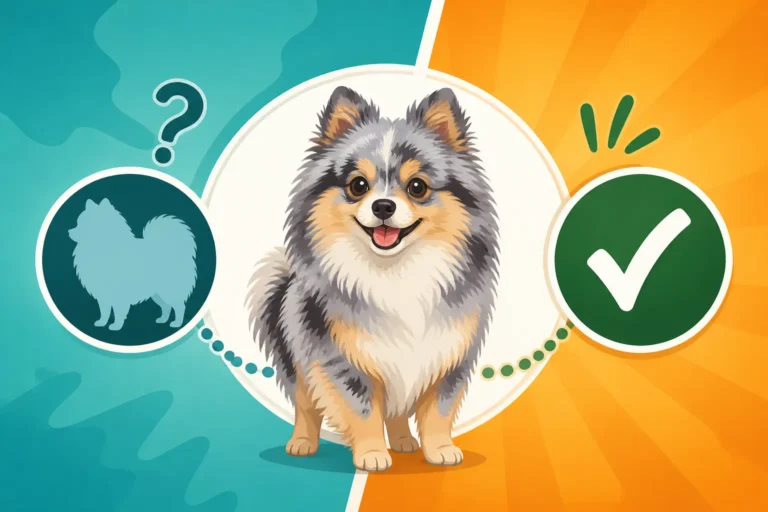
If you are looking at puppies or adult dogs, ask what the breeder means by “British type” or “American type.” The phrase may refer to a specific family line, a preferred look, or simply a marketing description. Ask to see the parents and, if possible, mature relatives. Seeing several dogs from the same family can give you a better sense of what traits tend to appear than looking at one carefully posed puppy photograph.
Consider the dog as a whole. Look at its proportions, movement, coat condition, and comfort with handling. Ask how the breeder approaches health screening, grooming, socialization, and matching puppies to homes. A dog’s registration, pedigree, and show results can provide useful background, but none replaces asking practical questions about how that particular dog is being raised.
For a companion home, a dramatic difference in show-ring outline may matter less than everyday fit. Think about your tolerance for brushing, your ability to keep a small dog safe around larger pets or young children, and the kind of activity you expect to enjoy together. A label may help you start a conversation, but it should not make the decision for you. Whether a Show Pomeranian Differs From a Pet
Be cautious with “rare type” and guaranteed-appearance claims
A seller may use “British,” “American,” “European,” or “imported” to make a puppy sound distinctive. Those words can describe real ancestry or breeding connections, but they are not, by themselves, proof of quality, health, or suitability. Ask for the registered names of the parents and the relevant pedigree information, then consider the breeder’s answers alongside the puppy’s care and development.
Be wary if a seller promises that a puppy will have a precise adult weight, coat, or face shape. Young dogs change as they grow, and inherited traits are not perfectly predictable. A puppy that looks especially round and plush in a photograph may develop a different adult outline. Responsible breeders should be willing to explain what they can and cannot predict rather than presenting a fashionable look as a guarantee.
If you are learning about size, compare a dog’s actual health and structure rather than assuming smaller is better. The breed’s expected size is one useful part of the discussion, but an unusually tiny puppy should not be treated as more desirable simply because of its size. The Three to Seven Pounds a Pomeranian Is Allowed Breeding decisions aimed at extreme smallness can raise welfare concerns, so ask direct questions about the parents and the breeder’s priorities.
Choosing a Pomeranian without getting caught up in national type
Ask questions that reveal the breeder’s priorities
A helpful conversation with a breeder goes beyond “Is this a British or American Pomeranian?” Ask how they describe their dogs’ structure and temperament, what they hope to preserve in their breeding program, and how they select homes for puppies. Ask to meet the mother if possible, and request clear information about health history and the puppy’s early care. A thoughtful breeder should be able to explain their choices without relying on a country label as the whole answer.
You can also ask whether the dog’s pedigree includes lines from more than one country. International ancestry is common enough that a simple national category may not tell the full story. If you want to understand a family tree, ask for the pedigree and have the breeder walk you through it. How Breeders Selected Pomeranians Down in Size offers more context on how selection has influenced the breed over time.
Pay attention to how the breeder discusses the puppy as an individual. Do they describe its confidence, energy, response to handling, and needs? Do they ask about your household and experience with small dogs? Those details are more useful for a good match than claims that one national type is automatically healthier, calmer, or more beautiful.
Plan for the dog you will live with, not just the show-ring image
A Pomeranian’s day-to-day needs are much the same regardless of whether its family line is described as British, American, or mixed. Expect routine coat care, careful handling, training, and thoughtful management around larger dogs and busy households. If you are comparing grooming tools, food, or other everyday supplies, a retailer such as Chewy may be one place to browse options; choose products for your own dog’s size and needs rather than for a national type.
For grooming, ask the breeder or a knowledgeable groomer what routine suits the dog’s coat. Keep in mind that the coat may change with maturity, shedding, and health, and that a show-style finish takes regular care. If you are shopping for a brush or comb through Chewy or another retailer, compare the tool’s design with your dog’s coat and get guidance before using a harsh deshedding tool.
The most useful takeaway is simple: British and American Pomeranians can show different tendencies because of history, breeding choices, and show preferences, but these tendencies do not create two separate breeds. Judge the dog in front of you, ask careful questions about its background and care, and treat national type as context—not as a shortcut for assessing health, quality, or temperament.
Disclaimer
This article is for general informational purposes only and does not constitute professional advice. Laws, prices and regulations vary by location and change over time. Consult a qualified professional for guidance on your specific situation.