Whether Pomeranian Owners Buy the Breed Again
Pomeranian owners often love the breed’s lively, affectionate personality, but living with a tiny dog who barks, needs regular coat care, and can be physically fragile is not always effortless. There is no reliable universal percentage showing how many owners would choose a Pomeranian again. This guide explains what tends to shape that decision and how to tell whether the breed fits your life.
Do Pomeranian owners usually choose the breed again
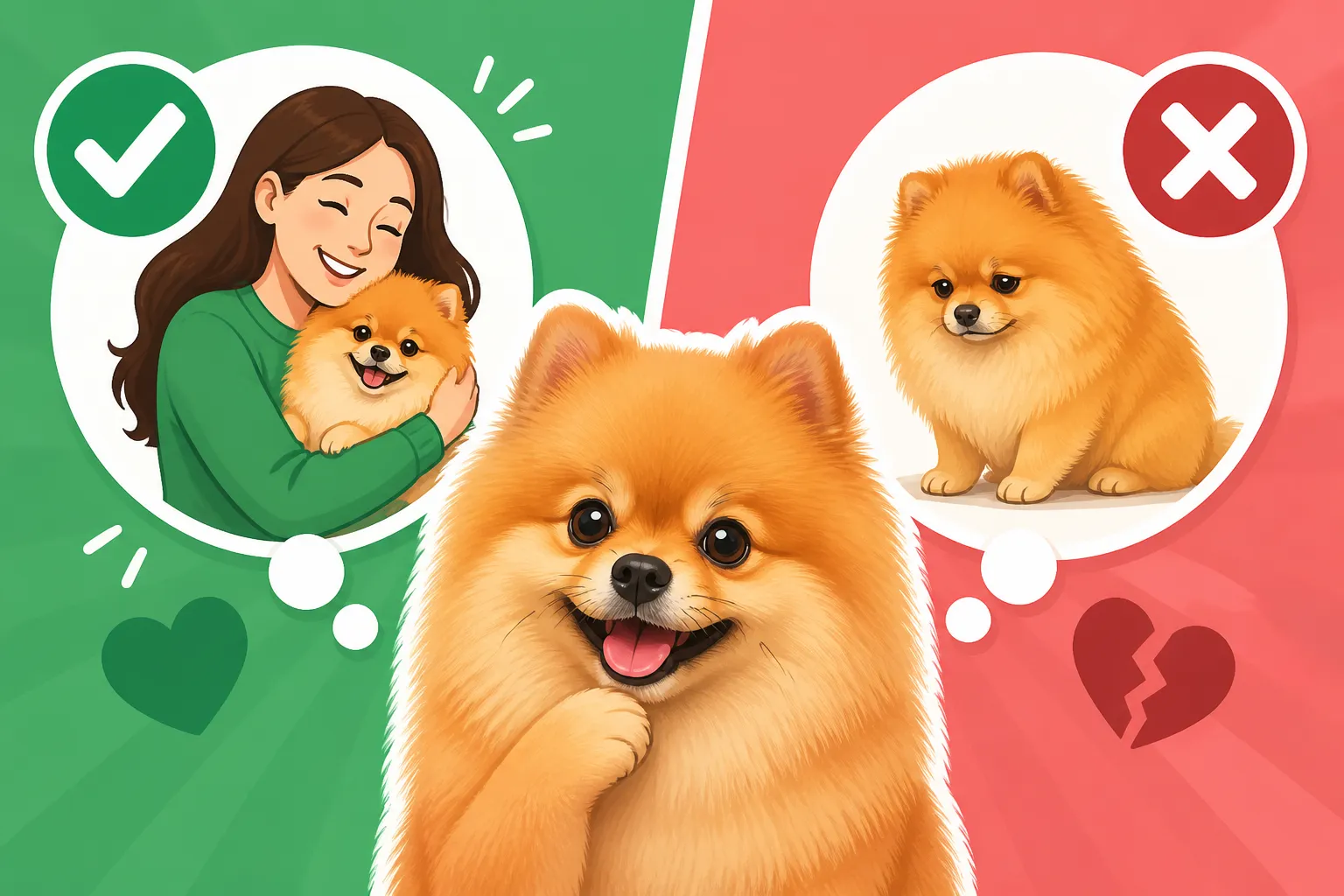
Some owners are so attached to their Pomeranian’s character that they plan to have another one. Others adore their individual dog but decide their next companion should be quieter, less demanding to groom, or more robust around children and larger pets. Both reactions are understandable: enjoying a dog and wanting the same breed again are not quite the same thing.
Without a representative survey, it would be misleading to claim that a particular proportion of owners would buy a Pomeranian again. Personal stories can show what people value or find challenging, but they cannot tell us what all Pomeranian owners think.
Loving your dog is not the same as choosing the breed again
A Pomeranian may be the perfect companion for one person and a poor match for another. An owner who enjoys daily brushing, lively conversation with a vocal dog, and training a bright little character may be eager to welcome another Pom. Someone who hoped for a low-maintenance lap dog may feel differently after dealing with alert barking, house-training setbacks, or the need to protect a small dog from rough play.
There is also a difference between choosing a breed again and choosing the same type of dog again. A person might want another Pomeranian but choose an adult rather than a puppy, adopt through a rescue, or look for a less extremely small dog. Some might love their Pom while deciding that another small companion breed would suit their household better.
That distinction matters when reading owner discussions online. A person saying, “I would get another one in a heartbeat,” is sharing a real experience, but not a promise that every Pomeranian has the same temperament or care needs. Likewise, one difficult experience does not mean the breed is a poor fit for everyone.
Why there is no simple yes-or-no answer
Owners’ circumstances change. A Pomeranian who fit beautifully into a quiet apartment may be harder to manage after a family has a toddler, moves somewhere with more stairs, or takes on longer workdays. Age can also change the experience: a playful young dog, a settled adult, and a senior who needs help getting onto the couch can call for different routines.
The individual dog matters, too. Temperament, socialization, health, and early learning all affect day-to-day life. Breed tendencies can help a prospective owner prepare, but they cannot predict exactly how one dog will behave. Someone deciding whether to choose the breed again may be thinking about their particular dog rather than making a general judgment about Pomeranians.
If you are weighing up the breed for yourself, it helps to look beyond affectionate photos and ask what daily care actually involves. The Part of Pomeranian Ownership Nobody Mentions offers a useful starting point for considering the less glamorous parts alongside the fun ones.
What owners tend to love about living with a Pomeranian
People who want another Pom often value the dog’s presence as much as its appearance. Pomeranians are small, but many are alert, engaged companions who like being part of household routines. For owners who enjoy an interactive dog, that attentiveness can be a pleasure rather than a nuisance.
A small dog with a big presence
A Pomeranian can fit into a small home more easily than a large, high-energy dog, and many owners appreciate having a companion close by. The breed’s bright, curious nature can make everyday activities feel social: a Pom may follow its person around the house, watch visitors arrive, or enthusiastically investigate a new toy.
That closeness is not a guarantee of effortless companionship. An attentive dog may notice every sound in a hallway or outside a window, and barking can become frustrating when it happens frequently. Owners who are prepared to teach calm responses and manage triggers may find this alertness endearing. Those who need a reliably quiet home may find it wears on them.
Small size can make some practical parts of ownership easier, but it does not remove the need for exercise, enrichment, training, or supervision. A Pom still benefits from suitable walks and play, and should not be treated like a decorative accessory. For a closer look at matching a dog’s needs to a household, read The Home a Pomeranian Belongs In.
Personality, learning, and companionship
Many owners enjoy how expressive and engaged their Pomeranian seems. A dog who learns household routines quickly, enjoys a short training session, or invents a game with its person can bring a lot of character to a home. That personality is one reason some people feel drawn to the breed again after losing a beloved Pom.
A clever dog still needs patient teaching. Pomeranians may bark, pull, or resist a task if it has not been taught in manageable steps. A first-time owner who expects small size to mean easy training can be surprised by the time and consistency house-training takes. If that challenge is on your mind, Why House Training a Pomeranian Drags On explores why progress can feel slower than expected.
The bond can also be particularly rewarding for someone who wants a companion involved in everyday life. But closeness should not become a substitute for helping a dog feel comfortable on its own. Owners who build predictable routines and reward calm independence may find it easier to leave for errands or appointments without making departures a major event.
What makes some owners hesitate before choosing the breed again
A Pomeranian’s appeal is real, but so are the everyday demands. People sometimes love their dog deeply while deciding that certain care tasks, health worries, or household constraints would make another Pom difficult. Thinking through those realities is more useful than assuming affection alone settles the question.
Coat care takes regular attention
The Pomeranian’s abundant double coat needs consistent care to reduce tangles and mats. Brushing is not just an occasional tidy-up when the dog looks fluffy; it is a routine that owners need to fit into ordinary weeks. Areas behind the ears, around the collar or harness, and beneath the legs can need particular attention.
Some people find grooming relaxing bonding time. Others find it hard to maintain, especially if their dog dislikes being handled or their own schedule is already full. Professional grooming may help with bathing and trimming, but it does not necessarily eliminate the need for regular brushing between appointments. Whether a First Time Owner Keeps a Pomeranian Coat Up can help prospective owners picture the commitment more clearly.
The cost of maintaining coat care varies with location, the dog’s coat, and whether the owner does some tasks at home. If you are comparing supplies, retailers such as Chewy may be one place to check for brushes, combs, and dog shampoo; choose products suitable for your dog and ask a groomer or veterinarian if you are unsure what to use.
Barking, house-training, and fragility can affect daily life
Alert barking can be difficult in an apartment, a shared building, or a home where someone works irregular hours. Training may help, but owners should not expect a quick fix or rely on punishment to silence a dog. Identifying what triggers barking, rewarding quiet behavior, and managing access to windows or noisy areas can be more productive approaches.
House-training can also require patience and a consistent routine. A small dog may need frequent opportunities to go outside, and weather or reluctance to walk on wet grass can complicate the schedule. Owners who travel, work long stretches away from home, or cannot arrange a midday break should think through that support before bringing a puppy home.
Their size calls for sensible handling, too. A Pomeranian can be injured by a fall from furniture or accidental rough contact, even in a loving household. Children need close supervision and clear instructions about gentle interaction, and owners should consider barriers or ramps where needed. For anyone deciding whether their current household is suitable, Whether a Pomeranian Is Too Fragile for a Family Home is a helpful related read.
Health concerns can shape the decision
Every dog may need veterinary care, and Pomeranians can have health issues that require monitoring or treatment. The possibility of dental work, knee problems, or breathing concerns can affect an owner emotionally as well as financially. It is sensible to plan for routine care and unexpected expenses rather than assume a small dog will always be inexpensive to look after.
Insurance, savings, and access to veterinary care are all worth considering before choosing a puppy or adult dog. If you are comparing food, grooming tools, and other recurring supplies, Chewy may offer a convenient way to review products alongside local options. For medical questions, however, the dog’s veterinarian should guide decisions about diagnosis, treatment, and diet.
A difficult health experience does not mean every Pomeranian will face the same problem. But an owner who has spent years managing a serious condition may reasonably decide that their next dog should be a different breed, even if they still cherish the Pomeranian they had.
How to decide whether a Pomeranian fits you
Rather than asking only whether current owners would choose the breed again, ask whether the realities of Pomeranian care fit your home, routine, and expectations. A practical check can reveal mismatches before they become daily sources of stress.
Compare the appeal with the work
Use this table to put the common trade-offs side by side. Your experience may differ depending on the individual dog, but these are useful topics to consider before choosing a Pomeranian.
| What may appeal to you | What to be ready for | A useful question to ask yourself |
|---|---|---|
| Compact size | Careful handling and protection from falls or rough play | Can everyone in the household interact gently and safely? |
| Alert, lively personality | Barking and a need for training and enrichment | Am I willing to teach calm behavior consistently? |
| Full, fluffy coat | Regular brushing and ongoing grooming | Can I make coat care part of my normal routine? |
| Close companionship | A need to learn calm independence | Can I help the dog settle when I am busy or away? |
| Small appetite | Veterinary bills and other costs are still possible | Have I planned for routine care and unexpected needs? |
Think about your routine, not just your ideal dog
Picture an ordinary weekday, not a perfect weekend. Who will take the dog out? What happens during a long workday? Can you handle regular grooming when you are tired or busy? If the dog barks at a delivery or a neighbor in the hallway, are you prepared to work on that behavior rather than hope it disappears?
Also consider the dog’s life stage. A puppy may need more supervision and frequent bathroom breaks than an adult. An older rescue may already have established habits, health needs, or a calmer temperament, but will still need a thoughtful transition into your home. If you are open to a second Pomeranian, remember that sharing a breed does not guarantee two dogs will get along or have identical needs. Whether Two Pomeranians Are Twice the Work covers some of the practical questions involved.
For a broader household-fit check, consider Whether a Pomeranian Suits Someone Living Alone and Whether a Pomeranian Can Be Left During Work Hours. These topics can help you think through companionship, alone time, and the support you may need to arrange.
Use a realistic checklist before committing
Before you decide, write down the care tasks you expect to handle and who will help if your circumstances change. Include brushing, walks, training, veterinary appointments, grooming, and supervision around visitors or children. If you are comparing everyday supplies, Chewy is one option to consider alongside local pet stores and recommendations from your veterinarian or groomer; compare products carefully rather than buying based only on convenience.
If you already own a Pomeranian and are wondering whether you would choose the breed again, try separating the parts you love from the parts you would change. You might love the dog’s companionship but wish you had prepared better for coat care. You might want another Pom but plan to choose an adult dog, set up a grooming routine earlier, or arrange more support during work hours.
That kind of honest reflection is more useful than feeling pressured to give a simple yes or no. A Pomeranian can be a wonderful fit when the dog’s needs and the owner’s everyday life align. And it is entirely possible to treasure the Pom you have while deciding that your next dog should be different.
Disclaimer
This article is for general informational purposes only and does not constitute professional advice. Laws, prices and regulations vary by location and change over time. Consult a qualified professional for guidance on your specific situation.