Whether a Cream Pomeranian Turns White
It's a common question for many hopeful Pomeranian parents, especially when you're admiring a fluffy little cream puppy. You see that soft, buttery hue and wonder, "Will this beautiful cream actually lighten up to a crisp, bright white as they grow?" It's a perfectly natural thought, often fueled by images of almost-white Poms online, but the reality of Pomeranian coat genetics and development can be a little more complex and, at times, surprising. This guide will walk you through everything you need to know about why a cream Pomeranian is unlikely to turn truly white, what factors influence their coat color, and how to appreciate the stunning shades of cream they bring into our lives.
The Nuances of Cream in Pomeranian Coats
When you first lay eyes on a cream Pomeranian puppy, that ethereal shade can be truly captivating. It's often so light that it almost tricks your eyes into seeing white, especially under certain lighting. But understanding what "cream" truly entails in the world of Pomeranians is key to appreciating their unique beauty and managing expectations about their adult coat.
What "Cream" Really Means in Pomeranian Coats
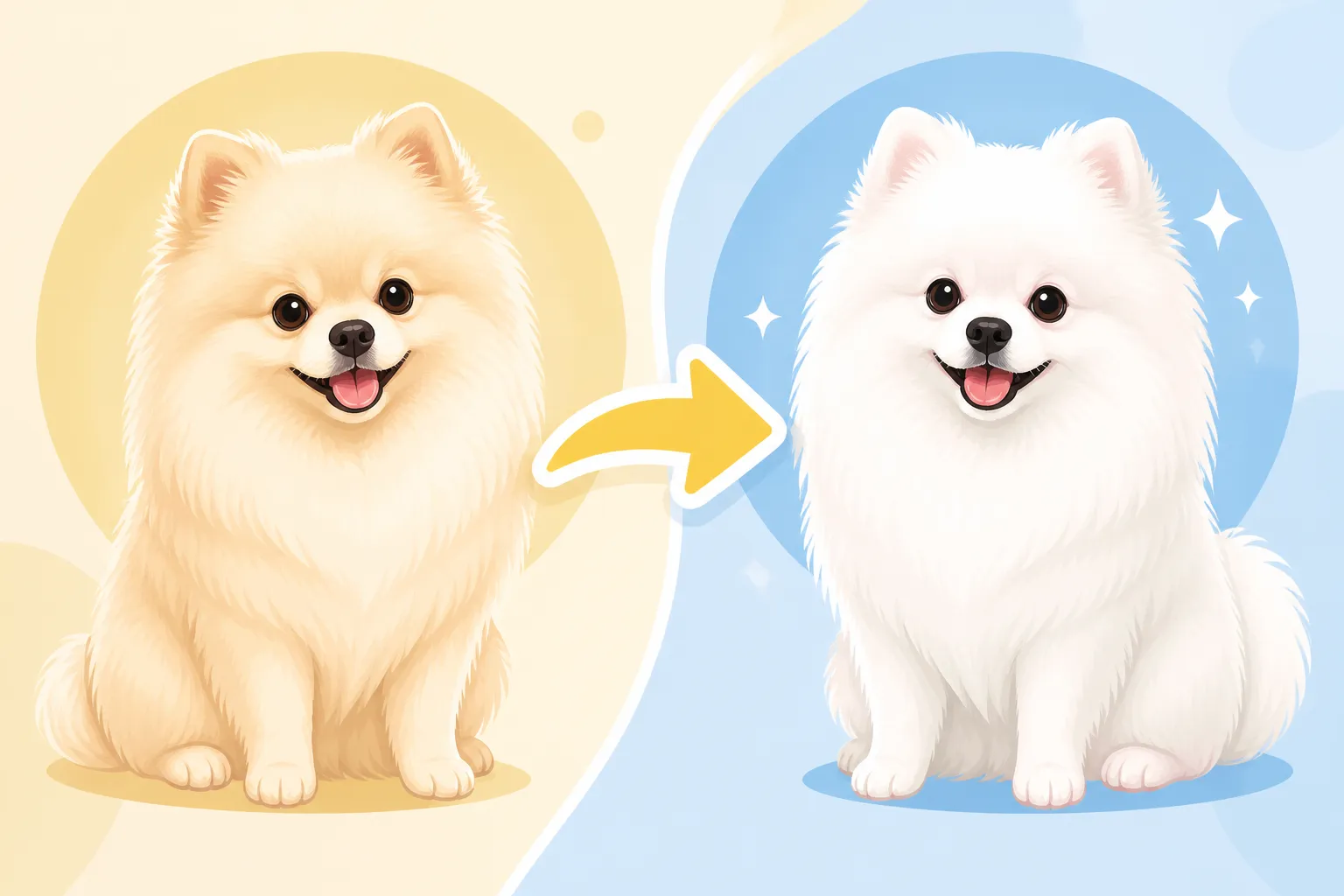
A "cream" Pomeranian is a dog whose coat is a dilute form of red or orange. Genetically, they carry genes that lighten these base colors to a soft, warm hue that can range from a very pale, almost parchment-like cream to a deeper, more golden biscuit tone. It's important to differentiate this from a true white Pomeranian. True white Poms are genetically distinct, carrying a dominant masking gene that completely suppresses all other color expressions, resulting in a coat that is pure, unpigmented white. These are rare, and often, what people perceive as white is actually a very light cream.
Think of it like this: if white is a blank canvas, cream is a canvas painted with the lightest wash of yellow or orange pigment. The subtle undertones are always there, even if they're barely visible. These undertones are what give cream its characteristic warmth and depth, distinguishing it from the stark absence of color found in a true white coat. This distinction is crucial for breeders and owners alike when discussing genetics and breed standards.
Why Expectations of "White" Often Differ from Reality
Many people fall in love with a cream Pomeranian puppy believing it will mature into a white dog. This expectation often stems from several sources. First, puppy coats are notoriously unreliable indicators of adult color. A young cream puppy might look exceptionally pale, only for its adult coat to come in a noticeably richer, deeper cream. Second, lighting plays a huge trick on our eyes. Under bright natural light or specific artificial lights, a very pale cream can easily photograph and appear white.
Third, there's a general misunderstanding about what constitutes a "white" Pomeranian. Because true white Poms are uncommon, any very light-colored Pomeranian tends to get labeled as such by casual observers. This inadvertently reinforces the idea that creams can become white. When your cream puppy matures and its coat settles into a distinct creamy hue, it can sometimes be a letdown if you were hoping for pure white, even though the cream is gorgeous in its own right. It's like expecting a vanilla milkshake to taste like water; both are light in color, but the flavor profile is entirely different.
Factors Influencing a Cream Pomeranian's Coat Color
The journey from a cream puppy coat to an adult one is fascinating, and several factors play a significant role in how that color develops and presents itself over time. It's not just a matter of "what you see is what you get" when they're tiny.
The Role of Genetics and Pigmentation
At the heart of any Pomeranian's coat color is its genetic makeup. The genes responsible for diluting red and orange pigments are what give us the beautiful cream shades. These genes can express themselves in varying degrees, leading to the spectrum of creams we observe, from nearly invisible undertones to more noticeable pale apricot or biscuit. A Pomeranian needs to inherit specific genes from both parents to display a cream coat. If a puppy inherits genes for a stronger red or orange, or a gene for a different color altogether, then cream won't be the outcome.
True white Pomeranians, on the other hand, carry different genetic markers, often involving the extreme piebald gene, which removes most or all pigment from the coat. This is why you rarely see a white Pomeranian that isn't also a parti-color (white with patches of another color). A pure, solid white Pomeranian with dark points (nose, eye rims) is exceptionally rare and genetically distinct from a cream. It's this fundamental genetic difference that makes it highly improbable for a cream to simply "turn white." The underlying pigment, however dilute, is still there, dictating the ultimate hue.
Environmental and Dietary Influences on Coat Tone
While genetics lay the groundwork, environmental factors and even diet can subtly influence the shade and vibrancy of a cream Pomeranian's coat. Sun exposure, for instance, can sometimes lighten a coat, giving it a bleached appearance, or paradoxically, deepen certain reddish tones if the dog spends a lot of time outdoors. However, this is usually a superficial change and won't transform a cream into a pure white.
Diet can also play a role, though typically more in terms of overall coat health and shine rather than a dramatic color shift. A diet rich in essential fatty acids, like those found in quality salmon oil or certain supplements, can contribute to a healthy, lustrous coat that appears brighter and more vibrant. For maintaining optimal coat health and ensuring your Pomeranian gets the right nutrients, many owners turn to reputable brands like Chewy for their food and supplement needs, offering a wide array of options for small breeds. Staining from tears, saliva, or even urine can also dull or discolor light coats, making regular grooming and hygiene crucial for maintaining the brightest possible cream.
Monitoring and Understanding Coat Changes Over Time
Pomeranians are famous for their dynamic coats, which undergo significant transformations, especially during their younger years. Understanding these stages is key to appreciating how a cream coat develops and settles.
The "Puppy Uglies" and Adolescent Coat Development
Ah, the infamous "puppy uglies"! Every Pomeranian owner knows this phase well, and it's particularly noticeable in lighter colored Poms. Between about 4 and 10 months of age, a Pomeranian puppy will typically shed its soft, fluffy puppy coat to make way for the denser, harsher double coat of adulthood. During this time, they can look rather sparse and disheveled, losing much of their initial puffiness. The Puppy Uglies a Pomeranian Goes Through describes this period in more detail.
It's during this "ugly duckling" phase that a cream Pomeranian's true adult color often begins to emerge. A very light cream puppy might start to show slightly deeper biscuit or apricot tones as the adult guard hairs grow in. The underlying undercoat might also develop a richer hue. This is the period where any lingering hopes of a pure white coat usually dissipate, as the lovely creamy tones become more defined and distinct. It's a natural and expected part of their growth, and once the adult coat fully comes in, you'll see the gorgeous cream shade that will likely stay with them. The Age a Pomeranian's Coat Fully Comes In offers further insights into this development.
Aging and Subtle Color Shifts in Senior Pomeranians
Just like us, Pomeranians experience changes as they age, and their coats are no exception. While a cream Pomeranian isn't likely to turn white, it's not uncommon for their coat to undergo subtle shifts in tone in their senior years. Some cream Poms might see a slight lightening of their coat, almost a "fading" of the color, as they approach their golden years. This can sometimes give the impression of becoming paler, closer to white, but it's more about a decrease in pigment intensity rather than a complete shift to white.
Conversely, some creams might develop a slightly duller or even a very faint greyish cast in certain areas, particularly around the muzzle or eyes, which is typical of aging in many breeds. This isn't a dramatic transformation, but a gradual, natural progression that reflects their journey through life. It's a testament to their longevity and the many years of joy they've given us. The First Signs a Pomeranian Is Aging can tell you more about what to expect as your Pom gets older.
When a Cream Pomeranian Might Appear White (and why)
While a true genetic transformation from cream to white is essentially impossible, there are several scenarios and factors that can make a cream Pomeranian appear white to the casual observer or in certain photographs.
Lighting and Perception
This is perhaps the biggest trick of the eye when it comes to cream coats. Under very bright, cool-toned lighting – think bright sunlight on a snowy day, or certain professional studio lights – the subtle warm undertones of a very pale cream Pomeranian can become almost invisible. The light washes out the color, making the coat appear stark white. This is why you might see photos online of "white" Poms that are, in reality, very light creams.
The camera's white balance settings can also play a huge role. An improperly balanced photo can easily make a cream dog look pure white. Our own perception also contributes; if we're expecting white, our brains can sometimes fill in the blanks, especially if the dog is exceptionally pale. It's a fascinating optical illusion that delights many but can also lead to misconceptions about actual coat color.
Grooming and Coat Health
A well-maintained cream coat can certainly appear brighter and more luminous, enhancing the illusion of whiteness. Regular bathing with brightening shampoos designed for light-colored coats can help remove dulling dirt and oils, allowing the natural cream to shine. Using a high-quality shampoo and conditioner, followed by proper blow-drying techniques, can make the coat exceptionally fluffy and vibrant. Brands like Chewy offer a vast selection of grooming products, including those specifically formulated for brightening and enhancing light coats, which can make a cream Pomeranian look its absolute best.
Furthermore, diligent brushing helps to remove dead undercoat and distribute natural oils, resulting in a healthier, more reflective coat. A clean, healthy coat simply reflects light better, which can make even a deeper cream appear lighter and more radiant. For tips on keeping that magnificent coat pristine, check out Washing a Pomeranian in a Kitchen Sink or Blow Drying a Pomeranian's Coat Out Straight.
Misidentification and Breeding for "White"
Sometimes, what's presented as a "white" Pomeranian is simply a very, very light cream that has been labeled as white, either innocently due to misidentification or sometimes deliberately for marketing purposes. True white Pomeranians, those without any pigment in their coat, are much rarer and often carry specific genetic markers that can sometimes be associated with health concerns if not bred responsibly.
For example, merle Pomeranians, if bred incorrectly, can produce double merle offspring who are predominantly white and often suffer from deafness and blindness. Why Double Merle Pomeranian Puppies Are Born Deaf explains this risk in detail. Ethical breeders focus on healthy, well-tempered dogs that meet the breed standard, and while cream is a recognized color, true pure white with dark points is a genetic anomaly outside the typical spectrum for Poms. It's crucial for prospective owners to understand these distinctions and not be swayed by claims of "rare white" if the dog is, in fact, a very light cream.
Here's a quick comparison of Cream vs. White Pomeranian characteristics:
| Feature | Cream Pomeranian | True White Pomeranian (Rare) |
|---|---|---|
| Genetic Basis | Diluted red/orange pigment; carries cream genes | Masking gene (extreme piebald); suppresses all pigment |
| Color Spectrum | Pale parchment, biscuit, pale apricot, warm undertones | Pure, unpigmented white; no visible undertones |
| Nose/Eye Pigment | Typically black; can be liver or blue depending on other genes | Usually black, but can sometimes be liver or blue |
| Rarity | Common and recognized color | Very rare; often linked to specific breeding practices |
| Coat Change to White? | No, will remain a shade of cream. May appear lighter. | No change, starts and remains white. |
| Appearance | Soft, warm, sometimes appears white in certain lights | Stark, bright white; often resembles a fluffy cloud |
Embracing the Beauty of a Cream Pomeranian
Ultimately, whether your cream Pomeranian appears almost white or settles into a deeper, richer hue, their coat is a testament to the diverse and beautiful genetics of the breed. Instead of holding out for a pure white coat, embrace the subtle elegance and warmth that a cream color brings. Each shade of cream, from the palest butter to a golden biscuit, has its own unique charm. It's a color that evokes softness and luxury, perfectly complementing the Pomeranian's abundant, fluffy double coat.
Caring for a cream coat involves the same dedicated grooming practices as any other Pomeranian color – regular brushing, proper bathing, and attention to diet. Keeping their coat clean and healthy will ensure that its natural luster and beautiful shade are always on full display. Whether your Pom is a light cream or a richer, deeper hue, the joy and companionship they offer are truly priceless, far outweighing any specific color aspirations. So, celebrate your cream Pom for the stunning individual they are, and enjoy every fluffy, beautiful moment!
Disclaimer
This article is for general informational purposes only and does not constitute professional advice. Laws, prices and regulations vary by location and change over time. Consult a qualified professional for guidance on your specific situation.