Washing a Pomeranian in a Kitchen Sink
The thought of bathing your fluffy Pomeranian can sometimes feel like a daunting task, especially when you consider their delicate size and magnificent double coat. Many owners struggle with finding a safe, comfortable, and efficient spot to get their little fluffball clean without turning their bathroom into a waterpark. But what if the perfect solution was already right in your kitchen? This guide will walk you through transforming your kitchen sink into an ideal bathing station, making bath time a less stressful, more manageable experience for both you and your beloved Pom.
Why the Kitchen Sink is Your Pomeranian's Best Bathing Spot
For small breeds like Pomeranians, the kitchen sink offers a unique combination of convenience and safety that larger tubs or outdoor hoses simply can't match. It's not just about size; it's about control, comfort, and keeping yourself comfortable during the process. We want bath time to be a positive experience, not a wrestling match, and the sink setup helps immensely with that.
Ergonomics for You and Your Pom
Let's be honest, bending over a standard bathtub to wash a tiny, squirming Pom can wreak havoc on your back. It's an awkward angle, and it makes it harder to maintain a firm but gentle hold on your dog. The kitchen sink, on the other hand, is typically at waist height, which means you can stand comfortably upright throughout the entire bathing process. This ergonomic advantage isn't just for you; it allows for better control and stability when handling your dog. You can lean in without straining, giving you better access to every part of their luxurious coat, from their fluffy ruff to their plumed tail. When you're comfortable, you're more patient, and your Pomeranian will pick up on that calmer energy, making the experience less frightening for them.
Beyond your comfort, consider your Pomeranian's perspective. A giant, slippery bathtub can feel incredibly intimidating to a dog weighing just a few pounds. The vast space can make them feel insecure and exposed, leading to increased anxiety. The smaller, enclosed space of a kitchen sink provides a much cozier and more secure environment. It feels less like a cavernous void and more like a contained, manageable space. This sense of security can significantly reduce their stress, making them more cooperative during washing and rinsing. Plus, the raised height means you're less likely to need to chase them around a large wet area if they try to bolt, giving you more immediate control.
Safety and Control in a Small Space
The compact nature of a kitchen sink is actually a huge safety advantage for a small dog like a Pomeranian. In a standard bathtub, there's a lot of room for them to slip, slide, or even try to jump out. The hard surfaces of a tub can be dangerous if they fall. In the kitchen sink, however, the smaller perimeter naturally limits their movement, which is particularly beneficial for a breed known for its spirited personality. You can maintain a gentle but firm hold without feeling like you're trying to contain a greased pig. This control is crucial not just for getting them clean, but for preventing accidental slips or falls that could lead to injury, especially if your Pom has delicate joints or a Slipping Kneecaps in a Five Pound Pomeranian.
To enhance this safety, a non-slip mat is an absolute must-have. You can find these at most pet stores or online retailers like Chewy or Amazon. Placing one on the bottom of the sink provides a stable surface for their paws, giving them better traction and reducing their anxiety about slipping. This simple addition can make a world of difference in how secure and calm your Pomeranian feels. Furthermore, the sink faucet often offers more precise control over water temperature and flow than a showerhead or a less adjustable tub faucet. You can adjust the stream to be gentle, avoiding any harsh sprays that might startle your dog. This focused control allows for careful wetting and rinsing, ensuring no part of their dense double coat is left with shampoo residue.
Essential Supplies for a Smooth Sink Bath
Before you even think about turning on the water, gathering all your supplies is paramount. Rushing around for a towel while your wet Pomeranian shivers or tries to escape is not ideal for anyone. Think of it like preparing for a cooking project: you wouldn't start chopping without all your ingredients and tools laid out. The same goes for bath time with your Pom. Having everything within arm's reach makes the process efficient, calm, and ultimately, more successful.
Choosing the Right Shampoo and Conditioner
Selecting the proper shampoo and conditioner for your Pomeranian is more important than you might think. Their glorious double coat is unique, and using human products or harsh detergents can strip their natural oils, leading to dry skin, irritation, and even coat damage. Always opt for a dog-specific shampoo that is pH-balanced and formulated for sensitive skin or double coats. Look for ingredients that are gentle and moisturizing, like oatmeal, aloe vera, or natural oils. Avoid anything with strong artificial fragrances or harsh chemicals, which can cause allergic reactions or skin issues.
Conditioner is not optional for a Pomeranian; it's a vital step. The dense undercoat and long guard hairs can easily tangle, and a good conditioner will help to hydrate the coat, make it smoother, and significantly reduce the likelihood of mats forming during and after the bath. It also helps in keeping their coat healthy and shiny. After rinsing out the shampoo, apply the conditioner, paying special attention to areas prone to tangles like behind the ears, the britches, and the tail. Let it sit for a few minutes as per the product instructions before rinsing thoroughly. There are many excellent brands available, and you might find that some companies like Chewy offer entire lines specifically designed for long-haired or double-coated breeds. Remember, a healthy coat is a beautiful coat, and the right products contribute greatly to that. If you're wondering Whether Conditioner Helps a Pomeranian's Coat, the answer is a resounding yes!
Tools for Prep and Post-Bath Care
Beyond shampoo and conditioner, a few other tools will make the bathing process much easier and safer.
- Brushes: A good quality slicker brush and a metal comb are non-negotiable. You'll need them for pre-bath de-matting and for brushing during the drying process. A slicker brush helps get through the bulk of the coat, while the metal comb ensures you're getting down to the skin. Make sure these are specifically designed for dogs with dense coats. The Slicker and Pin Brush a Pomeranian Needs is a great resource for understanding the best tools.
- Non-slip mat: As mentioned, this is crucial for stability and comfort in the sink. Even a small silicone mat works wonders.
- Cotton balls: These are essential for protecting your Pomeranian's ears from water. Gently place a cotton ball in each ear canal, being careful not to push it too far in.
- Several absorbent towels: Poms have a lot of fur, and you'll need at least two or three towels ready to absorb as much water as possible right after the bath. Microfiber towels work exceptionally well for this.
- Hair dryer (specifically for dogs): A human hair dryer can be too hot and damage a dog's skin or coat. A dog-specific dryer often has variable heat settings and a powerful, cool air flow that helps to fluff out the coat without burning the skin. This is vital for achieving that iconic Pomeranian look and preventing dampness that can lead to skin issues. We'll delve more into Drying a Pomeranian Without Damaging the Coat later.
- Treats: Positive reinforcement is key! Have some tiny, high-value treats ready to reward good behavior before, during, and after the bath. This helps build a positive association with bath time.
Consider creating a dedicated "bath kit" where all these items are stored together. This way, you’re never scrambling when it’s time for a wash. You can often find these grooming tools easily on platforms like Amazon.
Protecting Your Pomeranian and Your Kitchen
While the kitchen sink is convenient, it's still a work surface, and you'll want to take steps to protect both it and your dog during the bath. Before you even bring your Pomeranian near the sink, clear the surrounding counter space of anything fragile, valuable, or edible. Water splashes are inevitable, and you don't want your phone getting wet or your Pom snatching a forgotten snack. A good rule of thumb is to treat the area as if you were cooking with a lot of liquid and a very enthusiastic sous chef.
For your Pomeranian's safety, beyond the non-slip mat, ensure the water temperature is perfectly lukewarm – never hot or cold. Test it on your inner wrist, just as you would for a baby. The spray from the faucet should be gentle; a harsh blast can be terrifying for a small dog. Many kitchen faucets have a sprayer attachment, which can be fantastic for thorough rinsing, but always ensure it's set to a gentle stream.
You might also consider placing an old towel or a waterproof mat on the floor around the sink. This will catch inevitable drips and splashes, saving your floors from water damage and preventing you from slipping. If your Pomeranian is particularly prone to making a splash, you could even hang a shower curtain or old sheet over the surrounding area to create a splash guard. These small preparations make the experience much smoother and less messy, allowing you to focus on your dog rather than the cleanup.
| Item | Purpose | Where to Find | Key Feature for Poms |
|---|---|---|---|
| Dog Shampoo | Cleanses coat, maintains pH | Pet stores, Chewy, Amazon | pH-balanced, gentle, for double coats |
| Dog Conditioner | Hydrates coat, prevents mats | Pet stores, Chewy, Amazon | Detangling, moisturizing, for double coats |
| Slicker Brush | Removes loose hair, de-mats before wash | Pet stores, Amazon | Fine, angled pins |
| Metal Comb | Ensures thorough de-matting, checks for tangles | Pet stores, grooming supply shops | Fine and wide teeth |
| Non-Slip Mat | Provides stability in sink | Pet stores, Amazon, general home stores | Suction cups, textured surface |
| Absorbent Towels | Initial drying post-bath | Home goods stores | Microfiber for quick absorption |
| Dog Hair Dryer | Dries and fluffs coat safely | Pet stores, Amazon | Variable heat/speed, cool shot option |
| Cotton Balls | Protects ears from water | Drugstores, grocery stores | Standard size |
| High-Value Treats | Positive reinforcement | Pet stores, Chewy | Small, easy to chew, highly motivating |
The Step-by-Step Guide to Bathing Your Pomeranian in the Sink
Now that you have all your supplies ready and your kitchen is prepped, it's time for the main event! The key to a successful bath is a calm, methodical approach. Rushing can stress your Pom and lead to a less thorough cleaning. Take your time, speak in soothing tones, and remember that patience is a virtue, especially with a double-coated breed.
Pre-Bath Prep: The Critical First Step
Before a single drop of water touches your Pomeranian, you must thoroughly brush their coat. This is arguably the most crucial step, especially for a breed with a The Double Coat That Makes a Pomeranian and Why It Stays On. If you try to wash a matted coat, the mats will tighten, become impossible to remove, and can cause significant skin irritation. Use your slicker brush to work through their entire coat, section by section, getting right down to the skin. Follow up with a metal comb to ensure there are no hidden tangles. Pay extra attention to areas prone to matting, such as behind the ears, armpits, britches, and under the collar or harness area. If you encounter a stubborn mat, refer to guides like Working a Pomeranian's Coat in Sections to the Skin or Building a Pomeranian's Tolerance for Combing Mats to help you work through it gently. Never pull on mats, as this can be painful for your dog.
Once the coat is completely free of tangles, place the cotton balls gently into your Pomeranian's ears. This prevents water from entering the ear canal, which can lead to ear infections. Some owners also like to put a dab of ophthalmic ointment in their dog's eyes to protect them, especially if their Pom is particularly sensitive, but this isn't strictly necessary if you're careful about water around the face. Finally, bring your Pomeranian to the sink. Speak to them calmly, offering treats and praise as you gently lift them into the basin. Let them stand on the non-slip mat for a moment to get accustomed to the sensation.
The Washing Process: Gentle and Thorough
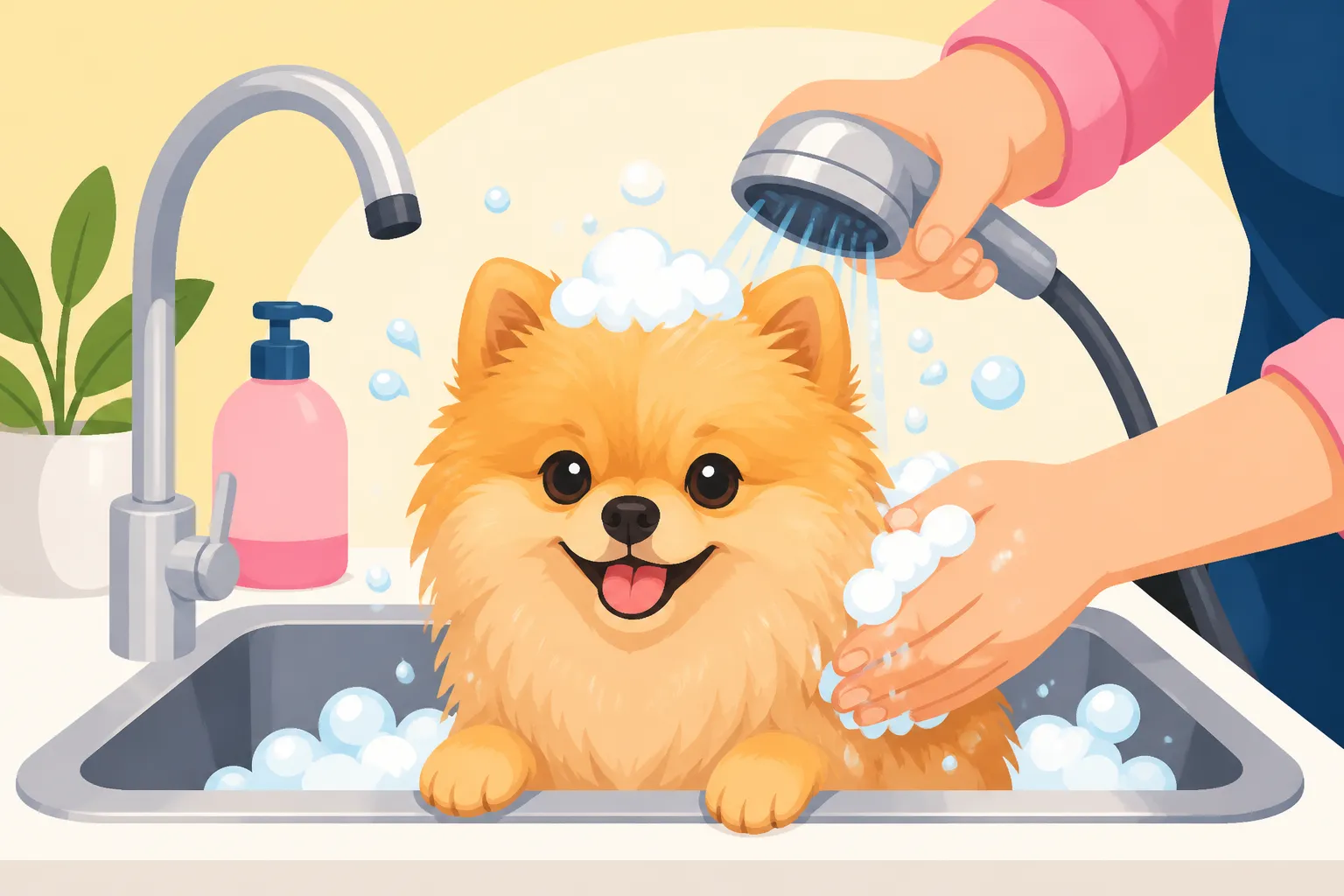
With your Pomeranian safely in the sink, it's time to introduce the water. Use the faucet sprayer or a small cup to gently wet their coat. Start from the neck and work your way down their body, always avoiding the face and ears. Ensure the water is lukewarm and the flow is gentle. Saturate the entire coat down to the skin, which can take a bit of time due to the density of a Pomeranian's double coat. Getting a Pomeranian Used to Water can be a helpful guide if your dog is hesitant.
Once wet, apply a small amount of dog shampoo, starting at the neck and working it through the coat. Lather gently, massaging the shampoo down to the skin. Remember, you're not scrubbing vigorously; you're working the shampoo in. Pay special attention to areas that tend to get dirty, like their paws, belly, and around their rear end. Use a very small amount of shampoo on a washcloth to carefully clean their face, avoiding their eyes and nose. After washing, it’s time for the conditioner. Apply it evenly, ensuring it penetrates the entire coat. Let it sit for the recommended time, usually a few minutes. This step is crucial for maintaining coat health and preventing tangles.
Rinsing: The Key to a Healthy Coat
This is arguably the most critical part of the entire bath. Any shampoo or conditioner residue left in a Pomeranian's dense double coat can cause skin irritation, dryness, and even lead to hot spots or matting. You need to rinse, and then rinse again, and then rinse some more. Use lukewarm water and a gentle stream, starting from the neck and moving down. Run your fingers through their coat as you rinse, feeling for any slippery or sudsy areas. The water running off their coat should be completely clear, with no bubbles or cloudiness.
Pay particular attention to the thicker parts of their coat, like the ruff, the britches, and their tail plume. These areas can hold onto shampoo like a sponge. It might feel like you've rinsed enough, but for a Pomeranian, it's usually not. If you have a detachable sprayer on your kitchen faucet, this is where it truly shines, allowing you to direct the water precisely and effectively penetrate the dense layers. Don't forget to rinse their belly and under their legs thoroughly. Once you're certain all the product is gone, gently squeeze excess water from their coat with your hands before moving them out of the sink.
Drying Your Pomeranian: Beyond the Towel
The drying process for a Pomeranian is just as important as the washing itself. Their thick double coat can take a long time to air dry, leading to chills, mildewy smells, and skin problems. Proper drying also ensures that their coat looks its best – fluffy, soft, and free of mats. This isn't just about aesthetics; it's about their health and comfort.
Towel Drying and Initial Moisture Removal
As soon as your Pomeranian is out of the sink, wrap them immediately in a large, absorbent towel. Gently blot and squeeze their coat to remove as much excess water as possible. Do not rub vigorously, as this can easily create tangles and mats, especially in a wet coat. Patting and squeezing is the way to go. You’ll likely go through one or even two towels during this initial drying phase. Microfiber towels are particularly effective for Poms because they absorb a significant amount of water quickly.
Keep your Pom warm during this stage. Small dogs can get cold easily when wet. You can hold them close or keep them wrapped in a towel. This is also a good time for more positive reinforcement – a few calming words and a treat can help them associate the post-bath routine with something pleasant. Once you've removed as much water as you can with towels, they'll still be quite damp, which is where the next step comes in.
The Art of Blow Drying for That Fluffy Pom Look
To get that signature fluffy Pomeranian look and ensure their dense coat dries completely, a dog-specific blow dryer is essential. As mentioned earlier, human hair dryers can get too hot and burn their delicate skin. A dog dryer uses a high volume of air at a safe temperature. Start on a low, cool setting to get your Pomeranian accustomed to the sound and sensation.
While drying, continuously brush their coat with your slicker brush. Drying a Pomeranian Without Damaging the Coat involves brushing in the direction the hair grows, lifting sections to ensure air reaches the undercoat. This technique helps to straighten the hair shafts and prevent the coat from becoming wavy or matted as it dries. Work in small sections, thoroughly drying one area before moving to the next. Pay close attention to the ruff, britches, and tail, as these are the thickest parts. If you want to know Whether a Pomeranian Needs Its Coat Fluffed, the answer is yes, and blow drying is how you achieve it! It helps separate the hairs, giving them that full, airy appearance.
Keep the dryer moving and never hold it in one spot for too long. Continuously check the temperature against your hand to ensure it's not too warm for your dog. This process can take a while, depending on the thickness of your Pomeranian's coat, so be patient. By the time you're done, their coat should be completely dry, fluffy, and free of any dampness. This diligent drying prevents skin issues and ensures their beautiful coat shines.
Common Challenges and Troubleshooting
Even with the best intentions and preparations, bath time with a Pomeranian can present its unique set of challenges. Their small size, active personalities, and dense coats require a bit of extra thought and strategy to ensure the process remains positive and stress-free. Let's tackle some common hurdles you might face.
Dealing with a Wiggling or Anxious Pomeranian
It's completely normal for a Pomeranian to be a bit squirmy or anxious during bath time. They might not enjoy the sensation of water, the sound of the dryer, or simply the feeling of being restrained. The first and most important step is to maintain a calm and reassuring demeanor yourself. Your stress will only amplify theirs. Speak to them in a soft, soothing voice, offering constant praise even for small moments of stillness.
Positive reinforcement with treats can work wonders. Have small, high-value treats readily available. Reward them when they stand still, when they allow you to wash a particular area, or even just for tolerating the water. You can also try smearing a little peanut butter (xylitol-free, of course!) on the side of the sink or a Lickimat stuck to the wall to distract them while you wash. The act of licking is often calming for dogs. For Poms that are particularly anxious, introducing them to the sink and water gradually, without the expectation of a full bath, can help. You might start by just putting them in the empty sink, then adding a small amount of water, then wetting just their paws, building up their tolerance over several short sessions. Consistency and positive associations are key to Getting a Pomeranian Used to Water.
Preventing Mats After the Bath
Mats are the bane of every Pomeranian owner's existence, and they often appear or worsen after a bath if not handled correctly. The number one rule to prevent post-bath mats is never to rub the coat dry vigorously with a towel. Blotting and squeezing are the only safe methods. Secondly, the pre-bath brushing session is non-negotiable. If you didn't get all the mats out before the bath, they will only become tighter and harder to remove once wet.
During the blow-drying process, continuous brushing is your best friend. As you dry, use your slicker brush to gently separate the hairs and ensure the air reaches every layer of the coat. This prevents the hair from clumping together and forming new tangles as it dries. Work systematically in sections. If you rush the drying or let the coat air dry on its own, especially with a damp undercoat, you're practically inviting mats to form. Utilizing a good dog conditioner also helps; it smooths the hair cuticle, making it less prone to tangling. Additionally, regular brushing, not just at bath time, is crucial for preventing mats in a Pomeranian's coat. A detailed The Grooming Schedule a Pomeranian Runs On will often emphasize daily brushing to keep mats at bay. Pay attention to areas where harnesses sit, as friction can also cause mats there. Preventing Mats Where a Pomeranian's Harness Sits offers more specific tips for these problem areas.
Maintaining Skin Health Post-Wash
A proper bath routine is essential for skin health, but improper techniques can actually cause issues. Leaving shampoo residue in the coat can lead to itchy, flaky skin or even infections. This is why thorough rinsing is so important. Similarly, not drying the coat completely, especially the dense undercoat, can create a damp environment where bacteria and fungi thrive, leading to hot spots or a musty smell. Always ensure your Pomeranian is bone dry before they go out or settle down for an extended period.
If you notice your Pomeranian scratching more after a bath, or if their skin looks red or irritated, review your shampoo and conditioner choices. They might be sensitive to an ingredient, or the product might be too harsh. Opt for hypoallergenic or veterinarian-recommended formulas. Over-bathing can also strip the skin of its natural oils, leading to dryness. How Rarely a Pomeranian's Coat Should Be Washed is a helpful guide to understand the appropriate bathing frequency for your Pom. In most cases, a bath every 3-6 weeks is sufficient, unless your Pom gets unusually dirty. If skin issues persist, consult your veterinarian, as it could indicate an underlying allergy or skin condition requiring professional attention.
Disclaimer
This article is for general informational purposes only and does not constitute professional advice. Laws, prices and regulations vary by location and change over time. Consult a qualified professional for guidance on your specific situation.