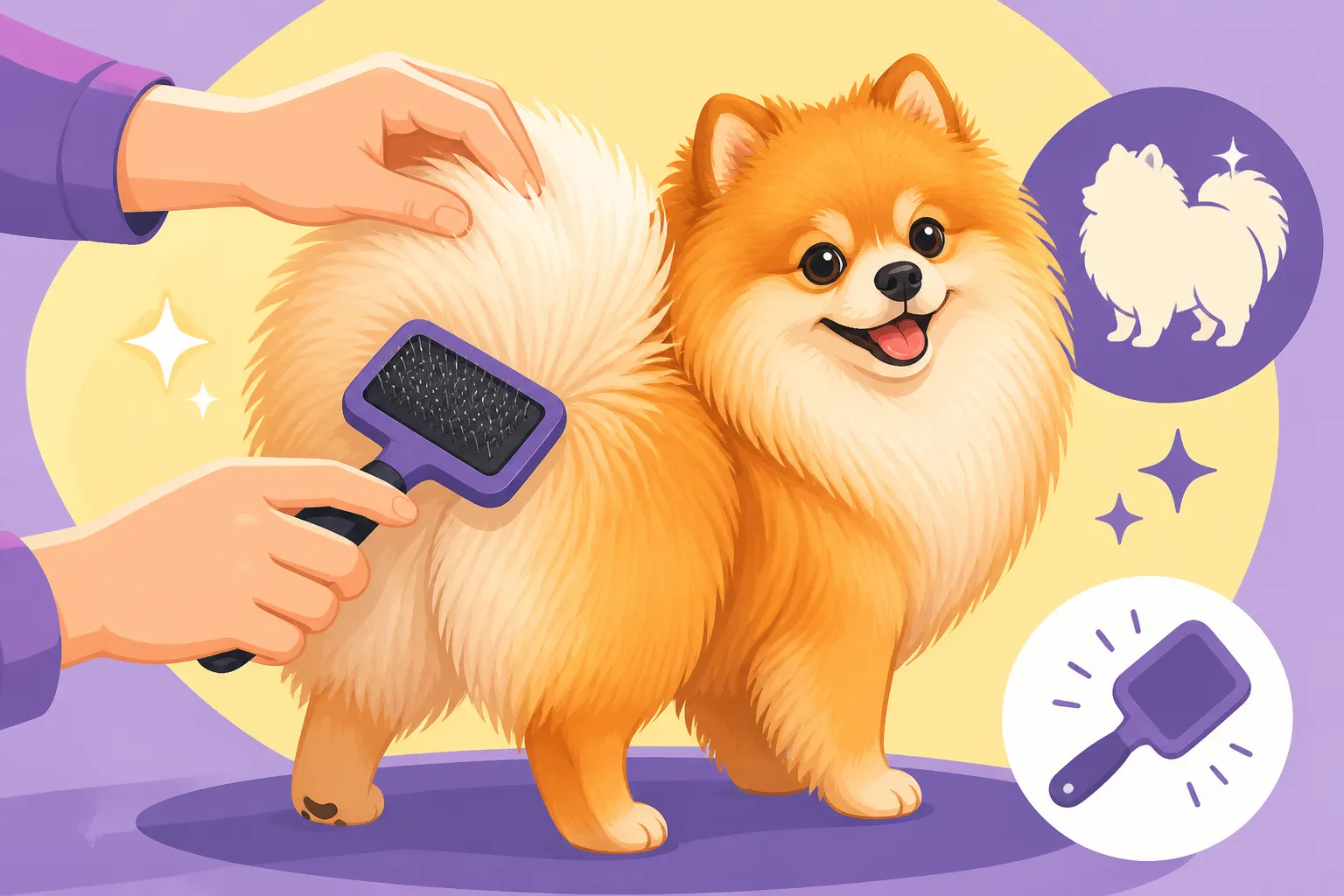
Brushing a Pomeranian’s Britches and Ruff
If you're a Pomeranian parent, you know the absolute joy these fluffy little bundles bring into your life. But let's be honest, you also know the struggle that comes with their magnificent double coat. Specifically, those luscious "britches" on their hindquarters and the glorious "ruff" around their neck and shoulders? They're often the first places to develop sneaky mats and tangles, leaving both you and your sweet Pom frustrated and, frankly, in a bit of pain. This guide is here to walk you through exactly how to tackle these challenging areas, ensuring a comfortable, mat-free coat for your furry friend.
Why the Ruff and Britches Are Prime Matting Zones
It's not just your imagination; those areas do seem to mat more quickly than the rest of your Pomeranian's coat. There's a reason for it, and understanding the "why" can help you be more proactive in your grooming routine. These aren't just patches of fur; they're dynamic zones on your Pom's body, constantly subjected to friction and movement, making them highly susceptible to tangles and knots.
The Double Coat's Density and Texture
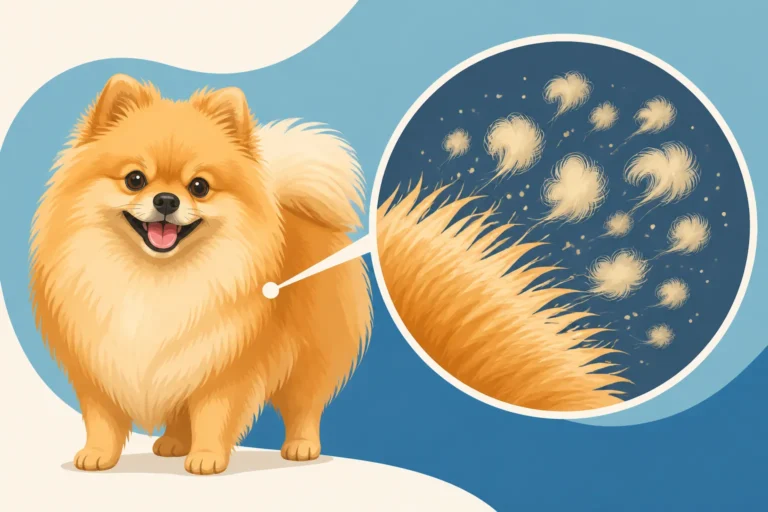
A Pomeranian's coat is a marvel of nature, a dense double layer designed to protect them from the elements. You have the soft, fluffy undercoat that provides insulation, and then the longer, harsher guard hairs that give the coat its structure and water resistance. This combination is beautiful but also a bit of a grooming challenge. The undercoat in areas like the ruff and britches can be incredibly thick, almost like a woolly cloud, especially in a Pom with a truly profuse coat. The sheer volume of hair means more opportunities for individual strands to intertwine and form mats, particularly when shed undercoat gets trapped within the standing guard hairs. It's a bit like trying to comb through a very full, fine wool sweater – it just wants to cling.
Imagine your Pomeranian, perhaps a spirited little guy named Barnaby, prancing around the house, his magnificent ruff standing proud. That ruff isn't just for show; it's a protective mane. But beneath those long, flowing outer hairs is a thick cushion of undercoat, especially dense around the neck and chest. When Barnaby rubs against furniture, plays tug-of-war, or even just wears his harness, that undercoat can start to compact. Similarly, the britches, which frame their cute little rear, are often just as dense. Every sit, every scoot, every enthusiastic wag of the tail creates friction that pushes those soft undercoat hairs together, starting the process of matting. It’s like tiny knots forming at the base of the hair, slowly growing larger and tighter.
Friction Points and Movement Patterns
These areas are constantly in motion and frequently encounter friction. Think about it: the ruff encircles your Pomeranian's neck, a pivot point for head movements, and it's often where collars or harnesses sit. A well-fitted harness is crucial for a Pomeranian, especially to protect their delicate trachea, but even the best harness can cause some friction where it rests on the ruff or around the chest. Every time your Pom turns their head, scratches an ear, or shakes off some water, those hairs are rubbing against each other. For the britches, it's a similar story. They fan out over the hindquarters, areas that are stretched, compressed, and rubbed every time your Pomeranian sits, runs, or even lies down.
Consider a busy day for your Pomeranian, Penelope. She might start by enthusiastically greeting you, wagging her tail so hard her britches sway. Then she settles down for a nap, curling up in a tight ball, compressing her ruff and britches against her body or the bed. Later, she goes for a walk, her harness rubbing gently against her neck and chest as she trots along. All these natural, everyday actions, which we want our Poms to enjoy, are simultaneously working against the smooth flow of their coat. The constant movement, the stretching and bunching of the skin, and the pressure from resting positions all contribute to the hairs weaving together. Even a simple scratch with a back paw can snag loose hairs in the britches, starting a tiny knot that quickly grows into a bigger problem. This is also why we talk about Preventing Mats Where a Pomeranian's Harness Sits – it’s a constant battle against friction.
The Challenge of Neglecting These Areas
Skipping these areas during regular grooming sessions, or not grooming frequently enough, almost guarantees a tangle. Mats don't just stay small; they grow. A tiny knot can quickly become a large, felt-like patch that pulls on your Pomeranian's skin, causing discomfort and even pain. If left unchecked, these mats can restrict movement, hide skin infections, or even cut off circulation in severe cases. It's a common frustration for owners, who often feel overwhelmed when they discover a hard, solid mat that seems impossible to get out. You might think, "Oh, it's just a small knot," but that small knot is a starting point, drawing in more loose hair, accumulating dirt, and tightening with every movement.
Imagine little Gus, who loves to play in the backyard. His britches, being so close to the ground, can pick up burrs, twigs, and all sorts of debris, which quickly gets woven into his dense coat. If you don't brush him daily, especially after outdoor adventures, those foreign objects become anchors for mats. Before you know it, what started as a few leaves has become a solid, painful mass that pulls at his skin every time he moves. Neglecting the ruff can be equally problematic, especially if your Pomeranian wears a collar or harness regularly. A tight mat there can be incredibly uncomfortable, digging into their sensitive neck area. It's not just about aesthetics; it's about your Pomeranian's comfort and health. The commitment to daily, thorough brushing is a cornerstone of preventing these painful issues, as discussed in How Many Times a Week a Pomeranian Is Brushed.
Essential Grooming Tools for a Smooth Brush-Out
Having the right tools is half the battle when it comes to maintaining a Pomeranian's magnificent coat, especially in those dense areas like the ruff and britches. Trying to detangle with the wrong brush or without proper preparation can be a frustrating, and even painful, experience for both you and your furry companion. Investing in quality grooming supplies will not only make the process easier but also more effective in preventing mats and keeping your Pom looking their best.
Selecting the Right Brushes and Combs
For a Pomeranian's double coat, you absolutely need a combination of tools. A good quality slicker brush is indispensable for getting through the undercoat and lifting loose hair. Look for one with fine, bent wire pins that are gentle enough not to scratch the skin but firm enough to penetrate the dense fur. Pair this with a metal greyhound comb, which has teeth of varying widths. The wider teeth help initially separate the hair and find mats, while the finer teeth are excellent for finishing and ensuring you've reached down to the skin. A pin brush can also be useful for longer guard hairs and for a final fluff, but it's the slicker and metal comb that are your true workhorses for the ruff and britches.
When I first started grooming my own Pomeranian, Pip, I made the mistake of thinking any old brush would do. Boy, was I wrong! I quickly learned that a cheap plastic comb just skimmed the surface, leaving all the dense undercoat packed in place, especially around her hindquarters. It wasn't until I invested in a good slicker brush from a reputable brand that I truly understood the difference. The fine pins of the slicker brush could actually reach through her thick fluff, gently pulling out shed undercoat that was otherwise destined to become a mat. After a good slicker session, following up with a metal greyhound comb, like one you might find on Amazon, allowed me to systematically check every section. The comb’s ability to "slice" through the coat revealed any hidden knots the slicker might have missed. For more on the specifics, check out The Slicker and Pin Brush a Pomeranian Needs.
The Magic of Detangling Sprays and Conditioners
Never, ever brush a dry Pomeranian coat, especially not in problem areas. Dry hair is brittle and prone to breaking, which not only damages the coat but can also create static, making matting worse. A good detangling spray or conditioning spray is a game-changer. These products lubricate the hair shaft, making it easier for brushes and combs to glide through, reducing friction, and minimizing breakage. They can also help loosen up minor tangles, turning a potentially painful struggle into a smoother process. Apply generously but not to the point of drenching, focusing on the dense and matted areas before you even pick up a brush.
I remember one time, after a particularly windy walk, my Pom, Sparky, had an unexpected tangle in his britches that felt like concrete. My first instinct was to just yank at it, but thankfully, I remembered my grooming mentor's advice: "Spray first!" I reached for a detangling spray I’d picked up from Chewy, spritzed the area thoroughly, and let it sit for a minute. The difference was astounding. What had felt like a solid knot became much more pliable, allowing me to carefully tease it apart with the wider teeth of my comb. These sprays are a lifesaver, especially for Poms who are prone to matting or have very fine, delicate coats. They not only help with existing tangles but also make the coat more resilient against future knotting, leaving it soft and manageable. This principle is key to Detangler Sprays for a Pomeranian.
Creating a Comfortable Grooming Environment
Grooming, especially in sensitive areas, requires patience from both you and your Pomeranian. A comfortable and safe environment is key to making the experience positive. Consider using a non-slip surface, like a rubber mat on a table, or even a dedicated grooming table if you have one. This elevates your Pom to a comfortable working height and prevents them from wiggling away easily. Ensure good lighting so you can clearly see what you're doing, and gather all your tools beforehand so you don't have to interrupt the session to search for something. Keep treats handy for positive reinforcement, making grooming a reward-based activity.
When setting up my grooming station for my little diva, Duchess, I always make sure it's a calm and quiet space. I lay down a yoga mat on a sturdy table so she feels secure and won't slip. I have her favorite little treats, often something small and easy to chew from Ollie, ready to go. The lighting is bright, so I can see every single hair and detect any burgeoning mat. I also make sure to have a dedicated grooming apron to protect my clothes and keep all my combs, brushes, and spray neatly organized in a caddy. This preparation signals to Duchess that it's "grooming time," and while she might not always be thrilled, she's learned to tolerate it with patience and a positive attitude, knowing treats are coming. Building this routine makes a huge difference in compliance and reduces stress for everyone involved.
A Step-by-Step Approach to Brushing the Neck Ruff
The Pomeranian ruff is a magnificent feature, a literal mane of hair that frames their charming face. But its density and location make it a prime candidate for tangles. Learning to brush it correctly is essential not just for aesthetics but for your Pom's comfort. It's all about working methodically and gently, ensuring you reach every layer of that beautiful double coat.
Setting Up for Success and Patient Preparation
Before you even touch a brush to your Pomeranian's ruff, take a moment to prepare both yourself and your dog. Find a comfortable, elevated surface where your Pom can stand or sit steadily, preferably with a non-slip mat. This could be a kitchen counter (if safe and stable), a sturdy coffee table, or a dedicated grooming table. The goal is to bring your Pom to eye level so you don't have to bend uncomfortably, which helps you stay patient. Have all your tools—slicker brush, metal comb, detangling spray, and treats—within easy reach. Start with a calm, reassuring voice. If your Pom is new to grooming or particularly sensitive, spend a few minutes just petting them, associating the grooming area with positive attention.
I remember when I first started grooming my energetic young Pom, Leo. He would squirm and try to nip at the brush, making the ruff an absolute nightmare to tackle. I learned quickly that rushing things only made it worse. Now, I always start with a gentle petting session, maybe even a little ear scratch, while he's on his grooming mat. I'll spray a bit of detangler on his ruff, letting him sniff it, and then give him a tiny treat. This helps to create a positive association, a clear signal that it's not a punishment. If Leo is particularly antsy, I might even do a short play session beforehand to burn off some energy. The key is never to force it. If they’re struggling too much, take a break and come back later. Remember, consistency in this calming routine will build trust over time.
Working in Small Sections to the Skin
The secret to brushing a dense coat like the ruff is to work in small, manageable sections, always brushing down to the skin. Do not just brush the top layer of hair. Use your free hand to part the hair, creating a visible line, and then use your slicker brush to brush from the roots outwards. Start at the bottom of the ruff, near the chest, and work your way up towards the ears and jawline. Brush small strokes, always away from the skin, lifting the hair as you go. After using the slicker, follow up with your metal comb to ensure there are no tangles or snags. If the comb glides smoothly through the section from root to tip, you've done a good job. If it catches, gently work through the tangle using more detangling spray and the comb's wider teeth.
For my Pomeranian, Daisy, her ruff is truly her crowning glory, but it’s also a magnet for mats. I literally visualize the ruff in horizontal layers, like tiers on a cake. I’ll hold a top section of hair up with one hand, exposing the underlayer, and then spritz that lower section with detangler. Then, with my slicker brush, I’ll brush outward and upward, from the skin out, making sure those bent pins are reaching all the way to her neck. Once that section feels smooth with the slicker, I use the fine-toothed side of my metal comb to confirm it's completely tangle-free. It’s painstakingly slow, but it’s the only way to avoid those painful, hidden mats. When you feel the comb glide through easily, it's such a satisfying feeling, knowing you've truly gone Working a Pomeranian's Coat in Sections to the Skin.
Checking for Hidden Mats and Full Coverage
Once you believe you've brushed a section thoroughly with the slicker, the metal comb becomes your ultimate truth-teller. It's your final inspection tool. Systematically comb through every inch of the ruff, from the base of the neck up to behind the ears, and around the jawline. Pay particular attention to the areas directly under the chin, where rubbing often occurs, and behind the ears, which are notorious for small, tight mats. If the comb meets resistance, don't yank! That's a mat. Go back to your detangling spray, re-spritz the area, and use the wide-toothed side of your comb or even your fingertips to gently tease the mat apart, working from the outer edges inwards. If a mat is too tight or too close to the skin, resist the urge to cut it out yourself, as you risk injuring your dog.
I once found a mat so deep behind my little guy Pip's ear that I almost missed it. It was hidden right where his ear folded against his neck, a really tricky spot. After his brush-out, I always do a "comb test" all over, and it was the fine teeth of the metal comb that caught it. It was a painful reminder that even after a seemingly thorough slicker brushing, those combs are absolutely essential for detection. For that particular mat, I saturating it with more detangler and used the very tips of the wide-toothed comb, slowly, patiently, picking at the edges until it began to loosen. It took a while, but getting it out without resorting to scissors was a victory. This attention to detail ensures The Double Coat That Makes a Pomeranian and Why It Stays On truly remains healthy.
Tackling the Britches with Care and Precision
The britches are another hallmark of the Pomeranian's luscious coat, creating a beautiful, fluffy fan on their hindquarters. However, like the ruff, their location and the constant movement of the dog make them highly susceptible to matting. Dust, debris, and even just the act of sitting can cause these hairs to tangle quickly. Approaching this area with a specific strategy will help keep your Pom's rear end as magnificent and mat-free as the rest of them.
Finding the Best Position for Access
Grooming the britches effectively requires excellent access to your Pomeranian's hindquarters. Some Poms are comfortable standing on a non-slip surface while you work, gently holding up their tail to expose the under-tail area and the inner thighs. Others might prefer to lie on their side, which can offer a better angle for reaching all the way into the deep folds of the britches. Experiment to find what works best for your dog. A good tip is to have your Pom facing away from you on your grooming surface, making it easier to see and reach their rear end without them constantly trying to turn and lick your face. Again, ensure good lighting and have all your tools ready.
My Pom, Archie, absolutely despises having his britches brushed if he's standing. He just tries to spin in circles. I found that if I gently lay him on his side on his grooming mat, he relaxes much more. I can then carefully lift his upper hind leg a little, which stretches the britches out slightly and makes it much easier to get the brush right down to the skin without pulling. I make sure to give him plenty of praise and tiny treats for staying still in this position. It’s all about finding that comfortable sweet spot where they can relax, and you have optimal access. Sometimes it takes a few tries to figure out their preference, but once you do, it makes a world of difference.
Methodical Brushing from Top to Bottom
Just like with the ruff, you'll want to work systematically through the britches, layer by layer. Start at the top of the hip, where the britches begin to fan out, and work your way down towards the hocks (the joint on the back leg). Use your free hand to part the hair horizontally, revealing the skin, and then brush outward and downward with your slicker brush. Focus on small sections, ensuring the pins reach through the dense undercoat. Pay extra attention to the areas around the sanitary trim zone and the inner thighs, as these areas often become compacted due to urine, feces, and general friction. After using the slicker, follow with your metal comb to confirm no tangles remain.
I approach my Pomeranian Lily’s britches as if I'm sculpting. I start high on her hip, near her spine, and create a horizontal part. I spray that line with detangler, then, using my slicker brush, I make short, upward and outward strokes, lifting the hair away from her body. After that section is smooth, I create another horizontal part directly below it and repeat the process. It's a slow descent down her leg, making sure each layer is completely mat-free before moving to the next. The under-tail area is especially tricky, so I gently lift her tail and brush down and out, being very careful with the sensitive skin. If you find debris caught in the britches, common after outdoor potty breaks, use the wide-toothed side of your comb to gently remove it before brushing. This methodical process ensures I'm not just skimming the surface, but actually getting through to the dense undercoat that causes the most problems.
Gentle Techniques for Detangling
When you encounter a mat in the britches, your immediate reaction might be frustration. But rushing or yanking will only hurt your Pomeranian and make them more resistant to future grooming sessions. Patience and gentle technique are paramount. First, liberally apply detangling spray to the mat. Let it soak in for a minute or two. Then, using your fingers or the wide-toothed side of your metal comb, start at the very edges of the mat and gently pick and pull strands away from the main knot. Work slowly, strand by strand, rather than trying to pull the entire mat out at once. You can use a technique called "line brushing" or "pinning," where you hold the hair above the mat to minimize pulling on the skin while you work on the knot below.
I remember dealing with a truly stubborn mat in my Pom Charlie's britches after a particularly muddy romp. It felt solid, and he was clearly uncomfortable when I touched it. I took a deep breath, spritzed it thoroughly with a good detangler (I like one that has a nice scent from Chewy), and let it sit while I brushed a different, easier area. When I came back, the mat was softer. I used my fingertips to gently pull apart the very outermost edges, then I carefully inserted the wider teeth of my metal comb into the loose strands at the edge of the mat, never directly into the center. I'd comb a tiny bit, then gently twist the comb and pull it out, repeating this motion. It took nearly twenty minutes, but slowly, bit by bit, the mat unraveled without ever having to cut it out. This gentle persistence is key, as is understanding when a mat is too far gone and requires professional intervention, as mentioned in Cutting a Mat Out of a Pomeranian.
Ongoing Maintenance and Preventing Future Tangles
Grooming a Pomeranian, especially maintaining their magnificent ruff and britches, isn't a one-and-done task. It's an ongoing commitment that pays off in a healthy, beautiful coat and a happy, comfortable dog. Establishing a routine, understanding the role of bathing, and knowing when to call in the professionals are all crucial aspects of long-term coat care.
Establishing a Regular Brushing Routine
The best way to prevent severe matting in the ruff and britches is consistent, regular brushing. For a Pomeranian, this ideally means daily or at least every other day, with a thorough session two to three times a week. Short, consistent sessions are far more effective and less stressful than trying to tackle major mats once a week. Incorporate brushing into your daily routine, perhaps while you're watching TV in the evening, making it a calm, bonding experience. The more frequently you brush, the less time it takes each session, and the less likely those frustrating mats will form. This consistency also means that when your Pom goes through their "coat blow," where they shed their undercoat profusely, you'll be on top of it.
I make it a habit to give my Pomeranian, Pepper, a quick brush-out every evening. It's just part of our wind-down routine. I focus on her ruff, behind her ears, and her britches first, as those are her high-risk areas. Sometimes it only takes five minutes, other times, if she’s been particularly active or if she's shedding, it might be ten or fifteen. But because I do it so often, I rarely encounter truly tough mats. It’s also a great opportunity to check her skin for any bumps, irritations, or parasites. If I skip a day or two, I can definitely feel the difference, with her coat starting to feel denser and a little less free-flowing. This regular effort saves so much time and heartache in the long run. If you're wondering about the frequency, consider How Many Times a Week a Pomeranian Is Brushed.
The Role of Bathing in Coat Health
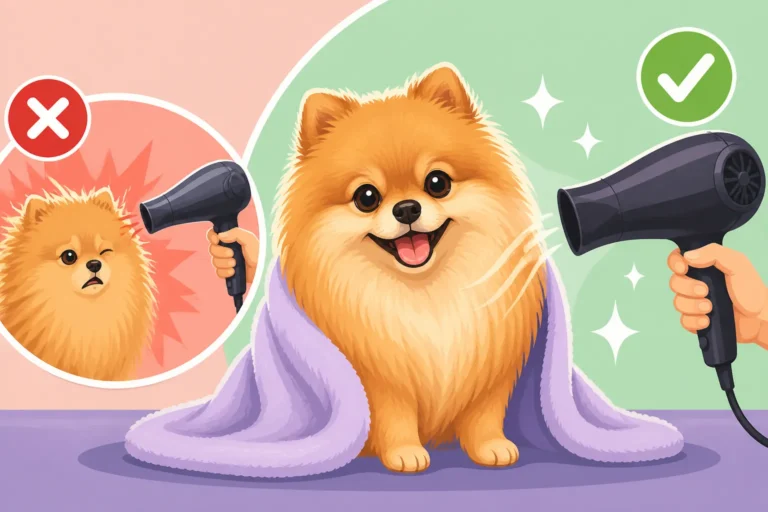
Bathing plays an important role in coat health, but it needs to be done correctly. A clean coat is less likely to mat than a dirty one, as dirt and oils can cause hairs to stick together. However, bathing a Pomeranian with existing mats can actually make them worse, as water can cause mats to tighten and shrink. Always ensure your Pomeranian is thoroughly brushed and free of all tangles before bathing. Use a good quality shampoo formulated for dogs, ideally one that moisturizes without stripping natural oils, and follow with a conditioner. Rinse thoroughly, and then blow-dry your Pomeranian's coat completely, brushing as you go to fluff it out and prevent new tangles from forming. Air drying is generally not recommended for Poms, as it can encourage matting.
I've learned the hard way that a pre-bath brush-out is non-negotiable. I once bathed my Pom, Gizmo, thinking a few minor tangles would magically disappear with the water. Instead, they shrank into tight, almost impossible-to-remove knots that required significantly more work than if I had just brushed them out dry beforehand. Now, before every bath, Gizmo gets a full, top-to-bottom brush-out, with extra attention paid to his ruff and britches. I use a gentle, volumizing shampoo and conditioner (often a brand I find on Chewy that's specifically for double coats) and make sure to rinse every last bit out. Then, the blow-drying process is just as important as the bath itself, as I brush his coat out straight while drying to prevent any tangles from reforming. This commitment ensures a truly clean and fluffy coat, as detailed in Drying a Pomeranian Without Damaging the Coat and Shampoo That Will Not Flatten a Pomeranian's Coat.
When to Seek Professional Grooming Help
While home grooming is essential, there are times when calling in a professional groomer is the best course of action. If your Pomeranian develops a large, tight mat that you can't safely remove with detangling spray and careful combing, a professional groomer has the expertise and specialized tools to handle it. They can often remove mats more efficiently and with less stress to your dog. Don't be embarrassed to seek help; groomers understand that mats happen, even to the most diligent owners. Regular professional grooming sessions (every 4-8 weeks) can also complement your home care, especially for full bath-and-fluff treatments, sanitary trims, and nail care that might be difficult to do yourself.
There was one summer when my Pomeranian, Fluffy, managed to roll in something sticky and developed a huge, really tight mat right in the middle of her britches. I tried for an hour with all my tricks, but it was too big, too close to the skin, and she was starting to get agitated. I knew it was time to call our trusted groomer. I felt a bit defeated, but the groomer, bless her heart, understood completely. She was able to carefully shave out the mat, explain to me exactly how she did it with minimal discomfort for Fluffy, and advise me on how to prevent it in the future. Sometimes, handing it over to an expert is not only safer for your Pom but also preserves your bond. Remember, a professional grooming appointment can run you anywhere from The 60 to 90 Dollar Pomeranian Grooming Appointment, but it's an investment in your dog's comfort and health. It's often far less expensive than a vet visit for skin issues caused by neglected mats, and considering What a Year of Pomeranian Grooming Adds Up To, it's a worthwhile budget item.
Disclaimer
This article is for general informational purposes only and does not constitute professional advice. Laws, prices and regulations vary by location and change over time. Consult a qualified professional for guidance on your specific situation.