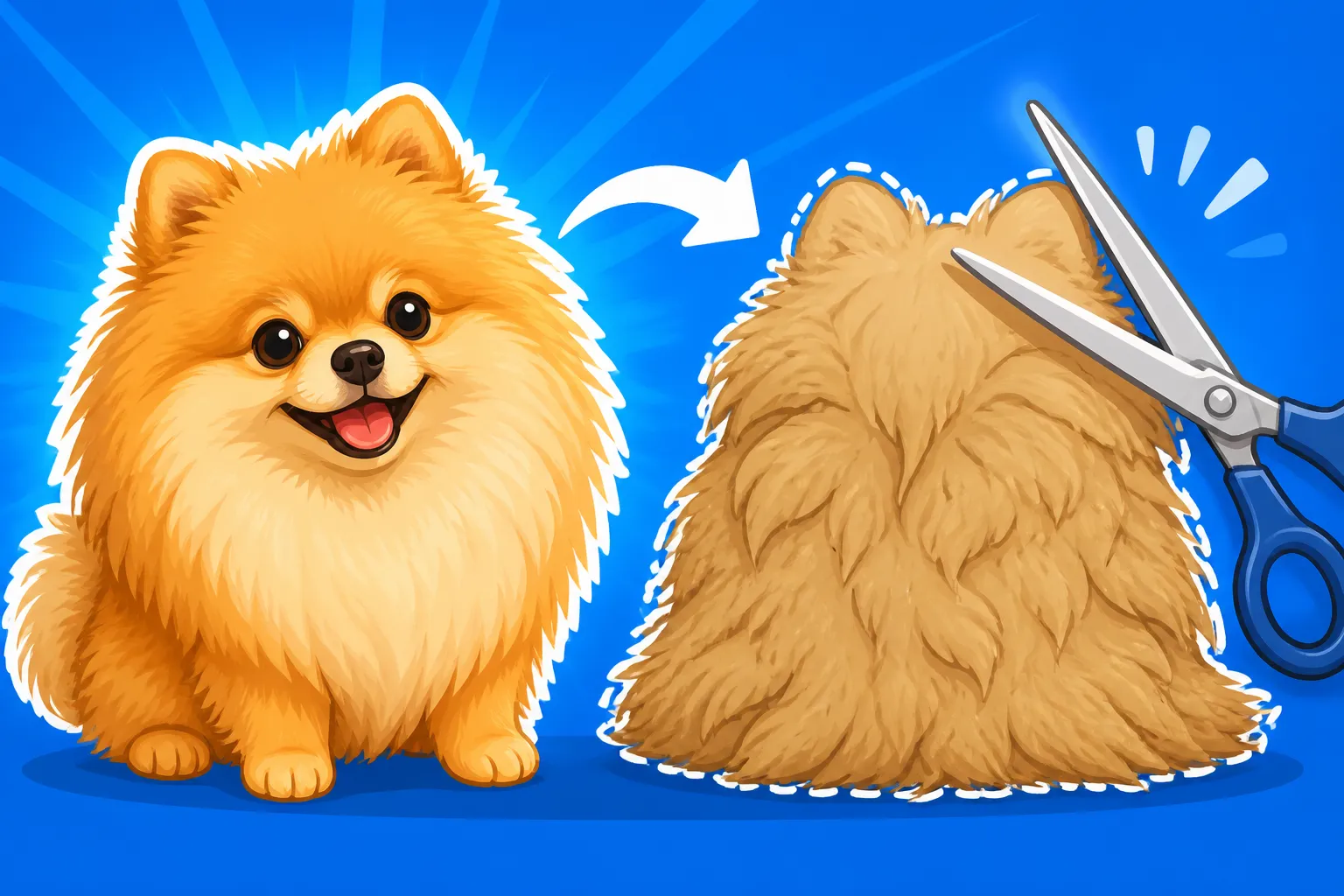
Cutting a Mat Out of a Pomeranian
Finding a mat in your Pomeranian’s glorious double coat can feel like discovering a knot in a priceless tapestry – frustrating, disheartening, and a little bit scary to tackle. These seemingly innocent tangles can quickly become tight, painful problems for your fluffy companion. This guide will walk you through the delicate process of safely and gently cutting out minor mats, empowering you to keep your Pom comfortable and their coat beautiful.
The Anatomy of a Mat: Why Pomeranian Coats Are Prone to Tangles
Pomeranians are renowned for their stunning, abundant coats. While beautiful, this very feature also makes them highly susceptible to matting. Understanding the nature of their fur and the common culprits behind tangles is the first step in prevention and effective removal.
The Double Coat Dilemma: Guard Hairs and Undercoat
Our Poms boast a magnificent double coat, a trait they share with their Arctic ancestors. This isn't just one layer of hair; it's a sophisticated system designed for insulation and protection. The outer layer consists of long, coarse guard hairs that stand away from the body, giving the Pomeranian its signature "puffball" silhouette. Underneath this, there's a dense, soft, fluffy undercoat. This undercoat is what keeps them warm in winter and cool in summer, but it's also the primary player in mat formation.
Mats occur when loose undercoat hairs become intertwined with the guard hairs and other shed undercoat. Instead of shedding out naturally, these dead hairs get trapped, creating dense clumps that pull at the skin. Imagine trying to comb through a pile of cotton wool that's been knotted together – that's what a mat can feel like for your Pom. Regular brushing, like the routine described in Working a Pomeranian's Coat in Sections to the Skin, is absolutely crucial to remove this loose undercoat before it has a chance to bind up and form these stubborn knots. Without it, the fine, soft undercoat simply locks onto itself.
Hotspots: Where Mats Most Commonly Form
While mats can appear anywhere on a Pomeranian's body, certain areas are notorious hotspots due to friction and movement. These are the places you should pay extra attention to during your regular grooming sessions.
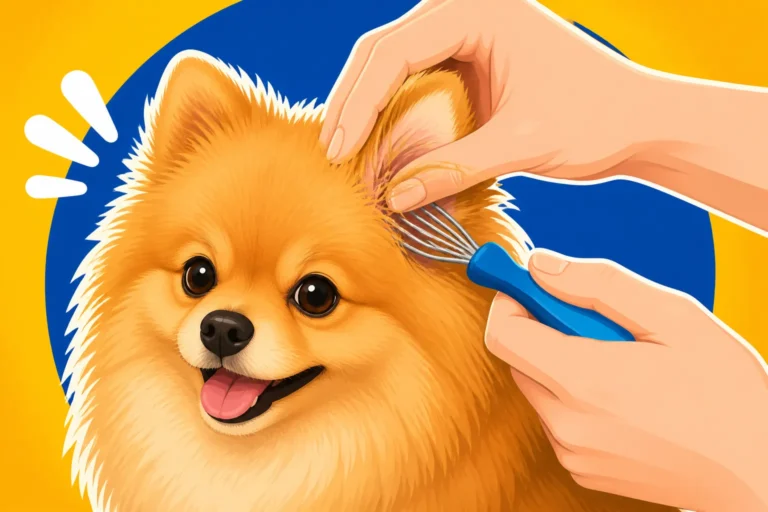
One of the most common places to find mats is behind the ears. This area often gets overlooked, and the constant rubbing from head movements, scratching, or even just tilting their head for cuddles can create friction that weaves the hairs together. Another prime location is under the "armpits" (the front legs where they meet the chest) and in the groin area. These spots experience a lot of rubbing as your Pomeranian walks, runs, and plays. The delicate skin in these areas also makes mat removal particularly tricky and sensitive. Then there are the "britches," the fluffy hair on their hindquarters. When a Pom sits down, this area compresses, leading to tangles, especially if they’ve been outside in damp conditions. And let's not forget the area where a harness sits; constant rubbing here can quickly compact the fur, a problem explored further in Preventing Mats Where a Pomeranian's Harness Sits.
Lifestyle Factors That Worsen Matting
It's not just the coat type; various environmental and lifestyle factors can significantly contribute to mat formation. Being aware of these can help you adjust your care routine.
Humidity and wet weather are big culprits. When a Pomeranian's coat gets wet and isn't thoroughly dried and brushed, the hair can clump and mat as it dries. Think about how your own hair might tangle more easily after a swim if you don't comb it out. Even damp conditions from morning dew or a rainy walk can be enough to start a mat. Furthermore, static electricity, especially prevalent in dry indoor environments during winter, can make hairs cling together, acting as a precursor to matting. A lack of consistent grooming is perhaps the biggest factor of all. If you're not brushing regularly, ideally daily or every other day, the shed undercoat simply has too much opportunity to bind with the guard hairs. Even something as simple as leaving a collar on continuously, rubbing against the fur, can create a friction point for mats. Understanding The Double Coat That Makes a Pomeranian and Why It Stays On truly highlights why diligent care is so paramount.
The Hidden Dangers: Why You Can't Ignore a Pomeranian's Mats
It's easy to dismiss a small mat as just a cosmetic issue, but for a Pomeranian, mats are far more than just bad hair. They pose significant health and comfort risks that can quickly escalate if not addressed. Ignoring them isn't an option if you want your beloved Pom to be happy and healthy.
Skin Health Nightmares: Irritation, Infections, and Hot Spots
One of the most immediate and serious consequences of matting is the impact on your Pomeranian's skin. Mats pull constantly on the delicate skin underneath, causing irritation and discomfort. This constant tension can lead to redness, inflammation, and even open sores as the skin becomes raw.
Furthermore, mats create a perfect breeding ground for bacteria and fungi. They trap moisture, dirt, and parasites against the skin, creating a dark, humid environment where skin infections can thrive. These infections often manifest as "hot spots" – angry, red, weeping lesions that are intensely itchy and painful. Your Pom will likely chew or scratch at these areas, making the problem worse and potentially spreading the infection. Left untreated, these skin issues can lead to deeper infections, hair loss, and chronic discomfort that requires extensive veterinary care. It’s a vicious cycle that starts with a simple tangle.
Pain and Restricted Movement: More Than Just a Bad Hair Day
Imagine trying to move with a tight rubber band constantly pulling at your skin. That's a fraction of the discomfort a Pomeranian feels with significant matting. As mats grow larger and tighter, they constrict the skin, limiting natural movement. If a mat forms in an armpit, for example, it can make walking incredibly painful, causing your Pom to hobble or limp.
Mats can form tight bands around limbs, tails, or ears, cutting off circulation in severe cases and causing extreme pain. Even smaller mats can create a constant, nagging ache. Your Pomeranian might become less active, irritable, or even aggressive due to the persistent discomfort. They might flinch when you try to touch them, not because they're being "naughty," but because they're anticipating pain. This is why addressing mats promptly is an act of kindness and essential for their overall well-being and mobility.
Escalating Grooming Challenges and Vet Visits
Allowing mats to accumulate creates a snowball effect that makes future grooming exponentially more difficult and expensive. A small mat that could have been brushed out easily can, within days or weeks, become a large, felt-like mass that is impossible to comb through.
When a Pomeranian's coat becomes severely matted, it often reaches a point where home grooming is no longer feasible or safe. At this stage, professional groomers may have no choice but to shave down the entire coat, a process known as a "shave down." This isn't just about aesthetics; it's often the only humane way to remove extensive matting without causing extreme pain. These shave downs can be costly, emotionally stressful for the dog, and sometimes even lead to "post-clipping alopecia," where the coat doesn't grow back properly. Moreover, if mats are causing skin infections, a vet visit will be necessary, adding further costs and stress. The need for sedated grooming or vet care for painful skin issues directly stems from untreated matting. This highlights why regular care, following a consistent The Grooming Schedule a Pomeranian Runs On, can save you a lot of heartache and money down the line.
Your Step-by-Step Guide to Safely Cutting Out Minor Mats
While prevention is always best, sometimes a sneaky mat appears despite our best efforts. For minor, isolated mats, you can safely remove them at home with the right tools and a gentle, patient approach. Remember, safety first!
Assembling Your Mat-Busting Arsenal
Before you even think about touching the mat, gather all your supplies. Having everything within reach will make the process smoother and less stressful for both you and your Pomeranian. Rushing or searching for tools mid-tangle is a recipe for disaster.
Here’s what you’ll need:
| Tool | Purpose | Why it's Important |
|---|---|---|
| Blunt-nosed Scissors | Safely cutting through mats without piercing skin | Absolutely essential. The blunt tips prevent accidental nicks or cuts to your Pomeranian's delicate skin, which is often pulled taut and hidden beneath the mat. |
| Slicker Brush | For initial loosening and post-cut brushing | Helps to gently work through the outer edges of the mat before cutting, and to smooth the coat after removal. Many excellent options can be found on Chewy. |
| Metal Comb | For line brushing, checking for remaining tangles, and fluffing | Crucial for detailed work and ensuring all tangles are gone. The fine and wide teeth allow you to effectively brush down to the skin. |
| Detangling Spray | Lubricates the coat, making mats easier to separate | Can significantly reduce friction and pain. Spritzing the mat thoroughly can sometimes help you finger-tease it apart before resorting to scissors. Look for pet-safe options on Amazon or at your local pet supply store. |
| Treats | Distraction and positive reinforcement | Keep your Pom calm and cooperative. High-value treats will make them associate grooming with good things. |
| A Helper | To hold and reassure your Pomeranian, if possible | An extra set of hands can make all the difference, especially if your Pom is wiggly or nervous. One person can focus on holding, the other on grooming. |
Always ensure your scissors are sharp enough to cut cleanly but, most importantly, have blunt or rounded ends. Never, ever use sharp-pointed household scissors for this task.
The Art of Precision: Gentle Cutting Techniques
This is the most critical part: slow, careful, and always with your Pomeranian's safety in mind. If your Pom is particularly sensitive, remember that A Pomeranian That Screams During Brushing will likely react even more strongly to scissors, so extreme patience is key.
- Locate and Assess the Mat: Gently feel around the mat to determine its size, density, and how close it is to the skin. Mats often pull the skin up into the tangle, so what you see on the surface isn't always the full story.
- Apply Detangling Spray: Liberally spray the mat with detangling spray. Work it in with your fingers, trying to get it to penetrate the mat. Let it sit for a minute or two to soften the hair.
- Finger Tease (If Possible): With the spray applied, try to gently pull apart the outer edges of the mat with your fingers. Never yank or pull hard. The goal is to break it into smaller sections, not to pull it out.
- Isolate the Mat: With one hand, firmly but gently hold the skin beneath the mat, pulling it slightly away from the mat itself. This creates a small gap between the mat and the skin, reducing the risk of cutting the skin.
- The "Under Cut" Technique: This is the safest way to cut. Slide the blunt tip of your scissors underneath the mat, parallel to the skin, with the blunt side pointing towards the skin. Make very small, shallow snips, moving slowly across the mat, cutting into the mat from the underside rather than straight down. It’s like breaking the mat into tiny strips.
- Work in Small Sections: Don't try to remove the whole mat at once. Cut a little, then gently try to pull apart the newly freed hair with your fingers or a comb. Repeat the process. Think of it as meticulously dissecting the mat, rather than chopping it off.
- Never Cut Straight Across: This is the golden rule. Cutting straight across a mat is extremely dangerous, as the skin is almost always pulled up into the tangle. You're very likely to cut your Pomeranian. Always go under the mat, parallel to the skin, with blunt scissors.
If at any point your Pomeranian becomes too agitated, stressed, or shows signs of pain, stop immediately. It's better to take a break and resume later, or seek professional help.
After the Cut: Soothing Skin and Preventing Recurrence
Once the mat is successfully removed, your job isn't quite done. Post-removal care is important to prevent irritation and ensure the mat doesn't return.
First, gently comb through the area where the mat was. Use your metal comb to ensure there are no tiny tangles left behind that could quickly become a new mat. Brush the entire coat with your slicker brush to ensure smooth, tangle-free fur. Check the skin under where the mat was; it might be red or a little sensitive. You can apply a pet-safe soothing balm or aloe vera gel if there's no open wound. For deeper cleaning or to refresh the coat, consider using a good quality pet shampoo and conditioner. Chewy offers a wide selection of shampoos formulated for double coats, which can help keep the fur healthy and less prone to tangles.
Most importantly, implement a stricter preventative grooming routine. This means more frequent brushing, especially in those hotspot areas. Use a detangling spray as part of your regular brushing routine to help the brush glide through the coat. Consider adjusting collars to harnesses designed to minimize friction, or ensure the harness fits perfectly without rubbing. Regular baths, followed by thorough drying and brushing, are also key. Dryers and Brushes for Grooming a Pomeranian at Home offers excellent advice on home grooming tools and techniques to keep their coat in top condition and prevent future mats from forming.
Knowing When to Call for Backup: Professional Grooming for Severe Mats
While tackling minor mats at home can be empowering, there are definite situations where a professional groomer is not just recommended, but absolutely necessary. Recognizing these limits is crucial for your Pomeranian's well-being and safety. Don't feel like a failure if you need to call in the experts; it's a responsible choice.
Recognizing When Mats Are Beyond Home Care
It's easy to underestimate how quickly a small mat can become a huge problem. If you encounter any of the following scenarios, it's time to put away your scissors and pick up the phone to book a groomer.
Firstly, if the mat is large, dense, and covers a significant area of your Pomeranian's body, it's likely beyond safe home removal. These large "felted" mats can pull the skin so tightly that even identifying where the skin ends and the mat begins is impossible. Secondly, if there are multiple mats, particularly if they are close together or forming a "mat suit" around the body, a professional groomer is needed. Attempting to cut out numerous extensive mats can be incredibly stressful and painful for your dog, and you risk missing spots or causing injury. Thirdly, if the mat is located in a highly sensitive area that makes you nervous – such as directly over an ear, an eyelid, near genitalia, or very deep in an armpit – it's best left to someone with specialized training and tools. Finally, if your Pomeranian is showing extreme distress, aggression, or fear when you even attempt to touch the mat, pushing the issue at home will only make future grooming (and trust with you) more difficult. Professionals have techniques, restraint methods, and a calm demeanor to handle such situations safely.
Groomer's Expertise: Tools and Techniques for Tougher Jobs
Professional groomers possess a wealth of experience, specialized tools, and a deep understanding of canine anatomy that makes them uniquely equipped to handle severe matting. They can often achieve results that are simply not possible or safe for an owner at home.
Groomers have various tools specifically designed for mat removal, including different types of clippers with various blade lengths, specialized dematting tools, and professional-grade detangling products that are more potent than those available to the average pet owner. They also understand how to safely use these tools without injuring the dog. Crucially, a professional groomer can assess the extent of the matting and make an informed decision on the best course of action – whether it's carefully dematting small sections or performing a complete shave down for the dog's comfort and health. They know how to work efficiently and minimize stress for the dog, often employing specific handling techniques to keep a nervous Pomeranian calm. Their trained eye can spot underlying skin issues or hidden wounds that might be obscured by the mats, ensuring these are brought to your attention and can be addressed by a veterinarian.
Long-Term Mat Prevention Strategies
After a professional shave down or successful mat removal, the focus immediately shifts to prevention. A groomer can provide invaluable advice on maintaining your Pomeranian's coat, but ultimately, it's up to you to implement these strategies daily.
Regular brushing is non-negotiable. Aim for daily brushing, especially in those mat-prone areas. A professional groomer can demonstrate proper line brushing techniques to ensure you're reaching the skin. Invest in high-quality grooming tools, as suggested by your groomer, such as a good slicker brush and a metal comb. You can find a wide array of these tools from retailers like Chewy or Amazon. Consistent bathing with appropriate shampoos and conditioners, followed by thorough blow-drying and brushing, is also critical. Your groomer can recommend specific products that are best for your Pomeranian's coat type. Lastly, don't let long periods pass between professional grooming appointments. Even if you're diligent at home, regular trips to the groomer every 4-8 weeks can help maintain the coat, catch small tangles before they escalate, and keep your Pomeranian looking and feeling their best. Think of it as preventive maintenance for their luxurious coat.
Disclaimer
This article is for general informational purposes only and does not constitute professional advice. Laws, prices and regulations vary by location and change over time. Consult a qualified professional for guidance on your specific situation.