Whether a Matted Pomeranian Has to Be Shaved
It's a heartbreaking sight: you reach down to pet your beloved Pomeranian, and your fingers snag on a dense, tangled clump of fur. Perhaps it's a small knot behind an ear, or maybe it's a full-body pelt that has formed seemingly overnight. The immediate panic sets in – what do you do? Is it even possible to save their beautiful, fluffy coat, or are you facing the dreaded necessity of shaving your precious Pom? This guide is here to walk you through the difficult decisions, realistic expectations, and practical steps when dealing with a matted Pomeranian, helping you understand when detangling is feasible and when shaving becomes the kindest, most humane option.
The Unique Challenges of the Pomeranian Coat
The Pomeranian's glorious, fluffy appearance is one of its most defining features, but it's also the source of unique grooming challenges. Understanding the anatomy of their coat and how mats quickly develop is the first step in tackling this common issue.
The Double-Coated Marvel
Pomeranians possess a magnificent double coat, a characteristic inherited from their Spitz ancestors. This isn't just one layer of fur; it's a sophisticated system designed for insulation and protection. You have the soft, dense undercoat, which is typically shorter and provides warmth. This is the fluffy part that gives them their plush feel. Layered on top are the longer, coarser guard hairs. These are the protective outer coat, standing off from the body, giving the Pomeranian its distinctive "powder puff" or "lion's mane" appearance. This combination is what makes their coat so striking and so susceptible to matting if not properly maintained.
The guard hairs and undercoat work together beautifully when clean and tangle-free. However, when shedding undercoat gets trapped within the guard hairs, especially if not brushed out regularly, it creates the perfect recipe for mats. Imagine a miniature wool blanket forming close to their skin, tightening with every movement and every moment it's left unattended. You can learn more about The Double Coat That Makes a Pomeranian and Why It Stays On.
How Mats Take Hold So Quickly
Mats don't just appear out of nowhere; they are a gradual accumulation that can accelerate rapidly under certain conditions. One of the biggest culprits is infrequent brushing. A Pomeranian's double coat requires consistent attention, often several times a week, to prevent tangles from becoming full-blown mats. Without regular brushing, shed undercoat, dirt, and even everyday moisture can bond the hairs together.
Areas of high friction are particularly vulnerable. Think about the spots where a harness or collar rubs – the chest, armpits, and around the neck are common matting zones. Even something as simple as their collar constantly moving against their fur can cause friction that encourages tangles. Wet weather, baths that aren't followed by thorough drying and brushing, or even rolling around on rough surfaces can introduce moisture and pressure that exacerbate mat formation. During seasonal "coat blows," when they shed their entire undercoat, or during the "puppy uglies" phase where their adult coat replaces their puppy fluff, matting can become an even more pervasive problem. The Weeks a Pomeranian Blows Its Coat are critical times for increased vigilance in grooming.
Deciding When to Detangle and When to Clip
When you discover mats on your Pomeranian, the desire to preserve their coat is strong. However, it’s crucial to make a decision based on your dog's comfort and health, not just aesthetics. Sometimes, the most loving choice is to let go of the long fur.
Differentiating Mat Severity
Not all mats are created equal, and understanding their severity is key to determining the best course of action.
- Small, Surface Tangles: These are often found at the tips of the fur, especially on the ruff or britches. They might feel like small knots you can still pull apart with your fingers or a comb. These are typically easy to work out with patience, a good detangling spray, and the right tools. They don't usually pull at the skin and aren't causing significant discomfort yet. Think of a minor knot in human hair – annoying, but manageable.
- Moderate Mats: These are larger, denser clumps that have begun to pull closer to the skin. They might be concentrated in areas like behind the ears, in the armpits, or on the belly. You'll notice the skin underneath is starting to gather and might look a bit red or irritated. Attempting to comb these out can be painful for your Pomeranian, and it requires a significant amount of time and specialized detangling products. This is where you might need to seriously consider if the stress and potential pain for your dog are worth saving the fur.
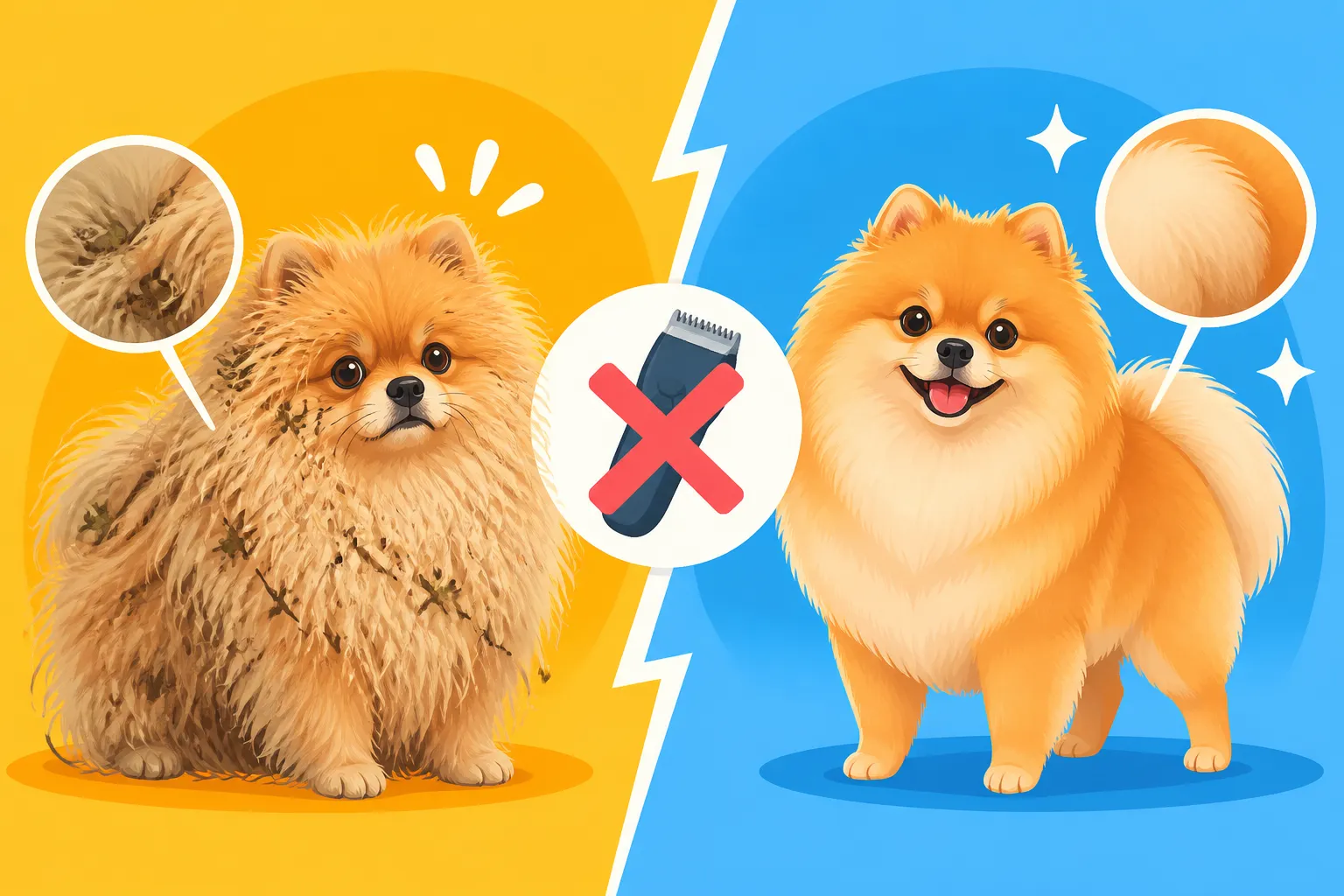
- Severe Matting or Pelting: This is the most serious level, where the mats have become so dense and extensive that they form a solid "pelt" over large sections of the dog's body, or even their entire body. These mats are often tight against the skin, pulling it constantly, which can be incredibly painful. Imagine wearing a tight, uncomfortable sweater that constantly tugs at your skin – now imagine you can't take it off. This level of matting can hide skin infections, parasites, sores, and restrict movement. It can even cut off circulation in extreme cases. At this point, detangling is not just painful; it's often inhumane and virtually impossible without causing extreme distress or injury to the dog. The only truly humane option here is often a complete shave down.
A quick test to determine mat closeness to the skin is to try to gently lift the mat away from the skin. If you can't easily see skin through the mat or if the skin pulls taut when you try to lift it, the mat is very tight.
The Humanity of the Choice
It's natural to feel guilty about shaving a Pomeranian, especially knowing that Why Shaving a Pomeranian Can End Its Coat is a real concern for their double coat. However, when faced with severe matting, the priority must always be your dog's well-being and comfort over cosmetic appearance. A severely matted coat is not just an aesthetic issue; it's a health and welfare problem.
- Pain and Discomfort: Mats pull on the skin, causing constant discomfort, especially around joints or when the dog moves. Tight mats can lead to bruising, skin irritation, and even open sores that become infected.
- Restricted Movement: Large mats can hinder a Pomeranian's natural movement, making it difficult to walk, sit, or lie down comfortably. This impacts their quality of life.
- Skin Health Issues: Mats trap moisture, dirt, and debris against the skin, creating a breeding ground for bacteria and yeast infections. They can also hide fleas, ticks, and other parasites. The lack of air circulation can cause the skin to become unhealthy and inflamed.
- Overheating: While the double coat insulates against cold, a severely matted coat can trap heat in warmer weather, preventing proper air circulation and making it difficult for the dog to regulate its body temperature.
Professional groomers are trained to assess matting and will prioritize the dog's comfort. Many will refuse to attempt extensive detangling of severe mats because it is simply too painful and stressful for the animal. They adhere to a "humanity before vanity" principle, which means if the only way to alleviate suffering is to shave, that's what they will recommend. Trusting their judgment in these situations is important. The cost of such an intervention can be significant, so understanding The Grooming Bill Nobody Warns a Pomeranian Owner About can help you prepare.
The Process of Reclaiming Your Pomeranian's Comfort
Once you've made the difficult but humane decision regarding severe matting, the next step is getting your Pomeranian comfortable again. This usually involves a professional groomer and a precise, gentle approach.
The Groomer's Assessment
When you bring a matted Pomeranian to a professional groomer, their first step will be a thorough assessment. They won't just dive in with clippers; they'll carefully examine the extent and type of matting. They'll check the legs, belly, armpits, behind the ears, and around the tail – all those sneaky places where mats love to hide and become dense. They'll look for:
- Severity and Location: Are the mats superficial, moderate, or pelted tight against the skin? Are they concentrated in certain areas, or is the entire coat affected?
- Skin Condition: The groomer will try to feel for any underlying skin issues, such as redness, irritation, sores, or lumps that the mats might be concealing.
- Dog's Temperament: How tolerant is your Pomeranian? An already stressed or fearful dog will have an even harder time with painful detangling, making shaving the gentler option.
Based on this assessment, the groomer will discuss their recommendation with you. If the matting is minor, they might suggest a careful detangling process using specialized tools and products. However, if the mats are extensive or tight, they will almost certainly recommend a full shave down for your dog's welfare. They might explain that attempting to brush out tight mats could cause more pain, skin damage, or even trauma, which is something they are committed to avoiding. This discussion is crucial, as it helps manage your expectations and ensures you understand why a particular course of action is best for your Pom.
The Shaving Process: What to Expect
If shaving is necessary, it's important to understand what the process entails and what your Pomeranian will look like afterward. The groomer will use professional clippers with a short blade to go under the mats, as close to the skin as safely possible. This is not like a regular haircut; it's a meticulous process designed to remove the matted fur without cutting the dog's skin, which can be challenging given how tight mats pull the skin.
- Blade Length: The groomer will choose the shortest safe blade to get under the mats. This usually means your Pomeranian will have very short hair, sometimes appearing almost bald, immediately after the shave.
- Appearance: Don't be surprised if your Pomeranian looks significantly different. Their once fluffy silhouette will be gone, replaced by a much slimmer profile. It can be a shock for owners, but remember it’s temporary and for their health.
- Potential for Irritation: Even with the most careful groomer, the skin underneath tight mats can be very sensitive. It might appear red or irritated for a day or two after shaving, similar to razor burn. This is why proper aftercare is so important.
- Revealed Issues: A shave down often reveals underlying skin conditions that were hidden by the mats. This could include dry patches, flea infestations, hot spots, or other irritations that can now be properly treated by your vet.
- Time and Cost: Shaving a severely matted Pomeranian takes more time and effort than a standard groom because of the care required to avoid injuring the skin. This will usually be reflected in The 60 to 90 Dollar Pomeranian Grooming Appointment cost, which might be higher for matted dogs.
Here’s a summary of mat severity and recommended action:
| Mat Severity | Description | Appearance | Recommended Action |
|---|---|---|---|
| Surface Tangles | Loose knots, often at the ends of the fur. | Easy to see through to the skin; fur moves freely around them. | Gentle detangling with comb/brush and spray. |
| Moderate Mats | Denser clumps, starting to pull closer to the skin. | Skin may be visible but taut; fur feels dense and somewhat stiff in spots. | Cautious detangling (professional recommended) or partial shave if dog is stressed. |
| Severe Matting | Extensive, tight mats forming a solid "pelt" against the skin. | Skin is often not visible, pulled tight; movement may be restricted. | Full shave down by a professional groomer (humanity first). |
Life After Shave: Nurturing the Coat Back to Health
A shave down is a fresh start for your Pomeranian's coat, but it requires careful attention to immediate aftercare and a commitment to a consistent grooming routine to prevent future matting.
Immediate Aftercare and Skin Protection
After a close shave, your Pomeranian's skin is suddenly exposed and vulnerable. It’s essential to provide special care to prevent issues and ensure their comfort.
- Sun Protection: Their skin, especially if it was previously covered by dense fur, is now susceptible to sunburn. If your Pom spends time outdoors, consider applying dog-safe sunscreen to exposed areas or dressing them in a lightweight, breathable canine shirt for protection. This is particularly important for Poms with light-colored skin.
- Moisturizing: The sudden exposure can lead to dry, flaky skin. A veterinarian-approved moisturizing spray or balm can help soothe and hydrate their skin. Avoid products with harsh chemicals or fragrances that might cause further irritation. Look for gentle, hypoallergenic options on platforms like Chewy or Amazon.
- Monitoring for Irritation: Keep a close eye on their skin for any signs of prolonged redness, itching, rashes, or bumps. While some initial redness is normal, persistent irritation could indicate a skin infection or an allergic reaction. Contact your vet if you have concerns.
- Temperature Regulation: Remember that without their insulating double coat, your Pomeranian will be more sensitive to temperature changes. In colder weather, a cozy sweater or coat will be essential. In warmer weather, ensure they have plenty of shade and access to water, as their body will adjust to its new insulation level.
It's also important to be aware of conditions like Black Skin Disease and the Pomeranian Coat That Never Returns. While shaving matted fur is often necessary, sometimes a close shave, particularly repeated ones, can trigger or exacerbate coat issues. Not all shaved Pomeranian coats grow back exactly as they were, and some develop patchy growth or a cottony texture. Managing expectations for Whether a Pomeranian's Coat Grows Back After Alopecia X is part of the recovery process.
Building a Preventative Grooming Routine
The best way to avoid future shave-downs is to establish and stick to a diligent grooming routine. This isn't just about aesthetics; it's about your Pomeranian's health and comfort.
- Daily Brushing: This is your strongest defense against mats. A good quality slicker brush and a metal comb are indispensable. Work through their coat in sections, starting from the skin and moving outwards. Don't just skim the surface; make sure you're getting down to the undercoat. Pay extra attention to high-friction areas. You can find excellent tools on Chewy or Amazon. For detailed guidance, read Working a Pomeranian's Coat in Sections to the Skin.
- Regular Bathing and Drying: Bathe your Pomeranian every 2-4 weeks using a gentle, dog-specific shampoo and conditioner. Always ensure they are completely dry, using a cool-setting blow dryer, and thoroughly brush them as they dry to prevent tangles from forming.
- Professional Grooming Schedule: Even with diligent home care, regular visits to a professional groomer are highly recommended. A groomer can perform thorough brush-outs, sanitary trims, and check for any developing issues you might miss. Discuss a schedule that suits your Pom's coat and lifestyle, typically every 4-8 weeks. This helps to manage the undercoat and keep the guard hairs pristine. Investing in home grooming tools and learning the techniques can also save you money in the long run, as detailed in What Home Grooming Saves a Pomeranian Owner.
- Harness and Collar Checks: Ensure harnesses fit properly and aren't rubbing excessively. Regularly check the fur underneath for any signs of matting. Consider rotating between different harness types or even using a soft, padded harness to minimize friction. Preventing Mats Where a Pomeranian's Harness Sits is crucial for long-term coat health.
Choosing the Right Grooming Products
Using the correct products can make a world of difference in maintaining your Pomeranian's coat and preventing mats.
- Shampoo and Conditioner: Opt for high-quality, moisturizing shampoos and conditioners formulated for dogs. Products designed for double coats can be particularly beneficial. Look for ingredients that hydrate the skin and coat, making it less prone to tangling. You can browse a wide range of options through retailers like Chewy.
- Detangling Sprays: Keep a good detangling spray on hand. These can be invaluable for working out small knots before they become major problems. Spray directly onto the tangle, let it sit for a moment, and then gently work it out with your fingers or a comb.
- Brushes and Combs: As mentioned, a slicker brush is great for the overall coat, and a metal comb (especially one with varying tooth spacing) is essential for getting through the deeper undercoat and checking for mats. Pin brushes can also be useful for finishing and general brushing. For those who prefer to shop online, resources like Amazon offer a vast selection of grooming tools, from the basic slicker brush to more specialized dematting combs. Make sure to choose tools appropriate for a Pomeranian's delicate skin and dense fur. You can learn more about specific tools in The Slicker and Pin Brush a Pomeranian Needs.
By committing to a consistent and gentle grooming routine, and by using the right tools and products, you can help your Pomeranian live a happy, comfortable life with a beautiful, healthy coat, avoiding the painful necessity of shaving down a matted mess.
Disclaimer
This article is for general informational purposes only and does not constitute professional advice. Laws, prices and regulations vary by location and change over time. Consult a qualified professional for guidance on your specific situation.