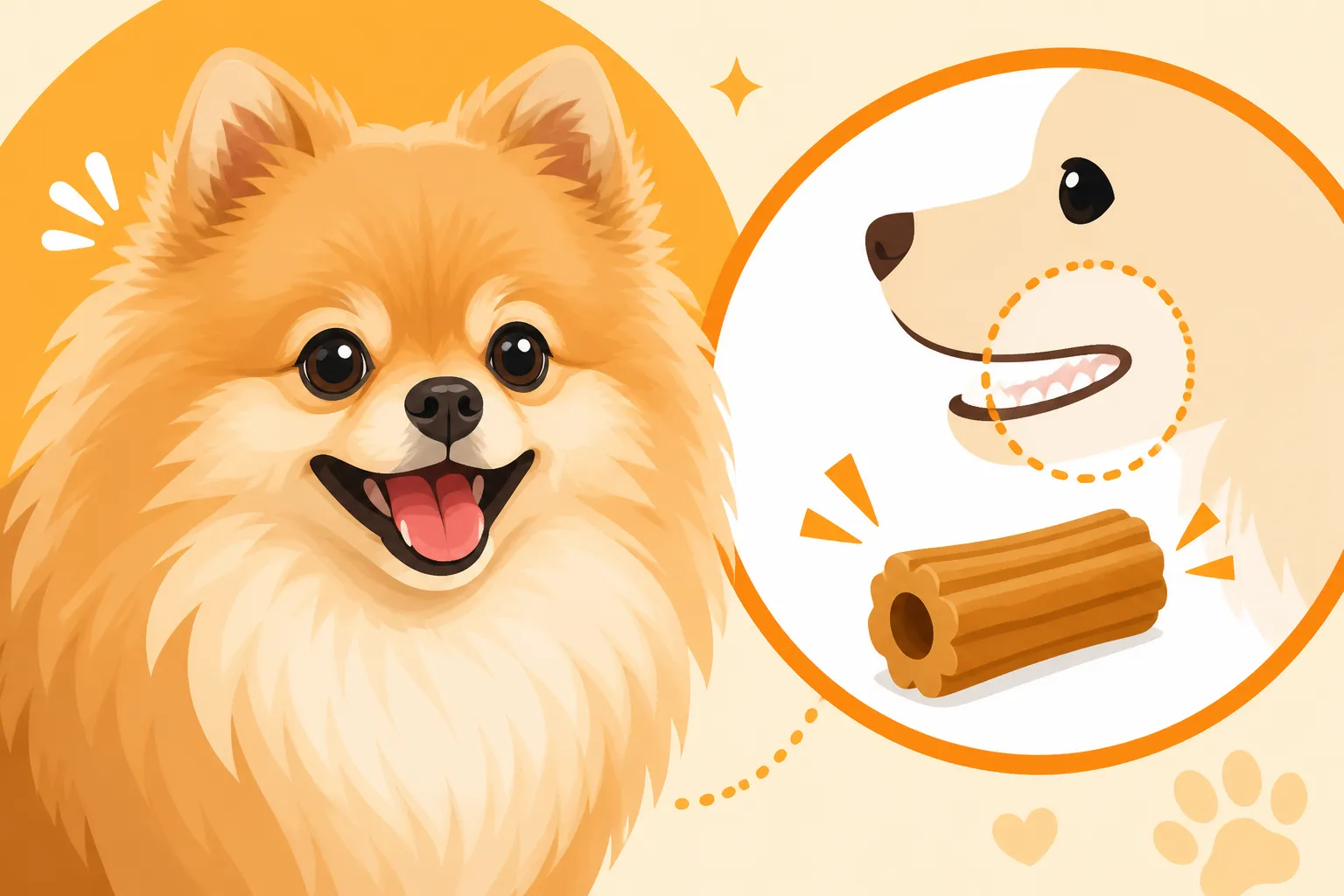
Chews Sized for a Pomeranian’s Jaw
It’s a common frustration for Pomeranian parents: you want to give your little fluffball something safe and satisfying to chew on, something that keeps their tiny teeth busy and their mind engaged. But with so many options out there, it can feel like a minefield trying to find chews that are actually appropriate for their delicate jaws and small size, rather than posing a choking hazard or risking a broken tooth. This comprehensive guide is here to cut through the confusion and help you confidently select the best chews for your beloved Pomeranian.
Understanding Your Pomeranian's Unique Jaw and Dental Needs
Before we even start looking at specific products, it’s absolutely crucial to understand the unique characteristics of a Pomeranian’s mouth. They aren’t just miniature versions of a larger dog; their dental structure comes with its own set of challenges that directly impact chew selection.
The Delicate Nature of a Pomeranian's Mouth
Imagine a jaw that fits in the palm of your hand, filled with tiny, sometimes crowded teeth. That’s your Pomeranian’s mouth. Their bones are more delicate than a Golden Retriever's or a Labrador's, making them highly susceptible to fractures from overly hard chews. Their teeth, while sharp, can also be quite brittle. We often see issues like retained deciduous (baby) teeth in Pomeranians, where the puppy teeth don't fall out when the adult teeth emerge, leading to overcrowding and food traps. This overcrowding, combined with their small size, also makes them highly prone to dental disease, like periodontal disease, which can start surprisingly early in life.
Think about it: a chew that's perfectly safe for a sturdy thirty-pound dog could be a serious hazard for your five-pound Pomeranian. A chew that doesn't bend or give when you press on it with your thumbnail is generally too hard and could easily chip or fracture one of those tiny canines or molars. The pain from a broken tooth is excruciating, and the repair often requires specialized veterinary dental work, which no one wants for their furry family member. You need chews that are tough enough to last a reasonable amount of time but gentle enough not to cause damage. Understanding Why a Pomeranian's Teeth Crowd and Rot is key to making informed decisions about their oral health, and choosing appropriate chews plays a huge role. Knowing The Age a Pomeranian Should Lose Its Baby Teeth can also highlight if your pup might have extra crowding, making careful chew selection even more important.
Beyond Just Cleaning: The Role of Chews in Mental Stimulation
While dental health is often the first thing that comes to mind with chews, their purpose extends far beyond just keeping teeth clean. Chewing is a fundamental, instinctual behavior for dogs. It's how they explore their world, relieve stress, and combat boredom. For a bright, active breed like the Pomeranian, mental stimulation is just as vital as physical exercise.
When a Pomeranian doesn't have appropriate outlets for their natural chewing instincts, they might turn to your furniture, shoes, or even dangerous household items. Providing safe, engaging chews can redirect this behavior constructively. Imagine your little Pom happily gnawing on a favored chew instead of eyeing your chair leg, or settling down with a comforting chew when you're busy or when they need a little calm-down time. This is especially true for puppies going through teething, but it continues to be important throughout their adult lives. Chewing releases endorphins, which can have a calming effect, making appropriate chews a great tool for managing mild anxiety or simply keeping a busy mind occupied. It helps prevent them from becoming What a Bored Pomeranian Chews Up and turning destructive.
Identifying Safe Chew Materials for Pomeranians
Navigating the vast array of chew products can be daunting. How do you know what’s truly safe for such a small, delicate breed? It all comes down to understanding the materials and applying a few simple tests.
The "Give" Test: What's Too Hard, What's Just Right
This is perhaps the most important rule of thumb for any Pomeranian owner. Before you offer any chew to your Pom, you need to be able to make a slight indentation in it with your thumbnail or bend it just a little. If it feels rock-hard to you, it’s probably too hard for your dog’s teeth. Think about trying to chew a rock – that's what some of these ultra-hard chews feel like to a dog, and the result can be a fractured tooth.
Common culprits for being too hard include natural antlers (especially deer antlers), real bones (both raw and cooked, as cooked bones can splinter and raw bones can be too dense), and some very rigid nylon chews. While these might be fine for a Rottweiler with powerful jaws, they are simply too risky for a Pomeranian. Always err on the side of caution. Look for chews that have a bit of flex, like many dental chews, certain softer nylon or rubber toys, or specific types of edible chews that break down as they are chewed. When in doubt, it’s always better to skip it.
Digestible vs. Non-Digestible Chews: Pros and Cons
Chews generally fall into two broad categories: edible (digestible) and non-edible (non-digestible). Both have their place, but understanding the differences is key to safe selection.
Digestible Chews: These are meant to be consumed and broken down in the digestive system. They offer the satisfaction of eating something and often come with dental benefits or nutritional value. Examples include dental sticks, bully sticks, collagen chews, and certain types of compressed vegetable chews.
- Pros: They fulfill a dog's natural urge to chew and consume, can offer dental benefits like plaque scraping, and may provide some nutrients. For dogs who love to eat their chews, these are very satisfying. You'll find a wide variety of these on platforms like Chewy, making it easy to filter by small breed appropriate options.
- Cons: They need to be carefully sized to prevent choking. Over-consumption can lead to digestive upset (diarrhea, vomiting). Owners must supervise to ensure the dog isn't trying to swallow large pieces. Ingredients matter here; avoid chews with artificial colors, flavors, or harmful fillers. Even with "all-natural" options, always read the label to ensure suitability for small, sensitive stomachs.
Non-Digestible Chews: These are designed to be chewed on, not eaten. They are typically made from durable materials like rubber or specific types of nylon. The idea is that they last a long time and provide a safe chewing outlet without being consumed.
- Pros: They are very durable and can withstand aggressive chewing over time, making them cost-effective. They satisfy the urge to chew without adding calories or causing digestive issues. Many are designed with textures that help clean teeth.
- Cons: If a dog manages to chew off and swallow a large piece, it can pose a choking hazard or lead to an intestinal blockage. It's crucial to replace these chews when they become too small or if sharp edges develop from chewing. Always ensure the material is non-toxic.
The best approach often involves a rotation of both types, carefully selected for your Pomeranian's size and chewing style.
Top Categories of Chews Suitable for Pomeranians
Now that we understand the basics, let's dive into the types of chews that tend to be a good fit for our pint-sized Poms. Remember, even within these categories, always choose the smallest size available and supervise your dog, especially with new chews.
Dental Chews and Treats Designed for Small Breeds
These are often the go-to for many Pomeranian owners, and for good reason! Most major brands produce specific "mini" or "petite" sizes of their dental chews, formulated with textures and ingredients to help reduce plaque and tartar. The texture is usually designed to be abrasive enough to scrape teeth but soft enough not to cause damage.
Brands like Greenies, DentaStix, and other enzymatic dental chews come in sizes specifically for dogs under 5-10 pounds. These chews typically have ridges or nubs that help massage gums and scrape away buildup as your Pom chews. Many also contain ingredients that help freshen breath. The key is consistency; these work best when given regularly, ideally daily, as part of your Pom's overall dental care routine. They are not a magic bullet and certainly don't replace brushing, but they can be a helpful supplement. While they're often marketed for dental health, remember they are also a treat and contribute to caloric intake, so adjust your Pomeranian's meals accordingly. Providing these can be a great addition to your efforts to protect their teeth, but it's important to know that Whether Dental Treats Replace Brushing a Pomeranian is a common question, and the answer is usually no; they assist, but daily brushing is still the gold standard.
Edible Chews: Bully Sticks, Collagen Sticks, and Natural Options
When it comes to edible chews, supervision is absolutely paramount. These are natural products and can vary in density and how quickly they break down, so what's safe for one Pom might be risky for another.
- Bully Sticks: These are a popular choice because they are single-ingredient (beef pizzle) and fully digestible. For Pomeranians, you MUST choose the thinnest, smallest bully sticks available. Look for "thin" or "petite" sizes, and even then, consider cutting them into shorter pieces if your Pom is an aggressive chewer. The main risk is when the stick becomes small enough to be swallowed whole, posing a choking hazard. Always remove the chew when it's small enough to be a danger. Many owners find a bully stick holder helpful, which grips the end of the stick, preventing the dog from swallowing the last bit. You can often find a good selection of smaller, thinner bully sticks suitable for Pomeranians on platforms like Amazon or Chewy, allowing you to read reviews from other small dog owners.
- Collagen Sticks: These are a newer, increasingly popular alternative to rawhide and sometimes bully sticks. Made from the inner layer of beef hide (collagen), they are typically more digestible than traditional rawhide and come in various shapes and sizes. Like bully sticks, opt for thin, small versions. They tend to be less odorous than bully sticks and offer similar chewing satisfaction. Again, remove when they become too small.
- Other Natural Chews: This category can include things like small pieces of dried sweet potato, various dried animal parts (like trachea or small gullet sticks), or even certain types of cheese chews. Always ensure they are sourced from reputable companies, have no added preservatives or chemicals, and are appropriately sized. Read reviews and consider the hardness; some can be quite brittle and cause tooth damage.
The biggest takeaway here is supervise, supervise, supervise. Never leave your Pomeranian alone with an edible chew, no matter how safe it seems initially.
Durable, Non-Edible Chews for Persistent Chewers
For the Pomeranian who loves to gnaw but isn't interested in consuming their chew quickly, durable non-edible options are fantastic. These are typically made from rubber or specialized nylon.
- Rubber Chew Toys: Think Kongs (the classic red or black ones, appropriately sized), or other natural rubber toys. These are fantastic because they are virtually indestructible, non-toxic, and can provide hours of chewing satisfaction. Many have nubs or textures that help clean teeth. A small Kong, for example, can be stuffed with peanut butter or a bit of plain yogurt and frozen, turning it into a long-lasting enrichment toy that satisfies the chewing urge while also providing mental stimulation. They're not meant to be eaten, so they last a long time. Make sure the size is appropriate – too small, and it could be swallowed; too large, and your Pom might not be able to get their mouth around it comfortably.
- Nylon Chews: While some nylon chews are too hard (refer back to the "give" test!), there are softer, more flexible nylon options specifically designed for small dogs. Brands like Nylabone often have different "chew styles" (gentle, moderate, power) and various textures. Look for the softer, more flexible varieties, and always ensure the size is appropriate. These chews are designed to fray into small, rice-sized pieces rather than splintering, which are generally considered safe to pass through the digestive system. However, if your dog manages to break off a large chunk, remove it immediately. Again, replace these when they become too small, worn down, or develop sharp edges that could irritate your Pom's gums.
The beauty of these non-edible chews is their longevity and safety from over-consumption. They're a great way to satisfy that chewing instinct without adding extra calories.
Avoiding Common Chew-Related Dangers and Misconceptions
It’s easy to get caught up in marketing hype or anecdotal advice when choosing chews. However, for a small breed like the Pomeranian, certain types of chews carry significant risks that are often overlooked.
The Perils of Oversized or Improper Chews
One of the most common mistakes I see owners make is offering chews that are simply too large or too hard for their Pomeranian. It's often done with the best intentions, thinking a bigger chew will last longer or a harder chew is more durable. But for a tiny dog, this is a recipe for disaster.
An oversized chew, even if digestible, can pose a serious choking hazard. A Pom might try to swallow a piece that's too big, leading to an emergency situation. Their windpipes are incredibly small and delicate, and a lodged chew could be fatal. Beyond choking, excessively hard chews are a leading cause of slab fractures in teeth – where a piece of the tooth literally breaks off. This is incredibly painful and can expose the sensitive pulp of the tooth, leading to infection and requiring a costly extraction under anesthesia. For a small dog, Anesthesia Risk in a Four Pound Pomeranian is always a consideration, making preventative care like appropriate chew selection even more important. Imagine the stress and expense of dealing with a broken tooth or an emergency trip to the vet because a chew was too big or too hard. It's simply not worth the risk. Always aim for chews that are sized for dogs smaller than your Pomeranian, if possible, just to be safe.
Rawhide, Bones, and Other Potentially Risky Options
While some chews are simply unsuitable due to size or hardness, others carry inherent risks regardless of size, especially for small dogs.
- Traditional Rawhide: While there are now many rawhide alternatives made from processed collagen that are more digestible, traditional rawhide chews can be very dangerous. They don't digest well, can swell in the stomach, and often contain chemicals used in processing. More critically, they can break off into large, hard-to-digest pieces that can cause intestinal blockages or severe choking. It's generally best to avoid traditional rawhide altogether for Pomeranians.
- Cooked Bones: This is a firm NO. Cooked bones become brittle and can easily splinter into sharp shards that can perforate your Pomeranian's esophagus, stomach, or intestines. They can also cause blockages or severe constipation. Even small cooked chicken bones are a huge risk.
- Raw Bones: While some proponents of raw feeding advocate for raw bones, they still carry risks for small breeds like Pomeranians. Bones that are too hard can still cause tooth fractures, and pieces can be swallowed that lead to choking or internal injury. There's also the risk of bacterial contamination. If you are considering raw bones, it's crucial to speak with a veterinary nutritionist and select only appropriately sized, soft, non-weight-bearing bones (e.g., chicken necks) and supervise extremely closely. Generally, for a Pomeranian, the risks often outweigh the benefits.
- Pig Ears, Cow Hooves, Smoked Bones: These are often too hard, too greasy, or can break into dangerous pieces for a Pomeranian. Pig ears, for example, can be very fatty and cause pancreatitis in sensitive dogs, besides being a choking risk once softened.
It’s tempting to give your dog anything labeled "chew," but a critical eye is essential. When in doubt, always consult your veterinarian. Better safe than sorry when it comes to What a Pomeranian Steals Off a Coffee Table that could be dangerous. And be mindful of The Doses That Are Toxic to a Pomeranian if you are considering any novel edible chew.
Here's a quick comparison table for common chew types and their suitability for Pomeranians:
| Chew Type | Suitability for Pomeranians | Pros | Cons | Supervision Level Required |
|---|---|---|---|---|
| Small Dental Chews | Excellent (choose petite/mini sizes) | Aids in tartar control, generally soft enough, good for daily use. | Can be calorie-dense, some ingredients may not suit sensitive stomachs. | Low to Medium |
| Thin Bully Sticks | Good (very thin, small pieces, use holder) | Single-ingredient, highly palatable, digestible protein. | Choking hazard as it gets small, messy, can be expensive. | High |
| Collagen Sticks | Good (thin, small pieces) | More digestible than rawhide, less odorous than bully sticks, natural. | Choking hazard as it gets small, can be expensive. | High |
| Rubber Chew Toys (e.g., Kong) | Excellent (appropriately sized) | Extremely durable, non-toxic, provides mental stimulation when stuffed. | Not edible, some dogs prefer edible chews. | Low |
| Softer Nylon Chews | Good (flexible varieties, small sizes) | Very durable, long-lasting, satisfying texture. | Can still be too hard if not chosen carefully, replace if sharp edges form. | Medium |
| Traditional Rawhide | AVOID | Long-lasting. | Indigestible, choking risk, intestinal blockages, chemical processing. | Never |
| Cooked Bones | AVOID | None. | Splintering, choking, internal perforation, blockages. | Never |
| Antlers (hard) | AVOID | Very durable. | Extremely hard, causes tooth fractures. | Never |
| Pig Ears, Hooves | AVOID (for most Poms) | Long-lasting. | High fat content (pancreatitis risk), choking hazard, too hard for teeth. | Never |
Incorporating Chews into Your Pomeranian's Daily Routine
Finding the right chews is only half the battle; knowing how to safely and effectively integrate them into your Pomeranian's life is just as important. It’s all about management, monitoring, and making it a positive experience for your furry friend.
Supervision, Rotation, and Timed Chew Sessions
The golden rule of dog chews, especially for a small breed like a Pomeranian, is supervision. I cannot stress this enough. Even the safest chew can become a hazard if left unsupervised. This means being present and actively watching your Pomeranian while they're chewing. If they're a particularly fast or aggressive chewer, you might even need to intervene if they try to swallow a piece that's too large.
Consider implementing timed chew sessions. Instead of leaving a chew out all day, offer it for a specific period, say 15-30 minutes, and then put it away. This not only keeps the chew special and exciting but also prevents your Pomeranian from over-chewing or becoming overly possessive. It also allows you to inspect the chew for wear and tear.
Rotation is another excellent strategy. Don't offer the same chew every single day. Having a variety of safe chews (different textures, materials, and even flavors) and rotating them keeps your Pomeranian interested and prevents boredom. It also allows different tooth surfaces to be engaged, providing a more comprehensive dental workout if you're using dental-specific chews. For example, one day it might be a dental stick, the next a stuffed Kong, and the next a flexible nylon chew. This keeps their mind stimulated and chewing behavior fresh.
Monitoring Your Pomeranian's Health and Chew Habits
Regularly observing your Pomeranian's chewing habits and overall health is crucial. Are they still interested in their chews? Are they chewing differently, perhaps favoring one side of their mouth, which could indicate pain? Are they excessively drooling, pawing at their mouth, or rubbing their face? These could all be signs of a dental issue, even with appropriate chews.
After each chew session, take a moment to inspect the chew itself. Has it splintered? Are there sharp edges? Is it worn down to a size that could be swallowed? If so, it's time to discard it and replace it with a new, safe one. Also, pay attention to your Pomeranian's stools. If they're having digestive upset (diarrhea, constipation, vomiting) after a chew session, that particular edible chew might not agree with them, and you should discontinue its use.
And, of course, regular veterinary check-ups are non-negotiable. Your vet can perform a thorough oral exam, identify any early signs of dental disease, and advise you on the best dental care routine, including chew choices, for your specific Pomeranian. Remember, The Checkup Schedule a Pomeranian Should Keep is vital for catching small issues before they become big, painful problems. If your Pomeranian does need dental work, knowing about Extractions in a Pomeranian's Small Jaw can help you prepare for what might be involved. Even with the best chews, professional dental cleanings are often necessary to maintain optimal oral health. Some excellent food brands, like Ollie, focus on high-quality, digestible ingredients which support overall health, including gut health that could be affected by unsuitable chews.
Disclaimer
This article is for general informational purposes only and does not constitute professional advice. Laws, prices and regulations vary by location and change over time. Consult a qualified professional for guidance on your specific situation.