Dryers and Brushes for Grooming a Pomeranian at Home
One of the biggest struggles for new Pomeranian owners, and even seasoned ones, is tackling that incredible, fluffy double coat at home. You might feel overwhelmed by the sheer volume of hair, or frustrated when your everyday human brush just isn't cutting it, leaving mats lurking beneath the surface. This guide is here to demystify the world of Pomeranian grooming tools, specifically focusing on the dryers and brushes that will make home grooming not just manageable, but effective, keeping your beloved Pom looking their best and feeling comfortable.
The Unique Demands of a Pomeranian's Glorious Double Coat
Before we dive into the tools, let's really understand what we're up against. A Pomeranian's coat isn't just fluffy; it's a marvel of canine engineering, designed for both insulation and protection. Appreciating its unique structure is the first step toward successful grooming at home.
Dissecting the Pomeranian's Coat Structure
Your Pomeranian is blessed with a true double coat, which is what gives them that iconic, stand-off appearance. This isn't just one type of hair; it's two distinct layers working in harmony. The outer layer consists of long, coarse guard hairs. These are the hairs you see, often straight and glossy, designed to protect your Pom from the elements like rain, wind, and even UV rays. They give the coat its structure and much of its color.
Beneath these guard hairs lies the real powerhouse of the Pomeranian coat: a dense, soft, woolly undercoat. This undercoat is incredibly thick and provides vital insulation, keeping your Pom warm in winter and helping to regulate their body temperature in summer. It's also the layer that, if not properly maintained, can quickly become a matted, tangled mess, leading to discomfort and potential skin issues for your dog.
Because of this dual-layered structure, grooming a Pomeranian requires tools that can effectively penetrate both layers without damaging either. A brush that only skims the surface will leave the dense undercoat packed, inviting mats and skin problems. Understanding this fundamental aspect of their coat is key to selecting the right grooming arsenal. You need to ensure you're reaching right down to the skin, separating hairs, and removing dead undercoat to keep air circulating and prevent painful tangles.
The Perils of Improper Drying Methods
Many first-time Pomeranian owners make the common mistake of either air-drying their freshly bathed Pom or using a human hairdryer. Both can lead to significant problems for your dog's coat and skin. When a Pomeranian's dense undercoat is left to air dry, it can take an incredibly long time to dry completely, sometimes hours or even a full day. During this prolonged drying period, the dampness creates a perfect breeding ground for bacteria and yeast, which can lead to skin irritation, hot spots, or an unpleasant mildewy smell.
Beyond the skin issues, air-drying almost guarantees mats. As the undercoat dries slowly, the fine hairs tend to clump together, especially if not consistently brushed and fluffed during the process. These damp clumps can then tighten and solidify into painful mats, particularly in friction areas like behind the ears, under the legs, or around the tail. Once these mats form, they can be incredibly difficult and uncomfortable to remove, often requiring professional intervention or even shaving.
Using a human hairdryer might seem like a quick fix, but it comes with its own set of dangers. Human dryers operate at much higher heat settings than is safe for a dog's delicate skin. This intense heat can quickly burn your Pomeranian's skin, especially if directed at one spot for too long. Additionally, the airflow from a human dryer is typically not powerful enough to effectively separate the dense double coat, leaving the undercoat damp and prone to matting, while potentially overheating the outer layer.
The Essential Brushes for a Pristine Pomeranian Coat
When it comes to brushing your Pomeranian at home, you can't just grab any old brush. To navigate that glorious double coat, you need specific tools designed to tackle both the guard hairs and the dense undercoat. Getting these basics right will save you a world of trouble and keep your Pom comfortable and mat-free.
Mastering the Slicker Brush for Undercoat Care
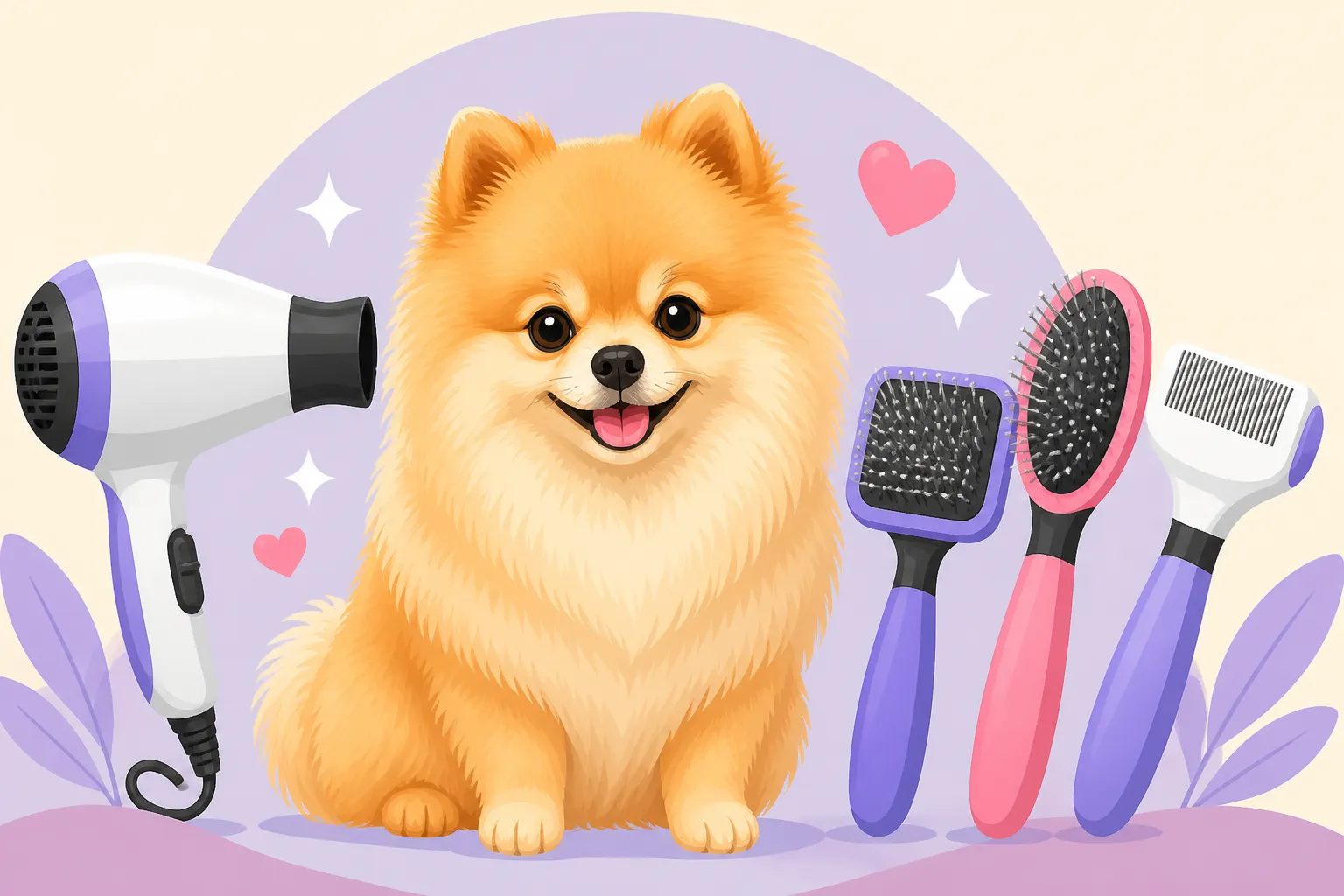
The slicker brush is, without a doubt, your primary weapon against mats and shedding in a Pomeranian's coat. It typically features a rectangular or square head covered in fine, short wires that are slightly angled. These wires are designed to gently grab and pull out loose undercoat and small tangles without damaging the longer guard hairs. This brush is crucial for "line brushing," a technique where you systematically brush through the coat in small sections, from the skin outwards, ensuring you reach every layer. Working a Pomeranian's Coat in Sections to the Skin is a vital skill to master here.
When using a slicker brush, always be gentle. You're not scrubbing; you're systematically clearing out the undercoat. Start at the bottom of a section, usually a leg or the belly, and hold the hair above with one hand while brushing downwards with the other, making sure to feel the bristles gently scratching your dog's skin. This ensures you're getting deep enough. Work your way up the body, always brushing in the direction of hair growth. This meticulous process helps to prevent painful mats from forming close to the skin, which can become impossible to remove without professional help.
Choosing a good quality slicker brush is important. Look for one with coated tips on the pins if your Pom has very sensitive skin, though most Poms tolerate standard slickers well. An ergonomic handle will also be a godsend during longer grooming sessions, preventing hand fatigue. While many pet stores offer generic options, brands widely available through retailers like Chewy often provide durable and effective slicker brushes specifically designed for double-coated breeds, ensuring the pins are strong enough to penetrate dense fur without bending or breaking easily.
The Gentle Art of the Pin Brush
While the slicker brush does the heavy lifting for the undercoat, the pin brush plays a different, yet equally important, role in your Pomeranian's grooming routine. A pin brush looks similar to a human hairbrush, featuring widely spaced metal pins, often with rounded tips, set into a soft cushion. It's much gentler than a slicker brush and is primarily used for the longer guard hairs, to finish the coat, or for daily, light brushing between full grooming sessions.
The pin brush excels at detangling the longer, topcoat hairs and adding a lovely fluff to your Pom's appearance. It's not designed to penetrate the dense undercoat down to the skin effectively, so it won't remove significant amounts of shedding undercoat like a slicker will. Instead, think of it as a tool for styling, separating individual guard hairs, and checking for any superficial tangles that might have formed. It’s perfect for giving your Pom that cloud-like, well-groomed finish after a thorough slicker brushing.
You can use a pin brush for a quick daily run-through to keep the topcoat neat and free of minor snarls, especially if your Pomeranian enjoys being brushed. It's also a great choice for puppies who are just getting used to grooming, as it's less intense than a slicker brush and can help build a positive association with the grooming process. Always use gentle, sweeping strokes, working through the longer parts of their coat, such as the ruff, the tail plume, and the britches.
The Critical Role of the Metal Grooming Comb
If the slicker brush is your primary tool and the pin brush is your finisher, then the metal grooming comb is your truth-teller. This seemingly simple tool is absolutely indispensable for confirming that your brushing efforts have been thorough and that no sneaky mats have been missed deep within the coat. It typically has two sections of teeth: one side with wider spacing and the other with finer, closer-set teeth.
After you've finished brushing with both your slicker and pin brushes, run the metal comb through your Pomeranian's coat, section by section, starting from the skin. Begin with the wider-toothed side to work through the bulk of the hair, and then follow up with the finer-toothed side. If the comb glides smoothly through the coat from root to tip, you've done a fantastic job! If it snags or stops, you know there's a mat or tangle that needs further attention with your slicker brush before it becomes a bigger problem. This is especially important in areas prone to matting like behind the ears, under the legs, and the tail. The Comb That Gets Through a Pomeranian's Undercoat is essential for checking your work.
The metal comb is also incredibly useful for tidying up specific areas like the hair around the face and ears, where a larger brush might be too cumbersome. It allows for precision grooming, helping you to separate and fluff the delicate facial furnishings and ensure these areas are also mat-free. Think of it as your final quality control check, ensuring your Pom is not just looking good on the surface, but is truly comfortable and free of any hidden tangles.
Choosing the Right Dryer to Protect and Fluff
Just like with brushes, not all dryers are created equal when it comes to a Pomeranian's coat. Using the wrong type of dryer can be detrimental to their skin and coat health. Investing in the proper drying equipment is just as vital as having the right brushes.
Why Household Dryers Are a No-Go Zone for Poms
We briefly touched on this, but it bears repeating with more emphasis: your human hairdryer is not suitable for your Pomeranian. It's a common mistake, born from convenience, but it carries significant risks. The heat settings on human dryers are far too high for a dog's skin, which is much more sensitive and prone to burns than ours. Even on a "cool" setting, the motor in a human dryer can generate enough residual heat to cause discomfort or even injury when directed at a small dog for an extended period.
Furthermore, the airflow generated by a typical human hairdryer is simply inadequate for a Pomeranian's dense double coat. It might dry the top layer, but it will mostly just push the outer hairs down, trapping moisture in the undercoat. This creates a perfect storm for matting, skin infections, and a lingering damp smell that no one wants. The noise level of human dryers can also be incredibly startling and frightening for a small dog, turning what should be a routine grooming session into a stressful ordeal.
Pet-specific dryers are designed with a completely different mechanism, prioritizing powerful airflow over high heat. This distinction is crucial for safely and effectively drying a double-coated breed like a Pomeranian. Do yourself and your beloved Pom a favor and keep the human hairdryer for your own locks; their coat needs something entirely different.
Embracing the Power of a Pet Force Dryer
The pet force dryer, also known as a high-velocity dryer, is the game-changer for drying your Pomeranian at home. These dryers are specifically engineered for animals, focusing on high-volume, strong airflow with minimal or no heat. The force of the air literally "blasts" water off the coat and separates the individual hairs, making it incredibly effective at drying the dense undercoat all the way down to the skin.
The benefits of a force dryer for a Pomeranian are numerous. First, it significantly reduces drying time, often cutting it in half or more compared to other methods. This means less stress for your dog and less time you spend on grooming. Second, the powerful airflow helps to "blow out" dead and shedding undercoat, preventing mats and reducing shedding around your home. As the air separates the hairs, it also fluffs the coat beautifully, giving your Pom that quintessential voluminous appearance.
When selecting a force dryer, look for models with variable speed settings, as this allows you to adjust the intensity for different areas of your dog's body and their comfort level. A lower setting might be better for delicate areas like the face, while a higher setting can tackle the thickest parts of the body. Multiple nozzle attachments are also a plus, offering different airflow patterns for various tasks. While even the quietest force dryers will still make some noise, opting for a model designed for lower decibel levels can make the experience more tolerable for sensitive Poms. Brands available through large pet retailers often provide a range of options suitable for home groomers.
Other Drying Tools and Considerations
While a pet force dryer is highly recommended, it's not the only tool in your drying arsenal. However, other methods often serve as supplementary steps rather than primary solutions. Towel drying, for instance, is your crucial first step after a bath. Use absorbent microfiber towels to gently squeeze and blot as much water out of the coat as possible before reaching for the dryer. This initial step significantly reduces the overall drying time and makes the force dryer's job easier.
Some professional grooming salons might use "cage dryers" where dogs are placed in a cage with controlled warm air circulation. While effective and often very gentle, these units are typically large, expensive, and not practical for most home groomers. The airflow is usually gentle and warm, but they can be slow for a very dense coat. For home use, a high-quality force dryer will be much more efficient and practical.
Ultimately, the key is to never let your Pomeranian's coat air dry completely after a full bath. The risk of matting, skin issues, and discomfort is simply too high. Whether you use a force dryer, or a combination of towel drying and a low-heat, pet-specific human-style dryer (if a force dryer is truly out of reach for your budget, though the investment is worth it), thorough drying is paramount to maintaining a healthy, beautiful Pomeranian coat.
Building a Seamless At-Home Grooming Routine
Having the right tools is only half the battle; knowing how to integrate them into a consistent and positive grooming routine is where the real magic happens. A well-established routine makes grooming easier for you and less stressful for your Pomeranian.
Preparing Your Pomeranian for a Positive Experience
Starting grooming early and making it a positive experience are crucial for your Pomeranian. Begin desensitizing your puppy to the brushes and the sound of the dryer as soon as they come home. Let them sniff the tools, offer treats, and give gentle praise. Short, frequent sessions are far more effective than long, arduous ones. Even if you're just doing a quick brush or turning the dryer on for a few seconds from a distance, positive reinforcement will help build a good association. Starting Brush Handling on a Pomeranian Puppy can help set the foundation for a lifetime of easier grooming.
Always brush your Pomeranian thoroughly before bathing them. Water can cause existing mats to tighten and become almost impossible to remove, turning a minor tangle into a major problem. Ensure their coat is completely free of knots and tangles before they ever step into the tub. This pre-bath brush also helps to remove loose hair, making the shampooing process more effective and reducing potential clogging in your drain. A detangling spray, easily found at pet stores or online retailers like Chewy, can be a huge help during this pre-brushing phase, making the comb and slicker glide more smoothly through any resistance.
Create a calm and safe environment for grooming. Use a non-slip mat in the tub or on a grooming table (if you have one). Have all your tools, shampoo, conditioner, and towels within easy reach before you begin. A calm demeanor from you will translate to a calmer experience for your Pom. Remember, this isn't just about getting the job done; it's about building trust and ensuring your dog feels safe and loved throughout the process.
A Step-by-Step Guide to Drying and Brushing
Once your Pomeranian is bathed and thoroughly towel-dried, it’s time for the main event: drying and the final brush-out. This process is where your force dryer and essential brushes really shine.
- Initial Force Drying: Start with your force dryer on a low-to-medium setting, keeping the nozzle a safe distance from your dog's skin. Begin with the least sensitive areas, like the back or sides, and slowly work your way around. Use your free hand to gently lift and separate the coat as you dry, allowing the air to penetrate all the way to the skin. This helps to fluff the coat and speed up drying. Pay special attention to the dense areas like the ruff, britches, and tail.
- Sectional Drying & Brushing: As the coat starts to dry, switch to a medium-to-high setting on your force dryer if your Pom tolerates it. Now, you’ll combine drying with brushing. Use your slicker brush to systematically line brush each section of the coat, using the force dryer to blow the hair in the direction you're brushing. This technique ensures the undercoat is completely dry and tangle-free. This combination of air and brush helps to separate every single strand, providing maximum volume and preventing mats. The Minutes a Full Pomeranian Brush Out Takes will depend on the density of the coat and your Pom's cooperation.
- Detailing with the Pin Brush: Once the coat is mostly dry and detangled, switch to your pin brush. Use it to fluff out the coat, giving it that beautiful, airy Pomeranian look. This also helps to smooth down any stray guard hairs and adds a final polish.
- The Comb Check: The last step, and arguably the most important, is the metal comb check. Systematically comb through your entire Pomeranian, from head to tail, using both the wide and fine teeth of the comb. If the comb glides through without resistance, you’ve achieved a perfectly dry, tangle-free coat. If you hit a snag, go back to that area with your slicker brush and dryer until the comb passes through smoothly.
Throughout this entire process, patience is your greatest virtue. Take breaks if your Pom gets antsy. Offer praise and small, high-value treats for good behavior. The goal is a thoroughly dry and brushed coat, achieved with minimal stress for your dog.
Maintaining Your Grooming Arsenal
Just like any good craftsman cares for their tools, you need to care for your Pomeranian grooming equipment. Proper maintenance will extend the life of your brushes and dryer and ensure they perform optimally every time.
For your brushes, especially the slicker, it’s crucial to remove all trapped hair after each grooming session. You can use a dedicated brush cleaning tool or even a metal comb to rake out the hair caught in the bristles. Periodically, you might want to wash your brushes with a mild soap and water, ensuring they are thoroughly rinsed and air-dried before storing to prevent mildew or damage to the cushion. Store them in a clean, dry place where they won’t get crushed or bent.
Your force dryer also requires some basic maintenance. Regularly check and clean the air intake filter, usually located at the back or bottom of the dryer. This filter prevents pet hair and dust from getting into the motor, which can reduce efficiency and even cause the dryer to overheat. A clogged filter will make your dryer less effective and shorten its lifespan. Most filters can be easily removed, cleaned with soap and water, and allowed to air dry completely before being put back in place. Additionally, check the nozzles for any blockages and ensure the hose is free of kinks or damage.
By taking a few minutes to clean and store your tools properly, you ensure they are ready for action whenever your Pomeranian needs their next pampering session. This small investment of time in maintenance will pay off in the long run, guaranteeing your tools remain effective and hygienic for years to come.
Grooming Tool Comparison for Pomeranians
| Tool Type | Primary Function | Best For | Key Features | Why It's Essential for Poms |
|---|---|---|---|---|
| Slicker Brush | Removing loose undercoat and detangling mats. | Dense undercoat, line brushing, preventing matting close to the skin. | Fine, angled wire pins; various sizes; ergonomic handle. | Penetrates thick double coat to remove dead fur and tangles. |
| Pin Brush | Finishing coat, detangling guard hairs, light daily brushing. | Longer guard hairs, adding fluff, daily maintenance between full grooms. | Widely spaced metal pins (often with rounded tips); cushioned base. | Separates and smooths the topcoat; gentler for sensitive areas. |
| Metal Comb | Checking for missed mats, precision detangling. | Final check after brushing, tidying facial hair, ears, and paw pads. | Two sections (wide/fine teeth); durable metal construction. | Confirms thoroughness of brushing; essential mat detection. |
| Pet Force Dryer | High-velocity drying with minimal heat. | Rapid drying of dense double coats, blowing out undercoat, fluffing. | Variable speed; multiple nozzles; powerful airflow; low heat. | Prevents matting and skin issues from dampness; achieves show-quality fluff. |
| Microfiber Towels | Absorbing excess water after bathing. | Initial water removal, reducing force dryer time. | High absorbency; soft texture. | Reduces drying time and stress; gentle on coat. |
Disclaimer
This article is for general informational purposes only and does not constitute professional advice. Laws, prices and regulations vary by location and change over time. Consult a qualified professional for guidance on your specific situation.